 Bellingham
 Sunnyland is one of Bellingham's older, established residential pockets, and that shows in the housing stock: a mix of mid-century single-story homes, older bungalows, and newer infill construction sitting on tree-lined streets not far from Whatcom Creek and the edge of downtown. Homes here share a common set of exterior challenges that come with living in Whatcom County — persistent moisture, salt-laced air moving in off Bellingham Bay, and long stretches of shade from mature trees that never quite let a roof dry out. Roofing done right in this neighborhood means understanding those conditions, not just installing a product and moving on.
What Sunnyland's Climate Does to a Roof
Bellingham sits in a marine environment, and Sunnyland gets the full effect. The combination of salt air, driving rain off the Sound, and a moss season that can stretch for most of the year puts real, cumulative stress on roofing systems, siding, and trim. None of it is dramatic on any given day — there's no single storm that destroys a roof here. It's the slow accumulation that gets homeowners: moisture that doesn't fully evaporate between rain events, organic growth that holds water against a surface, and salt-bearing air that accelerates corrosion on anything metal.
Salt Air and Metal Fatigue
Proximity to the bay means airborne salt settles on exposed metal — flashing, fasteners, gutters, and any exposed roofing hardware. Over years, that accelerates corrosion, especially on lower-grade fasteners or flashing that wasn't rated for coastal exposure. It's a slow process, but it's a real one, and it's part of why material selection matters more here than it would inland.
Driving Rain and Wind-Driven Moisture
Bellingham's rain often doesn't fall straight down. Wind off the water pushes it sideways, which means it finds its way under poorly lapped siding, undersized flashing, and roof penetrations that weren't sealed with wind-driven moisture in mind. A roofing or siding job that would hold up fine in a drier, calmer climate can fail here specifically because the installer didn't account for lateral water movement.
Moss, Shade, and Organic Growth
Sunnyland's tree canopy is part of what makes the neighborhood pleasant to live in, but it also means a lot of roof surfaces stay shaded and damp longer than they would in full sun. Moss and algae take hold on roofs that don't get enough sun exposure or airflow to dry out between rains. Left alone, moss holds moisture against shingles, lifts tabs, and works its way under the roofing surface — which shortens the life of an otherwise sound roof.
Roofing Services for Sunnyland Homes
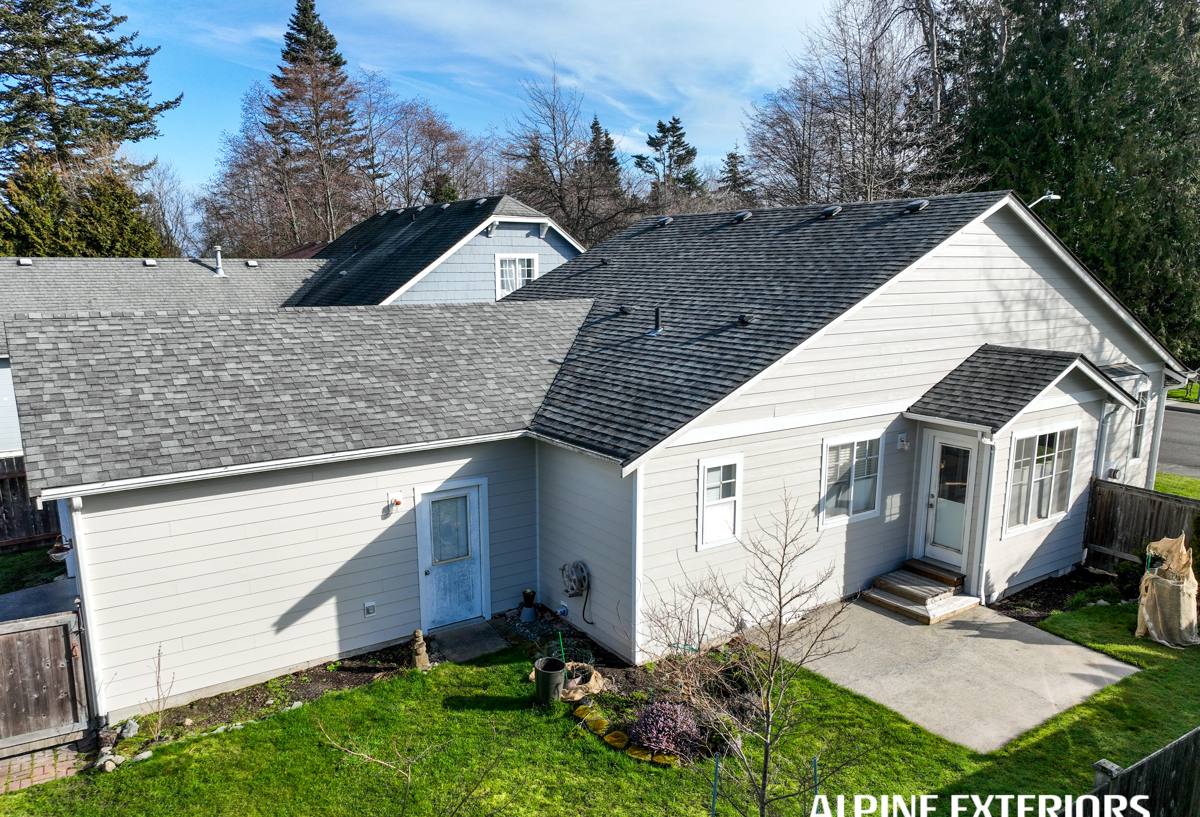
We handle the full range of roofing work this neighborhood actually needs — not just full replacements, but the inspections, repairs, and maintenance that keep a roof performing between replacements.
- Roof inspections that check for moss buildup, flashing condition, and early signs of moisture intrusion, not just obvious damage
- Repairs to flashing, valleys, and penetrations — the spots where wind-driven rain most often finds a way in
- Moss treatment and removal, done in a way that doesn't damage the roofing surface underneath
- Full roof replacements using materials chosen for this climate, not a generic regional default
- Gutter and drainage checks, since a roof can be in good shape and still cause damage if water isn't being moved away from the house properly
When we're on a roof in Sunnyland, we're looking at how the specific site sits — how much shade it gets, which direction it faces relative to prevailing wind and rain, and whether nearby trees are contributing to moisture retention. Two roofs on the same street can have very different maintenance needs depending on tree cover and exposure.
Siding: The Other Half of Keeping Water Out
Roofing and siding work together as a system. A well-installed roof with poorly sealed or aging siding still lets moisture into the wall assembly, and in a climate like this one, that moisture doesn't dry out quickly. We install and repair fiber cement, engineered wood, and vinyl siding, with particular attention to the details that matter most in wind-driven rain — proper lapping, flashing at windows and doors, and sealed penetrations.
For older Sunnyland homes with original siding, our first step is usually an honest assessment: is this a repair-and-maintain situation, or has moisture already gotten into the sheathing behind it? We'll tell you which one it is rather than defaulting to a full replacement recommendation.
Windows: Comfort and Moisture Control
Older windows in this neighborhood are often single-pane or early double-pane units that have lost their seal, which shows up as fogging between the panes or drafts around the frame. Beyond the comfort and energy cost of that, failed window seals and poorly flashed window openings are a common entry point for the same wind-driven moisture that affects roofs and siding. We install replacement windows and make sure the flashing and sealing around them is done to hold up against Bellingham's rain patterns, not just to pass a quick visual check.
Decks: Built for Wet Weather, Not Just Dry Days
A deck in Sunnyland spends most of the year exposed to moisture, whether it's direct rain, dripping tree cover, or the general dampness of the marine climate. Material choice and construction details matter a lot here — proper spacing between boards for drainage and airflow, ledger board flashing that keeps water from tracking back into the house, and fasteners that won't corrode under salt-air exposure. We build and repair decks with those specifics in mind, whether it's a full new build or fixing rot and structural issues on an existing one.
Material Choices We Recommend — and Why
We don't push a single product for every home. What we do is walk homeowners through the real trade-offs for this specific climate, honestly, including the maintenance commitment each option comes with.
| Material | How It Performs Here | Maintenance Consideration |
|---|---|---|
| Architectural asphalt shingles | Good moss resistance with zinc/copper strips; solid mid-range performer in wind-driven rain when properly flashed | Periodic moss inspection; lifespan shortened by heavy shade if untreated |
| Metal roofing | Sheds moisture and moss well due to slick surface; needs corrosion-rated fasteners and flashing near the coast | Low ongoing maintenance if installed with marine-grade hardware |
| Fiber cement siding | Stable in wet climates, resists moisture-driven warping better than some wood-based alternatives | Needs proper caulking and paint maintenance at seams |
| Vinyl siding | Low maintenance, handles moisture well, but installation quality around penetrations is critical in wind-driven rain | Minimal upkeep; watch for cracking in prolonged cold snaps |
We're upfront when a product has a maintenance burden that doesn't fit a homeowner's expectations. That's a judgment call based on installation sensitivity and long-term moisture behavior in this specific climate — not a knock on any manufacturer.
Why a Local Crew Matters Here
General contracting knowledge doesn't automatically translate to knowing how Bellingham's specific combination of salt air, rain direction, and shade patterns affects a building. A crew that works across Whatcom County regularly sees how these conditions play out on real roofs and walls over years, not just at the point of installation. That's the difference between a roof that's installed correctly on a dry install day and one that's built to actually hold up through a wet Bellingham winter.
Being local also means we're available for the follow-up — a moss check a couple years in, a flashing repair after a windstorm, a warranty question — without the homeowner having to track down an out-of-town crew.
A Practical Maintenance Checklist for Sunnyland Homeowners
- Check for moss buildup on shaded roof sections at least once a year, ideally before the wettest months set in
- Clear gutters and downspouts regularly — clogged drainage backs water up under roofing edges and siding
- Look for staining or soft spots on siding near windows and ground level, common signs of moisture intrusion
- Inspect deck ledger boards and fasteners for corrosion or rot, especially where the deck meets the house
- Have windows checked for seal failure (fogging between panes) or drafts, since this often points to bigger flashing issues
- After major windstorms, do a visual check for lifted shingles or displaced flashing
What to Expect When You Call Us
We start with an honest look at what's actually going on — whether that's a full roof, a siding section, windows, or a deck. We'll tell you what needs attention now, what can reasonably wait, and what your material options are for this climate, with real trade-offs explained rather than a one-size-fits-all pitch. No pressure, no inflated urgency.
If you're in Sunnyland and dealing with a roof that's holding moss, siding that's showing its age, windows that fog up, or a deck that's seen better days, we're happy to take a look. Reach out for a free, no-pressure estimate using the form below.