 Bellingham
 Exterior Contracting in Columbia, Bellingham
Columbia is one of Bellingham's older, established neighborhoods, and that shows in its housing stock — a mix of early-to-mid-century homes alongside newer infill, many of them within a few miles of Bellingham Bay. That proximity to the water is part of what makes the neighborhood desirable, and it's also exactly why exteriors here wear differently than they do a few miles inland. Homes in Columbia deal with a specific combination of salt-laden air, wind-driven rain off the bay, and long stretches of shade and moisture that keep roofs and siding damp far longer than homeowners expect. We work on houses throughout Whatcom County, and the patterns we see in Columbia are consistent enough that we plan for them before a crew ever shows up.
This page covers what that climate actually does to a home's exterior, how our roofing, siding, window, and deck work is adapted for it, and what to look for when you're evaluating contractors for a property in this part of Bellingham.
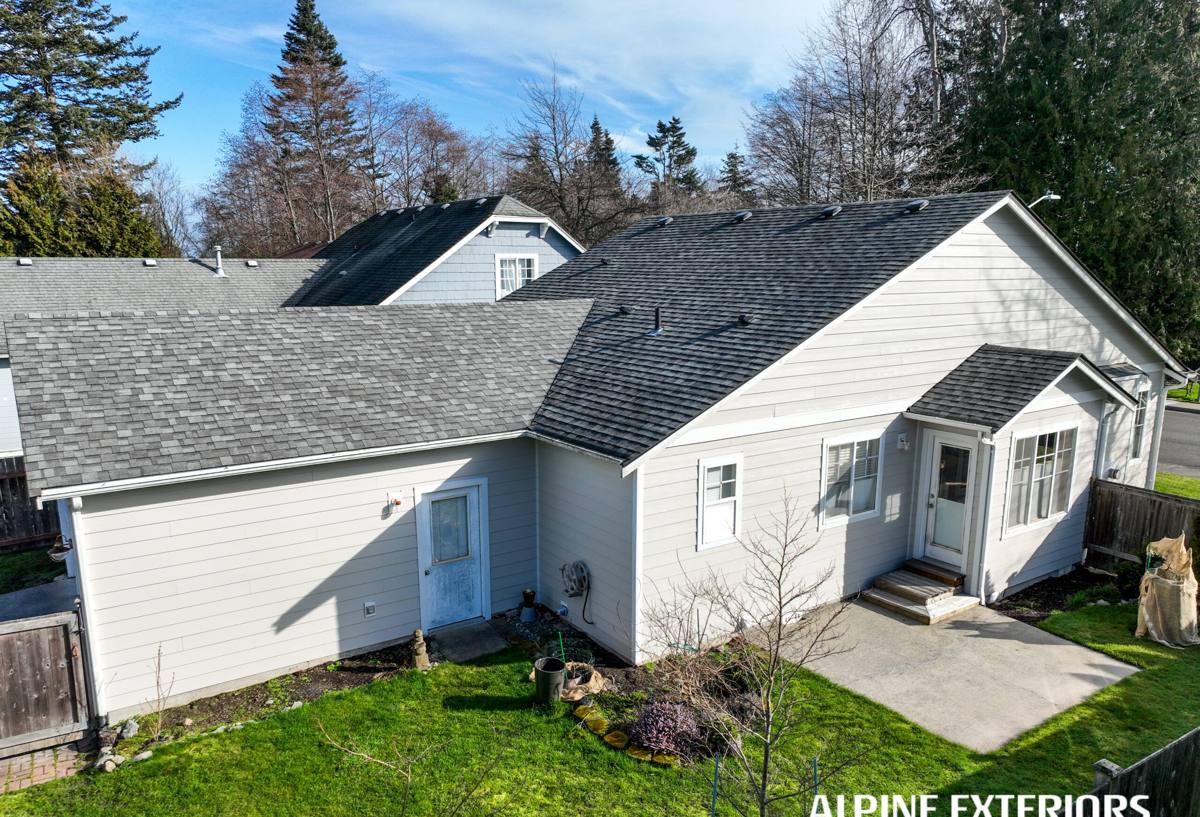
What the Local Climate Does to a Home
Salt Air and Metal Fatigue
Being close to the water means airborne salt is a constant, low-grade factor in how materials age. It's rarely dramatic — nobody's roof fails in a season because of it — but it accelerates corrosion on exposed metal: flashing, fasteners, gutter hardware, and any lower-grade metal roofing components. Over years, that corrosion shows up as rust streaking, pitted fasteners that lose their grip, and flashing that thins out faster than the manufacturer's rated lifespan would suggest. It's one of the reasons fastener and flashing material selection matters more here than it would on a home twenty miles inland.
Driving Rain
Bellingham gets a lot of rain, but the Columbia area also catches wind off the bay that pushes rain sideways rather than straight down. Wind-driven rain finds gaps that vertical rain never would — under lap siding, around window flanges, up under shingle tabs at ridge and hip lines. A roof or wall system that would be perfectly adequate somewhere with calmer weather can underperform here if the flashing details and water management weren't built with lateral water intrusion in mind.
Moss and Shade
Whatcom County's moss season runs long, and it's worse on north-facing roof slopes, shaded roofs under mature trees, and anywhere debris collects and holds moisture. Moss isn't just cosmetic — its root structure works into shingle granules and the moisture it holds against the roof deck accelerates rot and shortens shingle life. Columbia's older tree canopy means a lot of homes here have at least one roof plane that stays shaded and damp well after the rest of the roof has dried out.
Roofing for Columbia Homes
Most of the roof work we do in this neighborhood is asphalt shingle replacement, with a growing number of homeowners asking about metal for its longevity and low maintenance. Whatever the material, the details that actually determine how long a roof lasts here are the same: proper underlayment, correctly lapped and sealed flashing at every penetration, ice-and-water shield at eaves and valleys, and ventilation that keeps the attic dry so moisture isn't working against the deck from underneath.
Moss Prevention Built In
On re-roofs, we install zinc or copper strips near the ridge on request — as rain washes over them, trace metal ions inhibit moss and algae growth on the slopes below. It's a small addition at install time that meaningfully reduces how often a homeowner needs to get up on the roof for moss treatment later, particularly on shaded north-facing planes that are common throughout Columbia's tree-lined streets.
Flashing and Fasteners
Given the salt air exposure this close to the bay, we default to corrosion-resistant fastener and flashing materials rather than the cheapest code-minimum option. It costs a little more up front and it's the difference between flashing that's still sound in fifteen years and flashing that's rust-streaked and leaking in eight.
Siding That Handles Wind-Driven Moisture
Siding failures in this neighborhood are rarely about the siding material itself failing outright — they're almost always about water getting behind it. Wind-driven rain pushes moisture up under laps and around trim and window edges, and once water gets behind siding it can sit there for a long time, especially on north- or west-facing walls that don't get much direct sun to dry them out.
We pay particular attention to house wrap continuity, proper lap orientation, and flashing at every horizontal trim break and window head. On repaint or re-side projects we'll often find that the visible siding looks fine while the sheathing behind it has taken damage over years — that's a conversation we have honestly with homeowners rather than just covering it back up.
Material Options We Install
- Fiber cement: Dense, dimensionally stable, and holds paint well in a damp climate — our most common recommendation for this area.
- Engineered wood: A lighter-weight, budget-conscious option; we're careful about installation detailing since it's more moisture-sensitive than fiber cement.
- Vinyl: Low maintenance and cost-effective, though it has less design flexibility and can become brittle in impact over time.
- Wood: Traditional look that many older Columbia homes were built with, but it demands the most ongoing maintenance in a marine climate.
Windows: Sealing Out the Bay Wind
Older homes in Columbia often still have original or first-generation replacement windows, and the failure point we see most is at the perimeter seal, not the glass itself. Wind-driven rain finds its way in through degraded caulking and worn flashing tape long before the window unit itself is actually failing. When we replace windows, proper flashing integration with the surrounding wall assembly is what determines whether the new window actually solves the water intrusion problem or just delays it. We also hear from homeowners in this area who are looking to cut drafts and noise from bay winds — modern dual-pane units with quality low-E glass make a noticeable difference on both fronts.
Decks: Built for Standing Moisture
Decks in a climate like this take a beating from standing moisture more than anything else. Structural framing that isn't properly protected can develop rot at ledger boards, post bases, and anywhere two pieces of wood meet and hold water. We build with moisture management as a first consideration — proper flashing at the ledger connection, structural fasteners and hardware rated for exterior/coastal exposure, and decking spaced and sloped to shed water rather than trap it. Composite decking has become a popular choice for homeowners here who want to spend less time on annual maintenance, though we also install and refinish wood decks for those who prefer the traditional look and don't mind the upkeep.
Cost Factors to Understand
Every home and project is different, so exact numbers require a walk-through, but these are the main factors that move a project's cost up or down in this area:
| Factor | Why It Matters Here |
|---|---|
| Roof pitch and access | Steeper roofs and limited access add labor time and safety equipment costs |
| Existing water damage | Rot found under siding or at roof decking must be repaired before new material goes on |
| Material grade | Corrosion-resistant flashing/fasteners cost more upfront but reduce salt-air degradation |
| Tree coverage / shade | Heavier moss treatment and ventilation needs on shaded, tree-covered lots |
| Home age | Older Columbia homes may need updated flashing details or structural repair during the project |
What to Look for in a Local Contractor
Choosing a contractor for a home this close to the bay is different from choosing one for a house further inland. A crew unfamiliar with marine climate exposure can do technically fine work that still underperforms here simply because it wasn't detailed for wind-driven rain and salt air. A few things worth checking before you hire anyone:
- Do they carry current Washington State contractor licensing and adequate liability insurance?
- Can they explain, specifically, how their flashing and fastener choices account for coastal exposure?
- Do they offer a written estimate that details materials, not just a lump-sum price?
- Are they willing to point out moisture damage honestly rather than just covering it over?
- Do they have a real physical presence and reputation in Whatcom County, not just a mailing address?
Why Local Experience Matters
A roof or siding job done to generic specifications can look fine on installation day and still underperform within a few years if it wasn't built for this specific climate. Working throughout Bellingham and the surrounding Whatcom County area means we see the same moss patterns, the same wind-driven rain intrusion points, and the same salt-air fastener corrosion often enough to plan for them by default rather than as an afterthought. That's the practical value of hiring a crew that works this area regularly — the fixes aren't experimental, they're what we already know holds up here.
If you're dealing with an aging roof, siding that's showing wear, drafty windows, or a deck that needs attention, we're happy to take a look and walk you through your options. Reach out for a free, no-pressure estimate — there's a form right below to get started.