 Bellingham
 Deck Replacement for Sunnyland Homes: What This Climate Requires
Sunnyland is one of Bellingham's older, established residential neighborhoods, with a mix of home ages and the kind of mature tree cover that shades yards and, unfortunately, keeps deck surfaces damp longer than a more open lot would. Add in the marine air that moves through the whole city off Bellingham Bay and the Salish Sea, and even a neighborhood set back from the waterfront deals with salt-tinged moisture working on wood and metal year-round. Combine that with driving rain that regularly comes in sideways rather than straight down, and you get a set of conditions that ages an old deck faster than homeowners usually expect.
When a deck in Sunnyland reaches the point where repair isn't enough anymore, the replacement itself needs to answer those specific conditions, not just swap old boards for new ones on the same layout with the same fasteners. This page covers how to tell a deck actually needs replacing, what a correct replacement job involves in this climate, how our process works, and why hiring a crew that already works this part of Bellingham makes a real difference.
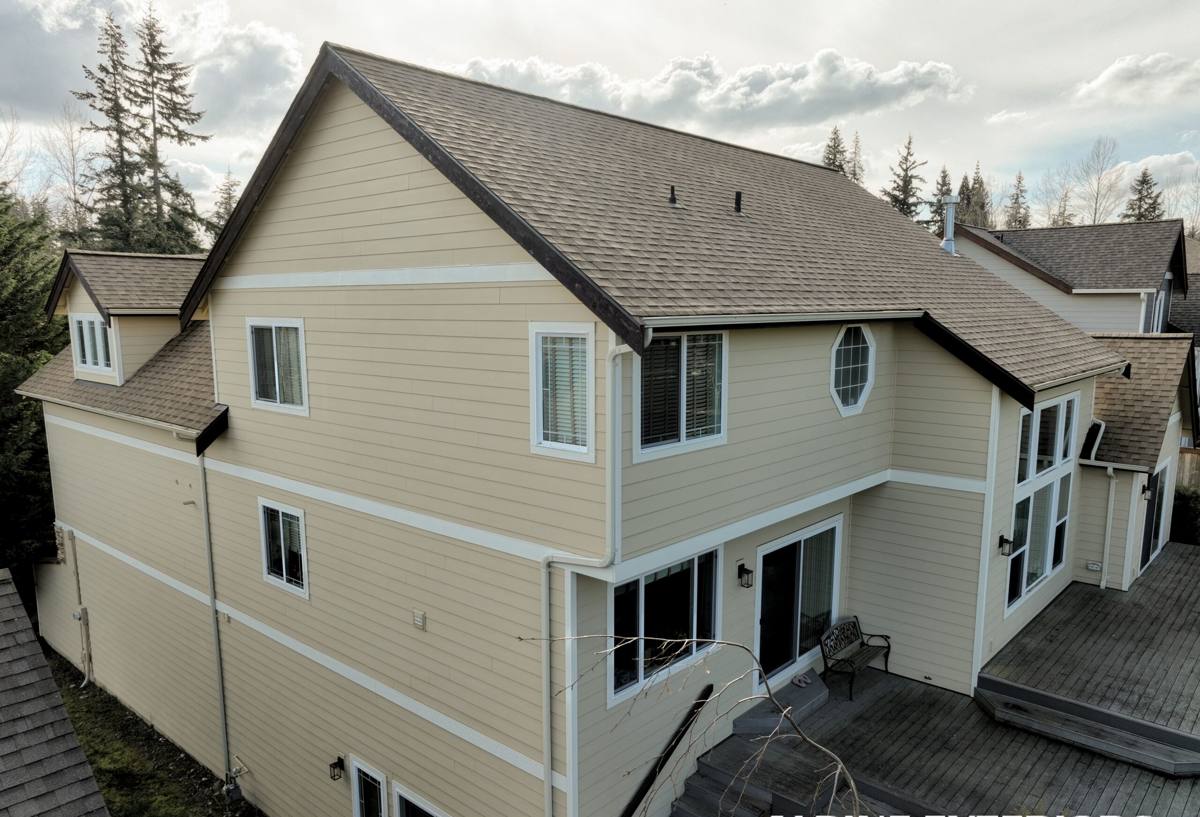
Signs Your Deck Has Reached Replacement, Not Repair
Repair makes sense when the problems are limited and the underlying structure is sound. Replacement becomes the honest recommendation once damage runs through the framing itself or shows up in more than one or two isolated spots. Some signs worth taking seriously:
- Soft or spongy decking in multiple areas, not just one board that took a direct hit
- Rot or visible decay at the ledger board where the deck attaches to the house
- Support posts or footings that have shifted, settled, or show rot at ground contact
- Widespread fastener corrosion, with rust staining spread across the surface rather than a handful of spots
- A deck built to an older code that no longer meets current railing, stair, or attachment requirements
- Persistent moss or mildew that keeps returning within weeks of cleaning, a sign the surface itself is holding moisture it shouldn't
One or two of these in isolation might still be repairable. Several of them together, especially anything touching the ledger connection or support posts, usually means the deck has reached the end of its useful life, and a patch job would just be spending money to delay the inevitable.
What Sunnyland's Climate Does to an Aging Deck
Marine Air Reaching Inland Neighborhoods
Bellingham's location on the bay means salt-tinged, moisture-laden air moves across the whole city, and Sunnyland isn't exempt just because it sits back from the water. That kind of sustained exposure works on exposed metal, fasteners, joist hangers, railing hardware, more steadily than an inland climate would, and the damage is usually invisible until a board starts to lift or a railing post loosens.
Driving Rain and Wind
Storms coming through Whatcom County don't just drop rain straight down; wind pushes it sideways and drives it up under railings and into ledger connections that were built to shed water falling vertically, not water arriving at an angle. Decks built or repaired without that in mind often look fine in dry weather and still let moisture in during the exact storms that matter most.
A Long Moss Season Under Mature Trees
Sunnyland's tree cover is part of what makes it a pleasant neighborhood to live in, but it also means shade and dampness linger on deck surfaces longer than they would on an open lot. Combined with Bellingham's mild, wet stretch of the calendar that runs most of the year, that shade gives moss and mildew a long season to take hold, especially on horizontal surfaces and any decking material with even slight surface porosity.
Choosing a Replacement Decking Material
A full replacement is the right time to reconsider decking material, not just match what was there before. The three main categories homeowners weigh are pressure-treated or cedar wood, capped composite, and cellular PVC.
| Material | Moisture & Salt Air Handling | Moss Resistance | Typical Upkeep |
|---|---|---|---|
| Cellular PVC | Excellent, no wood fiber to absorb moisture | Strong, smooth non-porous surface | Occasional washing |
| Capped composite | Strong, cap layer resists moisture and staining | Good on most product lines | Occasional washing |
| Uncapped composite | Moderate, some absorption at exposed fiber | Fair, more prone to buildup over time | Periodic cleaning |
| Cedar | Moderate, natural resistance, needs sealing | Fair when sealed and maintained | Regular oiling or sealing |
| Pressure-treated wood | Weak against sustained moisture over time | Poor without regular treatment | Regular sealing or staining |
Cost is part of the decision, but so is how much upkeep a homeowner actually wants to keep up with. Wood costs less upfront and gives a natural look many people prefer, but it asks for a maintenance schedule that, in a climate this consistently damp, tends to slip, and a slipped maintenance schedule is exactly how a deck ends up back on the replacement list a few years early. Composite and PVC cost more initially but trade ongoing maintenance for a longer, lower-effort lifespan in this specific climate.
What a Correct Replacement Involves
Tearing off old decking and nailing down new boards on the existing frame is sometimes tempting as a shortcut, but if the deck has earned a full replacement, the frame usually needs attention too. A correct replacement in Sunnyland's climate includes:
- Full removal of old decking, railing, and any framing members that show rot, corrosion, or damage rather than reusing questionable material to save time
- Framing sized and rated for the actual span and load, not just matched to whatever was there before
- Stainless steel or coastal-grade corrosion-resistant fasteners throughout, given the salt-tinged air that reaches this neighborhood
- Correct ledger board flashing at the house connection, since this is one of the most common failure points on older decks
- Board gapping sized for drainage and material movement, so wind-driven rain can actually clear the surface instead of sitting in it
- Hidden fastener systems on the walking surface where the decking product supports them, reducing exposed metal on top
- Railing and post attachment that meets current code, particularly on any elevated deck where a failure has real consequences
- Grading and airflow underneath the deck so moisture doesn't sit against new framing between storms
Skipping any of these usually doesn't show up on day one; a deck put together with shortcuts still looks fine when it's brand new. The shortcuts show up two or three winters later, in the same places the old deck failed.
Permitting and Code in Bellingham
Deck replacement in Bellingham generally requires a permit, and older decks in a neighborhood like Sunnyland are often replaced under railing, guard, and attachment codes that have changed since the original deck went in. That's actually one of the better reasons to replace rather than patch an old deck: it's a chance to bring the whole structure up to current requirements instead of carrying old code gaps forward. We handle the permitting and inspection process as part of the job, so it isn't something the homeowner has to sort out separately.
How Our Replacement Process Works
We start with a site visit to actually assess what's there: how far the rot or corrosion has spread, the condition of the ledger connection and support posts, drainage and grade around the deck, and how much sun and shade the space gets through the day. That assessment is what tells us honestly whether a repair would hold up or whether replacement is the better use of the budget.
From there we talk through decking material options against the homeowner's budget and how the space actually gets used. Once material and layout are settled and permitting is in place, the work follows the sequence above: full tear-out first, then framing and fasteners sized and rated for the site, then the decking surface, railing, and any stairs or trim. We finish with a walkthrough covering what the specific material you chose needs going forward, since that upkeep list is short for most modern decking but isn't nothing.
Keeping a New Deck in Good Shape
A properly built replacement still needs some routine attention to hold up through Sunnyland's shaded, damp conditions. Worth keeping on a seasonal checklist:
- Rinse the deck surface periodically to clear pollen, leaf litter, and organic buildup before it works into the surface or cap layer
- Keep gaps between boards clear of debris so water and airflow can move through as designed
- Trim back overhanging branches where practical to cut down on shade and moisture sitting on the surface
- Check railing hardware once a year for early corrosion or loosening, especially heading into the wet season
- Address any soft framing or standing water underneath right away, since that's a structural issue rather than a cosmetic one
Why It Matters That We Already Work Sunnyland
A crew that mostly builds decks in drier, more open parts of the region can still do competent work, but Sunnyland's combination of mature tree shade, marine air reaching in from Bellingham Bay, and driving rain isn't identical to conditions a few miles inland or on a different kind of lot. Working this neighborhood regularly means we're not guessing at fastener grades, drainage details, or how much moss resistance a given decking line actually needs here; we've seen which choices hold up under this specific climate and which ones look fine at handoff and start failing within a few seasons.
That familiarity also shows up in the practical judgment calls: how to orient a replacement deck for the sun a particular shaded lot actually gets, or giving a homeowner a straight answer about whether their deck needs full replacement or whether a more limited repair would genuinely hold.
Get a Straight Answer About Your Deck
Whether your deck in Sunnyland has reached the end of its life or you just want an honest opinion on whether repair or replacement makes more sense, we're glad to take a look and walk through the options plainly. Reach out below for a free, no-pressure estimate.