 Bellingham
 Building Decks for Sunnyland's Particular Climate
Sunnyland sits close enough to Bellingham Bay and the surrounding tree cover that homes here deal with a specific combination of weather stress: salt-tinged air off the water, long stretches of driving rain through fall and winter, and shaded, damp conditions that keep moss and algae active for much of the year. None of that makes deck building here impossible — it just means a deck has to be designed and built with those conditions in mind from day one, not treated like a project you'd build the same way in a dry inland climate.
A deck built without that mindset might look fine for the first year or two. Then the ledger board starts trapping moisture against the house, fasteners bleed rust streaks into the decking, and the boards on the shaded side stay slick with moss well into spring. We build decks in this neighborhood the way this climate actually demands, not the way a generic spec sheet says to.
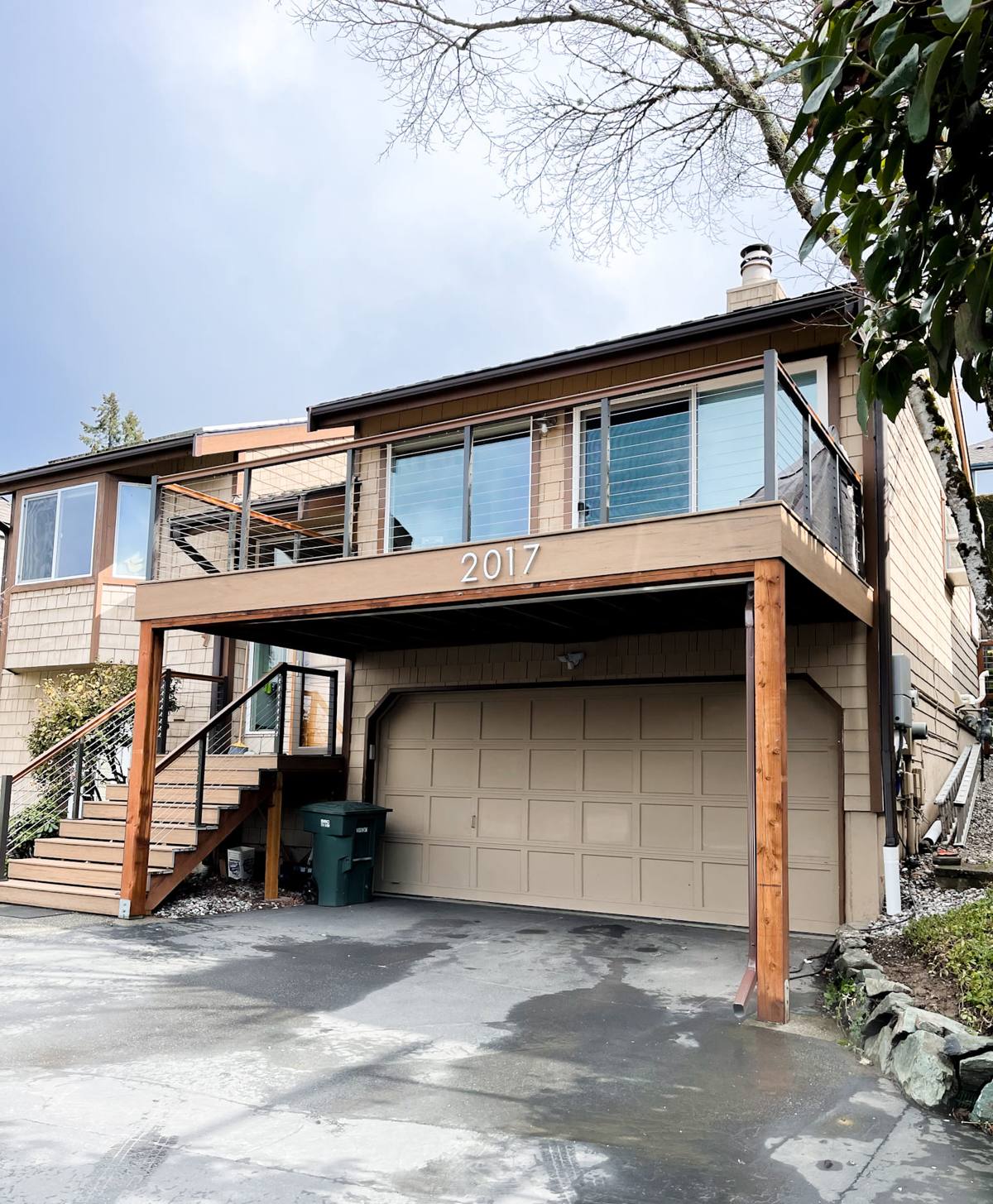
What "Correct" Deck Construction Means Here
A deck is only as good as the parts you don't see once it's finished. In Whatcom County's wet climate, the structural details matter more than they would somewhere drier, because water finds every gap and stays there longer.
Ledger Attachment and Flashing
Where the deck attaches to the house is the single most common failure point on decks we're asked to repair or rebuild. Proper flashing — installed so water sheds outward and never behind the siding or into the rim joist — is non-negotiable. A deck ledger without correct flashing will eventually rot the framing behind it, whether that takes two years or ten.
Footings and Framing
Footings need to be sized and set to the depth and bearing requirements the City of Bellingham's permit office calls for, not guessed at. Framing lumber should be rated for ground contact where it's close to grade, and every cut end and drilled hole should get field-treated before it's covered up, since a factory-treated board with an untreated cut edge is an open door for rot.
Joist Protection
Covering the tops of joists with a protective tape or membrane before decking goes down keeps water from pooling on end grain and wicking into the framing — a small step that adds real years to a deck's structural life in a climate that rarely gives wood a chance to fully dry out between rain events.
Fasteners and Hardware
Salt-influenced air corrodes standard hardware faster than inland areas ever see. We use stainless steel or coated fasteners and connectors rated for the exposure, so you don't end up with rust streaks bleeding down light-colored decking or corroding hardware weakening joints from the inside.
Choosing a Decking Material That Fits This Climate
There's no single "best" decking material — there's the material that fits your maintenance appetite, your budget, and how much sun or shade your particular lot gets. Sunnyland has a mix of open and heavily treed lots, and that changes which material makes the most sense.
| Material | Moisture & Moss Behavior | Maintenance | Typical Lifespan |
|---|---|---|---|
| Pressure-treated lumber | Absorbs water readily; shaded areas grow moss faster if not cleaned | Annual cleaning and periodic sealing | 15–20 years with upkeep |
| Cedar | Naturally rot-resistant, but surface graying and moss buildup still happen in shade | Cleaning and re-oiling every 1–2 years to hold color | 20–25 years with upkeep |
| Composite decking | Doesn't absorb water into the board itself, but moss and algae can still grow on the surface film in shaded, damp spots | Periodic washing; no sealing or staining needed | 25–30+ years |
| PVC/capped composite | Fully moisture-resistant surface; least hospitable to moss growth | Occasional washing | 25–30+ years |
We don't push one product over another as a rule — we walk each lot, look at sun exposure and drainage, and talk through what you're willing to maintain. A shaded backyard deck under mature trees is a very different maintenance conversation than a south-facing deck that gets real sun exposure.
Why We're Selective About Some Products
Some decking and railing products on the market perform poorly specifically in prolonged wet-shade conditions like much of Sunnyland sees — certain composite formulations from years back had known moisture and mold sensitivity issues, and some railing systems trap water at connection points with no way to drain. Our standard is to install products with a track record of holding up in Pacific Northwest conditions, and we're upfront if something you're asking about isn't one we'd stand behind for this climate — not because it's inherently bad, but because it isn't the right match for what your yard will put it through.
Railings, Stairs, and Code Requirements
Any deck more than a modest height off the ground needs a code-compliant guardrail — generally a minimum height with baluster spacing tight enough that a small child can't pass through. Stair stringers need to be sized for the span and load, and treads need adequate depth and a non-slip surface, which matters more here than in drier climates since wet, mossy stair treads are a real fall hazard through the winter months.
Bellingham requires permits for most new deck construction and significant deck replacement. We handle that process as part of the job — pulling permits, scheduling required inspections, and building to the approved plan — so you're not the one tracking down City Hall paperwork.
Preventing Moss, Rot, and Slip Hazards Long Term
Even a well-built deck needs some seasonal attention in this climate. The goal is to keep water moving off the deck instead of sitting on it, and to keep organic growth from getting a foothold.
- Sweep leaves and debris off the deck surface regularly through fall — trapped leaves hold moisture against boards and feed moss growth
- Keep gaps between boards clear so water can drain through rather than pool
- Trim back overhanging branches where possible to let more light and air reach shaded sections
- Wash the surface at least once a year with a deck cleaner suited to your material — pressure washing wood or composite incorrectly can damage the surface
- Check the ledger flashing and any visible framing each year for signs of water staining or soft wood
- Reseal or re-oil wood decking on the schedule that material needs — don't wait until it's visibly gray and dry
- Address any loose fasteners, wobbly railings, or slippery stair treads before winter rain sets in, not after
Our Process for a Sunnyland Deck Project
We start with a walk-through of your property to look at grade, drainage, sun exposure, and how the deck will tie into your house. From there we talk through material options, layout, and railing style based on your budget and how you'll actually use the space. Once we've settled on a design, we handle the permit submission, schedule the build, and keep you in the loop on inspection milestones. After construction, we walk you through the maintenance schedule that matches whatever material you chose, so you know exactly what upkeep is expected and when.
Project cost varies a lot based on size, decking material, and railing choice — a straightforward pressure-treated deck costs meaningfully less than a large composite deck with custom railing and multiple levels. Most custom deck projects in this area land somewhere in a broad range from the low thousands for a small, simple deck up to well over $30,000 for a large multi-level composite build with custom features. We'll give you a specific number once we've seen the site and talked through what you actually want.
Why a Crew That Already Works in Sunnyland Matters
A deck built by someone unfamiliar with this specific microclimate tends to make the same mistakes: ledger flashing that isn't quite right for how hard rain drives against these homes, decking material chosen without accounting for how shaded the lot really is, or a maintenance plan that doesn't match the moss season here. Working regularly in Sunnyland and the surrounding Bellingham neighborhoods means we already know how the City's permitting process runs, what soil and drainage conditions typically show up on these lots, and how a deck built here actually weathers over its first few winters — because we've seen it firsthand, not from a manual written for a different climate.
Get a Straightforward Estimate
If you're planning a new deck or replacing one that's showing its age, we're happy to come take a look and talk through honest options for your property. Use the form below to request a free, no-pressure estimate, and we'll walk the site with you and answer whatever questions you have before you decide on anything.