 Bellingham
 Why Sunnyland Decks Wear Out Faster Than You'd Expect
Sunnyland is one of Bellingham's established neighborhoods, with a mix of older homes and newer builds shaded by mature trees for much of the year. That tree cover is part of the neighborhood's character, but it also means decks here rarely get a full day of sun to dry out between rain events. Add in the salt-tinged air that drifts inland off Bellingham Bay and the long, wet stretch of fall through spring that's normal for Whatcom County, and you have a climate that is genuinely hard on exterior wood and hardware. A deck that would last two decades in a drier inland climate can start showing structural problems in half that time here if it wasn't built or maintained with our conditions in mind.
Salt Air and Metal Fatigue
Coastal moisture carries fine salt content that settles on exposed metal. Over years, this accelerates corrosion in fasteners, joist hangers, and ledger bolts — especially on decks where builders used standard hardware instead of hot-dip galvanized or stainless-rated products. Corroded fasteners lose holding strength quietly, from the inside out, long before you'd notice a problem by looking at the deck surface.
Driving Rain and Wind-Driven Moisture
Bellingham's rain doesn't just fall straight down. Wind off the water pushes moisture sideways into gaps, joints, and the underside of ledger boards and stair stringers. Areas that a homeowner might assume are "protected" — under railings, behind skirting, tucked against the house wall — often stay damp longer than the open deck surface, which is exactly where rot gets started.
The Long Moss Season
Shaded decking holds moisture and grows moss for a good chunk of the year in this region. Moss itself isn't structural damage, but it holds water against the wood surface, makes boards dangerously slick, and hides early signs of splitting or soft spots underneath. A deck that looks "just needs cleaning" from a distance sometimes has real wear once the moss is scraped back.
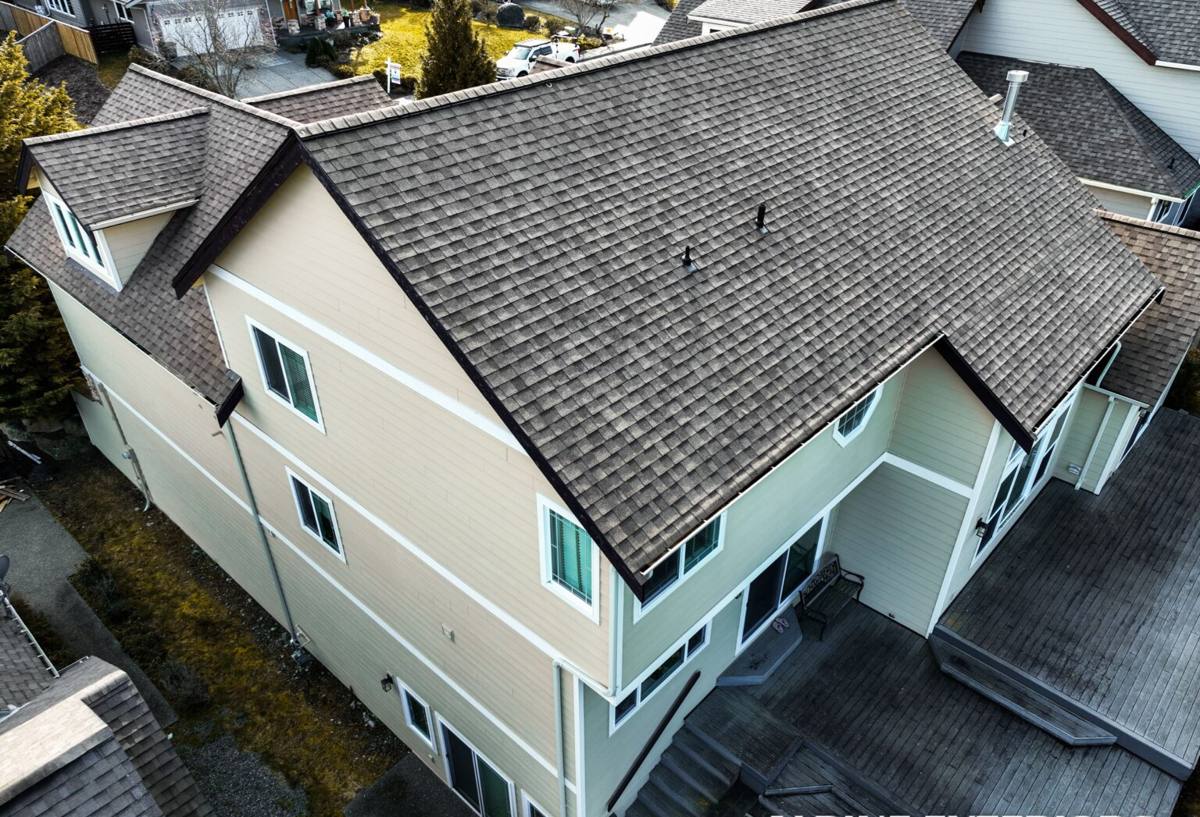
Signs Your Sunnyland Deck Needs Repair
Most deck problems in this climate start small and out of sight. Knowing what to look for — and where to look — catches issues while they're still a repair instead of a rebuild.
- Boards that feel spongy, springy, or noticeably softer underfoot than the rest of the deck
- Gaps or dark staining where the deck ledger meets the house siding
- Rust streaks running down from screw heads, joist hangers, or post bases
- Railings or stair rails that wiggle or feel less solid than they used to
- Persistent moss or algae in the same spots even after cleaning
- Visible daylight or gaps between structural framing members that used to sit tight
- A "bounce" in the deck surface when you walk across it
Any one of these on its own might be minor. Several together, especially near the ledger or stairs, usually means it's worth having someone look at the framing, not just the surface boards.
Where We Find the Damage First
After years of repair calls in Bellingham neighborhoods like Sunnyland, a handful of trouble spots come up again and again. These are the areas we check first, because they fail before the rest of the deck shows any obvious sign of trouble.
The Ledger Board Connection
This is the board that attaches the deck to the house, and it's arguably the single most important structural connection on the whole structure. If it was installed without proper flashing, or if the flashing has failed over time, water gets trapped between the ledger and the house wall. This is a slow, hidden rot that can compromise the entire deck's attachment to the building.
Joist Ends and Beam Pockets
Joist ends that sit in metal hangers or notched beam pockets trap moisture against end grain, which is the most absorbent part of any piece of lumber. Combined with corroding hangers, this is one of the most common places we find real structural softness.
Stair Stringers
Stairs take direct rain exposure, foot traffic, and often sit closer to grade level where splashback and soil moisture add to the load. Stringers are also harder to inspect casually since much of their length is hidden behind the treads.
Shaded, North-Facing Sections
Any part of the deck that stays shaded longest — under overhangs, along the house's north side, beneath mature trees — dries slowest and holds the most persistent moss. These sections often need repair years before the sunnier parts of the same deck.
What a Correct Deck Repair Actually Involves
A proper repair isn't just swapping out the boards that look bad. It starts with figuring out how far the damage actually extends, because rot and corrosion both spread past the point where they're visible from the surface.
A repair done right includes:
- A structural check of the framing — joists, beams, posts, and the ledger connection — not just the decking surface
- Probing suspect wood with an awl or screwdriver to find soft spots that look solid from the outside
- Replacing corroded fasteners and hardware with hot-dip galvanized or stainless-rated products suited to our coastal moisture
- Correcting or adding proper flashing at the ledger board if it's missing or failed — this is the fix that prevents the same rot from coming back
- Matching replacement lumber species and treatment to the existing structure so moisture behavior stays consistent across old and new material
- Re-checking railing and stair connections for code-correct spacing and solid attachment, not just cosmetic tightening
Skipping the structural check and just replacing surface boards is the most common shortcut we see on decks that "were repaired" a few years back and are already failing again. It looks like a fix, but it leaves the actual cause of the rot in place.
Repair Options by Decking Material
What we recommend for a repair depends heavily on what the deck was originally built with. Here's a general comparison of how the most common decking materials in this area hold up and what repair typically involves for each.
| Material | How It Holds Up Locally | Typical Repair Approach | Ongoing Maintenance |
|---|---|---|---|
| Cedar | Naturally rot-resistant but softens over time with constant damp/shade exposure | Board-by-board replacement, refinishing exposed wood, re-sealing cut ends | Periodic cleaning, sealing every few years |
| Pressure-treated lumber | Good structural durability if fasteners and flashing are corrosion-resistant | Framing repair, hardware upgrades, selective board replacement | Annual cleaning, occasional staining |
| Composite decking | Resists rot on the surface but hides moisture damage in the framing underneath | Framing repair beneath the composite deck often matters more than the boards themselves | Low — mainly moss removal and drainage checks |
| Older, untreated or unknown lumber | Least predictable — condition varies board to board | Full structural evaluation before deciding repair vs. replacement | Depends on findings |
Composite decking deserves a specific note: the boards themselves are genuinely low-maintenance in our climate, but composite surfaces can mask what's happening to the wood framing underneath. We've opened up composite decks that looked fine on top but had real joist and ledger problems below. If your deck is composite, the framing inspection matters at least as much as the surface.
Our Deck Repair Process
We keep the process straightforward, because most homeowners just want to know their deck is safe and know what they're paying for before work starts.
- On-site inspection. We walk the deck, probe suspect areas, and check the framing from underneath where access allows — not just what's visible from the top.
- Written scope and estimate. You get a clear breakdown of what needs to be repaired, what's optional, and what it costs before any work starts. No surprise add-ons mid-job.
- Repair the cause, not just the symptom. If the ledger flashing failed, we fix the flashing. If hardware corroded, we upgrade it. Replacing boards over an unresolved cause just delays the next repair.
- Structural work first, cosmetic work second. Framing, hardware, and connections get addressed before we touch surface boards or finish.
- Final walkthrough. We show you what was found, what was replaced, and what to keep an eye on going forward.
Keeping Your Repaired Deck in Good Shape
A correct repair buys you years, but a little seasonal attention buys you more. Here's what actually helps in a climate like ours:
- Sweep leaves and debris off the deck surface regularly in fall — trapped organic matter holds moisture against the boards
- Clean moss off with a soft-bristle brush and a deck-safe cleaner rather than a pressure washer, which can drive water into seams and fastener holes
- Check that gaps between boards stay clear so water can drain through instead of pooling
- Look at the ledger-to-house connection once a year for staining, gaps, or soft caulking that needs attention
- Keep gutters and downspouts near the deck clear so roof runoff isn't dumping extra water onto or under the structure
- Re-seal or re-stain wood decking on the schedule appropriate to the product — don't wait until it's visibly gray and dry
Why Hire a Crew That Already Works in Sunnyland
Deck problems in this part of Whatcom County follow patterns that are different from what you'd see in a drier climate, and different even from what a generalist contractor from outside the region might expect. Knowing which connections fail first here, which fastener grades actually hold up against salt-influenced moisture, and how much shade a given lot typically gets changes how a repair should be scoped. A crew that's already worked on decks in Sunnyland and the surrounding Bellingham neighborhoods isn't guessing at that — it's routine.
That familiarity also means a more accurate estimate the first time, because we're not discovering how our regional climate behaves on your job — we already know it, and we know what to check before we ever pull a board.
If your deck has soft spots, rust staining, stubborn moss, or just feels less solid than it used to, we're happy to take a look. Use the form below to request a free, no-pressure estimate, and we'll walk the deck with you and tell you honestly what it needs.