 Bellingham
 Windows Built for Sunnyland's Weather, Not Just Its View
Sunnyland sits close enough to Bellingham Bay that its homes take on a specific mix of weather stress: salt-tinged marine air, wind-driven rain off the water, and long stretches of gray, damp months where moisture just sits against the building envelope. Windows in this kind of environment aren't just an energy-bill decision — they're a moisture-management decision. A window that looks fine from the curb can still be letting cold air infiltrate, fogging up between panes, or slowly wicking water into the framing around it.
We work on homes throughout Bellingham and Whatcom County, and Sunnyland's older housing stock — a lot of it built well before current energy codes and window technology existed — tends to show the same handful of problems. Single-pane or early double-pane units with failed seals. Aluminum or bare wood frames that condensate heavily in winter. Caulk and flashing details that were fine when installed but have since dried out, cracked, or were never quite right to begin with. None of that is a knock on the original builders — it's just what 30, 50, or 70 years of this climate does to a window opening.
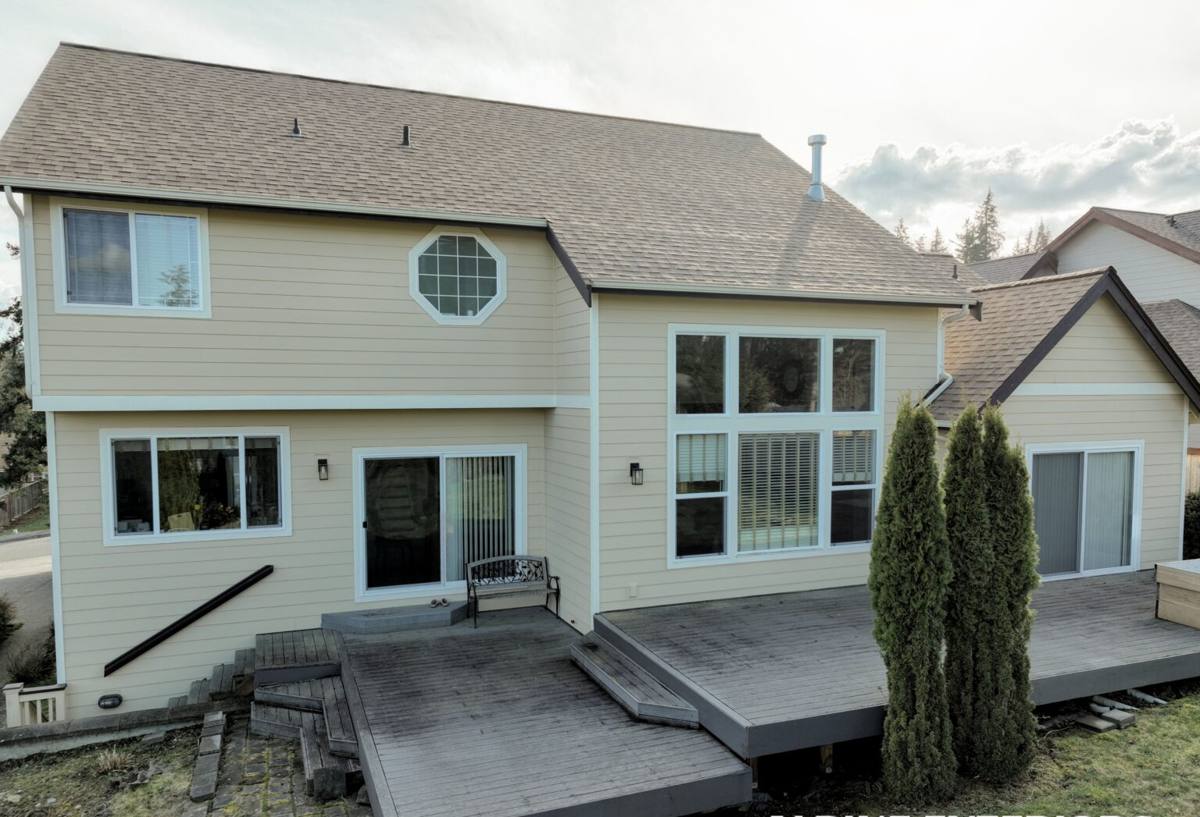
What Local Homes Actually Need From an Energy-Efficient Window
"Energy-efficient" gets used loosely in this industry, so it's worth being specific about what actually matters for a house in this part of Washington.
- Low U-factor — how well the window resists heat loss. This is the number that matters most for a heating-dominated climate like ours, where the bigger cost is keeping warmth in, not keeping heat out.
- Good moisture and condensation resistance — with our humidity and temperature swings, a window that isn't rated or installed well will fog or sweat on the interior glass, and that moisture ends up in the sill and framing.
- Corrosion-resistant hardware — locks, hinges, and balances that hold up to salt-laced air without seizing or pitting over the years.
- A weatherproof installation, not just a weatherproof product — the best window on the market still fails if the flashing, sill pan, and sealant details around it aren't done correctly for wind-driven rain.
That last point is the one homeowners underestimate most. The window unit itself is maybe half the equation. The other half is how it's tied into the wall, flashed above and below, and sealed against the specific way rain hits this house — which in a bay-adjacent neighborhood like Sunnyland often means rain coming in sideways, not just straight down.
What a Correct Installation Actually Involves
A rushed window swap and a properly installed one can look identical from across the room and behave completely differently five years later. Here's what we consider non-negotiable on every job:
- Removing the old unit and fully inspecting the rough opening for rot, soft framing, or prior water intrusion before anything new goes in.
- Correcting any damaged sheathing or framing found during that inspection — not covering it up and moving on.
- Installing a proper sill pan so any water that does get past the window sheds outward instead of pooling in the opening.
- Flashing integrated with the home's existing water-resistive barrier in the correct shingle-lap order, so water is always directed down and out.
- Setting the window level, plumb, and square, then insulating the gap around the frame properly — not overpacked, not left hollow.
- Sealing the exterior with the right sealant for the surface and exposure, and finishing interior trim so the whole opening is airtight.
Skip step one and you can install the best window available over rotten framing. Skip step three or four and you'll eventually get water intrusion that has nothing to do with the window itself and everything to do with the details around it — which is exactly the kind of failure that shows up as a mystery stain two or three winters later.
Choosing the Right Frame Material for This Climate
There isn't one "correct" window brand or material for every house — it depends on your budget, your home's style, and how much upkeep you're willing to do. Here's how the common options actually compare for a coastal Whatcom County setting:
| Frame Type | How It Handles Our Climate | Maintenance | Typical Trade-offs |
|---|---|---|---|
| Vinyl | Good moisture and corrosion resistance, no painting needed | Low | Fewer color options; can look less traditional on older homes |
| Fiberglass | Excellent dimensional stability, holds up well to temperature swings and moisture | Low | Higher upfront cost than vinyl |
| Wood (unclad) | Classic look, but bare wood is vulnerable to our rain and humidity without diligent upkeep | High | Needs regular refinishing to avoid rot in this climate |
| Wood-clad (aluminum or vinyl exterior) | Protected exterior face handles weather well; wood interior keeps traditional look | Moderate | Clad seams need to be detailed correctly during install to stay watertight |
| Aluminum (older/uninsulated) | Conducts cold readily, prone to interior condensation and corrosion near the bay | Moderate | Generally not what we recommend replacing into in this climate |
For most Sunnyland homes, vinyl or fiberglass frames with a good low-E, double- or triple-pane glass package hit the right balance of performance, upkeep, and cost. If you're restoring a period home where matching the original wood profile matters, wood-clad is often the better compromise — it just needs to be installed with extra attention to the cladding seams and flashing since that's where a wood-clad unit can fail early if it's rushed.
Reading the Numbers on a Window Label
Every code-rated window comes with a performance label. The two figures worth focusing on here:
- U-factor: lower is better — this measures heat loss, and it's the primary number for our heating-driven climate.
- SHGC (Solar Heat Gain Coefficient): matters less here than it would in a sunnier climate, but still relevant on south- and west-facing walls that get direct sun in summer.
Signs Your Windows Are Already Costing You
Homeowners often wait until a window is visibly broken before addressing it, but most of the cost of an old window shows up quietly, on the energy bill and in comfort, long before that.
- Visible fog or moisture between the panes of a double-pane window — that's a failed seal, and it can't be repaired, only replaced.
- Condensation forming on the inside of the glass regularly in cold weather.
- Noticeable draft when standing near a closed window on a windy day.
- Difficulty opening, closing, or locking a window — often a sign of a warped frame or failed balance.
- Soft or discolored wood trim or sill around the window.
- Rooms near windows that feel noticeably colder than the rest of the house in winter.
- Street or bay noise coming through more than it seems like it should.
Any one of these is worth a look. Several of them together usually means it's more cost-effective to replace than to keep patching.
Our Process, Start to Finish
We keep this straightforward because window replacement shouldn't feel complicated for the homeowner, even though there's a lot happening behind the scenes.
- On-site assessment — we look at your current windows, the condition of the openings, and how your home is oriented to wind and rain exposure.
- Honest recommendation — we'll tell you which windows make sense for your home and budget, and just as importantly, which upgrades wouldn't be worth the money for your specific situation.
- Written estimate — clear scope, clear pricing, no vague allowances.
- Installation — old units removed, openings inspected and corrected as needed, new units set and properly flashed and sealed using the steps outlined above.
- Cleanup and walkthrough — we walk you through the finished work and how to care for your new windows before we consider the job done.
What Affects the Cost
Every home and every project is different, so we'd rather explain what drives the price than throw out a number that doesn't apply to your house.
| Factor | Why It Matters |
|---|---|
| Number and size of window openings | Directly drives material and labor cost |
| Frame material chosen | Vinyl, fiberglass, and wood-clad carry different price points |
| Condition of existing framing | Rot or water damage found during removal adds repair scope |
| Full-frame vs. insert replacement | Full-frame addresses flashing and moisture issues directly; inserts are faster but rely on the existing frame being sound |
| Glass package | Double-pane, triple-pane, and specialty coatings each carry a different cost and performance level |
| Access and site conditions | Second-story or hard-to-access windows take more time and equipment |
As a general rule, we always recommend spending on getting the installation details right before spending extra on premium glass upgrades — a mid-grade window installed correctly will outperform a premium window installed poorly, every time.
Why a Crew That Already Works in Sunnyland Matters
Window replacement isn't a one-size-fits-all trade. A crew that's worked on homes throughout Bellingham and Whatcom County has already seen how this specific stretch of coastline treats a house — which wall typically takes the worst of the wind-driven rain, how the moss and moisture season affects trim and siding around window openings, and what the older local housing stock tends to have hiding behind the wall once you open it up. That's not something you can look up; it comes from doing the work in this exact area, repeatedly, and paying attention to what holds up and what doesn't.
It also means we're not guessing at code requirements, permitting expectations, or how to sequence work around our wetter months — we're already set up to do it right the first time, on a schedule that accounts for this climate rather than fighting it.
Caring for Your Windows After Installation
New windows are close to maintenance-free compared to what they're replacing, but a little upkeep goes a long way in this climate:
- Rinse frames and glass periodically to clear salt residue and grime, especially on sides facing the bay or exposed to wind.
- Check exterior caulk lines annually and have any cracking resealed before the wet season sets in.
- Clear debris and moss buildup from sills and surrounding trim so water doesn't sit against the frame.
- Operate locks and hardware periodically through the winter so they don't seize from disuse.
If you're noticing drafts, fogged glass, or sticking frames on your Sunnyland home, we're happy to take a look and give you a straight answer — whether that means new windows or something simpler. Reach out for a free, no-pressure estimate using the form below.