 Bellingham
 Exterior Work Built for Birchwood's Climate
Birchwood sits close enough to Bellingham Bay and the broader Whatcom County weather pattern that homes here take a specific kind of beating year-round. It's not the dramatic storms that do the damage so much as the steady, patient stuff: salt-laced air drifting in off the water, driving rain that comes in sideways during a stiff southwesterly, and a moss season that can run eight months or longer if a roof or a shaded siding wall never gets a chance to fully dry out. None of this is unusual for western Whatcom County, but it does mean exterior materials and installation choices that work fine in a drier climate can underperform here.
We work on homes throughout Birchwood and the surrounding Bellingham neighborhoods, and the patterns repeat: north-facing roof slopes and siding that stay damp longer than the rest of the house, fastener corrosion that shows up earlier than a warranty sheet would suggest, and gutter and drainage systems that get overwhelmed not by one big storm but by months of steady drizzle. Understanding those patterns is most of what separates a repair that lasts from one that doesn't.
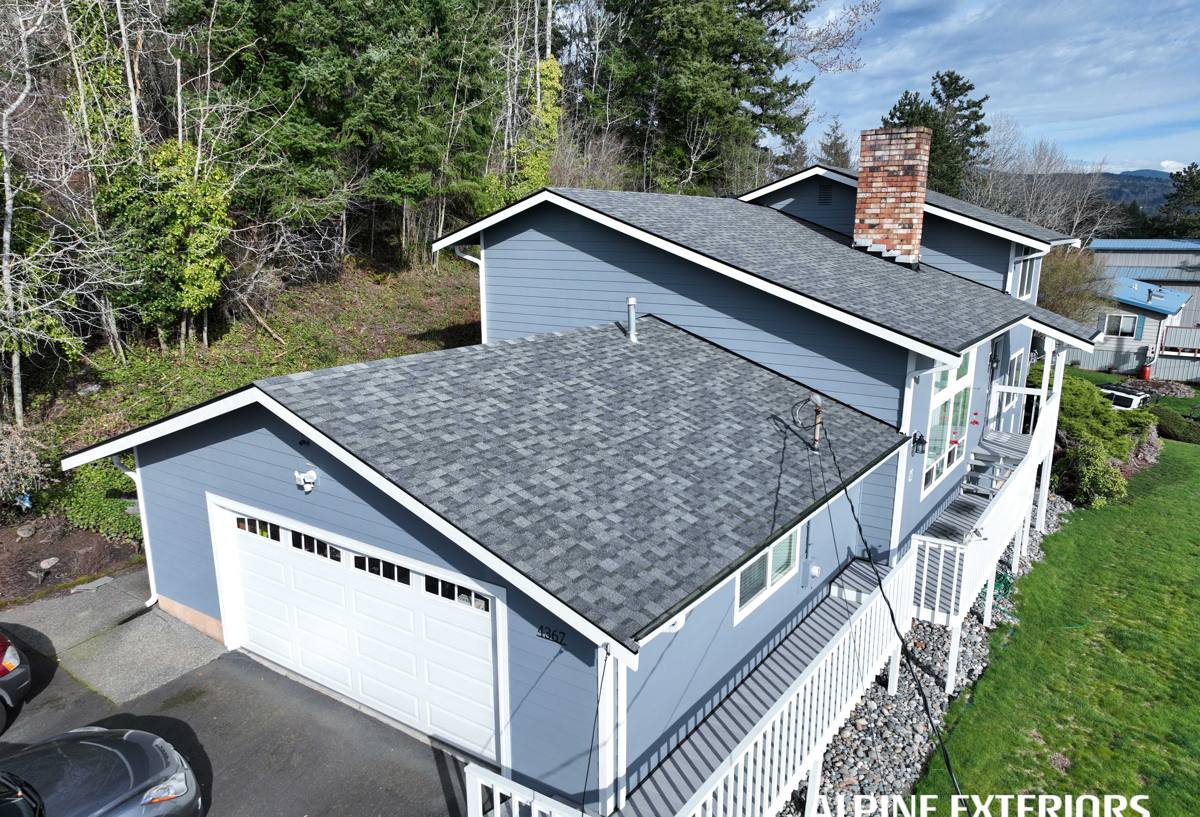
What Salt Air and Moisture Actually Do to a House
Salt Air and Metal Components
Proximity to saltwater accelerates corrosion on exposed metal — flashing, fasteners, gutter hardware, and any exposed hinges or brackets on doors and windows. Standard galvanized fasteners can start showing rust streaks years before they would inland. This is why we lean toward stainless or better-coated fasteners on homes closer to the water, even though they cost more up front.
Driving Rain and Wind-Driven Water
Rain that falls straight down is fairly easy to shed. Rain that comes in at an angle, pushed by wind off the bay, finds every gap in flashing, every under-lapped siding seam, and every window that wasn't flashed correctly. Most of the "mystery leaks" we get called out for aren't roof failures at all — they're wall or window flashing issues that only show themselves during a real windstorm.
Moss, Algae, and Prolonged Dampness
A long, mild, wet season is ideal moss-growing weather. Moss on a roof isn't just cosmetic — it holds moisture against the roofing material, lifts shingle edges as it grows, and can work its way under laps over time. On siding, especially in shaded or north-facing areas, algae staining and slow moisture intrusion behind poorly ventilated sections are the more common issues.
Roofing: What Holds Up Best Here
For most Birchwood homes, a well-installed asphalt composition roof with proper underlayment, ice-and-water shield at vulnerable areas, and correctly detailed flashing performs reliably and is the most cost-effective option. Metal roofing is a strong option too, particularly for homeowners planning to stay long-term, since it sheds moss more readily and holds up well against wind-driven rain when installed with the right fastener spacing and sealant details.
Where we're careful is with lower-slope roof sections and valleys, which collect debris and hold moisture longer — these need extra attention to underlayment and flashing regardless of the roofing material chosen. We also pay close attention to ventilation. A roof that isn't ventilated properly traps warm, moist air in the attic, which speeds up moss growth on the underside of the deck and can shorten the life of the roofing material from the inside out.
Signs a Birchwood Roof Needs Attention
- Moss buildup along the ridge, valleys, or north-facing slopes
- Granules collecting in gutters or downspouts
- Dark streaking or staining that doesn't wash off with rain
- Soft spots or slight sagging when walked (we check this carefully, not the homeowner)
- Daylight visible around flashing at chimneys, vents, or skylights
- Interior ceiling stains, especially after a windy rainstorm rather than a calm one
Siding: Managing Moisture Without Trapping It
The biggest mistake we see with siding in this climate isn't the material choice — it's installation that doesn't account for drainage. Siding needs a way for incidental moisture to get out from behind it. That means proper house wrap, correctly lapped seams, and a drainage gap where the siding type calls for one. Fiber cement, engineered wood, and vinyl all perform reasonably well here when installed with that principle in mind; where we see failures, it's almost always a flashing or drainage detail that was skipped, not the siding product itself.
We're honest with homeowners about maintenance trade-offs. Wood siding looks great and can be the right call for the right house, but it demands more upkeep in a climate this wet — regular refinishing and vigilance about caulking failure points. Fiber cement holds paint longer and resists moisture better, which is why it's become the default recommendation for a lot of Whatcom County homes, but it's heavier and less forgiving to install correctly, so installer experience matters more than brand.
Windows: Condensation, Drafts, and Water Intrusion
Older single-pane or early dual-pane windows in this area tend to show two problems: condensation between panes (a sign the seal has failed) and drafts around the frame where old caulking or flashing has degraded. Replacement windows installed with correct flashing — integrated with the surrounding siding's drainage plane, not just caulked around the edges — solve both the energy loss and the water intrusion issues at once. A window that's a great product but poorly flashed will still leak in a Birchwood windstorm.
Decks: Built to Handle Standing Water and Moss
Decks in this climate face two enemies: standing water that doesn't evaporate quickly given our cloud cover, and moss/algae growth on any deck surface that stays shaded or doesn't drain well. Proper deck building here means attention to board spacing and slope for drainage, ledger flashing to keep water from tracking back into the house framing, and joist protection so the structural wood isn't sitting in moisture for months at a time. Composite decking has become popular specifically because it resists the moss and rot issues that plague untreated or poorly maintained wood decking in a climate like ours — though a well-built and maintained wood deck can still last for years.
Comparing Common Exterior Materials for This Climate
| Material | Moisture/Moss Resistance | Maintenance | Typical Lifespan Here |
|---|---|---|---|
| Asphalt composition roofing | Good with proper ventilation and flashing | Periodic moss treatment, gutter clearing | 20-30 years |
| Metal roofing | Very good; sheds moss well | Low; occasional inspection | 40-50+ years |
| Fiber cement siding | Very good when properly installed | Repaint every 10-15 years | 30-50 years |
| Wood siding | Fair; depends heavily on upkeep | High; regular refinishing | Varies widely with maintenance |
| Vinyl windows | Good if flashed correctly | Low | 20-30 years |
| Composite decking | Very good; resists moss and rot | Occasional cleaning | 25-30+ years |
These are general ranges, not guarantees — actual lifespan depends heavily on installation quality, sun/shade exposure, and how consistently a homeowner keeps up with basic maintenance like gutter clearing and moss treatment.
Why a Local Crew Makes a Real Difference
A crew that works Bellingham and Whatcom County neighborhoods regularly knows which roof slopes in a given area tend to hold moss longest, which siding details fail first in a coastal windstorm, and how to size drainage and ventilation for our specific rainfall pattern rather than a generic national standard. That local pattern recognition shows up in small decisions — where to add extra flashing, which fastener spec to use, how to detail a valley — that add years to the life of the work. It also means someone who knows the area is available for warranty follow-up and seasonal check-ins, not a crew that's moved on to another region entirely.
A Simple Maintenance Checklist for Birchwood Homeowners
- Clear moss from roof valleys and north-facing slopes at least once a year
- Clean gutters and downspouts before the fall rains start in earnest
- Check window and door caulking annually for cracking or gaps
- Look for staining or streaking on siding, especially in shaded areas
- Inspect deck boards and ledger flashing for softness or water pooling
- Have flashing at chimneys, vents, and skylights checked every few years
Getting Started
Whether it's a roof that's overdue for attention, siding that's showing its age, windows that fog up between the panes, or a deck that needs rebuilding rather than another round of patching, we're glad to take a look and give you a straightforward assessment of what's actually needed versus what can wait. If you're in Birchwood or elsewhere around Bellingham, use the form below to request a free, no-pressure estimate.