 Bellingham
 Roofing and Exteriors for Sehome Homes
Sehome sits close to the heart of Bellingham, on the rise near Sehome Hill, with a mix of older character homes and newer infill construction. That mix matters when it comes to roofing and siding — a house built in the 1940s or 1960s handles moisture very differently than one built in the last fifteen years, and both need an approach that respects the original construction rather than a one-size-fits-all fix. We work on both, and we've seen enough Bellingham rooflines and wall assemblies to know what tends to fail first and why.
Whatcom County's marine climate is the constant backdrop to every job we do here. Homes in and around Sehome deal with salt-tinged air rolling in off Bellingham Bay, long stretches of driving rain in the fall and winter, and a moss and algae season that can run most of the year on north-facing slopes. None of that is unusual for this part of Washington — but it does mean exterior materials and workmanship have to be chosen and installed with that reality in mind, not with a generic warm-climate mindset.
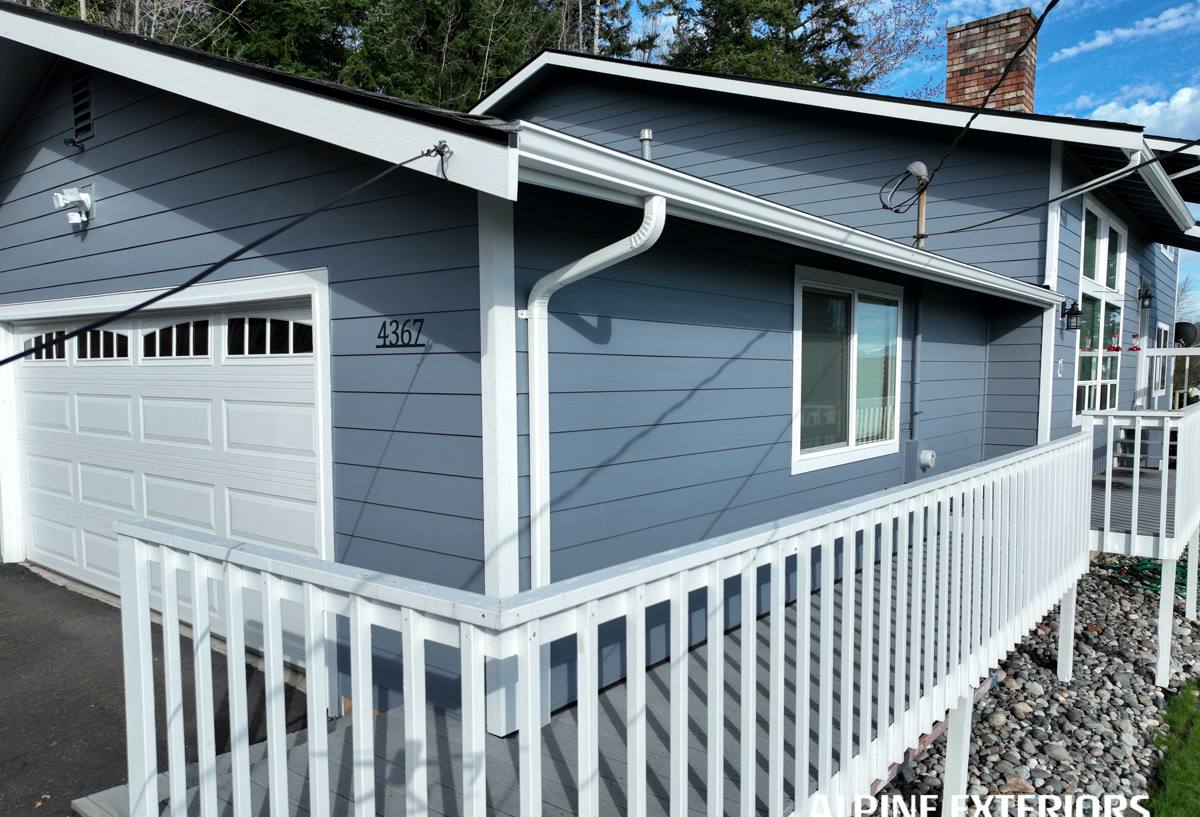
What Sehome's Climate Does to a Roof
The biggest roofing issue we see in this part of Bellingham isn't dramatic storm damage — it's the slow, cumulative effect of moisture that never fully dries out. Sehome's tree cover and proximity to the hill mean plenty of shaded roof sections that stay damp for days after a rain event. Add salt-laden air and you get a combination that accelerates two things: moss and algae growth, and corrosion on unprotected metal fasteners, flashing, and vents.
Moss and Algae
Moss doesn't just look bad. It holds moisture against the roofing surface, works its way under shingle tabs and shakes, and over time lifts material enough to let water find a path underneath. North- and west-facing slopes with shade from mature trees are the usual trouble spots. Left alone for a few seasons, moss growth turns a routine maintenance item into a premature replacement.
Salt Air and Metal Fatigue
Bellingham Bay is close enough that airborne salt is a real factor for metal roofing components, flashing, gutters, and fasteners. Standard hardware corrodes faster here than it would inland. We spec fasteners and flashing rated for coastal exposure on Sehome jobs for this reason — it costs a little more up front and saves a callback five years down the road.
Driving Rain and Wind-Driven Water
Storms off the Strait of Georgia and Puget Sound don't just drop rain straight down — wind pushes it sideways, up under laps, and into any gap in flashing or underlayment. Roofs and wall systems here need to be detailed for wind-driven rain, not just vertical rainfall, especially around valleys, chimneys, skylights, and wherever a roofline meets a wall.
Roofing Services We Provide
- Full roof replacement — asphalt composition, metal, and cedar options suited to Northwest exposure
- Roof repair — leak tracing, flashing repair, damaged shingle or shake replacement
- Moss treatment and removal, with guidance on prevention for shaded roof sections
- Gutter and downspout work tied into the roof system to keep water moving away from the structure
- Roof inspections — pre-purchase, post-storm, or routine maintenance checks
On replacements, we pay particular attention to underlayment quality and flashing details, since in a climate like ours those two things do more long-term work than the shingle or panel itself. A premium roofing material installed over weak flashing and underlayment will still leak; a modest material installed correctly, with attention to every transition point, will outperform it.
Siding: The Other Half of Keeping Water Out
Roofing gets most of the attention, but siding carries a lot of the weather-resistance load on a Bellingham home, especially on walls facing prevailing wind and rain. In Sehome we see everything from original wood lap siding on older homes to vinyl and engineered wood on more recent builds. Each has a different maintenance profile in a wet marine climate.
Why We're Selective About Materials
We install fiber cement siding on the large majority of our replacement jobs, and it's a deliberate professional choice, not a sales default. It holds paint longer than wood, doesn't swell or rot when it takes on moisture the way some wood and composite products can, and it stands up well to the freeze-thaw and constant damp cycle typical of a Whatcom County winter. Vinyl has its place on tighter budgets, but it can become brittle over time and telegraphs wall imperfections more than fiber cement. We'll walk through the honest trade-offs of each option for your specific house rather than push one product across the board.
What We Watch For on Older Sehome Homes
On original wood siding, the failure point is almost always inadequate drainage behind the cladding combined with paint that's been deferred too long. Once bare wood is exposed to repeated wetting, rot sets in at seams, sills, and anywhere caulk has failed. We check house wrap and flashing continuity any time we're pulling siding, because a new exterior over a bad drainage plane just hides the problem instead of solving it.
Windows and Decks: Rounding Out the Exterior
Roofing and siding are the two biggest defenses against Bellingham's rain, but windows and decks take their own beating from the same conditions.
Windows
Older single-pane and early dual-pane windows in Sehome's vintage housing stock often show fogging between panes, failed seals, and drafts — all signs the seal has broken down under years of humidity cycling. Replacement windows with modern low-E glass and properly flashed installation cut down on condensation issues and make a real difference in heating costs through a typical Bellingham winter.
Decks
A deck in this climate lives in near-constant moisture for months at a time. Untreated or poorly maintained wood decking checks, splinters, and rots at ledger boards and post bases faster here than in drier parts of the state. We build and repair decks with attention to proper flashing at the house connection, drainage under the surface, and hardware rated to resist corrosion from damp, salt-influenced air — the same principles that apply to roofing and siding, just applied horizontally.
Comparing Common Siding and Roofing Choices
| Material | Moisture Performance | Maintenance | Typical Lifespan Here |
|---|---|---|---|
| Fiber cement siding | Excellent — resists swelling and rot | Repaint every 10-15 years | 30-50 years |
| Vinyl siding | Good, but can crack with age/impact | Low — occasional cleaning | 20-30 years |
| Wood lap siding | Fair — needs consistent upkeep | Repaint every 5-8 years | 15-25 years without diligent care |
| Asphalt composition roofing | Good with proper underlayment/flashing | Periodic moss treatment | 20-30 years |
| Standing seam metal roofing | Excellent shedding of driving rain | Low, watch fastener corrosion near the bay | 40-60 years |
These ranges assume correct installation and reasonable upkeep. In a shaded, damp Sehome lot, actual lifespan can run shorter than the high end of these figures if moss and moisture aren't kept in check.
Why a Local Crew Matters
Anyone can install a roof or hang siding on a dry, sunny day. The real test is whether the work holds up through a wet Whatcom County winter, and that comes down to knowing this specific climate — not generic best practices pulled from a manual written for a different region. We know which roof slopes in Bellingham stay shaded and damp longest, which wall orientations catch the worst of the wind-driven rain, and which fastener and flashing choices actually hold up against salt air near the bay. That local knowledge shows up in the details: how deep a flashing lap is cut, what underlayment goes down first, how a deck ledger is sealed against the house.
Being local also means we're accountable after the job is done. If something needs a look after the first hard rain of the season, we're a short drive away, not a call center in another state.
A Simple Maintenance Checklist for Sehome Homeowners
- Check roof valleys and north-facing slopes for moss buildup at least once a year
- Clear gutters and downspouts before the fall rains start in earnest
- Look for peeling or bubbling paint on wood siding — it usually signals moisture trapped underneath
- Inspect deck ledger boards and post bases for soft or discolored wood
- Check window seals for fogging between panes, a sign of seal failure
- Have flashing around chimneys, skylights, and roof-to-wall transitions checked every few years
Getting Started
Whether you're dealing with a known leak, planning ahead for a roof that's getting close to the end of its service life, or just want an honest read on how your siding, windows, or deck are holding up under Bellingham's weather, we're happy to take a look. If you're in Sehome or anywhere else around Bellingham and Whatcom County, reach out for a free, no-pressure estimate — use the form below to get started.