 Bellingham
 Blaine's Exterior Challenge: Salt Air, Wind-Driven Rain, and Moss
Blaine sits at the northwest corner of Whatcom County, right on Semiahmoo Bay and the international border, which means homes here take on a combination of stresses that inland Bellingham properties don't deal with in the same way. Salt-laden air off the water accelerates corrosion on metal fasteners, flashing, and gutter systems. Wind-driven rain off the Strait of Georgia doesn't just fall straight down — it gets pushed sideways into eaves, soffits, and any gap in a roofing or siding system that wasn't detailed for that kind of exposure. And like the rest of Whatcom County, Blaine gets a long, damp shoulder season each fall and spring where roofs and siding rarely get a chance to fully dry out between rain events.
That combination — salt, wind-driven moisture, and extended dampness — is what shapes how we approach every roofing, siding, window, and deck project we take on in the area. It's not about using exotic materials; it's about choosing proven products, installing them correctly for coastal conditions, and paying attention to the details (fasteners, flashing, ventilation) that get overlooked when a crew treats a Blaine home the same as one twenty miles inland.
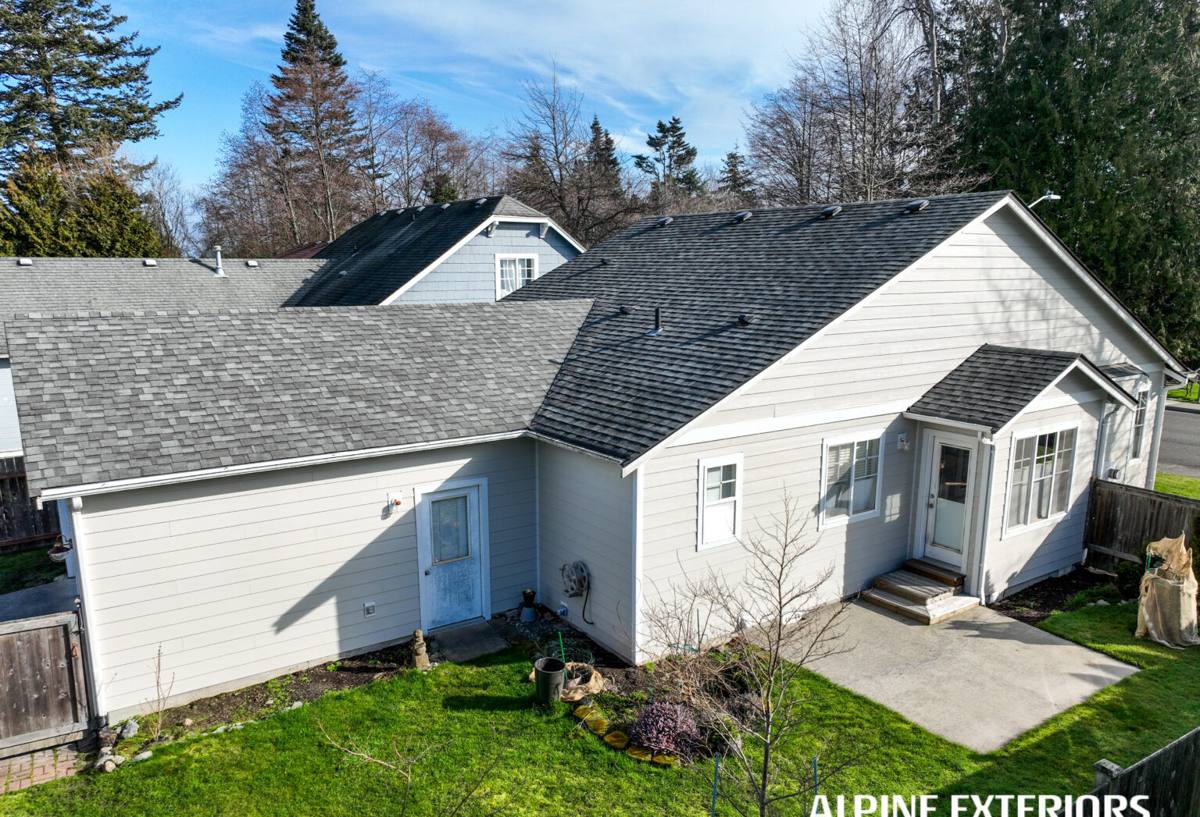
How Salt Air and Moisture Actually Damage a Roof
Corrosion of Metal Components
Standard galvanized fasteners and flashing can corrode faster near salt water than they would further inland. Over years, that corrosion can loosen shingles, compromise flashing seals around chimneys and vents, and lead to small leaks that are hard to spot until they've caused interior damage. We favor corrosion-resistant fastener and flashing materials for homes in Blaine's immediate coastal zone, which costs a little more upfront but avoids a much more expensive repair down the line.
Moss, Algae, and Trapped Moisture
Whatcom County's mild, wet climate is ideal moss and algae growth conditions, and Blaine's tree cover and coastal humidity make it worse in shaded or north-facing roof sections. Moss isn't just cosmetic — its root structure lifts shingle edges, holds moisture against the roof deck, and shortens the life of the roofing material underneath it. Left unaddressed for several seasons, moss growth can turn a routine maintenance item into a full deck replacement.
Wind-Driven Rain at Roof Edges
A lot of Blaine's leak calls trace back to the same few areas: valleys, roof-to-wall transitions, and eaves where wind pushes rain up and under the roofing material instead of letting it run off. This is a detailing problem more than a materials problem — proper underlayment, ice-and-water shield in vulnerable areas, and correctly lapped flashing solve it. A roof that looks fine from the ground can still be failing at these transition points.
Roofing Materials: What Holds Up Near the Water
There's no single "best" roofing material for every home — the right choice depends on your budget, roof pitch, and how much maintenance you want to commit to over the years. Here's how the common options compare for a coastal Whatcom County property like those in Blaine:
| Material | Typical Lifespan | Coastal Considerations |
|---|---|---|
| Architectural asphalt shingle | 25-30 years | Good value; choose algae-resistant granules and corrosion-resistant fasteners for this area |
| Standing seam metal | 40-50+ years | Excellent for shedding wind-driven rain; requires marine-grade or coated fasteners near salt air |
| Composite/synthetic shingle | 30-50 years | Resists moisture absorption well; higher material cost, low maintenance |
| Cedar shake | 20-30 years with upkeep | Traditional look but needs regular treatment against moss and rot in wet climates; higher maintenance burden here |
We'll walk through these trade-offs honestly during an estimate rather than steering every homeowner toward the same product. For most Blaine homes, an architectural shingle with algae-resistant granules and marine-rated fasteners hits the right balance of cost and durability. Homeowners who want the lowest long-term maintenance and don't mind the higher upfront cost often look at standing seam metal, especially on lower-slope sections where water sits longer.
Reading the Warning Signs Before They Become Leaks
Because Blaine's climate accelerates wear on roofing systems, catching problems early matters more here than in drier parts of the state. Common signs we look for on inspection visits include:
- Moss or algae streaking, especially on north-facing or shaded slopes
- Granule loss showing up in gutters, a sign an asphalt roof is aging past its effective lifespan
- Rust staining around flashing, vent boots, or exposed fasteners
- Curling, cracked, or lifted shingle edges near eaves and valleys
- Soft spots or sagging in the roof deck, often found near chimneys or skylights
- Water stains on interior ceilings or in the attic, particularly after a windy rain event
- Gutters pulling away from fascia or overflowing during heavy rain
None of these on their own means you need a full roof replacement. Most are catchable with a repair or a maintenance visit if addressed early — which is part of why we recommend a periodic inspection rather than waiting for a visible leak.
Beyond the Roof: Siding, Windows, and Decks for Coastal Exposure
Siding
The same wind-driven rain that stresses a roof also pushes moisture into siding seams, so proper flashing at windows, doors, and horizontal joints matters as much as the siding material itself. Fiber cement and quality vinyl both perform well in this climate when installed with correct water management behind the cladding — a rain screen gap, properly lapped house wrap, and sealed penetrations. We treat the water management layer as the real work; the visible siding is only as good as what's behind it.
Windows
Older or poorly sealed windows are a common source of drafts and moisture intrusion in coastal homes, particularly on the sides of a house that take the brunt of prevailing wind and rain. Replacement windows with proper flashing integration into the surrounding wall assembly do more for comfort and moisture control than upgrading glass alone. We also pay attention to condensation issues, which show up more in homes near the water due to higher ambient humidity.
Decks
Outdoor living spaces in Blaine face near-constant moisture exposure for much of the year, plus salt air on waterfront or near-waterfront lots. Fastener corrosion, wood rot at ledger boards, and mildew on deck surfaces are the most common issues we see. Composite decking reduces some of this maintenance burden, while quality-grade lumber decks need proper flashing at the house connection and regular sealing to hold up long-term.
Why a Local Crew Makes a Real Difference Here
A roofing or siding crew that works across Whatcom County day in and day out knows which details matter for homes near the water versus homes further inland, and which permitting or code requirements apply locally. That local knowledge shows up in small but important decisions — how much underlayment overlap to use in a wind-exposed valley, which fastener spec to call out for a waterfront property, or how to sequence a re-roof around Blaine's rainy stretches so the deck isn't left exposed longer than necessary.
It also means someone is close by if a warranty question or a storm-related issue comes up after the work is done, rather than waiting on a crew that has to travel a long distance to get back to your property.
What to Expect When You Work With Us
- An on-site inspection where we look at the roof, siding, windows, and decking as a system, not just the piece you called about
- A written estimate that explains the material options, the scope of work, and the reasoning behind our recommendation
- A clear project timeline that accounts for Whatcom County's weather patterns, so materials aren't left exposed longer than needed
- Straightforward communication throughout the project, including any unexpected findings once work begins
- A final walkthrough before we consider the job complete
Cost Factors for Blaine Exterior Projects
Every property is different, but the main variables that drive cost on roofing, siding, window, and deck projects in this area tend to be the same:
| Factor | How It Affects Cost |
|---|---|
| Roof pitch and access | Steeper or harder-to-access roofs take longer and require more safety setup |
| Material selection | Asphalt, metal, composite, and wood carry different material and labor costs |
| Existing damage or rot | Deck sheathing, siding backing, or framing repairs add cost once uncovered |
| Coastal-grade hardware | Corrosion-resistant fasteners and flashing near the water add modest upfront cost but reduce future repairs |
| Project scope | Bundling roofing with siding, windows, or a deck can reduce overall mobilization costs versus separate projects |
We provide itemized, written estimates so you can see exactly what's driving the price rather than a single lump-sum number.
A Simple Maintenance Checklist for Blaine Homeowners
- Clear gutters and downspouts at least twice a year, more often under tree cover
- Have moss and algae growth treated before it spreads across a full roof slope
- Check attic ventilation — poor airflow traps moisture and accelerates deck rot from underneath
- Inspect caulking and sealant around windows and deck ledgers annually
- Walk the exterior after major windstorms to check for lifted shingles or loose siding panels
- Schedule a professional inspection every few years, or after any significant storm
If you're noticing moss buildup, aging siding, drafty windows, or a deck that's starting to show its age, we're happy to take a look and give you a straightforward assessment of what actually needs attention versus what can wait. Reach out for a free, no-pressure estimate using the form below.