 Bellingham
 A Different Microclimate in the Trees
Sudden Valley sits in a pocket of Whatcom County that behaves differently than the rest of the Bellingham area. Tucked into forested hillsides along Lake Whatcom, homes here live under heavy tree canopy for most of the year, and that canopy changes almost everything about how a roof, a wall of siding, or a deck ages. While homes closer to Bellingham Bay deal more with wind-driven marine air, Sudden Valley's real adversary is shade — shade that holds moisture on roofing and siding long after a storm has passed, and that keeps needles, cones, and leaf litter cycling through gutters and valleys nearly year-round.
We work on homes throughout Whatcom County, and Sudden Valley is one of the areas where a generic maintenance schedule simply doesn't hold up. A roof that would be fine going three or four years between inspections in an open, sunny neighborhood can develop real moss and moisture problems in half that time under a mature fir or cedar canopy. Understanding that difference is the starting point for any honest conversation about exterior work out here.
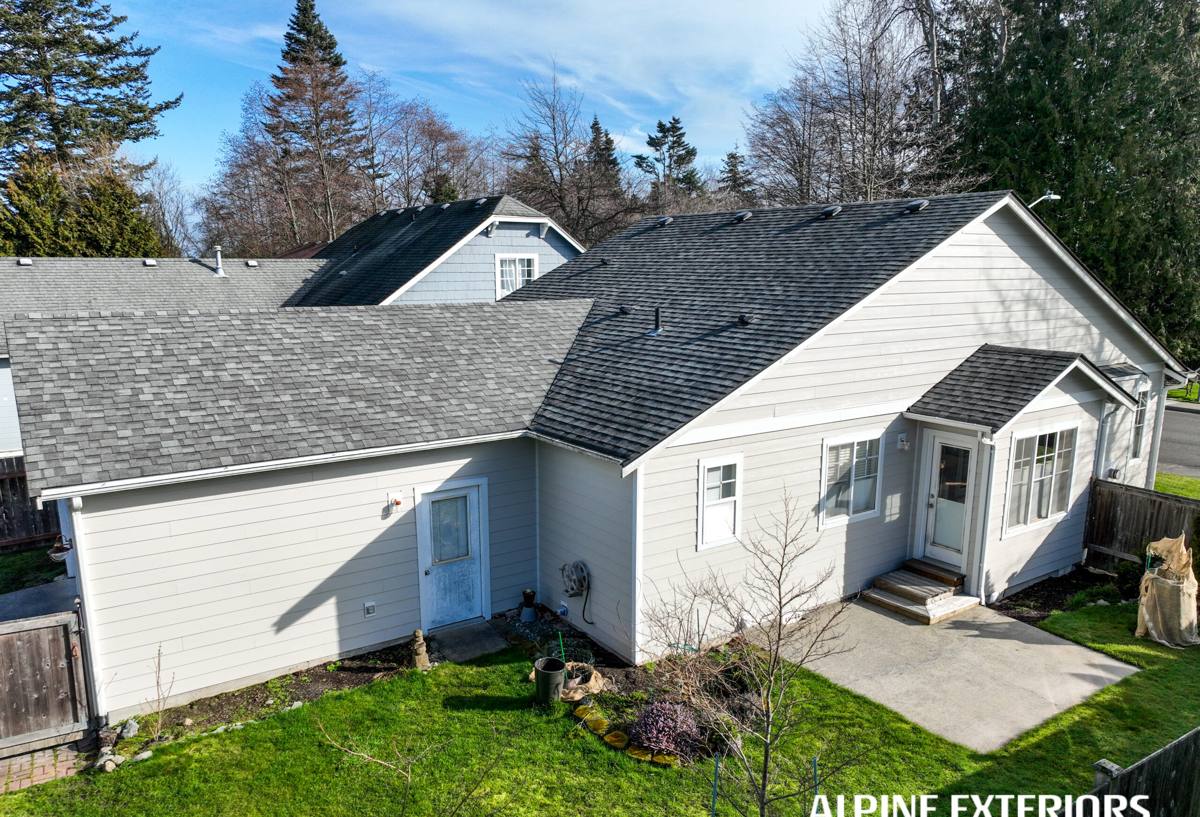
Why Wooded Lots Change the Maintenance Equation
Most Sudden Valley lots were platted into the hillside with trees left standing close to the house, which is part of what makes the neighborhood attractive to live in. It also means roofs and siding rarely get a full day of direct sun, even in summer. Wet surfaces dry slowly, organic debris collects in low-slope areas and valleys, and gutters fill faster than on an open lot.
What we see most often
- Gutters and downspouts clogged with needles and seed pods well before a typical cleaning schedule would call for it
- Moss and algae establishing on north-facing slopes and shaded valleys years before the rest of the roof shows wear
- Fascia and trim staying damp longer after rain, which accelerates rot if paint or caulking has failed
- Deck boards and stair treads holding moisture and growing slick with algae in shaded corners
- Standing debris on lower-pitch roof sections that traps water against shingles or membrane
None of this means wooded lots are a bad place to build or own a home — it just means the maintenance rhythm needs to match the site, not a one-size-fits-all calendar.
Moss, Algae, and Roof Life in the Shade
Moss is the single biggest recurring issue we're asked about in Sudden Valley. It's not just cosmetic. Moss holds water against the roof surface, works its way under shingle tabs as it grows, and can lift edges enough to let wind-driven rain get underneath. On cedar shake it's worse, because the moisture gets trapped directly against wood fiber.
Our approach to moss
We treat moss removal as maintenance, not a one-time fix. A proper visit means hand-removing moss (never pressure-washing shingles, which strips granules and shortens roof life), treating the surface with a moss-specific treatment, and — where it makes sense — installing zinc or copper control strips near the ridge so rainwater carries a mild anti-moss mineral wash down the roof plane on future rains. That last step doesn't eliminate moss on a heavily shaded roof, but it slows regrowth meaningfully on the areas below the strip.
For roofs that are already showing granule loss, soft spots, or moss that's established itself for multiple seasons, treatment alone isn't enough — that's a conversation about targeted repair or, eventually, replacement, and we'll always tell you honestly which situation you're in rather than upselling a repair that won't last.
Siding and Trim in a Damp, Shaded Environment
Siding on a shaded Sudden Valley lot deals with the same slow-drying problem as the roof above it. Fiber cement holds up well here because it doesn't absorb moisture the way wood does and it resists the rot that shows up on old cedar siding and trim that's lost its paint film. Vinyl performs reasonably well too, though we pay close attention to ventilation gaps behind it in heavily shaded walls so trapped moisture has somewhere to go.
Where we see the most damage is on painted wood trim — fascia boards, window trim, corner boards — where a failed paint or caulk joint lets water in and the shade never lets it fully dry back out. That's a slow, quiet failure that can go unnoticed for a couple of years before soft wood becomes obvious. Regular caulk and paint inspection on the shaded sides of a home is one of the cheapest things a Sudden Valley homeowner can do to avoid a bigger trim or sheathing repair later.
Common siding issues by exposure
| Wall Exposure | Typical Issue | What Helps |
|---|---|---|
| Deep shade / north side | Slow drying, moss and algae growth on surface | Fiber cement or well-ventilated vinyl, periodic wash-downs |
| Near mature trees | Debris buildup at trim and flashing lines | Trim clearance from branches, regular debris clearing |
| Lake-facing / open pockets | Wind-driven rain intrusion at joints | Properly lapped flashing and sealed joints, inspected yearly |
Windows: Condensation and Heat Loss Under Tree Cover
Homes under heavy canopy tend to run cooler and more humid inside than the same house on an open lot, especially in shoulder seasons. Older single-pane or early double-pane windows in Sudden Valley often show more interior condensation than you'd expect, simply because the home doesn't get the solar warming that helps dry out indoor air on a sunnier site. That condensation, over years, contributes to sill and frame rot on original wood-framed windows.
When we replace windows out here, we're usually talking with homeowners about vinyl or fiberglass frames with good seals and appropriate glass packages for a shaded, cooler home — the goal is cutting drafts and condensation, not chasing maximum solar gain the way we might on a south-facing open lot elsewhere in the county. We'll walk the house with you and point out which openings are actually losing you comfort and money before recommending a full replacement scope.
Decks: Built for Wet Wood, Not Just Wet Weather
Decks in Sudden Valley take a specific kind of abuse: shade keeps them damp, tree debris collects between boards, and lake-adjacent lots often mean decks are used and walked on with wet feet more than the average yard deck. Wood decking needs more frequent sealing out here than the same product would on an open, sunny lot — moisture that would normally evaporate off in a day can sit for several days under a canopy.
Deck material trade-offs for shaded, wooded lots
| Material | Maintenance in Shade | Longevity Notes |
|---|---|---|
| Pressure-treated wood | Needs regular cleaning and re-sealing; algae-prone in deep shade | Lower upfront cost, shorter service life if maintenance lapses |
| Cedar | Attractive but needs consistent sealing; softens faster when chronically damp | Good appearance, higher upkeep than composite |
| Composite decking | Low maintenance, but still needs debris cleared from grooves and gaps | Higher upfront cost, much less sealing/staining upkeep over time |
Whatever material a deck is built from, the framing and ledger connections matter as much as the decking itself in a wet, shaded environment — that's where rot does the real structural damage, usually out of sight until a board starts to feel spongy underfoot.
Working in Sudden Valley: Access, Terrain, and Respect for the Community
Sudden Valley is a private community with its own road network and its own rhythm, and that matters for how a job actually gets done. Steep driveways, tree-lined access roads, and tight turnarounds mean not every crew or every truck handles the terrain the same way. A crew that's worked the neighborhood before knows how to stage material, protect landscaping on a sloped lot, and get equipment in and out without turning a two-day roofing job into a headache for you or your neighbors.
It also matters for diagnosis. A crew that's used to open, sunny Bellingham neighborhoods can misjudge how much moss or moisture damage is normal wear versus something that needs attention now, simply because they don't see shaded, wooded lots as often. Local, repeat experience in Sudden Valley specifically — not just Whatcom County broadly — is part of what makes an inspection accurate instead of generic.
A Practical Maintenance Checklist for Sudden Valley Homes
- Clear gutters and valleys at least twice a year — more often under heavy fir or cedar cover
- Have shaded roof slopes checked for moss growth annually, even if the sunnier slopes look fine
- Keep tree limbs trimmed back from the roofline to reduce debris and improve drying time
- Inspect and refresh caulking and paint on trim before it fails, not after wood is already soft
- Clear debris from between deck boards regularly and re-seal wood decking on a shorter cycle than an open-lot home would need
- Check window sills for condensation staining each fall as heating season starts
None of these are large jobs on their own, but skipping them on a shaded, wooded lot compounds faster than most homeowners expect — a missed year of gutter cleaning here can mean a valley leak that a sunnier lot wouldn't have developed in the same timeframe.
Let's Take a Look at Your Property
Every lot in Sudden Valley carries its own mix of shade, slope, and tree cover, so there's no substitute for actually walking your roof, siding, windows, or deck before recommending a plan. If you're noticing moss buildup, damp trim, drafty windows, or a deck that never seems to fully dry out, we're happy to come take a look. Reach out for a free, no-pressure estimate using the form below.