 Bellingham
 Exterior Work Built for Ferndale's Climate
Ferndale sits close enough to the water and low-lying farmland that homes here take on a specific mix of weather stress: salt-tinged marine air drifting in off the bay, long stretches of driving rain through fall and winter, and a moss and algae season that can run eight months out of the year in shaded, north-facing spots. None of that is dramatic on its own, but stacked together year after year, it wears down roofing, siding, and trim faster than homeowners moving from drier climates tend to expect.
We work throughout Whatcom County, and Ferndale's mix of older farmhouses, mid-century ranches, and newer subdivision builds gives us a good cross-section of what holds up out here and what doesn't. This page walks through what we typically see on Ferndale homes and how our roofing, siding, window, and deck work is built around those conditions.
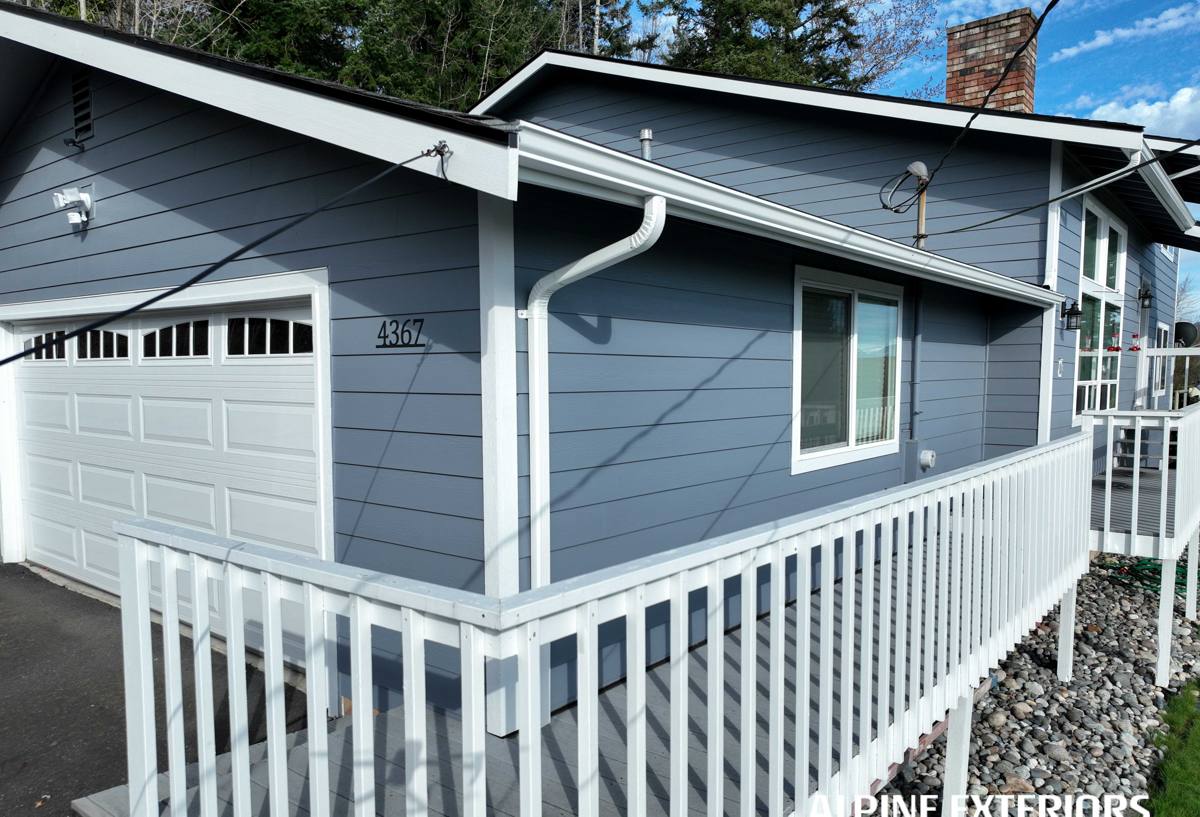
What Salt Air and Moisture Do to a Roof and Exterior
Salt Air's Slow Corrosion
You don't need to be right on the waterfront to feel the effects of salt air. Fasteners, flashing, gutter hangers, and any exposed metal on a roof or siding system corrode faster in a marine environment than they would further inland. Cheaper galvanized fasteners can start showing rust streaks within a few years; that's why we favor stainless or heavily coated fasteners on exterior work in this area, even when it costs a little more up front.
Driving Rain and Wind-Driven Moisture
Whatcom County storms often come with real wind behind them, which pushes rain sideways into siding laps, window flanges, and roof penetrations that would stay dry in a calmer climate. That's a water-management problem more than a "thicker material" problem — the fix is proper flashing details, correct lap sequencing, and house wrap or weather-resistive barriers installed the way they're designed to work, not just installed.
Moss, Algae, and a Long Growing Season
Shaded roof slopes, north sides of houses, and anything tucked under overhanging trees will grow moss here almost year-round. Left unchecked, moss holds moisture against roofing material, lifts shingle edges, and accelerates granule loss on asphalt roofs. It's cosmetic at first and a real problem later.
Roofing in Ferndale
Most of the roofs we work on in Ferndale are asphalt composition shingle, with a growing number of standing-seam metal roofs on newer builds and remodels. Both have a place here — the right choice depends on the home's roof pitch, shading, budget, and how long the owner plans to stay in the house.
- Roof inspections that specifically check for moss growth, granule loss, and flashing condition around chimneys, vents, and valleys
- Full tear-off and re-roof for homes at or past the end of their shingle life
- Moss treatment and removal, done carefully to avoid damaging the shingle mat underneath
- Metal roofing installation for homeowners who want a longer-interval, low-maintenance option
- Flashing repair and replacement around roof penetrations, which is where the majority of leaks actually start
On a shaded lot, we'll often talk through zinc or copper strip options near the ridge, which help suppress moss regrowth over time without chemical treatment every year. It's not a miracle fix, but it reduces how often the roof needs attention.
Asphalt vs. Metal Roofing for This Area
| Factor | Asphalt Shingle | Standing-Seam Metal |
|---|---|---|
| Upfront cost | Lower | Higher |
| Typical lifespan (local conditions) | 18-25 years | 40-60+ years |
| Moss resistance | Lower — textured surface holds debris and moisture | Higher — smooth surface sheds moisture and moss more easily |
| Performance in driving rain/wind | Good with proper installation | Very good; fewer seams and laps |
| Salt air / fastener exposure | Moderate — depends on flashing and fastener quality | Good with coated or stainless fasteners and panels |
| Maintenance | Periodic moss/debris cleaning recommended | Minimal, but not maintenance-free |
Siding for Ferndale Homes
Siding takes the brunt of wind-driven rain, so the details around windows, corners, and the bottom few feet of wall matter as much as the siding material itself. We install and repair fiber cement, engineered wood, and traditional wood siding, and we're honest about the trade-offs of each in a wet, salt-influenced climate.
Fiber cement has become a common choice out here because it holds paint well, resists moisture-driven rot, and doesn't feed insects the way some wood products can. It's heavier to work with and less forgiving of installation shortcuts, which is exactly why installation quality matters more than which brand of fiber cement gets used. We also still repair and re-side homes with wood or engineered wood siding where that's the right fit for the house's age and style — the goal is matching the material to the home, not pushing one product on every job.
Common Siding Issues We See in Ferndale
- Rot at the bottom courses of siding near grade, especially where sprinklers or downspouts discharge nearby
- Caulk failure and gapping around window and door trim after a few winters of expansion and contraction
- Paint failure on the weather-facing (typically west and southwest) sides of a house
- Moisture staining or soft spots where old flashing was skipped or under-lapped
Windows: Sealing Out Wind-Driven Rain
Older single-pane or early dual-pane windows are common in Ferndale's older housing stock, and beyond the energy loss, they're often the weak point in a home's water-management system. A window that isn't flashed correctly will let wind-driven rain track behind the trim and into the wall cavity, and that damage is usually invisible until siding or interior drywall is opened up.
When we replace windows, we treat the flashing and integration with the weather-resistive barrier as the most important part of the job — the window unit itself is only as good as the install around it. We work with vinyl and fiberglass window lines suited to this climate, sized and detailed to the specific rough openings on the house rather than a one-size approach.
Decks in a Wet Climate
A deck in Whatcom County spends a lot of the year wet, which means ledger board attachment, joist protection, and drainage underneath the structure matter more here than in drier parts of the country. We build and repair decks with an eye toward keeping water moving off and away from structural wood, using proper flashing tape at the ledger, corrosion-resistant hardware, and decking materials suited to a marine, high-moisture environment.
Composite decking has become popular for good reason — it doesn't need annual staining and handles moisture cycling well — but wood decking, properly maintained, still performs fine for owners who prefer that look and are willing to keep up with sealing on a normal schedule.
Cost Factors for Ferndale Exterior Projects
Every home is different, but a few things consistently move the price on roofing, siding, window, and deck projects in this area:
| Factor | Why It Matters Locally |
|---|---|
| Roof pitch and access | Steeper or harder-to-access roofs take longer and require more safety setup |
| Existing moisture damage | Rot found once siding or roofing is opened up adds repair scope |
| Material choice | Metal roofing and fiber cement siding cost more upfront but reduce long-term maintenance |
| Number of penetrations/window openings | More flashing details mean more labor, but also more leak-prevention points done right |
| Time of year | Scheduling around Whatcom County's wetter months affects sequencing on tear-off work |
Why a Local Crew Matters Here
A contractor who mostly works drier inland climates can still do competent work, but they won't always think to spec stainless fasteners over standard galvanized, or know which sides of a Ferndale house take the worst of the weather, or recognize moss buildup as an early warning sign rather than a cosmetic issue. Working across Whatcom County day in and day out means we see the same failure patterns repeatedly — and we build our roofing, siding, window, and deck work around preventing them, not just responding after the fact.
We're also familiar with the practical side of working in this area: permitting expectations, typical HOA requirements in some Ferndale subdivisions, and scheduling around the wetter months so tear-off and open-wall work isn't left exposed longer than necessary.
Get a Free, No-Pressure Estimate
If you're dealing with moss buildup, a leak you can't pin down, siding that's showing its age, drafty windows, or a deck that needs attention, we're happy to take a look and give you a straightforward read on what's going on and what it would take to fix it. There's no pressure and no obligation — just an honest assessment from a crew that knows what Ferndale homes are up against. Use the form below to request your free estimate.