 Bellingham
 Roofing in Barkley: A Climate That Doesn't Let Up
Barkley sits inside Bellingham, in Whatcom County, close enough to Bellingham Bay to catch salt-laden air on windy days and far enough into the Pacific Northwest's wet belt to see rain move sideways more often than most homeowners would like. That combination is hard on a roof. It's not one dramatic storm that causes the damage — it's the accumulation of moisture, wind-driven rain, and shade that never quite fully dries between weather systems.
Homes in this part of Bellingham tend to have mature tree cover nearby, which is part of what makes the neighborhood pleasant to live in, but it also means roofs stay shaded longer through the day and hold moisture longer than a roof out in the open. That's the root of most of the moss, algae, and slow-rot problems we see when we're called out to a Barkley property.
What "Driving Rain" Actually Does
Wind-driven rain doesn't just fall straight down — it gets pushed sideways under shingle tabs, into flashing laps, and around vents and pipe boots that were sealed correctly for calm weather but weren't detailed for wind pressure. Over years, that's how small leaks start at penetrations rather than in the open field of the roof. It's also why flashing detail and underlayment quality matter as much as the shingle or metal on top.
Moss, Algae, and the Long Wet Season
Whatcom County's moss season runs long compared to drier parts of the state — shaded, north-facing roof slopes can stay damp for weeks at a stretch through fall, winter, and much of spring. Moss doesn't just look bad. As it establishes itself, it lifts shingle edges, holds water against the roofing material, and accelerates granule loss on asphalt shingles. On cedar or older wood roofing, it can hold enough moisture to promote rot underneath.
The fix isn't a one-time power wash. Aggressive pressure washing can strip granules and shorten a shingle roof's life faster than the moss would on its own. We treat moss and algae with methods matched to the roofing material, and where a roof's design allows it, we look at whether better attic ventilation or targeted tree trimming (on the homeowner's side, not ours) would reduce how long the roof stays wet in the first place.
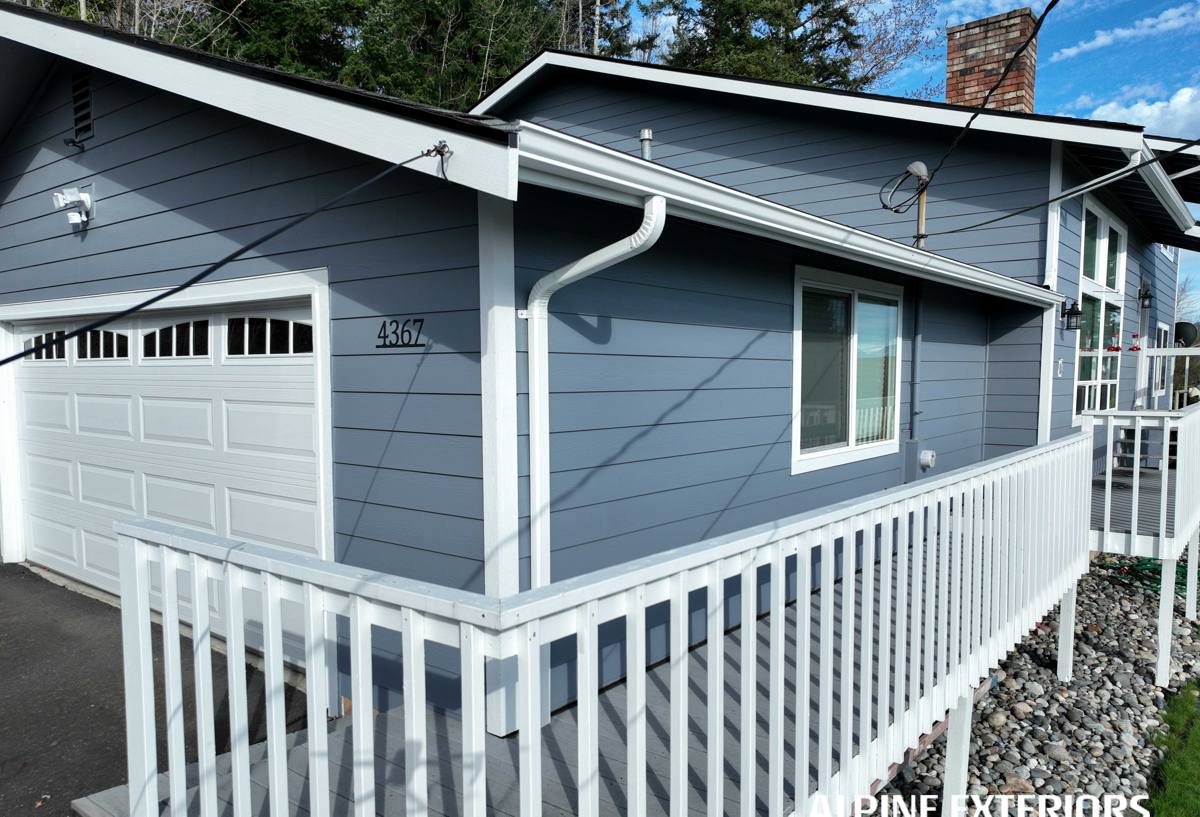
Siding, Windows, and Decks Face the Same Climate
Roofing gets the most attention, but the same salt air and sustained moisture affect every other exterior surface on a Barkley home.
Siding
Wood and fiber cement siding both need paint or stain systems that can handle repeated wet-dry cycling without failing at the seams. Caulk joints and butt seams are usually where we find the first signs of moisture intrusion — small enough that a homeowner won't notice from the ground, but large enough to let water behind the siding over a season or two.
Windows
Older single-pane or early-generation dual-pane windows in this climate often show fogging between panes (a sign the seal has failed) or drafts around the frame where old caulking and flashing have given out. Replacement windows installed with proper flashing integration into the siding system are one of the more reliable ways to stop a recurring leak point.
Decks
Uncovered decks take the brunt of both rain and UV cycling. Ledger board connections — where the deck attaches to the house — are the single most common place we find hidden rot, because that's where water collects and has the least chance to dry.
Roofing Materials: What Holds Up Locally
There's no single "best" roofing material for Bellingham — the right choice depends on the home's roof pitch, budget, and how much shade the roof sits under. Here's how the common options compare for a marine, moss-prone climate like Barkley's:
| Material | Moss/Moisture Resistance | Maintenance | Typical Lifespan |
|---|---|---|---|
| Architectural asphalt shingle | Good with proper ventilation; algae-resistant granules help | Periodic moss removal, gutter care | 25-30 years |
| Standing seam metal | Very good — sheds water fast, little surface for moss to grip | Low; occasional fastener/seam check | 40-50+ years |
| Cedar shake | Requires diligent upkeep in shaded, wet areas | Regular treatment and moss control | 20-25 years with upkeep |
| Composite/synthetic shake | Good — engineered to resist moisture absorption | Low to moderate | 30-50 years |
We don't push one product on every home. A shaded, low-pitch roof under fir or cedar trees is a poor candidate for a high-maintenance material regardless of how it looks, and we'll say so plainly during an inspection rather than let a homeowner find out the hard way in year four.
Why a Local Crew Matters Here
A crew that works across Whatcom County day in and day out knows which details actually matter in this climate versus what's written in a generic install manual written for a drier region. That shows up in small decisions: how much ice-and-water shield underlayment goes around valleys and penetrations, how flashing gets lapped at a wall-to-roof transition, how much ventilation an attic needs to keep the underside of the roof deck dry through a wet winter.
It also matters for accountability. A crew based in the area is going to be reachable next season if a question comes up, and understands that a roof or siding job here isn't finished until it's been through a real Whatcom County winter — not just a dry install day.
What to Expect From an Inspection and Estimate
A straightforward process helps homeowners make a clear-eyed decision instead of a rushed one:
- A visual inspection of the roof, siding, windows, and any deck structures, including attic access where available to check for moisture, ventilation issues, or daylight at penetrations.
- Photos and notes on specific problem areas — flashing, valleys, moss buildup, caulk failure, soft decking — rather than a vague "needs work" summary.
- A written estimate that separates必要 repairs from optional upgrades, so a homeowner isn't guessing which line items are urgent.
- An honest answer on repair-versus-replace, based on the age and condition of the material, not on which option is more profitable to sell.
Cost Factors Worth Understanding
Exact pricing depends on roof size, pitch, access, and material choice, but the factors that move a bid up or down are consistent:
| Factor | Why It Matters |
|---|---|
| Roof pitch and access | Steeper or harder-to-reach roofs take longer and require more safety equipment |
| Layers of existing roofing | Tear-off of multiple old layers adds labor and disposal cost |
| Decking condition | Rotted sheathing found during tear-off needs replacement before new roofing goes on |
| Flashing and penetration count | More chimneys, skylights, and vents mean more detail work |
| Material choice | Metal and composite products cost more upfront but less in long-term maintenance |
We'd rather flag a likely surprise — like decking that probably needs replacing — during the estimate than discover it mid-tear-off and have to change the number on the fly.
A Homeowner's Seasonal Checklist
Between professional inspections, a few habits catch problems early:
- Clear gutters and downspouts before the fall rains settle in, so water isn't backing up under roof edges.
- Look for moss or dark streaking on shaded roof slopes each spring, before it has a chance to establish through another wet season.
- Check caulk lines around windows and siding seams once a year for cracking or gaps.
- Walk the deck and press on the ledger board area and any spots that feel soft underfoot.
- Keep tree branches trimmed back from the roofline to reduce shade and debris buildup.
- After any windstorm, do a visual check from the ground for lifted shingles, dented flashing, or debris on the roof.
One Crew for the Whole Exterior
Because roofing, siding, windows, and decks all respond to the same weather in the same climate, it helps to have one crew that understands how they interact — a roof leak that shows up as a stain on interior siding trim, or a failed window seal that's actually letting water track down into a wall cavity. Handling these as one connected exterior system, rather than four separate unrelated projects, tends to catch problems that a single-trade contractor would miss.
If you're in Barkley and dealing with moss buildup, a slow leak, aging siding, or a deck that's starting to feel soft in places, we're happy to come take a look. The estimate is free, there's no pressure to sign anything on the spot, and you'll get a plain-English rundown of what we actually see — you can fill out the form below to get started.