 Bellingham
 Why Board & Batten Needs to Be Built for This Climate, Not Just This Look
Board and batten has become one of the most requested siding styles in Bellingham neighborhoods like Sunnyland, and it's easy to see why — the vertical lines and crisp shadow reveal give a home a clean, modern-farmhouse look that photographs well and holds up visually for decades when it's done right. But board and batten is also one of the least forgiving siding styles if it's installed by someone who treats it as a cosmetic choice instead of a system. Every vertical seam, every batten strip, every joint where a board meets a window or the foundation is a place water can find a way in — and in Whatcom County, water has a lot of chances to try.
Sunnyland sits close enough to Bellingham Bay and the Cascade foothills to get the full package: salt-laden air moving in off the water, long stretches of driving rain that hits walls at an angle instead of falling straight down, and a moss and algae season that can run eight or nine months out of the year in shaded, north-facing spots. A board and batten wall system has to be detailed to shed that water and resist that biological growth, not just look good in dry weather.
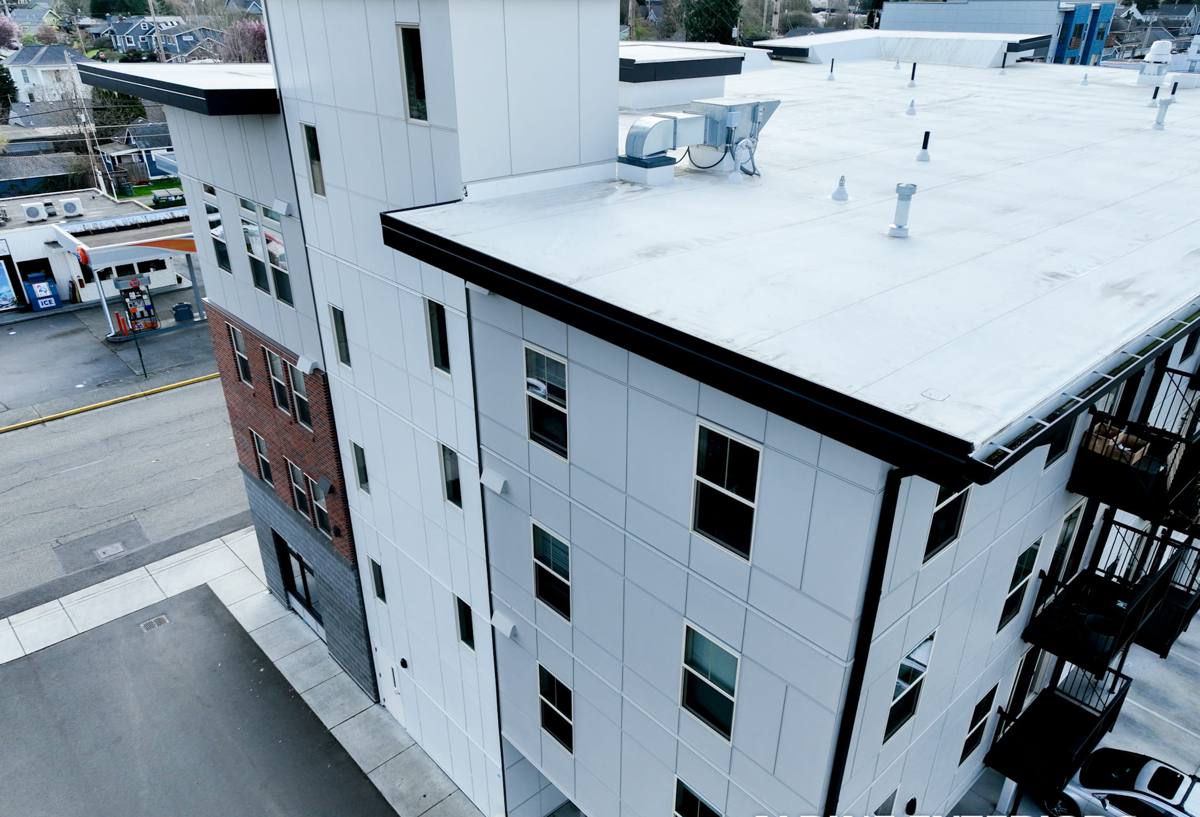
What Sunnyland's Housing Stock Means for a Board & Batten Job
Like a lot of established Bellingham neighborhoods, Sunnyland has a mix of home ages and styles — older houses with layers of past siding work, and newer builds or additions where board and batten is being specified as a design feature from the start. That mix matters for how we scope a job. A retrofit over an older wall assembly usually means opening things up to check what's underneath: old sheathing condition, whether there's any existing moisture damage, and whether the wall has any drainage plane at all. New construction or a full tear-off gives us a cleaner slate to build the assembly correctly from the studs out.
We don't assume either scenario going in. Every board and batten quote in this area starts with an honest look at the existing wall, not a number pulled from a square-footage chart.
Common Starting Points We See
- Older wood or engineered wood siding that's failed at seams or absorbed moisture over time
- Vinyl siding installed over original wood that's hiding condition issues underneath
- Additions or accent walls where board and batten is being added as a feature, not a full re-side
- New construction where the framing is exposed and the drainage plane can be built in from day one
The Material Question: Why We Only Install James Hardie for Board & Batten
Board and batten can be built from several materials — cedar, engineered wood like LP SmartSide, primed spruce, vinyl panel systems, and fiber cement. We've made a deliberate decision to install James Hardie fiber cement exclusively, and it's worth explaining why rather than just stating it.
Cedar and primed spruce look beautiful new, and we understand the appeal — but real wood board and batten in this climate needs consistent recoating, careful caulk maintenance at every seam, and vigilant moisture management, or it starts cupping, splitting, and holding moisture right where battens meet the base boards. Engineered wood products like LP SmartSide use wood strand cores that are more moisture-resistant than solid wood but are still an organic substrate at the core — edge sealing and installation precision matter enormously, and any breach in that outer coating gives moisture a path into the strand core. Vinyl board and batten systems are low-maintenance and budget-friendly, but they're thin, they flex and can crack or warp in temperature swings, the seams are more visible up close, and they don't offer the crisp, deep-shadow-line profile that makes board and batten worth doing in the first place.
James Hardie fiber cement solves the core problem: it's non-combustible, it doesn't absorb moisture into a wood substrate, it holds paint and factory finish far longer than wood, and it's manufactured with HZ5 product lines specifically engineered for wet, cold, marine climates like ours. The ColorPlus factory finish means the color is baked on before it ever reaches Sunnyland, not brushed on in variable weather during install — and it carries a real transferable warranty backing that finish. For a siding style built almost entirely out of exposed seams and joints, starting with a material that doesn't swell, rot, or delay is the difference between a wall that looks good for two years and one that looks good for twenty.
What a Correctly Installed Board & Batten Wall Actually Involves
Board and batten is deceptively simple-looking, which is exactly why it gets rushed on a lot of jobs. A correct installation in a climate like Whatcom County's has several non-negotiable pieces:
The Details That Actually Matter
- A drainage plane and rain screen gap behind the panels, so any water that does get past the outer surface has somewhere to drain and dry instead of sitting against sheathing
- Proper flashing at every window, door, and horizontal transition — this is where the majority of siding leaks actually originate, not through the field of the wall
- Correct fastener pattern and spacing per the Hardie installation specification, so panels aren't over-fastened, under-fastened, or fastened in a way that traps moisture
- Batten spacing and fastening that allows for material movement without cracking caulk joints every season
- Bottom clearance from grade, decks, and roof lines so splashback and standing water don't sit against the base of the wall
Skipping any one of these doesn't usually show up as a problem in year one. It shows up in year four or five, as a stained board, a soft spot at a window corner, or moss taking hold in a joint that never dries out between storms.
Our Process, Start to Finish
| Step | What Happens |
|---|---|
| Site walk and assessment | We look at the existing wall condition, drainage, sun/shade exposure, and any trouble spots specific to the home |
| Written estimate | Clear scope, material, and pricing — no vague allowances |
| Tear-off or prep | Removal of failing material and inspection of sheathing before anything new goes up |
| Weather barrier and rain screen | House wrap and furring installed to spec before a single Hardie panel goes on |
| Panel and batten installation | Installed to Hardie's fastening and spacing requirements, with flashing detailed at every penetration |
| Final walk-through | We review the finished work with the homeowner before calling the job done |
Material Comparison for Board & Batten Projects
| Material | Moisture Behavior | Maintenance Load | Longevity in This Climate |
|---|---|---|---|
| James Hardie fiber cement | Non-organic substrate, engineered HZ5 for wet climates | Low — factory finish, occasional wash | Decades with proper install |
| Cedar / primed spruce | Absorbs moisture at cut edges and seams | High — recoating and caulk upkeep | Shorter without diligent upkeep |
| Engineered wood (LP SmartSide) | Wood-strand core, sensitive to coating breaches | Moderate — edge sealing critical | Depends heavily on installation precision |
| Vinyl panel | Doesn't absorb, but flexes and can crack/warp | Low | Shorter aesthetic life, visible seams |
Living With Whatcom County's Moss Season
Bellingham's long wet season means shaded walls — especially north- and east-facing ones common in tree-lined Sunnyland yards — stay damp for extended stretches. That's exactly the environment moss and algae favor. A properly built rain screen behind Hardie panels lets walls actually dry out between storms instead of staying saturated, which is the single biggest factor in whether a wall stays clean or turns green. Homeowners can help by keeping nearby shrubs trimmed back from the wall and rinsing off accumulated debris once or twice a year — but the wall assembly itself is what determines whether that's a minor task or a losing battle.
What to Ask Before Hiring Anyone for Board & Batten Work
- Will there be a rain screen gap behind the panels, or are they going straight over the house wrap?
- What's the fastener pattern and spacing, and is it Hardie's documented spec?
- How is flashing handled at windows, doors, and horizontal siding transitions?
- What's the clearance from grade, roofline, and decks at the base of the wall?
- Is the crew certified or specifically experienced with James Hardie fiber cement, not just siding in general?
- Is there a written warranty covering both the material and the labor?
Why It Matters That We Already Work in Sunnyland
Board and batten installation isn't generic — the right detailing changes based on sun exposure, wind-driven rain direction, tree cover, and how a specific street sits relative to the water. A crew that's already worked on homes in and around Sunnyland has a working sense of which walls take the worst weather, which yards hold moisture longest, and what a Bellingham winter actually does to an exterior over a few seasons — not just what a spec sheet says it should do. That local pattern recognition shows up in small decisions on install day that a spec sheet alone won't cover.
If you're weighing board and batten for a home in Sunnyland, we're glad to walk the property, look at what you're working with, and give you a straight answer on what it would take to do it right — no pressure, no inflated scope. Reach out for a free estimate using the form below.