 Bellingham
 Roofing and Exteriors in Bellingham's Happy Valley Neighborhood
Happy Valley is one of Bellingham's older, well-established residential neighborhoods, sitting close enough to Bellingham Bay that homes here catch the same weather pattern the whole city deals with: wet, marine air moving in off the water almost year-round. If you own a home in this part of Bellingham, you already know the roof, siding, and trim take a beating that homes further inland simply don't. We work on houses in this neighborhood regularly, and the patterns repeat — moss lines on the north-facing roof slope, soft trim boards near ground level, and windows that have started fogging between the panes after a couple decades of Pacific Northwest weather.
This page covers what we actually see on Happy Valley homes, how our roofing, siding, window, and deck work is built around Whatcom County's climate, and what a realistic maintenance and replacement timeline looks like here. Nothing below is a sales pitch dressed up as advice — it's the same information we'd give a neighbor.
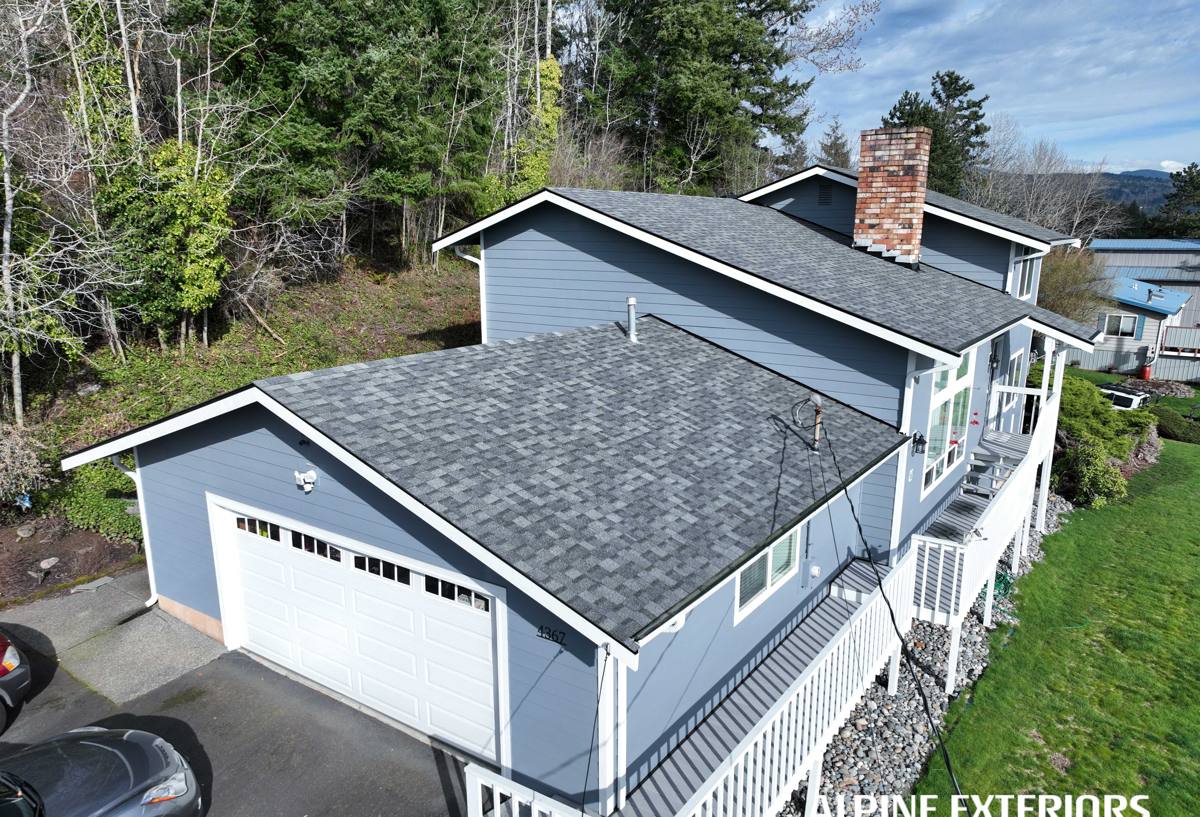
What Bellingham's Climate Does to a Roof Over Time
Three things drive most of the roofing problems we see in this part of Whatcom County: near-constant moisture, salt-tinged coastal air, and a moss and algae season that runs far longer than most homeowners expect.
Driving Rain and Wind-Driven Water
Bellingham doesn't just get rain — it gets rain pushed sideways by wind coming off the Strait of Georgia and Bellingham Bay. That matters for roofing because wind-driven rain finds its way under shingles, around flashing, and into valleys that a calmer climate would never stress-test. Flashing detail work — around chimneys, skylights, dormers, and roof-to-wall transitions — is where we spend a disproportionate amount of our attention on Bellingham roofs, because it's where poor original installation shows up first as a leak, often years later.
Salt Air and Coastal Exposure
Homes closer to the water deal with airborne salt that accelerates corrosion on exposed metal — fasteners, flashing, gutter hardware, and any exposed metal roofing components. Over years, that corrosion can loosen fastener grip and cause premature rust staining even on newer materials if lower-grade hardware was used. It's a slow process, not a dramatic one, which is exactly why it gets missed until a roof is older and the damage is already done.
The Long Moss and Algae Season
Whatcom County's combination of shade, moisture, and mild temperatures gives moss and algae an unusually long growing window compared to drier climates — realistically much of the year, not just a "spring problem." Moss holds moisture against roofing material, works its way under shingle edges as it grows, and can lift shingle tabs enough to let water in during heavy rain. Algae staining is mostly cosmetic, but heavy moss growth is a legitimate structural concern if it's left unaddressed for multiple seasons.
Roofing Materials: What Holds Up in This Climate
There's no single "best" roofing material for every home — it depends on your roof's pitch, sun exposure, budget, and how much maintenance you want to take on. Here's how the common options compare for a Bellingham-area home specifically.
| Material | Typical Lifespan Here | Moss/Algae Resistance | Maintenance Load |
|---|---|---|---|
| Asphalt composition shingle | 20–30 years | Moderate — improves with algae-resistant granules | Periodic moss removal recommended |
| Metal roofing (standing seam) | 40–50+ years | High — moss struggles to establish on smooth metal | Low, but fastener/sealant checks over time |
| Cedar shake | 20–30 years with upkeep | Low without treatment — needs regular care | High — regular treatment and moss control |
| Synthetic/composite shingle | 30–50 years | High — engineered to resist moisture uptake | Low to moderate |
For most Happy Valley homes, we lean toward algae-resistant asphalt composition shingles or metal roofing as the practical middle ground — good performance against this climate without asking a homeowner to commit to heavy annual upkeep. Cedar shake has real curb appeal and shows up on a number of older homes in the neighborhood, but we'll always be upfront that it demands more attention here than it would in a drier region, and we frame that as a maintenance trade-off, not a defect in the material itself.
Signs a Bellingham Roof Needs Attention
Most roof failures we see weren't sudden — they were visible for a year or two before anyone called about them. Worth checking for on your own roof, or having us check during a free inspection:
- Moss buildup thicker than about a quarter-inch, especially on north-facing or shaded slopes
- Dark streaking or staining that doesn't wash off with normal rain
- Granules collecting in gutters or at downspout outlets (a sign of shingle wear)
- Curling, cupping, or lifted shingle edges, particularly after a windy winter
- Rust staining around metal flashing, vents, or fasteners
- Soft or discolored ceiling drywall, especially near chimneys, skylights, or exterior walls
- Daylight visible through the roof deck from inside an attic space
- Gutters pulling away from fascia boards or overflowing during heavy rain
Moss and Gutter Maintenance: What Actually Helps
Zinc or copper control strips near the ridge can reduce moss regrowth over time as rain washes trace metal down the roof slope — it's a reasonable long-term supplement, not a substitute for periodic cleaning. Physical moss removal should be done carefully; aggressive scraping or pressure washing can strip granules and shorten a shingle roof's life faster than the moss itself would have. Gutters matter more here than in drier climates too — with the volume of rain Bellingham gets, a clogged or undersized gutter system backs water up under the roof edge and into fascia boards, which is one of the more common rot issues we find on older homes in this area.
Siding, Windows, and Decks: Same Climate, Same Logic
Roofing doesn't fail in isolation — the same moisture and salt-air exposure that wears down a roof works on the rest of the exterior at the same time, which is why we handle siding, windows, and decks alongside roofing rather than treating them as separate trades.
Siding
Wood and older fiber-cement siding on shaded, moisture-prone walls are where we most often find soft spots, especially near ground level and around window trim where water tends to collect. Proper flashing and drainage gaps behind siding matter as much as the siding material itself — a well-installed budget product will outlast a premium product installed without attention to water management.
Windows
Older single-pane or early double-pane windows in this climate often show fogging between panes (a sign the seal has failed) or drafts around frames that have shifted slightly with years of moisture cycling. Replacement windows with modern seals and proper flashing integration handle wind-driven rain considerably better than what was standard installation practice a few decades ago.
Decks
Uncovered decks take the most direct hit from Bellingham's wet season. Ledger board connections, joist tops, and any spot where two pieces of lumber meet without adequate drainage are the first places we check on an aging deck, since trapped moisture there causes rot long before the visible decking boards show damage.
A Realistic Exterior Maintenance Timeline
Every home is different, but this is a reasonable baseline for what we'd suggest checking and roughly how often, for a home in this climate:
| Task | Suggested Frequency | Why |
|---|---|---|
| Roof visual inspection | Annually, or after major storms | Catch flashing and moss issues before they become leaks |
| Gutter cleaning | 2x per year (fall and spring) | Prevent overflow and fascia rot during peak rain months |
| Moss treatment/removal | Every 1–2 years | Long moss season means buildup happens faster than in drier climates |
| Deck sealing/staining (uncovered) | Every 1–3 years | Protects wood from constant moisture cycling |
| Siding and trim inspection | Annually | Catch soft spots before rot spreads to structural framing |
Why Working With a Local Crew Matters
Roofing crews that aren't based here don't always price in what this specific climate demands — the flashing detail work, the moss-resistant material choices, the drainage planning that a drier region wouldn't need. We're in Whatcom County homes like yours regularly, which means we're not guessing at how a roof or a deck will hold up against a Bellingham winter — we've already seen how the last one did. That also means when something needs warranty follow-up or a maintenance check a few years down the road, we're not a crew that came through once and left town.
What an Estimate With Us Looks Like
We start with a straightforward inspection — roof, siding, windows, or deck, depending on what you're calling about — and give you an honest read on what's actually needed versus what can wait. We'll explain material options in plain terms, including the maintenance trade-offs of each, rather than steering you toward the most expensive choice by default. If multiple parts of your exterior are showing wear at once, which is common on older Bellingham homes, we'll tell you that too and help you prioritize rather than pushing every project at once.
If you're noticing moss buildup, a slow leak, soft trim, foggy windows, or a deck that's starting to feel spongy underfoot, it's worth getting a second set of eyes on it before the next wet season sets in. Reach out for a free, no-pressure estimate using the form below — we'll walk the property, tell you honestly what we see, and give you a clear picture of your options.