 Bellingham
 Siding in Sunnyland Has a Specific Job to Do
Sunnyland sits close enough to Bellingham Bay that homes here deal with a steady mix of moist marine air, wind-driven rain off the water, and long stretches of overcast, damp weather that never quite dries out. That combination is hard on exterior materials. Siding in this part of Whatcom County isn't just a cosmetic layer — it's the barrier standing between your framing and a climate that stays wet for most of the year.
We install James Hardie fiber cement siding, and only James Hardie. This page focuses on what that looks like specifically for a Sunnyland home: what the local climate does to siding over time, what a correct Hardie installation involves, and how our process works when we're on your street.
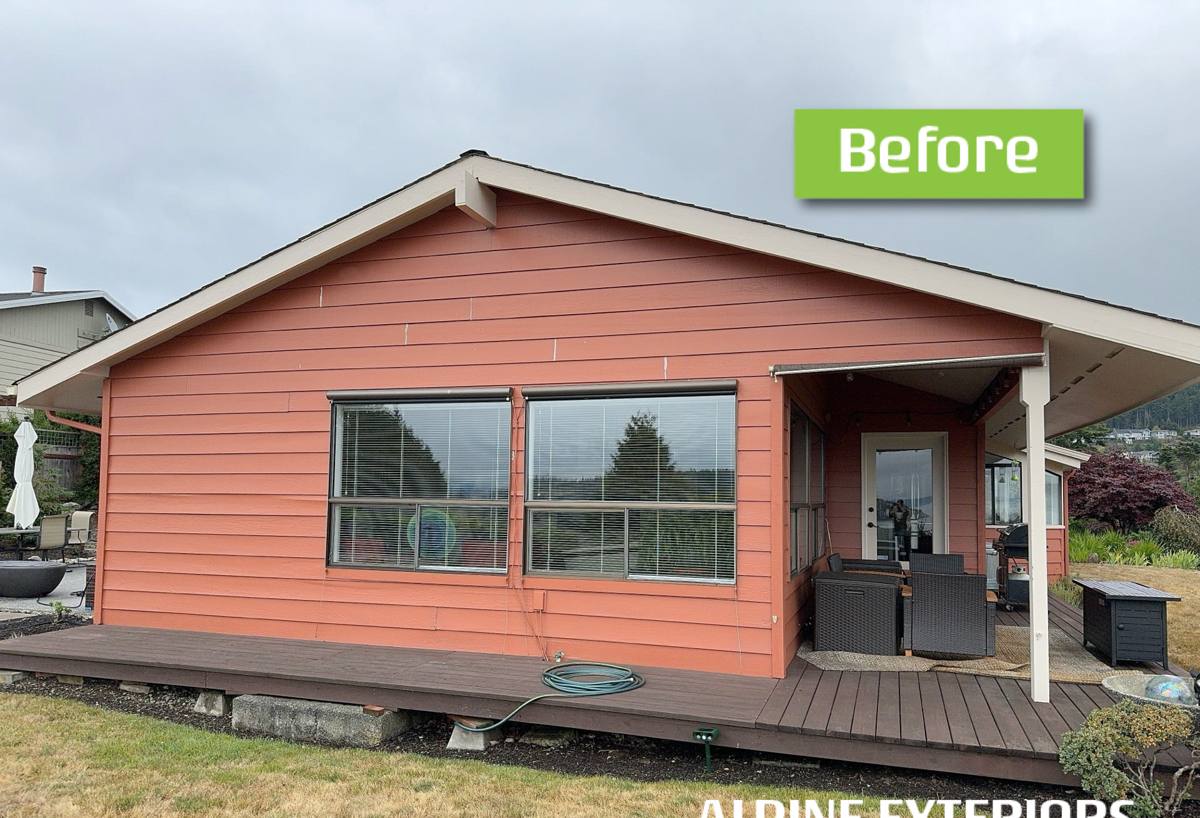
What Bellingham's Climate Actually Does to Siding
Salt Air
Homes closer to Bellingham Bay pick up airborne salt that settles on exterior surfaces. Over years, that salt exposure accelerates the breakdown of paint films, corrodes lower-grade fasteners, and speeds up wear on materials that weren't designed to handle it. It's a slow process, which is exactly why it gets overlooked until a homeowner notices peeling, chalking, or fastener staining on a wall that's only a decade or so old.
Driving Rain
Wind off the water doesn't just bring moisture — it pushes rain sideways into wall assemblies, especially on gable ends and corners that face open exposure. Siding that isn't installed with proper flashing, clearances, and fastening will let that wind-driven water find seams and laps it was never meant to get behind.
The Long Moss Season
Whatcom County's wet season runs long, and shaded or north-facing walls in tree-covered neighborhoods like Sunnyland stay damp for weeks at a time. That's exactly the environment moss and algae need to take hold. On some siding materials, that growth traps moisture against the surface and accelerates decay underneath. On others, it's a surface issue that a routine wash handles. Which category your siding falls into depends heavily on the material.
Why We Standardized on James Hardie
We used to get asked why we don't offer vinyl, LP SmartSide, cedar, or other fiber cement brands. The honest answer is that after years of installing and repairing siding in this climate, James Hardie is the product we trust to hold up to Bellingham's specific mix of moisture, salt exposure, and moss pressure without the maintenance headaches or premature failures we've seen from alternatives.
James Hardie fiber cement is non-combustible, doesn't rot or delaminate the way wood-based products can when they take on moisture, and comes from the factory with a ColorPlus finish that's baked on rather than field-applied. That matters here specifically because a factory finish resists the fading and chalking that salt air and UV cycling cause faster on site-painted surfaces. Hardie also backs its siding with a strong transferable warranty and its ColorPlus finish with its own coating warranty — support that matters when a product has to perform for decades in a wet marine climate, not just look good on installation day.
The Hardie Product Lines That Make Sense for Sunnyland
Hardie builds region-specific formulations, and homes in Western Washington fall under their HZ5 engineered-for-climate line, designed for moisture and moderate freeze-thaw conditions rather than the dry-climate or hurricane-zone formulations sold elsewhere in the country. That distinction isn't marketing — it affects how the product is engineered to handle sustained damp exposure.
- HardiePlank lap siding — the most common choice for Sunnyland homes; available in several exposure widths and profiles to match traditional or more modern styling.
- HardieShingle — a shingle-profile option for homes or accent areas where a shake or shingle look is wanted without the moisture vulnerability of real wood shingles.
- HardiePanel vertical siding — often used on gables, accent walls, or contemporary designs.
- HardieTrim — fiber cement trim boards that hold paint and resist moisture damage far better than the finger-jointed wood trim commonly used around windows and corners.
Color selection matters too. ColorPlus finishes come in a curated palette engineered for UV and weather resistance, which is a real advantage over field-painted siding in a climate where sun exposure is inconsistent and moisture exposure is constant.
What a Correct Installation Actually Involves
James Hardie siding performs the way it's supposed to only when it's installed to the manufacturer's specifications. In a climate like Bellingham's, the installation details matter more than they would somewhere dry, because any shortcut becomes a moisture entry point that gets tested by rain for most of the year.
| Installation Detail | Why It Matters in Sunnyland's Climate |
|---|---|
| Proper clearance from grade, decks, and roof lines | Keeps siding from wicking up standing moisture or splash-back from the ground and hardscaping |
| Correct flashing at windows, doors, and penetrations | Stops wind-driven rain from working behind the siding at the most vulnerable points |
| Rain screen or drainage gap where called for | Lets incidental moisture drain and the wall assembly dry out between wet spells |
| Stainless or coated fasteners driven correctly | Resists corrosion from salt-tinged air and prevents fastener staining and pull-through |
| Correct lap and joint sealing per Hardie spec | Prevents water intrusion at horizontal and vertical seams during sustained rain |
| Field-cut edges primed or sealed | Uncoated cut edges are a common failure point where moisture gets absorbed over time |
None of this is exotic — it's the manufacturer's published installation standard. But it takes discipline to follow every detail on every board, on every wall, on every job. That discipline is what separates a Hardie installation that lasts thirty-plus years from one that develops problems in five.
Our Process for a Sunnyland Project
1. On-Site Assessment
We walk the home and look specifically at exposure — which walls take the most wind-driven rain, where moss and algae are already established, where existing siding shows signs of moisture damage, and what's happening behind the current cladding at trouble spots like window heads and deck ledgers.
2. Removal and Substrate Check
Once old siding comes off, we check the sheathing and framing underneath for rot or moisture damage before anything new goes up. This is the point where hidden problems get caught — and fixed — instead of covered over.
3. Weather-Resistive Barrier and Flashing
We install or verify the water-resistive barrier and get flashing details right at every window, door, and penetration before the first piece of Hardie siding is hung.
4. Siding Installation to Hardie Spec
Panels and planks go up following Hardie's fastening, clearance, and joint requirements — not shortcuts, not "close enough."
5. Trim, Caulking, and Final Details
HardieTrim and detailing get finished, seams are sealed per spec, and we do a final walk-through so you know exactly what was done and why.
- Site assessment and exposure review
- Old siding removal and substrate inspection
- Barrier and flashing installation
- Hardie siding installation to manufacturer spec
- Trim, sealing, and final walkthrough
Cost Factors for a Sunnyland Siding Project
Every home is different, but the same handful of factors drive cost on most projects in this neighborhood. We give firm, itemized numbers after an on-site look — not a phone estimate — because these variables change the scope significantly.
| Factor | Why It Affects Cost |
|---|---|
| Home size and number of stories | More surface area and more difficult access both add labor time |
| Condition of existing sheathing | Rot repair discovered during tear-off adds material and labor beyond the original scope |
| Product line and profile chosen | HardieShingle and custom trim details cost more in labor than standard lap siding |
| Color and finish | Standard ColorPlus colors are typically more cost-effective than premium or custom-match options |
| Trim and architectural detail | Homes with more corners, gables, and window trim take longer to finish correctly |
| Site access | Tight lots, mature landscaping, or limited staging space in denser Sunnyland streets can add time |
Maintaining Hardie Siding in This Climate
James Hardie siding is genuinely low-maintenance compared to wood or engineered wood products, but "low-maintenance" isn't "no-maintenance," especially with a moss season as long as ours.
- Rinse siding gently once or twice a year to clear salt residue, pollen, and early moss growth — a garden hose and soft brush is usually enough, avoid high-pressure washing that can force water behind laps
- Keep gutters clear so overflow doesn't run down and saturate wall sections repeatedly
- Trim back landscaping and tree limbs that keep walls shaded and damp, which is exactly what encourages moss
- Check and re-caulk joints and trim intersections periodically, since caulking is a maintenance item even on Hardie siding
- Watch for any dark streaking or soft spots at the base of walls near grade, which can signal a moisture issue worth a closer look
Why a Crew That Already Works in Sunnyland Matters
Installing James Hardie siding correctly requires following the same manufacturer spec anywhere in the country. What changes from neighborhood to neighborhood is judgment — knowing which walls in a given area take the worst weather, what kind of substrate condition to expect when tear-off starts, and how a specific pocket of Bellingham's microclimate behaves compared to a few miles down the road. A crew that's already worked on Sunnyland homes has that judgment built in, rather than learning it on your project.
We also only do one thing: James Hardie fiber cement siding. We're not juggling five different product lines with five different installation standards, which means every crew member on your job is working from the same deep, repeated experience with the same material — in the same climate your home sits in every day.
If you're planning a siding project in Sunnyland, we're glad to come take a look and talk through what your home specifically needs. Reach out for a free, no-pressure estimate using the form below.