 Bellingham
 Why "How Long Will My Roof Last?" Doesn't Have a One-Size Answer
Every roofing material comes with a lifespan number printed on the package or quoted by a salesperson. The problem is that those numbers are usually generated in a lab or a dry climate, not on a roof deck two miles from Bellingham Bay. If you've asked a few contractors this question and gotten a few different answers, it's not because someone is lying to you — it's because the honest answer depends on your specific roof, your specific installation, and how much moss, wind-driven rain, and salt air it's had to fight off over the years.
This page walks through what actually determines how long a roof lasts, gives you real ranges by material, and explains what's specific to roofing in Whatcom County versus roofing in, say, Spokane or Sacramento. Our goal isn't to scare you into an early replacement or talk you into a material you don't need — it's to give you the numbers straight so you can plan and budget with your eyes open.
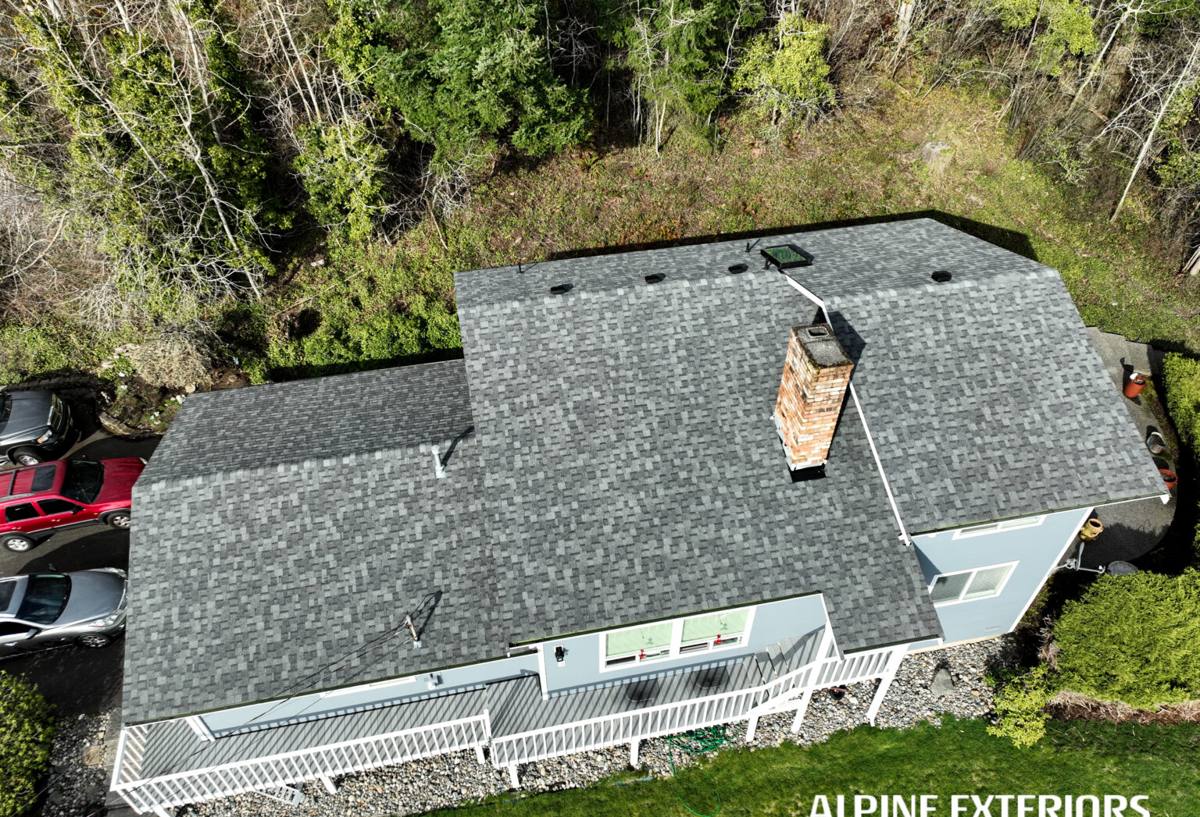
What Actually Determines Roof Lifespan
Manufacturers publish a warranty term, but the number of years your roof actually performs comes down to four things, roughly in order of importance:
- Installation quality: Flashing details, nailing pattern, ventilation, and underlayment choices matter more than the shingle brand. A premium product installed poorly will underperform a mid-grade product installed correctly.
- Ventilation and attic moisture: A roof deck that can't breathe traps moisture, which shortens shingle life from underneath — often invisibly, until you see sagging or staining.
- Local climate exposure: Sun, wind, rain volume, and in our case, near-constant damp and organic growth pressure.
- Maintenance history: Whether moss, debris, and clogged gutters were kept in check, or left to do their work for a decade.
Two identical roofs installed the same week can age very differently depending on how these four factors play out. That's why we always tell homeowners to treat published lifespan numbers as a starting point, not a guarantee.
Honest Lifespan Ranges by Material
Here's how the common roofing materials actually perform in a marine climate like ours, based on realistic, well-maintained installations — not best-case lab numbers.
| Material | Typical Lifespan Here | Main Local Stress Factor |
|---|---|---|
| 3-tab asphalt shingle | 12–18 years | Moss undermining and granule loss from constant moisture |
| Architectural (laminate) asphalt shingle | 20–28 years | Moss and algae staining; UV is a minor factor here compared to drier climates |
| Cedar shake/shingle | 20–30 years with upkeep | Moisture retention and moss without diligent cleaning and treatment |
| Standing seam metal | 40–60 years | Fastener and sealant maintenance at penetrations; coastal fastener corrosion if the wrong hardware was used |
| Torch-down / TPO (low-slope) | 15–25 years | Seam integrity under constant driving rain exposure |
Notice the spread within each category. A 20-year architectural shingle roof that gets moss removed every year or two and has clean gutters can realistically push toward the top of its range. The same product with moss left to grow for eight years will often need attention a decade early.
Where Bellingham Falls Compared to Drier Climates
In a low-humidity climate, asphalt shingles fail mainly from UV breakdown — the asphalt dries out and granules shed. Here in Whatcom County, that's rarely the leading cause. Our roofs fail more often from moisture-related issues: moss holding water against the shingle surface, algae staining that traps damp organic material, and fasteners or flashings that corrode faster in salt-influenced air near the water. It's a different failure pattern, which is why generic national lifespan charts can be misleading for a Bellingham roof.
What Bellingham's Climate Specifically Does to a Roof
Salt Air
Homes closer to Bellingham Bay and the greater Salish Sea shoreline see accelerated corrosion on exposed metal — nail heads, flashing edges, gutter fasteners, and vent boots. It's slow and easy to miss, but over 15-20 years it adds up, especially on lower-grade fasteners that weren't rated for coastal exposure.
Driving Rain
Storms here often come with real wind behind the rain, which pushes water sideways and upward under laps and flashing that would stay dry in a straight-down rain event. This is why flashing detail and underlayment quality matter more here than in climates that get less wind-driven precipitation — a roof can look fine from the ground and still have slow intrusion happening at a valley or chimney flashing.
The Long Moss Season
Because Whatcom County stays damp and mild for most of the year, moss and algae have a long growing window with few hard freezes to knock them back. Moss isn't just cosmetic — its root structure lifts shingle edges, and the mat it forms holds water against the roof surface for days after everything else has dried out. Left unmanaged, this is one of the single biggest lifespan-shorteners we see on local roofs.
Signs Your Roof Is Aging Out — Repair vs. Replace
Age alone doesn't tell you whether a roof needs replacing. These signs matter more than the calendar:
| Sign | Usually Means |
|---|---|
| Granules collecting in gutters | Shingles are wearing down; more common late in life but can happen from moss damage even earlier |
| Shingle edges curling or cupping | Aging asphalt or heat/moisture cycling; often localized and repairable if isolated |
| Moss mats thicker than a quarter-inch | Active moisture retention and likely lifting shingle tabs underneath |
| Dark streaking (algae) | Cosmetic and biological, not structural on its own — but a sign moisture is sitting on the surface |
| Soft spots or sagging deck | Moisture has reached the wood substrate; usually a replace situation, not a patch |
| Interior staining or attic moisture | Active leak or ventilation failure; needs prompt diagnosis regardless of shingle age |
A roof with isolated wear — one bad valley, a cracked pipe boot, a few lifted shingles from wind — is usually a repair. A roof with widespread granule loss, moss damage across multiple slopes, or deck-level moisture is telling you it's nearing the end of its useful life, even if it's a few years shy of the "official" number.
Maintenance That Actually Extends Lifespan
Not all maintenance advice is worth your time. Here's what genuinely moves the needle in our climate:
- Remove moss and treat for regrowth on a regular schedule — don't wait until it's thick and established.
- Keep gutters and downspouts clear so water isn't backing up under the roof edge, especially during heavy fall rain.
- Trim back overhanging branches to reduce shade, debris buildup, and the moisture retention that comes with both.
- Check attic ventilation isn't blocked by insulation — poor airflow shortens shingle life from underneath where you can't see it.
- Have flashing at chimneys, valleys, and skylights inspected periodically rather than waiting for a visible leak.
- Avoid pressure washing shingles directly — it strips granules and does more harm than the moss it removes.
None of this is glamorous work, but it's the difference between a shingle roof that hits 25 years and one that struggles to reach 16.
Cost Factors When Replacement Time Comes
When a roof does need replacing, several factors drive the price beyond just square footage:
| Factor | Why It Matters |
|---|---|
| Roof pitch and access | Steeper or harder-to-access roofs take longer and require more safety setup |
| Number of layers to tear off | Removing old material adds labor and disposal cost versus a clean deck |
| Deck condition underneath | Rotted or soft sheathing needs replacing before new roofing goes down |
| Material choice | Asphalt, metal, and cedar carry different material and labor costs |
| Flashing and penetration count | More valleys, skylights, and vents mean more detail work and time |
| Ventilation upgrades | Adding or correcting ventilation during a re-roof pays off in the new roof's lifespan |
We won't quote a number on this page because a fair estimate requires actually looking at your roof — but these are the honest drivers behind why two houses of the same size can get very different quotes.
Planning Ahead Instead of Reacting
The homeowners who get the best outcomes aren't the ones who wait for a leak — they're the ones who know roughly where their roof sits in its lifespan and plan a replacement on their own timeline, in good weather, with time to compare options. If your roof is asphalt and pushing past the 18-20 year mark, or you've noticed moss coming back faster than you can keep up with it, that's a reasonable point to get an honest inspection rather than a reactive one after a storm.
If you're not sure where your roof stands, we're happy to take a look and give you a straight answer — including telling you if it has years of life left and doesn't need anything more than routine upkeep. Reach out below for a free, no-pressure estimate and we'll walk the roof with you.