 Bellingham
 Roofing Built for Puget's Coastal Climate
Homes in the Puget area of Bellingham sit close enough to the water and the weather patterns that move through Whatcom County that the roof over your head is doing more work than most homeowners realize. Between salt-laden air off the Sound, long stretches of driving rain, and a moss season that can run most of the year in the shade, a roof here ages differently than one fifty miles inland. We've built our roofing process around those specific conditions rather than a one-size-fits-all approach, because what protects a home in a dry climate often falls short in a marine one.
Whether you're dealing with a roof that's showing its age, chasing down a leak, or planning ahead for a full replacement, the goal is the same: a roof system that sheds water fast, resists moss and algae growth, and holds up to wind and salt exposure without constant babysitting.
What Puget-Area Homes Face Each Year
Salt Air and Metal Fatigue
Proximity to Bellingham Bay and the broader Puget Sound means airborne salt settles on roofing materials, flashing, fasteners, and gutters. Over years, this accelerates corrosion on unprotected metal — exposed nails, cheap flashing, and lower-grade metal components are usually the first things to show pitting or rust streaks. It's rarely the roofing material itself that fails first; it's the metal details around it.
Driving Rain and Wind-Driven Water
Rain in this part of Washington doesn't always fall straight down. Wind off the water can push rain sideways under shingle edges, around chimneys, and into valleys where two roof planes meet. This is why underlayment quality and flashing detail work matter as much as the shingle or metal panel on top — a roof can look fine from the street and still be letting water in at the seams.
Moss, Algae, and Shade
Bellingham's tree cover and long damp season give moss and algae plenty of opportunity to take hold, especially on north-facing slopes and roof sections that stay shaded most of the day. Moss isn't just cosmetic — as it grows, it lifts shingle edges and holds moisture against the roof deck, which is a slow but steady path toward rot and premature failure.
Signs Your Roof Needs Attention
Most roof problems in this climate develop gradually. A few warning signs worth taking seriously:
- Moss or dark streaking building up on north-facing or shaded slopes
- Granules collecting in gutters or at downspout outlets
- Shingles that look curled, cupped, or are missing entirely after a windstorm
- Soft spots or sagging when walked on (should only be checked by a professional)
- Water stains on interior ceilings, especially near chimneys, skylights, or valleys
- Daylight visible through the roof deck from inside an attic
- Rust streaking around metal flashing, vents, or fasteners
Catching these early is almost always cheaper than waiting. A small flashing repair or a partial re-roof of a damaged section costs far less than repairing water damage to decking, insulation, and interior finishes after a slow leak has been running for a season or two.
Roof Types We Install and Repair
Different roof types perform differently in a wet, moss-prone, salt-exposed environment. We work with homeowners on what fits their home, budget, and maintenance appetite rather than pushing one product for every job.
| Roof Type | Typical Lifespan Here | Moss/Algae Resistance | Maintenance Needs |
|---|---|---|---|
| Asphalt composition (standard) | 18-25 years | Moderate — benefits from algae-resistant granules | Periodic moss removal, gutter checks |
| Asphalt composition (algae-resistant) | 20-30 years | Better — copper/zinc granules slow growth | Lower, but not maintenance-free |
| Standing seam metal | 40-50+ years | High — sheds moss and debris well | Low; check fasteners and sealant over time |
| Cedar shake/shingle | 20-30 years with upkeep | Low without treatment | Higher; needs regular cleaning and treatment |
Metal roofing has become a popular choice for homeowners in wetter, mossier parts of Whatcom County precisely because its smooth, steep-shedding surface gives moss and algae less to hold onto. Asphalt composition shingles remain the most common choice because of the balance between upfront cost and performance, particularly the algae-resistant lines that are worth the small upcharge in this climate. Cedar has real character and a long history in the Pacific Northwest, but it asks for more ongoing attention here than in a drier region — we'll walk you through that honestly rather than talk you out of a look you want without explaining the trade-off.
Our Roofing Process
Inspection First
We start by actually getting on the roof — not just estimating from the ground or a photo. That means checking flashing around chimneys, vents, and skylights, looking at valley construction, checking the condition of the decking where accessible, and noting drainage issues that might be contributing to moss growth or wear patterns.
Underlayment and Flashing Detail
Given how often wind-driven rain is a factor here, we pay particular attention to underlayment overlap and flashing at every penetration and valley. This is the part of a roof job that isn't visible once it's finished, but it's usually the difference between a roof that holds up through thirty years of Puget Sound weather and one that develops leaks within a decade.
Installation
Whether it's a full tear-off and replacement or a targeted repair, we follow manufacturer specifications for fastening patterns, ventilation, and ice/water shield placement at eaves and valleys — details that matter more in a marine climate than they do in drier parts of the state.
Cleanup and Final Walkthrough
We clear the site of debris and old materials and walk the finished work with the homeowner so you know exactly what was done and what to watch for going forward.
Moss, Algae, and Ongoing Maintenance
A roof in the Puget area benefits from periodic attention even between major services. Moss removal should be done carefully — pressure washing can strip granules and shorten a shingle roof's life, so we use methods appropriate to the material. Keeping gutters clear also matters more here than in drier climates, since a clogged gutter during a heavy rain event backs water up under the roof edge rather than moving it away from the house.
We're happy to talk through a simple maintenance schedule for your specific roof rather than sell you a service plan you don't need — some roofs need annual attention, others can go two or three years between checkups depending on tree cover and exposure.
Beyond the Roof: Siding, Windows, and Decks
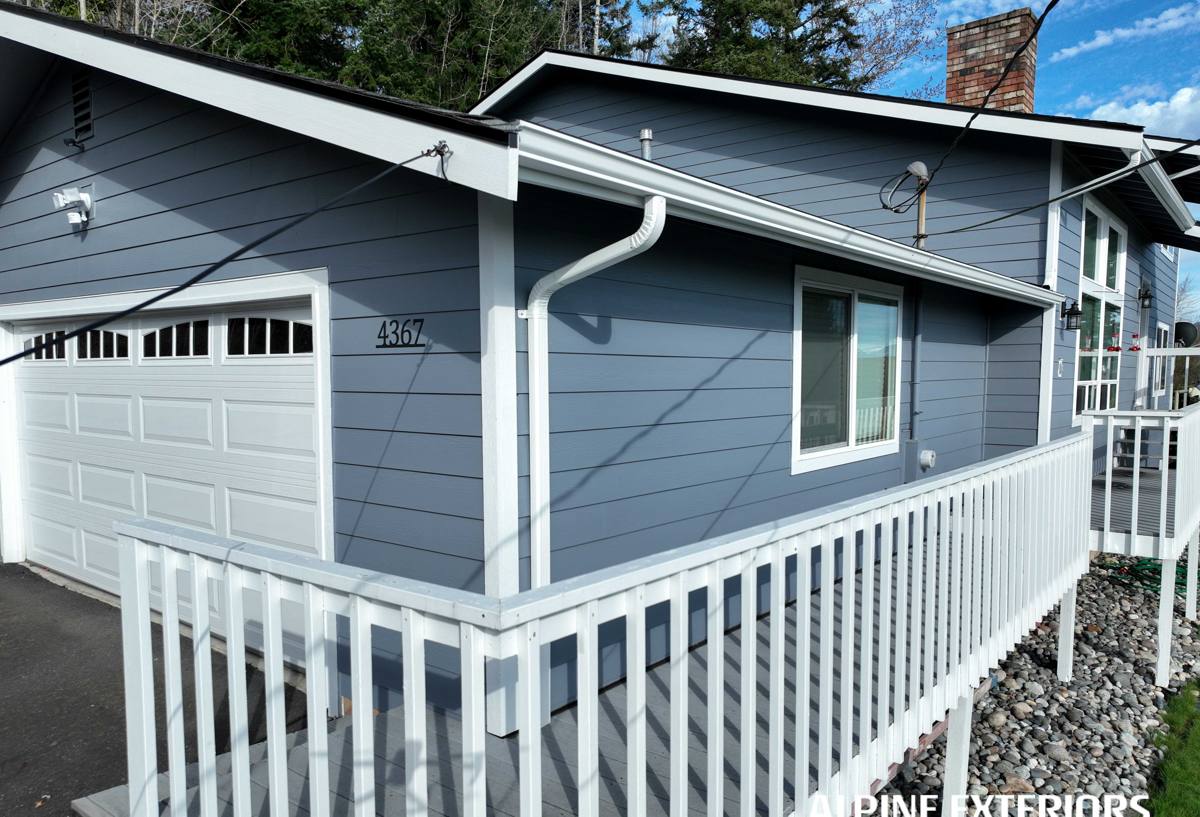
A roof doesn't work in isolation — it's one part of the building envelope that's keeping Puget Sound weather out of your home. We also handle siding, windows, and decks, and on many projects those systems interact directly with the roof. Poor siding-to-roof flashing at a wall intersection, for example, can cause a leak that looks like a roofing problem but is really a siding detail, and vice versa. Having one crew that understands how these systems tie together — rather than coordinating between separate roofing, siding, and window contractors — usually means fewer gaps where water can find its way in.
Decks in this climate face their own version of the same moisture and moss challenges, particularly on shaded sides of a home, so if you're already planning roof work it's often a good time to have the rest of the exterior looked at as well.
Why a Local Whatcom County Crew Matters
Roofing crews who work primarily in drier or more inland regions don't always build the same instincts around wind-driven rain, moss cycles, and salt exposure that come from working Bellingham and the surrounding Puget Sound area year-round. Local knowledge also means understanding which products actually hold up here versus which ones look good on a spec sheet but struggle with our specific mix of humidity, rain volume, and shaded tree cover. We're not guessing at what works in this climate — it's what we see on roofs across Whatcom County every week.
What Affects the Cost of a Roofing Project
| Factor | Why It Matters |
|---|---|
| Roof size and pitch | Steeper roofs take longer and require more safety setup |
| Material choice | Metal and premium algae-resistant shingles cost more upfront, less over time |
| Number of penetrations | Chimneys, skylights, and vents each need flashing detail work |
| Existing damage | Rotted decking found during tear-off adds material and labor |
| Accessibility | Tree cover, steep lots, or limited staging area can affect labor time |
We provide honest, itemized estimates so you know what's driving the cost, rather than a single number with no explanation behind it.
If your roof is showing signs of wear, you're dealing with a leak, or you'd simply like an honest assessment of where things stand, we're glad to come take a look. There's no pressure and no obligation — just a straightforward walkthrough of what we see and what your options are, using the form below to get started.