 Bellingham
 Why "How Much Is a New Roof?" Doesn't Have One Answer
Every homeowner asks it, and every honest contractor gives the same first answer: it depends. A roof replacement quote isn't a single number pulled from a price list — it's the sum of your roof's size, its pitch, what's underneath the shingles, what material you choose, and how hard the crew has to work to access and protect the property while they're up there. Two houses of the same square footage in the same Bellingham neighborhood can come in thousands of dollars apart once you factor in slope, layers of old roofing, and deck condition.
This page walks through the real cost drivers, in the order they usually matter, so you can look at a quote and understand what you're actually paying for — not just a bottom-line total.
Roof Size and Complexity
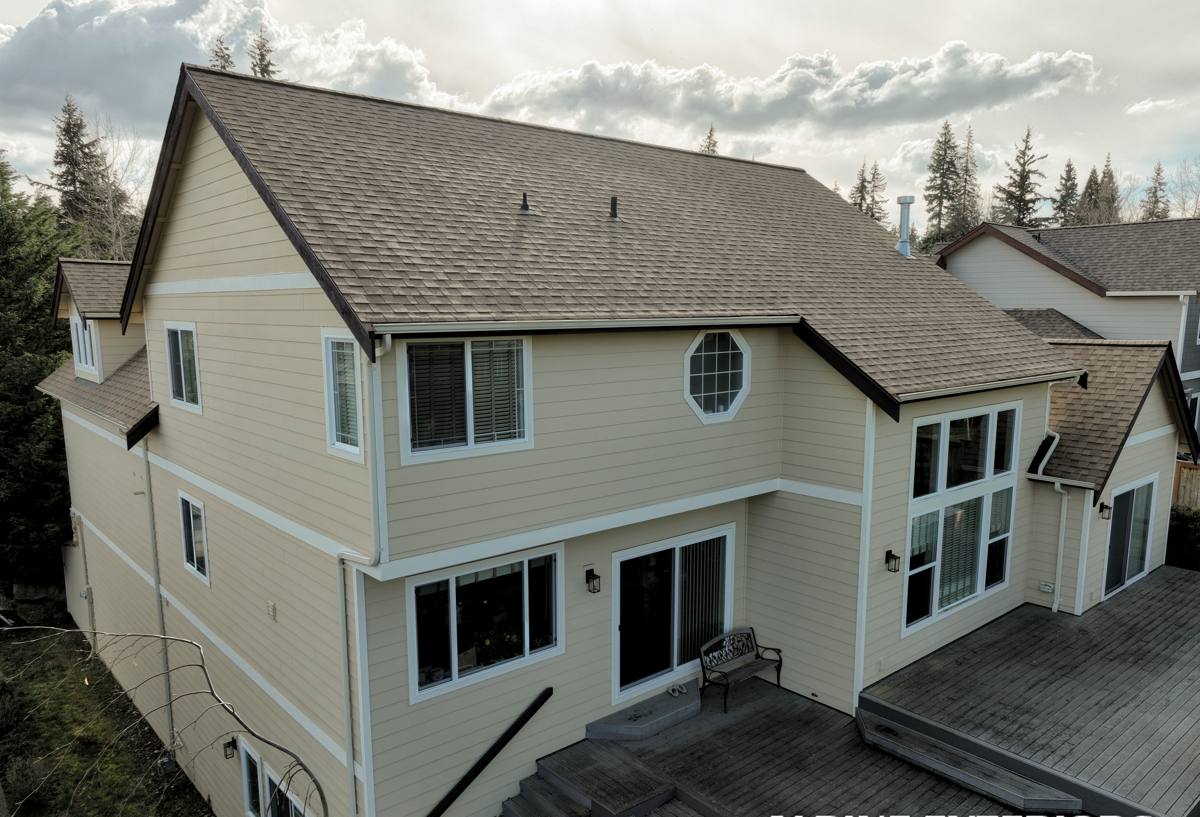
Roofing is priced by the "square" — 100 square feet of roof area. A simple rectangular ranch roof and a roof with multiple dormers, valleys, and hips can have the same square footage on paper but very different labor hours. Every valley, hip, chimney, skylight, and roof-to-wall transition adds cutting, flashing, and sealing work. A steep, cut-up roof can easily cost 20–40% more per square than a simple gable roof of the same size, purely because of the extra detail work.
What adds complexity
- Multiple roof planes, dormers, or a walk-out attic
- Valleys where two roof sections meet
- Chimneys, skylights, and roof penetrations for vents or solar
- Steep pitch that slows the crew down and requires extra fall protection
Material Choice
Material is usually the single biggest line item, and the range is wide. The table below is a general guide to relative cost — not a quote — since actual pricing depends on the specifics above and on current material costs at the time of the job.
| Material | Typical Lifespan | Relative Cost | Notes |
|---|---|---|---|
| 3-tab asphalt shingle | 15-20 years | Lowest | Budget option, less wind resistance |
| Architectural (dimensional) shingle | 25-30 years | Moderate | Most common choice in this region |
| Standing seam metal | 40-50+ years | High | Sheds moss and rain well, higher upfront cost |
| Cedar shake | 20-30 years with upkeep | High | Needs regular treatment in a wet climate |
| TPO / torch-down (flat or low-slope) | 15-25 years | Moderate to High | Used on additions, porches, low-slope sections |
Architectural shingles are the most common upgrade we install in Whatcom County — they hold up better to wind-driven rain than a basic 3-tab and cost meaningfully less than metal, which makes them the practical middle ground for most homes here.
Tear-Off: How Many Layers Are Coming Off
If your roof already has one layer of shingles, code and good practice call for tearing it off before the new roof goes on — installing over old shingles traps moisture and shortens the life of the new roof. Tear-off adds labor and disposal cost, and if there are two layers already up there (common on older Bellingham homes that were re-roofed once before code tightened up), that's more dump fees and more crew hours. A straightforward single-layer tear-off is a normal, budgeted part of most jobs. A double tear-off, or a deck that turns out to be in rough shape underneath, is where quotes can shift once the old roofing actually comes off.
Roof Pitch and Access
Steeper roofs take longer to work on safely, require more fall-protection setup, and often need smaller crews moving materials by hand rather than by conveyor or crane. Roofs that are hard to access — tight lot lines, landscaping close to the house, no clear staging area for a dumpster or material delivery — also add time. None of this is negotiable on cost; it's simply what safe, correct work on a steep or tight roof requires.
What's Under the Shingles Matters as Much as What's On Top
Decking condition
Once the old roofing is off, the plywood or board decking underneath gets inspected. Soft, rotted, or delaminated sections need to be replaced before new roofing goes down — skipping this is how roofs fail early. Most quotes include an allowance for a reasonable amount of deck replacement, with a per-sheet cost if more is needed once the roof is open.
Underlayment and ice/water protection
In a climate with as much sustained rain as ours, underlayment isn't a place to cut corners. Synthetic underlayment and self-adhering ice-and-water membrane at eaves, valleys, and around penetrations are what actually keep water out when wind drives rain sideways under the shingle tabs — which happens regularly during Whatcom County winter storms.
Flashing
Flashing around chimneys, skylights, sidewalls, and valleys is where the majority of roof leaks actually originate — not the shingle field itself. Replacing flashing rather than reusing old pieces adds a modest cost but is the difference between a roof that stays dry and one that develops slow leaks within a few years.
Ventilation
Proper intake and exhaust ventilation keeps the attic temperature and moisture balanced, which protects the decking from the underside and helps shingles last their full rated life. Adding or upgrading ridge vents, soffit vents, or baffles is a common part of a re-roof and a worthwhile one — poor ventilation is a quiet cause of premature roof failure that has nothing to do with the shingles themselves.
Local Factors: Bellingham and Whatcom County Climate
Coastal Whatcom County roofs deal with a specific combination of stresses that inland climates don't. Salt air off Bellingham Bay accelerates corrosion on exposed metal fasteners, flashing, and vents, so corrosion-resistant materials and fasteners are worth the small upcharge here rather than an afterthought. Driving rain during fall and winter storms tests every seam, valley, and flashing detail, which is why underlayment and flashing quality matter more here than in drier regions. And the long moss season — shaded, north-facing, and tree-covered roofs especially — means moss and algae growth is a near-constant maintenance factor that shortens the life of a poorly ventilated or poorly maintained roof, regardless of material.
None of this means roofing costs more here across the board, but it does mean the "cheap" version of a roof — minimal underlayment, reused flashing, standard fasteners — tends to show problems sooner in this climate than it would somewhere drier. A contractor who's used to Whatcom County conditions will price for the region, not a generic national average.
Permits, Warranty, and Labor
A residential re-roof typically requires a permit, and that cost, along with inspection scheduling, should be included in your quote rather than added later as a surprise. Warranty structure also affects price: manufacturer material warranties are usually included at no extra cost, but extended workmanship warranties from the installer reflect that contractor standing behind their own labor for a longer period, and that's a legitimate value-add worth asking about directly. Labor rates vary by crew size, experience, and time of year — spring and summer are the busiest season for roofing in this region, and scheduling further out can sometimes mean better pricing than trying to book emergency work during a winter storm.
What to Have Ready Before You Call for Quotes
Getting a fair, comparable set of quotes is easier if you can answer a few basic questions up front, or if you let the contractor walk the roof and answer them for you.
- Roughly how old is the current roof, and is it the original roofing or a prior re-roof
- Any known leaks, soft spots, or interior water stains, and where
- How many layers of roofing are currently on the house, if known
- Whether there are skylights, solar panels, or a chimney that need to be worked around
- General material preference, if you already have one, or openness to a recommendation
- Any HOA rules on shingle color or material, if applicable
Comparing Quotes the Right Way
When quotes come in at noticeably different totals, the gap almost always traces back to one of the factors above: different materials, different underlayment specs, whether tear-off and disposal are included, whether flashing is being replaced or reused, and whether a deck repair allowance is built in. The lowest number on paper isn't always the lowest cost over the life of the roof — a roof underspecified for a wet, salt-air coastal climate tends to need attention sooner. Ask each contractor to break down material, underlayment, flashing, and labor separately so you're comparing the same scope, not just a final total.
If you'd like a clear, honest look at what your specific roof needs and what that translates to in real numbers, we're happy to walk it and put together a no-pressure estimate — no obligation, and no inflated worst-case scare tactics. Use the form below to get started.