 Bellingham
 Decks in Sunnyland Face a Different Set of Problems
Sunnyland is one of Bellingham's older, established neighborhoods, with mature tree canopy, a mix of home ages, and lots close enough to the water to pick up salt-laden air off Bellingham Bay. That combination is tough on outdoor structures. Composite decking was built to solve wood's rot and splinter problems, but it still has to be installed correctly for this specific setting, or you just trade one set of headaches for another.
Three things drive almost every deck problem we see in this part of Whatcom County: near-constant moisture from driving rain, a long moss and algae season that can run eight or nine months a year under tree cover, and salt air that accelerates corrosion on anything metal. A deck built without those three factors in mind will look fine for a year or two and then start showing streaking, soft spots at fastener locations, or a slick, mossy surface that's genuinely dangerous to walk on in winter.
Because Sunnyland sits close enough to the water to catch salt air, but also has enough mature tree cover to create heavily shaded yards, individual lots in this neighborhood can behave very differently from each other. A deck on an open, sun-facing lot dries out fast between storms. A deck tucked under fir and cedar canopy a few blocks away might stay damp for days after the same storm passes. That's why we treat every Sunnyland estimate as its own project instead of quoting off a generic template.
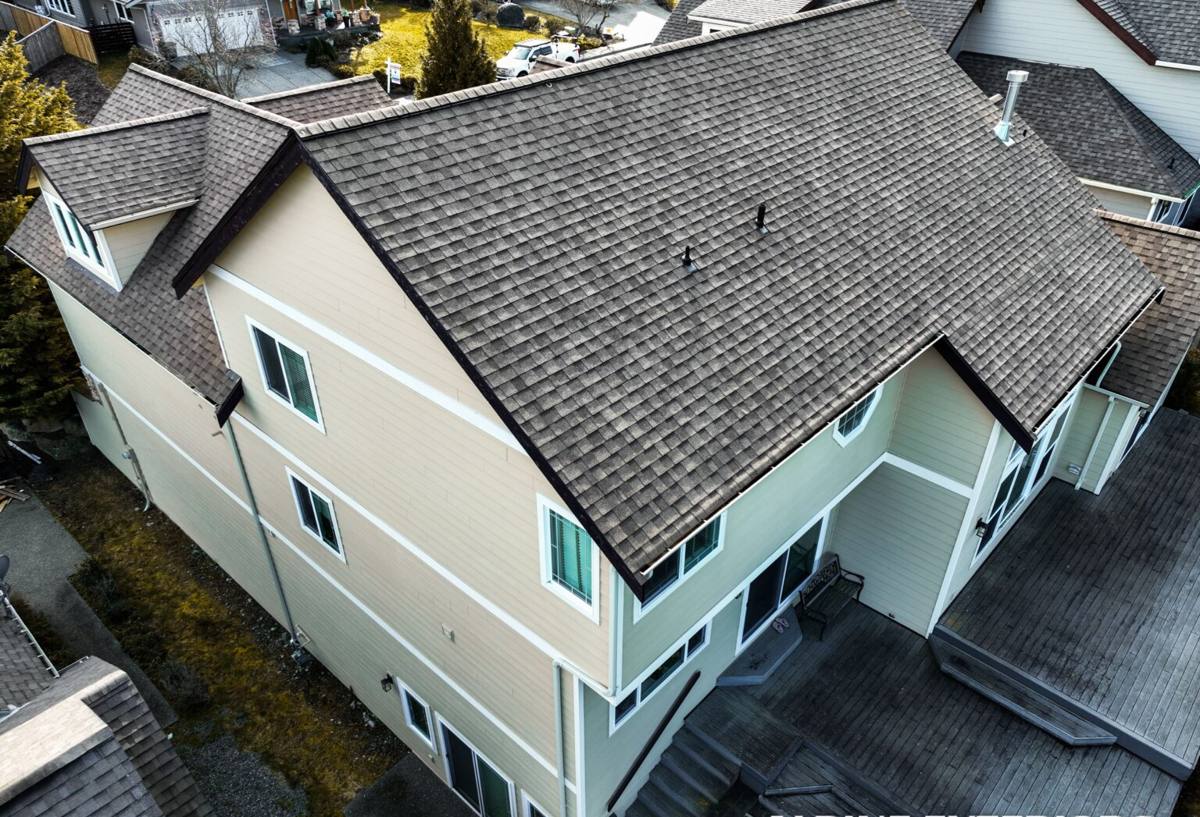
What a Correctly Installed Composite Deck Actually Requires
Composite boards get most of the marketing attention, but the board is only part of the system. In our experience, most premature composite deck failures trace back to the substructure or the details underneath, not the decking material itself.
Substructure and Ventilation
Composite boards don't rot, but the framing underneath is almost always pressure-treated lumber, and that lumber still needs airflow to dry out between rain events. Low-clearance decks, decks built tight against a foundation, or decks with skirting that blocks cross-ventilation trap moisture underneath. In a climate where it can rain for a week straight, that trapped moisture is what leads to soft, spongy joists years before the composite surface shows any wear.
Fasteners and Hardware
Salt air off the bay corrodes standard fasteners faster than manufacturers' warranties usually assume. We use stainless steel or coated fasteners rated for coastal exposure, along with joist tape or flashing on top of framing members to keep water from wicking into end grain and screw holes. Skipping this step is one of the most common corners cut on lower-bid decking jobs, and it's invisible until the hardware starts failing from the inside.
Drainage and Slope
Every deck surface needs a slight slope, typically a quarter inch per foot, away from the house so water sheets off instead of pooling. On composite decking this matters even more than on wood, because composite doesn't absorb standing water the way wood does; it just sits on the surface, feeding algae growth and leaving the slick film that makes moss-prone decks dangerous underfoot.
Composite Board Types: What's Actually Different
Not all composite decking is the same, and the differences matter more in a wet, shaded climate than they do in a dry one. The table below covers the broad categories you'll run into.
| Board Type | Moisture Behavior | Maintenance | Typical Lifespan |
|---|---|---|---|
| Uncapped composite (wood-plastic blend) | Can absorb some moisture at cut ends and fastener holes; more prone to mold staining in shaded, damp spots | Occasional cleaning; more attention to sealed cut ends | 15-20 years |
| Capped composite (polymer shell over composite core) | Shell resists moisture penetration on the face; cut ends still need sealing | Regular rinsing to prevent surface algae in shaded areas | 20-30 years |
| Capped PVC (all-polymer) | Essentially non-absorbent; best option for deeply shaded, damp lots | Lowest maintenance; still needs cleaning to prevent surface film | 25-30+ years |
For a shaded Sunnyland lot with heavy tree cover, we lean toward capped composite or PVC options specifically because uncapped material gives moss and mildew more surface texture to grab onto. On a more open, sun-exposed lot, a quality uncapped or lightly capped board can perform fine and costs less.
Our Process for a Sunnyland Composite Deck
1. On-Site Assessment
We walk the site and look at sun exposure, tree cover, existing drainage patterns, and how close the deck sits to grade. A deck tucked under fir trees on a north-facing lot gets a different board recommendation and ventilation plan than one on an open, south-facing yard.
2. Substructure Build or Inspection
New builds get pressure-treated framing set with proper joist spacing for the specific composite product, since composite often requires tighter joist spacing than wood to avoid flex. On replacement jobs where we're re-decking existing framing, we inspect every joist and ledger board before covering anything back up, and we won't install new composite boards over framing that's already compromised.
3. Flashing, Fasteners, and Drainage Details
Ledger flashing against the house, joist tape on framing tops, coastal-rated fasteners, and correct slope get built in before a single visible board goes down. This is the stage that determines whether the deck is still solid in fifteen years.
4. Board Installation and Finish Work
Boards get installed per manufacturer spacing guidelines to allow for thermal expansion, which matters through Whatcom County's temperature swings between summer heat and winter cold snaps. Picture-frame borders, fascia, and railing get finished last.
Living With Composite Decking Through a Bellingham Winter
Even the best composite board isn't maintenance-free, despite what the marketing sometimes implies. Under tree cover, algae and moss spores land on any horizontal surface, and composite's textured finish gives them just enough grip to take hold if the deck never gets a chance to dry.
- Rinse or sweep debris off the deck regularly through fall, when falling leaves and needles trap moisture against the surface
- Clean the deck with a soft-bristle broom and a composite-safe cleaner once or twice a year, more often on heavily shaded sections
- Keep gutters and downspouts clear so runoff isn't dumping extra water directly onto the deck surface
- Trim back overhanging branches where practical to let more light and airflow reach the deck
- Check railing posts and stair stringers annually for movement, since hardware is usually the first thing to show wear in salt air
- Avoid pressure-washing on high settings, which can strip the cap layer on some composite products and void the warranty
None of this is heavy work, but skipping it is exactly how a deck that should last decades starts looking tired after five or six wet seasons.
What a Composite Deck Project Costs and Why
Every deck is different, but the factors that move the price are consistent. We give straight answers on this during the estimate rather than a number that changes once the crew shows up.
| Factor | Why It Matters |
|---|---|
| Board tier (uncapped vs. capped vs. PVC) | Material cost varies significantly, and higher-tier boards reduce long-term maintenance and moisture risk |
| Deck height and substructure condition | Elevated decks or full substructure replacement add framing, footings, and structural engineering time |
| Site access and tree cover | Tight side-yard access or heavy landscaping slows material staging and demo removal |
| Railing and stair complexity | Composite or metal railing systems, multiple stair runs, and custom framing add labor |
| Existing deck removal | Tear-off and disposal of an old wood deck is priced separately from new construction |
As a broad range, straightforward composite deck replacements in this area typically run from the mid five figures for a smaller deck up into higher five figures for larger, multi-level, or elevated projects. We won't give a real number without seeing the site, since substructure condition alone can swing the cost significantly.
Why a Crew That Already Works Sunnyland Matters
A lot of decking problems in this neighborhood are predictable if you've worked here before and easy to miss if you haven't. Knowing which lots hold moisture longest, which fastener specs actually hold up against salt air off the bay, and how much ventilation a shaded substructure needs isn't something you learn from a spec sheet, it's something you learn by building and repairing decks in this specific climate over and over.
Permitting is another detail that trips up out-of-area contractors. Deck projects in the City of Bellingham often require a building permit depending on height, size, and attachment to the structure, and getting that wrong can mean a stop-work order mid-project or problems later when you sell the house. We handle permit requirements as part of the estimate, not as a surprise add-on after the contract is signed.
We're not a national outfit rotating crews through the region for a season. We're local, we stand behind our own installation work, and if something needs attention after the job is done, we're not hard to find.
Questions to Ask Before You Hire
- Will you inspect and, if needed, replace substructure framing, not just the visible boards?
- What fastener and flashing spec do you use, and is it rated for coastal exposure?
- What joist spacing will you use for the specific composite product I'm choosing?
- Do you carry liability insurance and, if required for this project, a building permit?
- What does your workmanship warranty cover, separate from the manufacturer's material warranty?
- Can you walk me through drainage and slope for my specific lot?
A contractor who can answer these without hesitation has built decks in conditions like Sunnyland's before. One who can't is guessing.
If you're weighing a new composite deck or need to replace one that's showing its age, we're happy to walk the site with you and give you a straight, no-pressure estimate built around your lot's actual sun, shade, and drainage conditions. There's no cost and no obligation to use the form below to get started.