 Bellingham
 Roofing Built for Cordata's Growing Neighborhoods
Cordata is one of the newer, faster-growing residential areas in north Bellingham, and its housing stock reflects that: a mix of newer subdivisions, townhomes, and multi-family developments built over the last two to three decades, along with pockets of older homes on the surrounding roads. That mix means roofing needs vary block to block. A roof installed in the late 1990s is due for very different attention than one put on ten years ago, and a shared-wall townhome roof has different failure points than a detached single-family home. We work on all of it, and we tailor the inspection and the recommendation to the actual age and construction of your roof rather than a one-size-fits-all pitch.
What doesn't change across Cordata is the climate. North Bellingham sits close enough to the water to get salt-laden air, and the whole region deals with long stretches of driving rain and an extended moss season that runs from fall through spring. Roofs here are working against moisture almost year-round, and that's the lens we use on every job.
What Bellingham and Whatcom County Weather Does to a Roof
Salt Air and Metal Fatigue
Homes closer to Bellingham Bay and the Strait of Georgia catch airborne salt that settles on exposed metal — flashing, fasteners, gutter hardware, and vent caps. Over years, that accelerates corrosion, especially on lower-grade galvanized components. It's a slower process than storm damage, but it's steady, and it's often invisible from the ground until a fastener backs out or a flashing seam starts leaking.
Driving Rain and Wind-Driven Water
Whatcom County doesn't usually get dramatic downpours, but it gets long duration rain pushed sideways by wind off the water. That combination finds weak points that a straight-down rain never would: lifted shingle tabs, marginal flashing laps, and poorly sealed penetrations around vents and chimneys. Roofs that would be fine in a drier climate can leak here simply because wind-driven rain works its way uphill under materials that aren't properly lapped or sealed.
Moss, Shade, and Slow Roof Decay
Cordata's tree cover and the region's long wet season create ideal moss conditions. Moss holds moisture against the roof surface, works into shingle granules and seams, and can lift edges over time. On older cedar or asphalt roofs, moss is one of the most common reasons we see premature wear. It's manageable with the right maintenance, but it's not something to ignore for years at a time.
Roof Repair vs. Replacement
Most calls start with a leak, a stain on a ceiling, or missing shingles after a windstorm. Repair is almost always the right first move if the roof is otherwise sound. Replacement gets recommended when the underlying materials are failing broadly — not just at one spot — or when the cost of chasing repairs starts to approach the cost of doing it right once.
| Factor | Repair usually makes sense | Replacement usually makes sense |
|---|---|---|
| Age of roof | Under 15 years (asphalt) | 20+ years or original roof on an older home |
| Leak pattern | Isolated, single source | Multiple leaks in different areas |
| Shingle condition | Localized damage, granules mostly intact | Widespread granule loss, curling, brittleness |
| Decking condition | Solid, no soft spots | Soft, spongy, or visibly rotted sheathing |
| Moss/algae extent | Surface growth, treatable | Moss has lifted shingles or damaged the mat underneath |
We'll tell you honestly which category your roof falls into. If repair buys you several more years, we'll say so — replacement isn't the answer just because it's the bigger job.
Materials That Hold Up in This Climate
Asphalt composition shingles remain the most common and cost-effective choice for Cordata homes, and modern architectural shingles with algae-resistant granules perform well against our moss and moisture. Metal roofing is a strong option for homeowners wanting a longer service life and better wind performance, though it requires attention to fastener and flashing quality given the salt exposure in this area — we spec corrosion-resistant hardware specifically because of that.
We generally steer clients away from unsealed or poorly maintained cedar shake in this climate. It's not that cedar can't work here — it's that the maintenance burden is high: it needs regular treatment and cleaning to resist moss and moisture intrusion, and skipping that maintenance leads to accelerated decay in a wet region like ours. If a homeowner wants the look with less upkeep, we'll walk through composite or engineered alternatives that mimic the appearance with a more forgiving moisture profile.
Underlayment and Ventilation Matter as Much as the Shingle
A lot of premature roof failure in this region isn't about the shingle brand at all — it's about what's underneath. Proper synthetic or ice-and-water underlayment at eaves and valleys, correct flashing details around every penetration, and balanced attic ventilation all directly affect how long a roof lasts under sustained wet weather. We don't cut corners on these details because they're the difference between a roof that lasts its full rated life and one that doesn't.
Roof Inspections and Maintenance
Given how gradually salt air and moss cause damage, a roof can look fine from the driveway while quietly deteriorating. We recommend a professional look at the roof roughly once a year, and always after a significant windstorm. An inspection covers:
- Shingle condition — curling, cracking, granule loss, missing tabs
- Flashing at chimneys, skylights, vents, and roof-to-wall transitions
- Moss and algae growth, especially on north-facing and shaded slopes
- Gutter and downspout function, including signs of overflow staining
- Attic ventilation and any signs of trapped moisture or condensation
- Fastener and metal hardware condition, particularly on older roofs
Moss treatment and gutter clearing are worth doing on a regular schedule rather than reactively — it's cheaper to keep moss from establishing than to deal with the shingle damage it causes after a few seasons.
Siding, Windows, and Decks Face the Same Climate
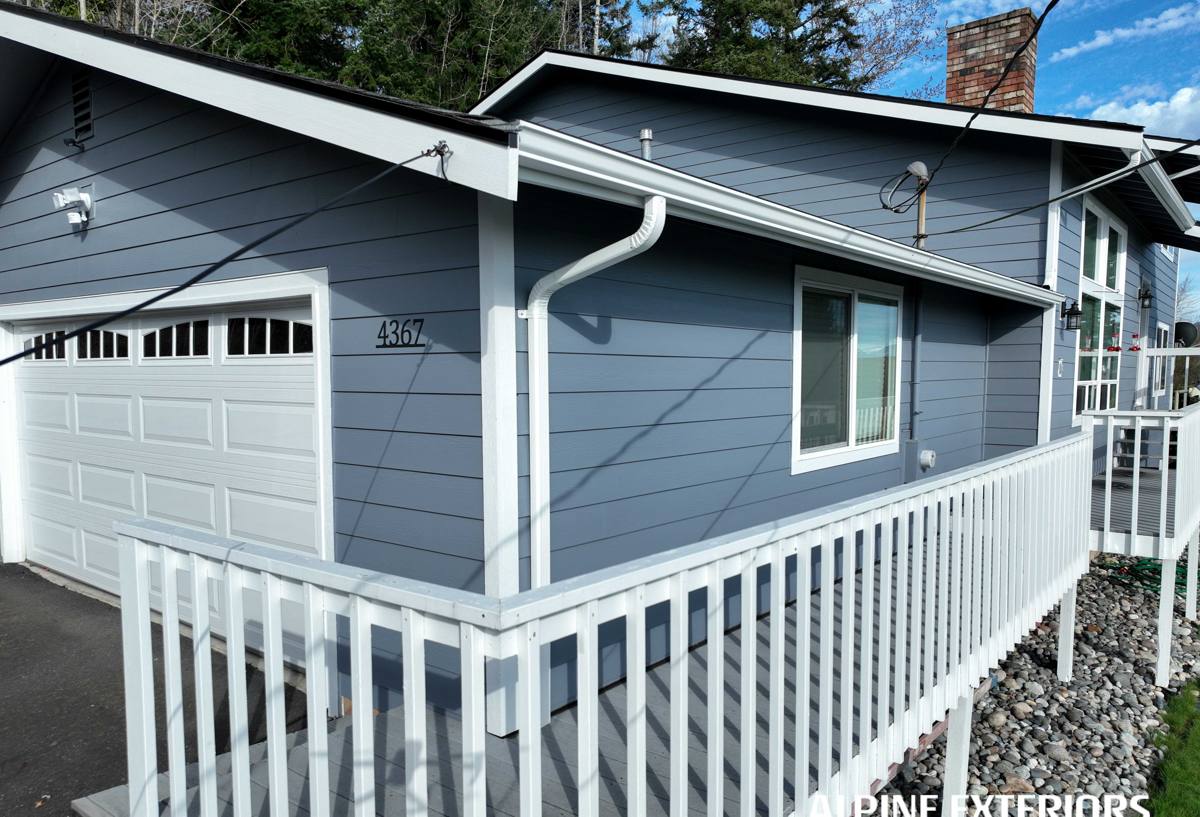
Roofing rarely fails in isolation from the rest of the exterior. The same wind-driven rain and moisture load that stresses a roof also pushes water against siding seams, window flashing, and deck framing. We handle all four — roofing, siding, windows, and decks — because they're really one system for keeping water out of a house, and problems in one area often show up as symptoms in another. A leak that looks like a roof issue sometimes traces back to a window flashing detail, and vice versa. Having one crew that understands the whole envelope means fewer missed connections between trades.
Siding in a Wet Climate
Siding on Cordata homes deals with the same driving rain, and materials with poor moisture resistance or failing caulk joints let water behind the wall plane, which can lead to rot long before it's visible from outside. We look at siding condition as part of any roof estimate, since the two systems share flashing details at rooflines.
Decks and Ground-Level Moisture
Uncovered or partially covered decks in this region take a beating from year-round moisture, and ledger board connections — where the deck meets the house — are a common point of hidden rot if not properly flashed. We check this whenever we're already on site for other exterior work.
Why Work With a Local Bellingham Crew
A contractor based in Bellingham and working across Whatcom County sees the same climate patterns repeatedly — the same moss cycles, the same salt exposure near the water, the same wind-driven rain events — and that shapes how we spec materials and details for every job, including work in Cordata. We're also close enough to respond quickly if a storm causes damage, rather than being weeks out on a schedule from a company based somewhere else. Local reputation matters to us because we're not leaving town after the job is done — we're still here if something needs a follow-up visit.
What to Expect From an Estimate
When we come out to look at a roof, siding, window, or deck project in Cordata, we walk the property, get on the roof when it's safe to do so, and give you a straightforward assessment — what's actually wrong, what your realistic options are, and rough cost ranges for each. We don't pressure-sell replacement when repair will do, and we explain the reasoning behind any material or method recommendation so you're making an informed decision, not just taking our word for it.
If you're noticing a leak, spotting moss buildup, or just want a professional opinion on how much life is left in your roof, siding, windows, or deck, we're happy to take a look. Fill out the form below for a free, no-pressure estimate.