 Bellingham
 Why Sunnyland's Climate Is Hard on Siding
Sunnyland sits close enough to Bellingham Bay and the Puget Sound shoreline that salt-laden air is a constant factor for anything mounted on the outside of a house. Add Whatcom County's pattern of driving, wind-pushed rain and a moss season that can stretch from early fall through late spring, and you have a combination that punishes siding materials that aren't built for it. Salt air accelerates corrosion on fasteners and trim metal. Wind-driven rain doesn't just fall straight down — it gets pushed sideways into laps, seams, and butt joints, which is exactly where cheap installations fail first. And the shade from mature trees common in this part of Bellingham keeps wall surfaces damp longer after every storm, which is what moss and algae need to take hold.
None of this means Sunnyland is a bad place to own a home — it just means siding here has to be chosen and installed with the local conditions in mind, not treated as an afterthought. A product and installation method that works fine in a dry climate can fail in five to ten years here if it wasn't designed for sustained moisture exposure.
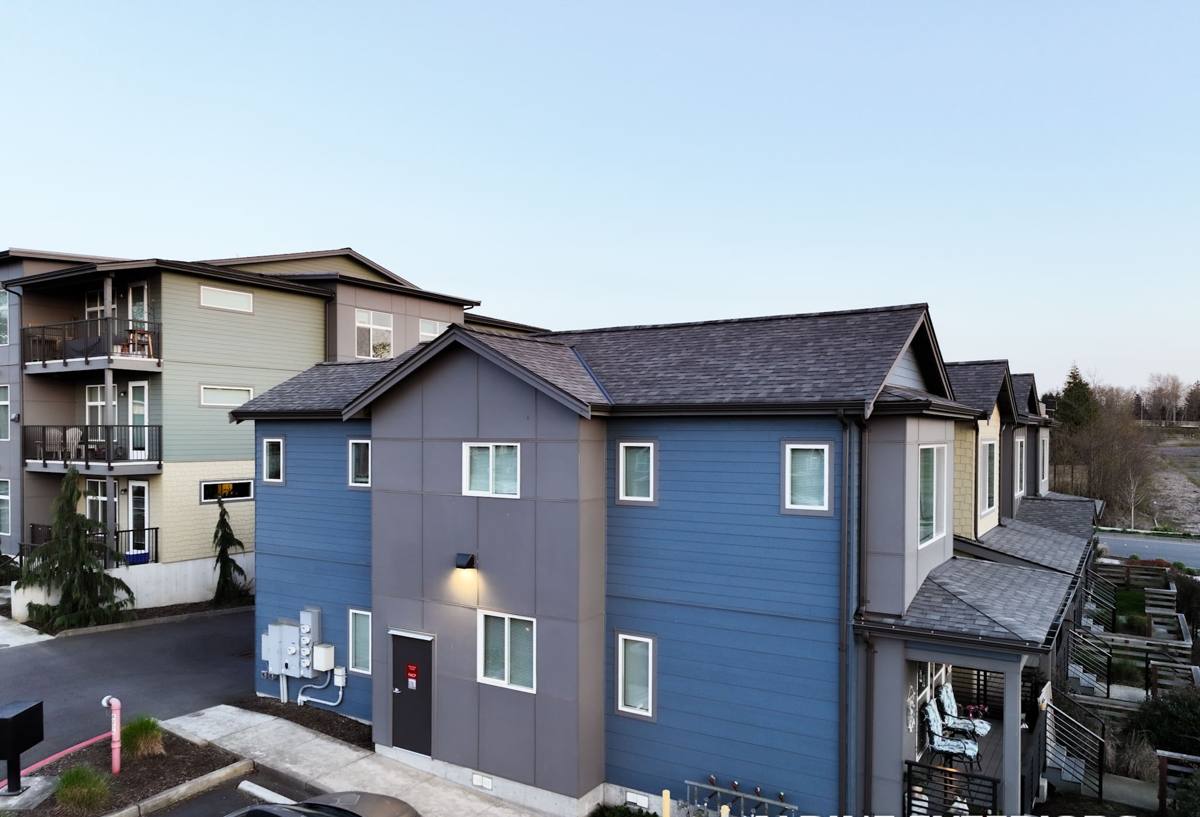
What "Correct" Siding Installation Actually Means
Siding failures in Whatcom County are rarely about the siding material sitting out in the open and simply wearing out. They're almost always about what's happening behind it — water getting past the surface layer and having nowhere to go, or getting trapped against the wall sheathing. A correct installation is built in layers, and every layer matters.
Weather-Resistive Barrier and Flashing
Before a single piece of siding goes up, the wall needs a properly lapped weather-resistive barrier, with flashing integrated at every window, door, and penetration so water is directed out and down, never into the wall cavity. This is the step that's invisible once the job is done — and the step most likely to be rushed on a low-bid job.
Rainscreen Gap
A small drainage gap between the back of the siding and the weather barrier lets any moisture that does get past the surface drain and evaporate instead of sitting against the wall. In a climate with as much sustained rain as Bellingham sees, this gap is what keeps a wall assembly drying out between storms instead of staying damp all winter.
Fastening and Clearances
Fiber cement siding has a specific nailing pattern, fastener type, and minimum clearance from grade, roofing, and decks. Skipping these specs doesn't show up as a problem on installation day — it shows up as cracking, buckling, or rot two or three winters later.
Caulking and Joint Treatment
Butt joints and trim transitions need the right sealant, applied correctly, and in some cases battens or trim details that shed water rather than collect it. Over-caulking is as much a problem as under-caulking — it can trap moisture instead of letting it escape.
Why We Install Only James Hardie Fiber Cement
We made a deliberate decision to install one siding system — James Hardie fiber cement — and nothing else. Not vinyl, not LP SmartSide, not primed spruce or cedar. That's a narrower offering than most exterior contractors advertise, and we think that's a feature, not a limitation, especially in a climate like this one.
Fiber cement is non-combustible and dimensionally stable, meaning it doesn't expand and contract with moisture the way wood-based products do — a real advantage when a wall is repeatedly wetted and dried through a Whatcom County winter. James Hardie's ColorPlus finish is baked on at the factory under controlled conditions, which gives it better fade and moisture resistance than field-applied paint, and it comes with a longer, transferable finish warranty. Hardie also engineers region-specific product lines (their HZ5 line, for example, is built for the wetter, colder climate zones the Pacific Northwest falls into), which is a level of climate-specific engineering that generic siding products don't offer.
We're not going to tell you every alternative product is worthless — vinyl, wood, and engineered wood siding all have legitimate uses and loyal installers. But we've seen enough of how they perform in coastal, high-moisture, moss-heavy conditions over the years that we stopped offering them. If a product needs more maintenance, more caulking, more repainting, or is more sensitive to standing moisture than we're comfortable putting our name behind, we don't install it — full stop.
Comparing Siding Materials for This Climate
| Material | Moisture & Rot Resistance | Moss/Algae Resistance | Maintenance | Typical Lifespan Here |
|---|---|---|---|---|
| James Hardie Fiber Cement | Excellent — won't rot, dimensionally stable | Good, especially with factory finish | Occasional wash, no repainting needed for years | 30+ years with correct install |
| Vinyl | Good on its own, but seams and gaps can trap moisture | Fair — can stain and hold algae in shaded areas | Low, but cracks and fades over time in cold snaps | 15–25 years |
| LP SmartSide / Engineered Wood | Fair — vulnerable if edges aren't sealed and maintained | Fair | Regular caulk and paint upkeep required | 15–20 years, shorter if maintenance lapses |
| Primed Spruce / Cedar | Poor to fair — absorbs moisture, needs consistent sealing | Poor in shaded, damp spots | High — repainting and sealing every few years | 10–20 years, highly maintenance-dependent |
These are general tendencies, not guarantees for every product on the market — installation quality changes the outcome for any material. But in a neighborhood with as much sustained moisture exposure as Sunnyland, the gap between low-maintenance and high-maintenance materials shows up fast.
Our Process on a Sunnyland Home
Assessment and Moisture Check
We start by looking at what's actually happening behind the existing siding, not just what it looks like from the curb. On homes in this area, that often means checking for trapped moisture around window flashing, at the base of walls, and in any spots shaded by trees or neighboring structures for most of the day.
Prep and Removal
Old siding, trim, and any compromised sheathing get removed and the wall is inspected before anything new goes up. This is the point where hidden rot or past water damage gets caught and addressed, rather than sealed in behind new siding.
Installation to Spec
Weather barrier, flashing, rainscreen gap, and Hardie panels or planks go up in that order, following James Hardie's published fastening and clearance specifications — not shortcuts based on what's fastest.
Final Detailing
Trim, caulking, and touch-up finishing get done carefully, because these details are what determine whether water sheds cleanly off the wall or finds a place to sit.
Signs a Sunnyland Home May Need New Siding
- Persistent green or black staining that returns quickly after washing
- Soft spots, bubbling, or visible warping in wood-based or engineered siding
- Paint that's peeling or blistering rather than just fading
- Gaps opening up at seams, corners, or trim joints
- Interior drafts or musty odors near exterior walls
- Visible cracking, especially near the base of walls or below windows
Any one of these on its own might just need a repair. Several together, especially on an older home, usually means the assembly behind the siding has been dealing with moisture for a while.
Living With a Long Moss Season
Moss and algae growth on siding isn't just cosmetic — it holds moisture against the surface far longer than an open, dry wall would experience. In shaded parts of Sunnyland, that can mean months of near-constant dampness against lower-quality siding each year. Fiber cement doesn't feed moss growth the way wood does, and its factory finish resists staining better than field-applied paint, but no siding is immune to moss taking hold, especially in deep shade. Keeping gutters clear, trimming back vegetation that holds moisture against walls, and periodic gentle washing all go a long way regardless of what material is on the house.
Why Local Experience in This Neighborhood Matters
Sunnyland has a mix of home ages and construction styles typical of an established Bellingham neighborhood, and a crew that already works in this specific pocket of Whatcom County knows what that mix tends to mean — older wall assemblies without modern weather barriers, mature landscaping that shades and dampens walls, and exposure patterns driven by the neighborhood's position relative to the water and prevailing weather. That familiarity shows up in faster, more accurate assessments and fewer surprises once the old siding comes off.
It also matters for permitting and code compliance specific to the City of Bellingham and Whatcom County, and for knowing which detailing choices hold up here versus which ones look fine on paper but fail in this climate within a few years.
If your Sunnyland home's siding is showing signs of wear, or you're planning ahead for a replacement, we're glad to take a look and give you a straight, no-pressure assessment of what's going on and what it would take to do the job right. Request a free estimate using the form below.