 Bellingham
 Sunnyland's Climate Is Harder on Siding Than It Looks
Sunnyland is one of Bellingham's older, more established neighborhoods, and that means a lot of the housing stock has been standing through decades of Pacific Northwest weather with whatever siding was fashionable — or affordable — at the time it was built or last re-sided. The problem isn't any one storm. It's the accumulation. Bellingham sits right on Bellingham Bay, and homes in and around Sunnyland get a steady dose of salt-laden air that slowly works on fasteners, trim, and any siding material that isn't built to resist it. Add in Whatcom County's driving, wind-pushed rain — the kind that hits siding sideways instead of straight down — and you've got a climate that punishes any gaps, cracks, or weak spots in a wall system.
Then there's moss. Western Washington's moss season isn't a few weeks in the fall; it's a long, damp stretch that can run from October well into spring, and mature tree cover in a lot of Sunnyland yards keeps siding shaded and slow to dry between rain events. Siding that never fully dries out is siding that's constantly at risk of trapping moisture against the wall — which is where real damage starts, whether that's wood rot, delamination, or paint and caulk failing years ahead of schedule.
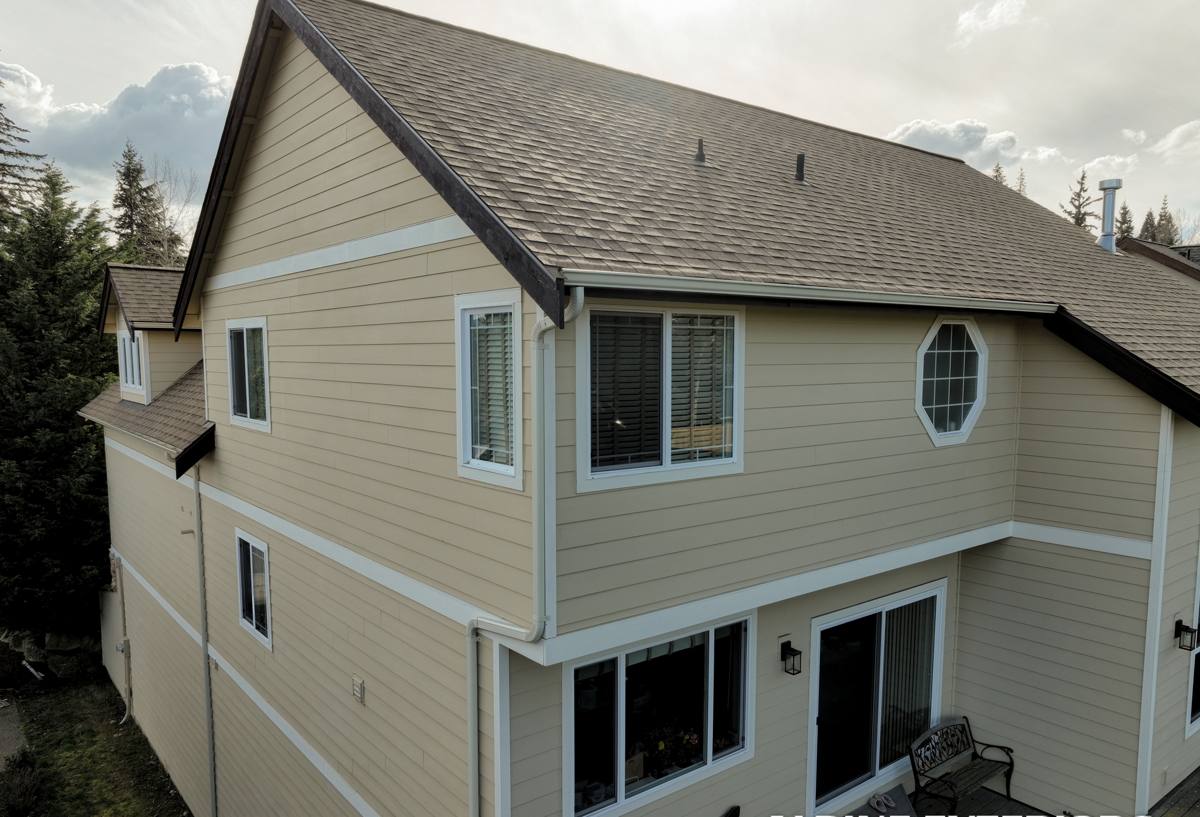
How This Shows Up on Sunnyland Homes Specifically
Because the neighborhood spans a wide range of build eras, we see a wide range of siding conditions on inspections — original wood lap siding that's been painted a dozen times, aluminum siding from a mid-century remodel, vinyl installed in the '90s or 2000s, and the occasional patch job where a previous owner mixed materials to save money. None of these were engineered for this specific climate, and it shows in predictable ways:
- Wood siding with soft, spongy sections near the bottom courses or under windows, where rain and splashback linger longest
- Paint that's peeling or bubbling within just a few years of a repaint, a sign moisture is moving through the wall from behind
- Vinyl that's cracked, warped, or pulled away from the wall after enough freeze-thaw cycles and UV exposure
- Persistent moss or black algae staining on north-facing or shaded walls that pressure washing only fixes temporarily
- Visible gaps or caulking failure at seams, corners, and trim, letting wind-driven rain behind the siding
Any one of these is worth a look. Several at once usually means the siding has reached the end of its useful life and patch repairs are just delaying a full replacement.
Why We Only Install James Hardie Fiber Cement
We get asked why we don't offer vinyl, LP SmartSide, or one of the other fiber cement brands on the market. The honest answer is that we've standardized on James Hardie because, installed correctly, it holds up to exactly the conditions Sunnyland deals with — and it lets us stand behind the work without hedging.
James Hardie siding is fiber cement: sand, cement, and cellulose fiber engineered into a board that doesn't absorb water the way wood-based products can, and doesn't soften, warp, or become brittle the way vinyl can in a climate that swings between cold, wet winters and dry summer heat. It's non-combustible, which matters more each year as wildfire smoke and dry-season fire risk become a bigger part of life in Washington. Hardie's ColorPlus factory-applied finish is baked on under controlled conditions rather than sprayed on-site, which means better adhesion and a finish that resists fading and chipping far longer than field-applied paint — a real advantage in a neighborhood where shaded, damp walls are hard on ordinary paint jobs. And Hardie backs its products with a strong, transferable limited warranty, which matters if you ever sell the house.
None of this means other products are junk — vinyl is inexpensive and low-maintenance in the right application, and LP SmartSide has its own engineered strand-based construction. But we've made a professional call: for the moisture load, salt air, and moss exposure that Bellingham homes deal with year after year, fiber cement installed to spec is the product we're willing to warranty our labor against. That's the standard we hold every job to, including yours.
What a Correct Siding Replacement Actually Involves
Tear-Off and Sheathing Inspection
Replacing siding isn't just swapping old boards for new ones. Once the old siding comes off, that's the one chance to actually see the wall — the sheathing, the framing, and any water damage that's been hiding underneath. On older Sunnyland homes especially, we routinely find sections of sheathing that need repair or replacement before new siding can go on. Skipping this step and siding directly over a compromised wall is how a brand-new siding job ends up with problems in five years instead of thirty.
Weather-Resistive Barrier and Flashing
A correctly installed weather-resistive barrier (housewrap) and properly integrated flashing around windows, doors, and penetrations is what actually keeps water out — the siding itself is the first line of defense, but the barrier behind it is what protects the wall if any water does get past the surface. This is also where a lot of shortcut installations fail: flashing that's missing, reversed, or not lapped correctly will eventually let water in no matter how good the siding looks.
Installing to Manufacturer Specification
James Hardie products are engineered around specific installation requirements — fastener type, spacing, clearance from grade and roof lines, and gaps at butt joints and trim that allow for expansion. Caulking the wrong joints, nailing too tight, or closing up gaps that are supposed to stay open are common mistakes that void warranty coverage and cause problems down the road. Installing to spec isn't optional detail work; it's what determines whether the siding performs the way it's supposed to for the next several decades.
Our Process for Sunnyland Projects
We start with an on-site inspection, not a phone estimate, because siding condition and wall issues are impossible to judge accurately from photos or a description. From there:
- We assess the existing siding, sheathing, and trim, and walk you through what we find, good or bad
- We help you choose a Hardie product line, profile, and color that fits the age and style of the home — including Hardie's climate-engineered HZ5 formulation, suited to the Pacific Northwest's wet, moderate climate
- We provide a written estimate that separates any necessary sheathing or repair work from the siding install itself, so you know exactly what you're paying for
- We schedule around Whatcom County's wetter months where possible, since proper installation depends on dry working conditions for the wall assembly
- We tear off, repair as needed, install the weather barrier and flashing, then install siding and trim to manufacturer spec
- We do a final walkthrough with you before we consider the job done
What Affects the Cost of a Siding Replacement
Every home is different, but the same handful of factors drive most of the cost variation we see on Sunnyland projects:
| Factor | Why It Matters |
|---|---|
| Sheathing condition | Hidden water damage found at tear-off adds repair scope before new siding can go on |
| Home size and wall complexity | Dormers, multiple gables, and cut-up wall lines take more labor and material than simple rectangular walls |
| Siding profile chosen | Lap siding, shingle-style panels, and board-and-batten each have different material and install time |
| Trim and detail work | Window and door trim, corner boards, and fascia detail add cost but also add durability and curb appeal |
| Access and site conditions | Mature landscaping, narrow side yards, or multi-story walls common in older neighborhoods can affect labor time |
Signs It's Time to Replace, Not Just Patch
- Multiple areas of soft or spongy siding, not just one isolated spot
- Paint or finish failing within a couple of years of being redone
- Visible gaps, warping, or siding pulling away from the wall
- Moss or algae staining that returns quickly after cleaning
- Rising energy bills that suggest air and moisture are moving through the wall assembly
- Siding that's simply reached or passed the manufacturer's expected service life
Why Hiring a Crew That Already Works Sunnyland Matters
A contractor who works this neighborhood regularly already understands the mix of home ages you'll find on any given block, knows what Bellingham's building department expects for permitting and inspections, and has a feel for how tree cover, lot layout, and proximity to the bay affect a given house's exposure. That local familiarity shortens the guesswork on your project — from correctly diagnosing what's happening under the old siding to knowing how to sequence the work around Whatcom County's weather patterns so materials go on dry and stay protected.
It also means accountability. A crew that's going to be doing roofing and siding work in this area for years to come has every reason to install your siding correctly the first time and stand behind the warranty if something comes up later.
Questions Worth Asking Before You Sign a Contract
- Will you inspect the sheathing before quoting a final price, or is that an unknown until tear-off?
- What specific siding product and profile are you installing, and why?
- Are you a certified installer for that product, and what does the manufacturer warranty actually cover?
- How do you handle unexpected water damage found once the old siding comes off?
- What's included in your written estimate versus billed as an add-on later?
If you're weighing a siding replacement for a Sunnyland home, we're happy to come take a look, walk the exterior with you, and put together a straightforward, no-pressure estimate — no obligation, just a clear picture of what your home actually needs.