 Bellingham
 Sunnyland's Roofs Work Harder Than People Realize
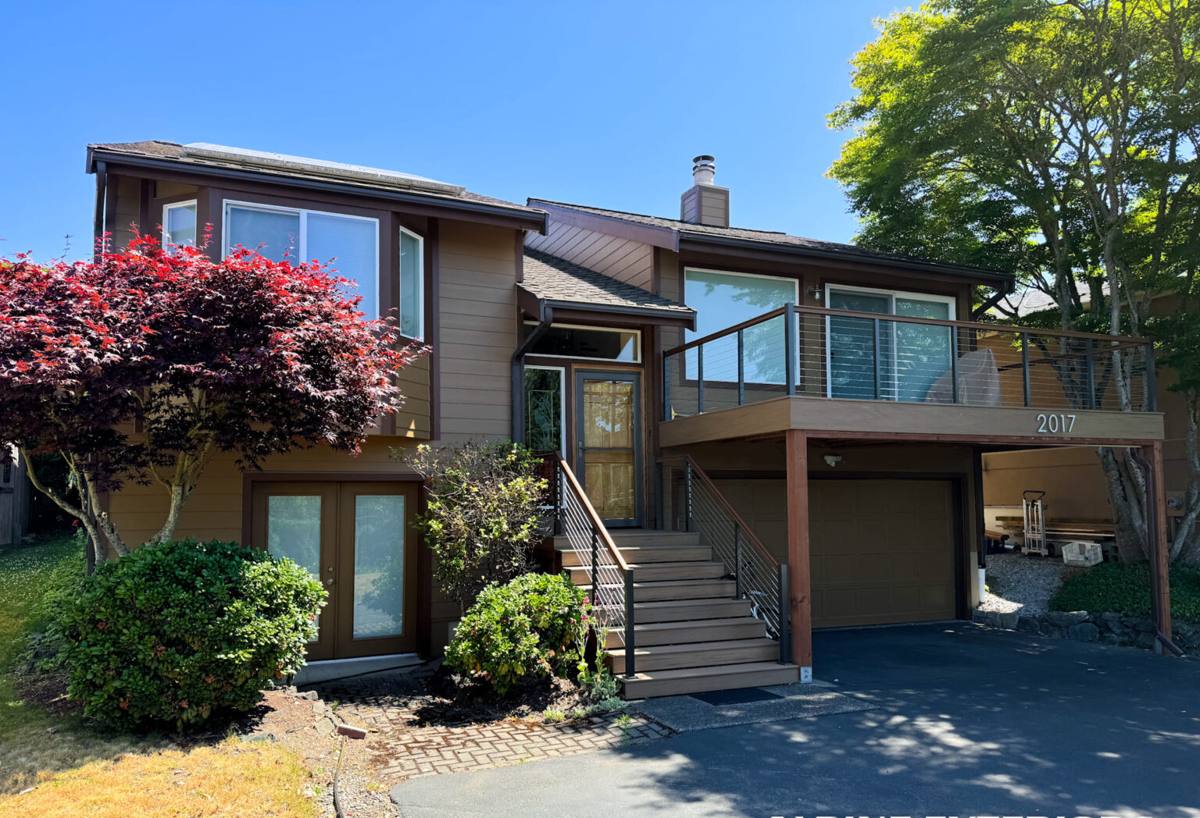
Sunnyland sits close enough to the water and the tree canopy that its roofs deal with a specific combination of stress: salt-tinged air drifting up from Bellingham Bay, long stretches of driving rain off the Salish Sea, and heavy shade from mature conifers and maples that keeps moss and moisture around far longer than it would in a drier, more open part of Whatcom County. None of that is dramatic on its own. But layered together, year after year, it shortens the working life of a roof that was installed without those conditions in mind.
A new roof installation in this neighborhood isn't just a matter of picking a shingle color and nailing it down. It's a decision about ventilation, underlayment, flashing detail, and material choice that either accounts for Bellingham's marine climate or quietly fights it for the next twenty years. This page is about what that decision actually involves, and what a correct installation looks like for a Sunnyland home specifically.
What Salt Air, Rain, and Moss Actually Do to a Roof
Each of these conditions attacks a roof differently, and understanding the mechanism is what separates a roof that lasts from one that doesn't.
Salt Air
Airborne salt from the bay accelerates corrosion on any exposed metal — nails, flashing, gutter fasteners, vent caps. Over time this shows up as rust streaking, loosened fastener heads, and flashing that fails at the seams years before the shingles around it wear out. The fix isn't complicated: use corrosion-resistant fasteners and flashing rated for coastal exposure from the start, rather than standard hardware that was never meant for this environment.
Driving Rain
Wind-driven rain doesn't just fall straight down — it gets pushed sideways and upward under shingle edges, around vents, and into valleys. A roof built for a drier inland climate can get away with lighter underlayment and looser flashing tolerances. A Bellingham roof can't. Every penetration, valley, and edge needs to be sealed as though water is going to attack it from more than one direction, because here, it often will.
Moss and Shade
Moss doesn't just sit on top of shingles — its root structure works into the granule surface and lifts shingle edges, and the moisture it holds against the roof deck promotes rot underneath. In shaded Sunnyland yards, moss season isn't really a season; it's closer to a year-round background condition that needs to be designed against rather than just cleaned off occasionally.
What a Correct New Roof Installation Actually Involves
A proper installation is a sequence, and skipping or rushing any step is where most premature failures start.
- Full tear-off down to the deck — layering new shingles over old traps moisture and hides deck damage.
- Deck inspection and repair — any soft, delaminated, or water-stained sheathing gets replaced before anything new goes down.
- Ice-and-water shield at eaves, valleys, and penetrations — the areas most exposed to wind-driven rain and standing moisture.
- Synthetic underlayment across the full deck for a secondary water barrier that outperforms old-style felt in wet climates.
- Corrosion-resistant flashing and fasteners at every chimney, wall intersection, skylight, and vent — chosen with salt air in mind, not just cost.
- Balanced ventilation — intake at the eaves, exhaust at the ridge, sized to the attic so moisture has somewhere to go instead of condensing under the deck.
- Correct shingle or panel installation — nailing pattern, exposure, and starter courses matched to manufacturer specs, not shortcuts.
- Final walkthrough — gutters, downspouts, and roof-to-wall transitions checked so water actually leaves the roof instead of pooling near it.
Every one of those steps matters everywhere. In Sunnyland, the flashing, underlayment, and ventilation steps carry more weight than usual, because they're the ones directly fighting moss growth and moisture intrusion.
Choosing a Roofing Material for This Neighborhood
There's no single "best" material — there's a best fit for a given roof, budget, and tolerance for maintenance. Here's how the common choices actually compare under Sunnyland's conditions.
| Material | Moss Resistance | Salt Air / Rain Behavior | Typical Lifespan | Maintenance Reality |
|---|---|---|---|---|
| Architectural (dimensional) asphalt shingle | Moderate — benefits from algae/moss-resistant granules | Performs well with proper underlayment and flashing | 25–35 years | Periodic moss removal recommended in shaded yards |
| Standard 3-tab asphalt shingle | Lower — lighter profile holds less resistance | Adequate but less margin for error | 15–20 years | More frequent moss and wear issues in heavy shade |
| Metal roofing (standing seam or panel) | High — sheds moisture, little surface for moss to grip | Needs coastal-rated coatings and fasteners near the bay | 40–60 years | Low, but requires correct fastener spec to avoid corrosion |
| Cedar shake | Low without diligent upkeep — organic material holds moisture | Absorbs and releases moisture repeatedly in driving rain | 20–30 years with maintenance | High — regular treatment and moss control required |
We install several of these depending on the home and the homeowner's priorities. Where we draw a line professionally is on assemblies that trade long-term moisture performance for a lower upfront cost — for example, thin-profile shingles or minimal underlayment packages that look fine on day one but give up the margin this climate actually requires. That's a standards issue on our end, not a knock on any particular manufacturer.
Ventilation: The Step Homeowners Rarely Ask About
Attic ventilation gets skipped over in a lot of roofing conversations, but in a wet, shaded neighborhood like Sunnyland it's one of the most important things we look at. A roof deck that stays cool and dry from underneath resists rot and moss-driving moisture far better than one sitting over a stagnant, humid attic. Balanced intake-and-exhaust ventilation — sized correctly to the attic's square footage — is part of every new roof installation we do here, not an upsell.
Our Process for a Sunnyland Installation
- On-site inspection and estimate — we look at the existing roof, attic ventilation, decking condition, and shade/moss exposure specific to the property.
- Clear, itemized proposal — material options, scope of tear-off, and any deck repair contingencies spelled out before work starts.
- Scheduling around the weather — we plan installation days to work with Bellingham's rain patterns rather than rush a deck exposed to an incoming system.
- Tear-off and deck repair — full removal, deck inspection, and replacement of any compromised sheathing.
- Installation — underlayment, flashing, ventilation, and roofing material installed to manufacturer and code specification.
- Site cleanup — magnetic sweep for nails, debris removal, and gutter check.
- Final walkthrough — we go over the finished roof with the homeowner before calling the job done.
What Drives the Cost of a New Roof
Every roof is different, so exact numbers depend on the inspection — but these are the factors that move the price up or down.
| Cost Factor | Why It Matters |
|---|---|
| Roof size and pitch | More surface area and steeper pitches take longer and require more safety setup |
| Number of existing layers | Tear-off of multiple old layers adds labor and disposal cost |
| Deck condition | Rotted or delaminated sheathing found during tear-off means added repair |
| Material selection | Asphalt, metal, and cedar carry different material and labor costs |
| Roof complexity | Valleys, dormers, skylights, and chimneys each add flashing detail and time |
| Access and site conditions | Tree cover, tight lot lines, and limited driveway access affect setup and disposal logistics |
We'd rather walk a homeowner through these factors honestly during the estimate than quote a number that doesn't hold up once tear-off starts.
Signs a Sunnyland Roof May Need Replacement, Not Repair
- Granules collecting in gutters or at downspout outlets in noticeable amounts
- Shingles that are curling, cupping, or missing in multiple areas rather than one isolated spot
- Moss buildup that returns quickly after cleaning, especially along shaded slopes
- Soft or spongy spots when walked on, which can indicate deck damage underneath
- Visible daylight or water staining in the attic near the roof deck
- A roof already past 20–25 years old with no major work done since installation
- Flashing around chimneys, walls, or vents that's rusted, lifted, or separating
One or two of these can sometimes be addressed with a targeted repair. Several at once, especially combined with an older roof, usually means replacement is the more honest recommendation.
Why Local Experience in This Neighborhood Matters
A crew that already works in Sunnyland has seen how specific lots handle shade, drainage, and wind-driven rain, and that shows up in small decisions — where to add extra flashing, which slopes need closer moss attention, how a particular tree line affects a roof's drying pattern. It's the same reason a roof built to a generic national spec sheet doesn't always hold up the same way here as it does somewhere drier and more open. Bellingham and the rest of Whatcom County share this marine climate, but shaded, tree-lined neighborhoods like Sunnyland get more of its downside than open, sunnier lots do — and a correct installation accounts for that difference rather than treating every roof the same.
If you're weighing repair versus replacement, or just want a straight answer on what your roof actually needs, we're happy to take a look. The estimate is free, there's no pressure attached to it, and you can start with the form below.