 Bellingham
 New Construction Is a Different Job Than Window Replacement
Installing windows in a home that's still framed is not the same trade as swapping out an old window in a finished wall. In new construction, the window goes in before siding, before interior trim, and often before the weather-resistive barrier is fully lapped. That's an advantage — you get full access to the rough opening from both the exterior and interior — but it also means every mistake made at this stage gets buried behind siding and drywall for the next 20-plus years. In Sunnyland, where homes range from older infill lots to newer builds going up around Bellingham's established neighborhoods, we see both scenarios: a builder framing a new house from scratch, or a homeowner adding a room and needing the new window openings done to the same standard as the rest of the shell.
Because a poorly flashed new-construction window doesn't leak right away, it's easy for a rushed or inexperienced install to pass a final walkthrough and still cause rot five or ten years down the road. That's the real risk with this work — not the window unit itself, but everything around it.
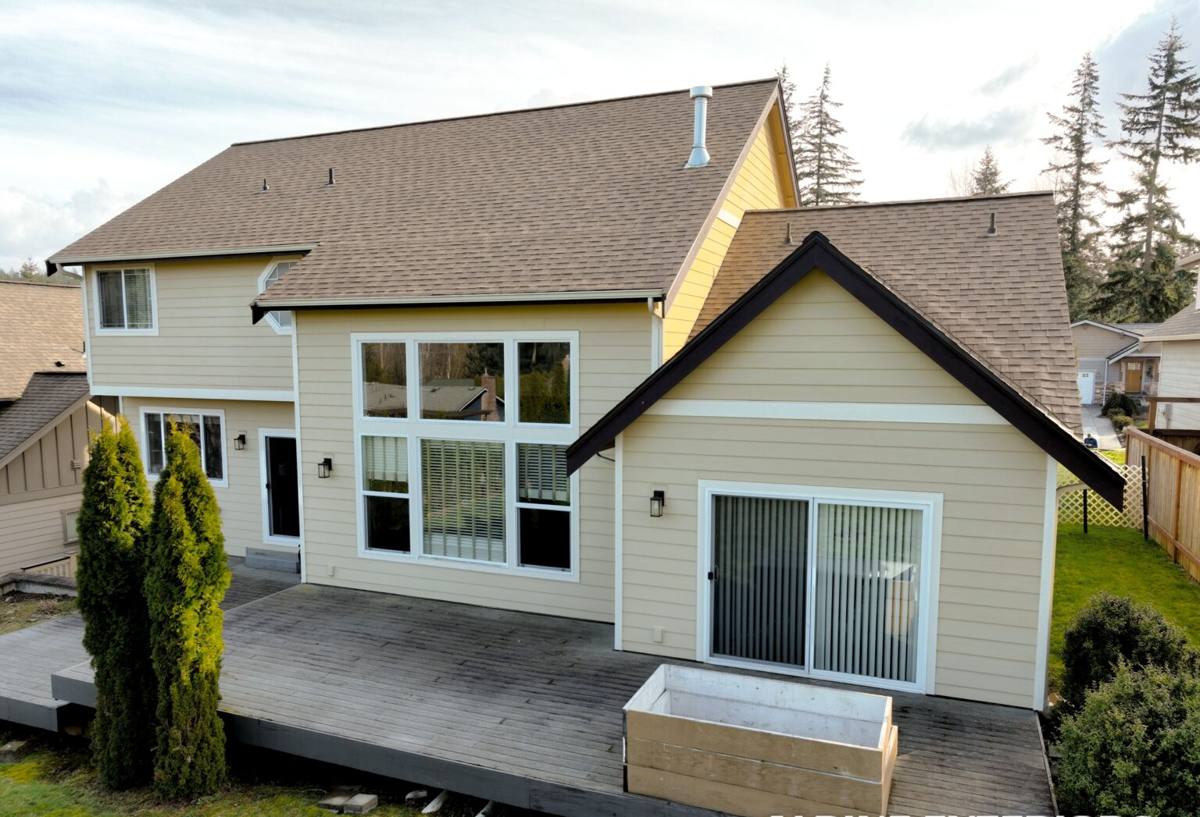
What Sunnyland's Climate Asks of a New Window Install
Salt Air and Hardware Corrosion
Bellingham sits on Bellingham Bay, and homes throughout Whatcom County — including Sunnyland — deal with a steady dose of salt-laden air coming off the water. Salt air accelerates corrosion on exposed fasteners, window hardware, and metal flashing that isn't rated for a coastal environment. We spec corrosion-resistant fasteners and flashing on every new-construction install, not just the ones closest to the water, because salt air travels further inland than most people expect.
Driving Rain
Pacific storms don't just drop rain straight down — wind pushes it sideways into wall assemblies, especially on south- and west-facing elevations. A window that's only sealed with a bead of caulk around the trim will eventually let wind-driven rain past the frame. The real defense against driving rain is built in layers, underneath the trim, before the window is ever set — which is exactly the part of the job that's invisible once construction wraps up.
A Long, Damp Moss Season
Whatcom County's moss season runs long — mild temperatures and near-constant moisture keep moss and algae active on roofs, siding, and trim for much of the year. Around windows specifically, that dampness shows up as staining on sills and trim, and it means any wood component near a window opening needs a real drainage path so it can dry out between storms instead of sitting wet.
What a Correct New-Construction Window Installation Involves
A properly installed new-construction window is really a sequence of layers, each one shedding water to the layer below it, so nothing relies on a single seal to keep water out. The core steps are:
- Sloped sill pan flashing at the rough opening, so any water that gets past the window has somewhere to drain — out, not into the wall cavity.
- Weather-resistive barrier integration using a shingle-lap sequence — head flashing laps over the housewrap, side flashing laps over the sill pan, in that specific order.
- Correct nailing-fin fastening at the manufacturer's specified spacing, without overdriving fasteners, which can bow the frame and cause the sash to bind or fail to seal.
- Backer rod and low-expansion sealant at the interior air seal — not spray foam alone, which can bow vinyl frames if overfilled.
- Shim, plumb, and square checks before final fastening, so the window operates smoothly and doesn't rack under the weight of siding and trim installed later.
- Head flashing with a drip cap above the window, kicking water out and away from the top of the frame.
Skip or reorder any one of these and the window can look perfect for years while water quietly works its way into the framing behind it.
Choosing Window Products Built for This Climate
Frame material matters more in a marine climate than it does somewhere dry. The table below reflects how the common options generally perform under Whatcom County conditions — salt air, sustained moisture, and temperature swings between damp winters and warm summers.
| Frame Material | Moisture Tolerance | Maintenance | Typical Lifespan |
|---|---|---|---|
| Vinyl | Good — won't rot or corrode, minimal upkeep | Low | 20–30+ years |
| Fiberglass | Very good — dimensionally stable, resists warping | Low | 30+ years |
| Wood-clad | Depends on cladding integrity — exposed wood is vulnerable | Moderate to high | Varies with maintenance |
| Aluminum | Prone to corrosion near salt air unless properly coated | Moderate | Varies with coating quality |
We don't push one brand over another — the honest answer depends on your budget, the look you want, and how much upkeep you're willing to commit to. What we do insist on is proper installation regardless of frame material, because even a premium window unit will fail early if the flashing behind it is wrong.
Our Process for New-Construction Window Installation in Sunnyland
- Rough opening check — confirming the opening is sized, plumb, level, and square before the window ever arrives on site.
- Sill pan flashing — sloped and sealed so water has a clear exit path.
- Dry-fit and set — window is set into the opening, shimmed, and checked for square and smooth operation.
- Fastening — nailing fin secured at proper spacing per manufacturer specs.
- Flashing sequence — side and head flashing integrated with the weather-resistive barrier in the correct shingle-lap order.
- Interior air seal — backer rod and sealant, or a light foam pass rated for window applications.
- Final inspection — operation check, seal check, and photo documentation of the flashing layers before siding covers them up.
That last step matters for new construction specifically — once siding goes on, the flashing work is hidden. We document it so there's a record of what's behind the wall.
Mistakes We See in New-Construction Window Work
Most of the window problems we're called to look at in older Bellingham homes trace back to shortcuts taken at the framing stage — not the window product itself. A few things worth watching for if you're overseeing a build or addition in Sunnyland:
- Caulk used as the only water defense, with no sill pan or flashing layers underneath it
- Housewrap taped over the nailing fin instead of properly lapped in shingle-fashion
- Spray foam packed tightly around the frame, which can bow vinyl and cause the sash to stick
- Fasteners driven flush or overdriven, deforming the frame at the fastening points
- No drip cap or head flashing above the window
- Rough openings that are out of square, forcing the window to be racked into place
Any one of these can pass a casual look and still cause a slow leak years later. If you're getting quotes from other contractors, it's fair to ask directly how they handle sill pan flashing and WRB integration — a straight answer tells you a lot.
What New Windows Cost to Install During New Construction
Pricing depends on the window itself, the number of openings, and the complexity of the flashing detail at each one. Broad factors that move the number:
| Factor | Impact on Cost |
|---|---|
| Frame material (vinyl vs. fiberglass vs. wood-clad) | Fiberglass and wood-clad run higher than standard vinyl |
| Window size and glazing (double vs. triple pane) | Larger units and upgraded glass packages increase cost per opening |
| Number of openings on the job | Per-unit cost typically drops with volume on a full build |
| Flashing complexity (dormers, bays, unusual framing) | Non-standard openings take more labor to flash correctly |
| Site access and building stage | Coordinating with a framer's schedule can affect labor time |
We'd rather walk your plans and give you a real number than throw out a broad figure that doesn't hold up once we see the openings.
Why a Crew That Already Works Sunnyland Matters
Window flashing details that work fine in a dry climate aren't automatically right for a wall that sits under Bellingham's rain load for eight or nine months of the year. A crew that regularly works Sunnyland and the surrounding Whatcom County area already knows which flashing sequence actually holds up here, which fastener types resist salt air corrosion, and how to schedule around the region's wet season without compromising the install. We're also familiar with local inspection expectations, which keeps a new build or addition moving without avoidable delays. That local track record isn't a marketing line — it's the difference between a window that's sealed for this climate and one that's sealed for a climate this house doesn't have.
Protecting the Investment After Move-In
Once a new-construction window is properly flashed and trimmed, it doesn't need much — but a little attention goes a long way in this climate. Keep weep holes and drainage tracks clear of debris, especially during moss season when organic buildup accumulates on sills and trim. Rinse salt residue off exterior frames periodically if the home is closer to the bay. And keep an eye on caulk lines at the interior and exterior trim, recaulking if you see cracking, since sealant is a maintenance item even when the flashing behind it is doing its job correctly.
If you're planning a new build, an addition, or replacing window openings in Sunnyland, we're happy to walk the plans or the framed openings with you and give you a straightforward, no-pressure estimate — just fill out the form below.