 Bellingham
 Roofing in Lynden: Built for Whatcom County Weather
Lynden sits out on the flatter farmland of Whatcom County, a little further from the water than downtown Bellingham but still squarely inside the same weather system. That means the same wet Pacific Northwest pattern that soaks the county from fall through spring hits Lynden roofs just as hard — long stretches of steady rain, low winter sun angles that keep shaded roof sections damp for weeks at a time, and the kind of humidity that gives moss and moisture problems a real head start if a roof isn't maintained. Homes closer to the water can pick up salt-laden air that accelerates corrosion on metal fasteners and flashing, and even inland properties feel some of that effect during windier weather when air moves across the bay and up the valley.
None of this means a Lynden roof is doomed to fail early. It means the roofing system, the ventilation, and the maintenance schedule all need to be matched to what this climate actually does over a 20-, 30-, or 40-year roof life — not to a generic national standard written for a drier region.
Driving Rain and Wind-Driven Moisture
Whatcom County storms rarely arrive as a straight-down rain. Wind pushes water sideways under shingle tabs, into open valleys, and around poorly sealed flashing at chimneys, skylights, and roof-to-wall transitions. On open, exposed lots — which are common around Lynden's farmland and larger rural parcels — wind-driven rain is often a bigger factor than on more sheltered, tree-covered lots closer to town. That makes proper underlayment, sealed flashing details, and correctly lapped shingle courses more important here, not less.
Moss, Shade, and the Long Wet Season
Moss needs moisture and time, and this region provides both in abundance. North-facing slopes, roof sections shaded by trees or outbuildings, and any low-slope area that holds moisture longer after a storm are the spots where moss and algae streaking show up first. Left alone, moss holds water against the roofing material, lifts shingle edges, and can work its way under flashing over a few seasons. It's rarely an emergency in year one, but it's one of the most predictable, preventable sources of early roof failure we see across Whatcom County.
Common Roofing Issues We See on Lynden Homes
Lynden's mix of established in-town homes, newer residential construction, and larger rural and agricultural properties means we run into a wide range of roofing conditions. A few patterns come up again and again:
- Moss and algae buildup on shaded or north-facing roof planes
- Worn or cracked flashing around chimneys, skylights, and roof valleys
- Granule loss on older asphalt shingles from years of driving rain and UV exposure
- Gutters and downspouts overwhelmed during heavy storm events, leading to water backing up under the roof edge
- Ventilation gaps in attics that trap moisture and shorten the life of the roof deck from underneath
- Metal roofing on barns, shops, and outbuildings showing fastener wear or seam issues from years of temperature swings
Because a lot of Lynden properties include secondary structures — shops, barns, detached garages — we treat roof inspections as a whole-property conversation, not just a look at the main house roof.
Roof Repair vs. Replacement: How We Help You Decide
Not every roofing problem in Lynden means a full replacement. A lot of what we find is contained damage that a proper repair can address, especially when it's caught before moisture has had time to spread into the decking or attic space. The honest answer depends on the roof's age, how widespread the damage is, and what's happening underneath the surface layer.
| Factor | Repair Usually Makes Sense | Replacement Usually Makes Sense |
|---|---|---|
| Roof age | Under 15 years, or well-maintained older roof | Near or past the material's expected lifespan |
| Damage extent | Isolated to one section, flashing, or a small leak | Multiple leak points or widespread granule loss |
| Decking condition | Solid, no soft spots or rot | Soft decking, staining, or sagging present |
| Moss/algae history | Recent, surface-level growth | Long-term growth that's lifted shingles or damaged the mat |
| Insurance or storm event | Minor localized wind or debris damage | Significant storm damage affecting large roof areas |
We'll always tell you plainly which category your roof falls into, and why — including when a repair is genuinely the right call, even though a replacement is more revenue for us. A roof that's repaired at the right time can often run another decade or more before replacement makes sense.
Materials We Install and Why
Different roofing materials handle Whatcom County's wet, moss-prone climate differently, and the right choice usually comes down to the roof's slope, the home's style, and what the homeowner wants to maintain long-term.
| Material | Typical Lifespan | Climate Considerations |
|---|---|---|
| Architectural asphalt shingle | 25–30 years | Good all-around performer; needs periodic moss treatment and gutter maintenance |
| Standing seam metal | 40–50+ years | Sheds moss and moisture well due to smooth surface; fasteners and seams need quality installation to avoid long-term wear |
| Composition 3-tab shingle | 15–20 years | Lower upfront cost but shorter lifespan under sustained wet exposure |
| Cedar shake | 20–30 years with upkeep | Traditional look but requires diligent moss and moisture management in this climate |
We don't push one material as universally "best" — we walk through the trade-offs in maintenance, upfront cost, and appearance so you can pick what fits your home and your tolerance for upkeep. When a product isn't a good fit for a particular roof — low slope, heavy shade, tight budget — we'll say so and explain why, rather than installing something that's likely to underperform on your specific roof.
Beyond the Roof: Siding, Windows, and Decks
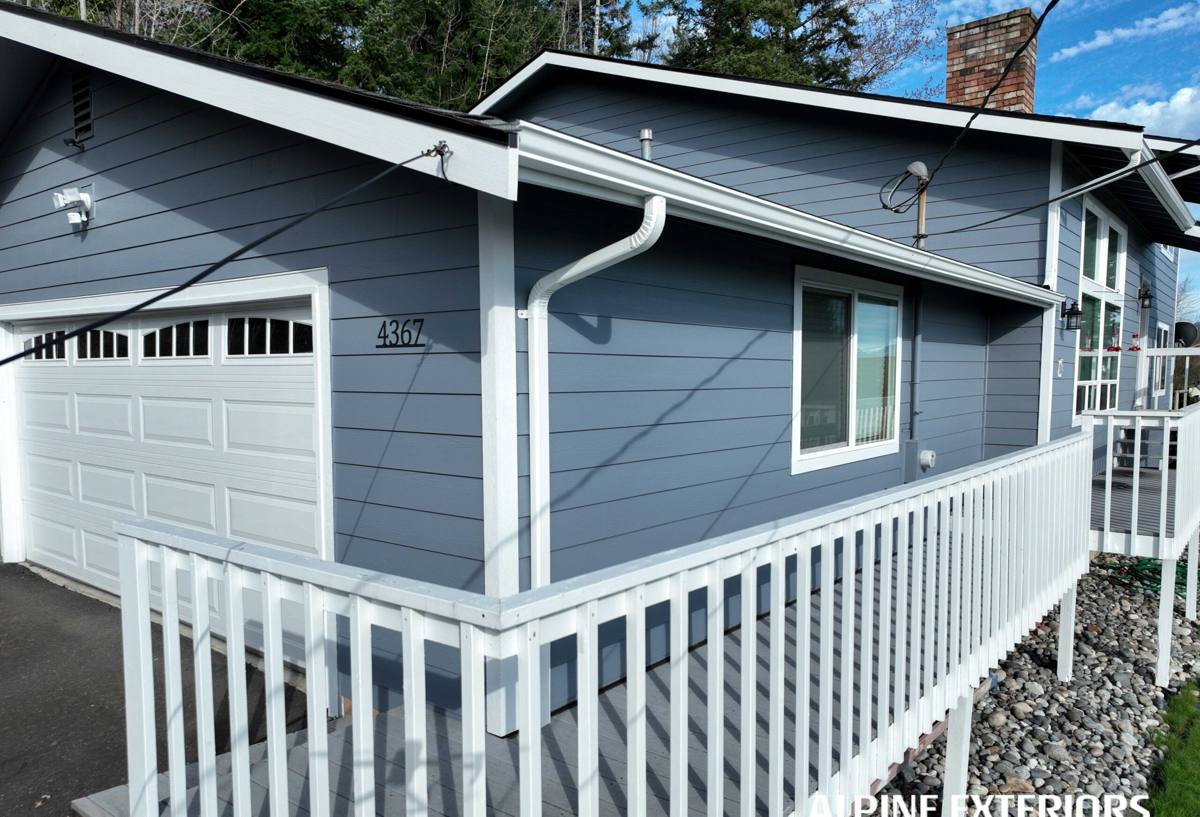
Roofing problems in Whatcom County rarely stay isolated to the roof. Water that gets past a compromised roof edge or flashing detail often ends up running down behind siding or pooling near window trim, so we look at the whole exterior envelope, not just shingles.
Siding
Wind-driven rain and long wet seasons put real stress on siding seams, caulking, and trim details. We install and repair siding with attention to how water actually moves across a wall in this climate — proper flashing above windows and doors, correct overlap, and drainage behind the cladding so moisture doesn't get trapped.
Windows
Older or poorly flashed windows are one of the most common quiet sources of water intrusion in Whatcom County homes. We check window flashing and seals as part of broader exterior work, since a leak blamed on the roof sometimes turns out to be coming from a window head or sill instead.
Decks
Decks take a beating from standing water, freeze-thaw cycles, and the same moss and algae growth that affects roofs. Proper drainage, ledger flashing, and material choice matter a lot here — a deck built without attention to water management in this climate will show rot and decay far sooner than one built with it in mind.
What to Expect When You Call a Local Crew
When we come out to a Lynden property, whether it's an in-town home or a larger rural parcel, the visit follows the same honest process: a full look at the roof surface, flashing, ventilation, and any secondary structures, followed by a plain-language explanation of what we found and what your realistic options are. No pressure, no inflated urgency — just a clear picture of where your roof and exterior actually stand.
Signs it's worth having someone take a look:
- Visible moss or dark streaking on the roof surface
- Granules collecting in gutters or at downspout outlets
- Water stains on interior ceilings or in the attic
- Daylight visible through the roof deck from inside the attic
- Curling, cracked, or missing shingles
- Sagging rooflines or soft spots underfoot on a flat or low-slope section
- Higher-than-usual heating bills, which can point to attic moisture or ventilation issues
A Maintenance Checklist for Whatcom County Homes
Most of the roofing damage we repair in Lynden and the surrounding area could have been slowed or prevented with basic, regular maintenance. A simple annual routine goes a long way in this climate:
- Clean gutters and downspouts before the fall rains set in
- Treat or remove moss on shaded roof sections before it spreads
- Trim back tree branches that keep roof areas shaded and damp
- Check attic ventilation to make sure moist air isn't getting trapped
- Inspect flashing around chimneys, skylights, and vents for gaps or wear
- Walk the roofline after major storms to check for obvious damage
Why a Local Whatcom County Crew Matters
A crew that works across Bellingham, Lynden, and the rest of Whatcom County day in and day out knows the difference between the roofing problems that show up on an exposed, wind-swept property versus a sheltered, tree-covered lot, and between an in-town roof and one on a larger rural property with outbuildings to consider. That local, hands-on experience shapes real decisions — what underlayment and flashing details actually hold up here, how often moss treatment really needs to happen on this side of the mountains, and which materials are worth the investment for a roof that has to handle this specific climate for decades, not just pass a one-time inspection.
If you're noticing moss, a slow leak, aging shingles, or you just want an honest read on where your roof, siding, windows, or deck currently stand, we're happy to come out and take a look. The estimate is free, there's no pressure to act on anything right away, and you'll get a straight answer about what your home actually needs.