 Bellingham
 Windows Built for Sunnyland's Weather, Not Just Its Views
Sunnyland sits close enough to Bellingham Bay that salt-tinged air reaches the neighborhood's older bungalows and mid-century homes on a regular basis, while the surrounding tree cover and long wet season keep humidity high for much of the year. That combination is hard on windows in ways that a lot of homeowners don't notice until a frame starts to soften, a seal fails, or condensation shows up between panes. Custom window work in this part of Bellingham isn't about picking a style out of a catalog and calling it done — it's about matching the window, the frame material, and the installation detail to what the house actually faces every winter.
We've worked on homes throughout Whatcom County long enough to know that a window that performs fine in a dry climate can fail early here. Salt air accelerates corrosion on hardware and some metal frame components. Driving, wind-blown rain finds gaps that a calmer climate would never expose. And the long stretch of grey, damp months each year gives moss, algae, and mildew months to work on any wood or trim that isn't properly protected. Getting custom windows right in Sunnyland means designing for all three at once.
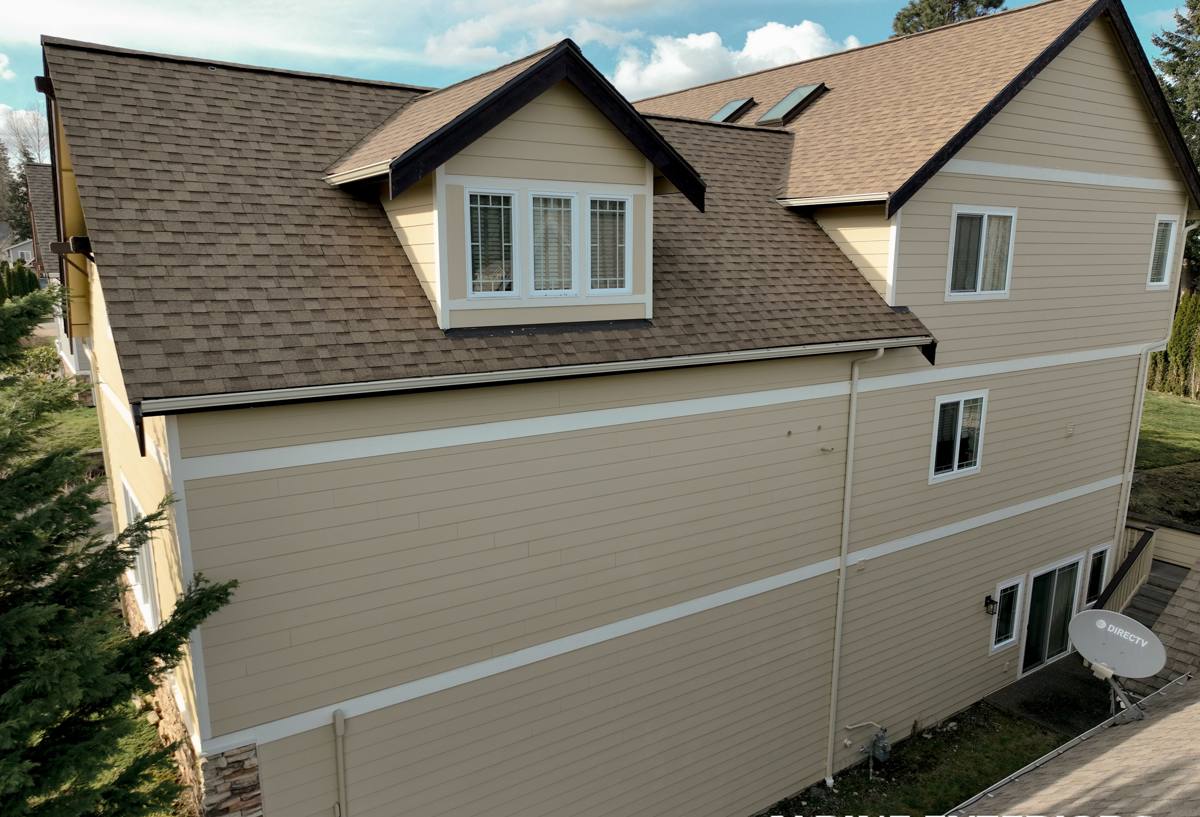
What Sunnyland Homes Typically Need
Sunnyland's housing stock is a mix of older single-story homes from the mid-20th century alongside newer infill construction, and each brings different window challenges.
Older homes
Many of the original windows in this part of Bellingham are single-pane or early double-pane units that have simply reached the end of their service life. Wood frames on these homes have often absorbed decades of moisture cycling — swelling in the wet months, drying and cracking in summer — which is exactly the kind of movement that eventually breaks a seal or lets water into the wall cavity. When we replace windows on an older Sunnyland home, we're not just swapping glass; we're also checking the surrounding sheathing, sill, and flashing for hidden rot before anything new goes in.
Newer construction
Newer homes in the area are less likely to have rot problems but still need window assemblies rated for wind-driven rain, since a standard installation detail that works in a drier region can under-perform here during a hard winter storm off the water. Custom sizing also comes up more often than people expect — additions, converted porches, and updated floor plans frequently create openings that don't match a standard stock size.
Choosing the Right Frame Material for This Climate
Frame material is the single biggest decision in a custom window project, and it's where local climate should carry real weight.
| Frame Material | How It Handles Salt Air & Moisture | Maintenance | Typical Fit for Sunnyland |
|---|---|---|---|
| Vinyl | Won't corrode or rot; handles humidity well | Low — occasional cleaning | Strong all-around choice for most homes |
| Fiberglass | Excellent resistance to moisture and temperature swings | Low | Good for exposed or higher-wind locations |
| Wood (clad exterior) | Vulnerable if cladding or seals fail; needs a sound moisture barrier | Higher — finish and seals need periodic checks | Best when the look matters and upkeep is expected |
| Aluminum | Can be prone to corrosion in salt air without proper coatings | Moderate | Usually reserved for specific architectural needs |
None of these materials is automatically wrong for the neighborhood — the right choice depends on how exposed the home is, how much upkeep the owner wants to take on, and what the rest of the exterior looks like. Our job is to lay out the honest trade-offs rather than push whatever's easiest to install.
Glass and Weatherproofing Details That Actually Matter Here
The glass package and the installation detail behind it do more work than most homeowners realize.
- Double or triple glazing: Reduces condensation risk and helps with the temperature swings common in a marine climate.
- Low-E coatings: Help manage heat loss during Bellingham's long heating season without sacrificing natural light.
- Argon or krypton gas fill: Improves insulation value between panes, which matters when a home is losing heat to a cold, wet exterior for months at a time.
- Warm-edge spacers: Lower the chance of seal failure and edge condensation over time, especially important given our humidity levels.
- Proper flashing and drainage planes: This is the detail that actually stops driving rain from getting behind the window, regardless of how good the window itself is.
A high-end window installed without correct flashing will leak eventually. A modest window installed with correct flashing and sealant detail will often outperform it. We treat the installation detail as equally important as the product itself.
How Salt Air, Rain, and Moss Season Show Up on a Window
Homeowners often come to us after noticing one of a handful of warning signs, and it helps to know what they usually mean.
- Fogging or moisture between panes — the seal has failed and the insulating gas has escaped; the glass unit needs replacing.
- Soft or discolored wood at the sill or corners — water has been getting in, often from a flashing gap rather than the glass itself.
- Green or black growth on frames or trim — a sign of prolonged moisture exposure during our wet, low-sun months, and a cue to check drainage and caulking.
- Hardware that's stiff, pitted, or corroded — common where salt-laden air reaches exposed metal parts over years.
- Drafts or whistling during storms — usually a sign the original installation didn't account for wind-driven rain and pressure the way it should have.
None of these are reasons to panic, but they're worth addressing before they turn into a larger repair. Windows are one of the few places where a small, cheap fix now (resealing, re-flashing) can prevent a much larger and more expensive one later (structural rot, interior water damage).
Our Custom Window Process
1. On-site assessment
We start by looking at the whole opening, not just the glass — checking the sill, header, surrounding siding, and any existing moisture damage. This is also where we talk through frame material and glass options based on how exposed the specific side of the house is.
2. Accurate measurement and custom sizing
Older Sunnyland homes rarely have perfectly standard openings, and additions or remodels can create sizes that don't match anything off the shelf. We measure for the actual opening rather than forcing a stock size to fit.
3. Removal and structural check
When we pull the old window, we check the framing and sheathing behind it for hidden rot or water damage — something that's easy to miss until the old unit is actually out of the wall.
4. Correct flashing and sealing
This is the step that determines whether a window stays watertight through a real Whatcom County winter. We install flashing and drainage details built for wind-driven rain, not just a bead of caulk around the trim.
5. Final fit, insulation, and finish
We insulate around the frame properly, finish the interior and exterior trim, and confirm the window operates smoothly before we consider the job done.
Cost Factors to Expect
Every custom window project is priced around a handful of variables rather than a flat per-window number:
| Factor | Why It Affects Cost |
|---|---|
| Frame material | Vinyl, fiberglass, and clad-wood carry different material costs and labor needs |
| Custom vs. standard sizing | Non-standard openings require custom manufacturing rather than stock units |
| Condition of the existing opening | Hidden rot or structural repair adds time and material before the new window goes in |
| Glass package | Triple glazing, upgraded coatings, and gas fills add cost but improve performance |
| Number of windows and access | Whole-house projects and hard-to-reach openings affect labor time |
We won't quote a job without seeing the openings in person — anything else is a guess. What we can promise is an honest estimate broken down by these factors, not a vague lump sum.
Why a Crew That Already Works in Sunnyland Is Worth Choosing
A contractor who's worked windows and exteriors elsewhere in Bellingham and Whatcom County already understands how this specific climate behaves — how far salt air travels inland, which directions take the worst of the driving rain, and how long moss and algae have to establish themselves in a typical wet season. That local knowledge shows up in small decisions: which flashing detail to use on a west-facing wall, when clad-wood is worth the upkeep and when it isn't, and how to spot rot that hasn't become visible from inside the house yet. It's the difference between a window installed correctly for the climate it's actually in and one installed to a generic standard that happens to look the same on day one.
If you're weighing a window replacement or a custom-sized project for your Sunnyland home, we're happy to take a look and give you a straightforward, no-pressure estimate — just fill out the form below.