 Bellingham
 Board & Batten in a Neighborhood Like York
Board and batten has a strong presence on homes in and around York — the vertical lines read as clean and a little more architectural than standard lap siding, and it pairs well with the mix of older bungalows and newer infill construction you see in this part of Bellingham. It's also a style choice that gets misjudged by homeowners who assume "vertical siding" is a single product. In practice, board and batten is a system, and the material behind those boards and battens matters more than the look on day one. It's what determines whether the siding still looks sharp in fifteen years or starts telling on itself after five wet Whatcom County winters.
This page is specifically about board and batten siding for homes in the York area — not a general overview of siding options. If you live here, you already know the climate story: rain that comes in sideways off the water, stretches of gray months where nothing fully dries out, and moss that will colonize anything organic given the chance. That's the backdrop for every recommendation below.
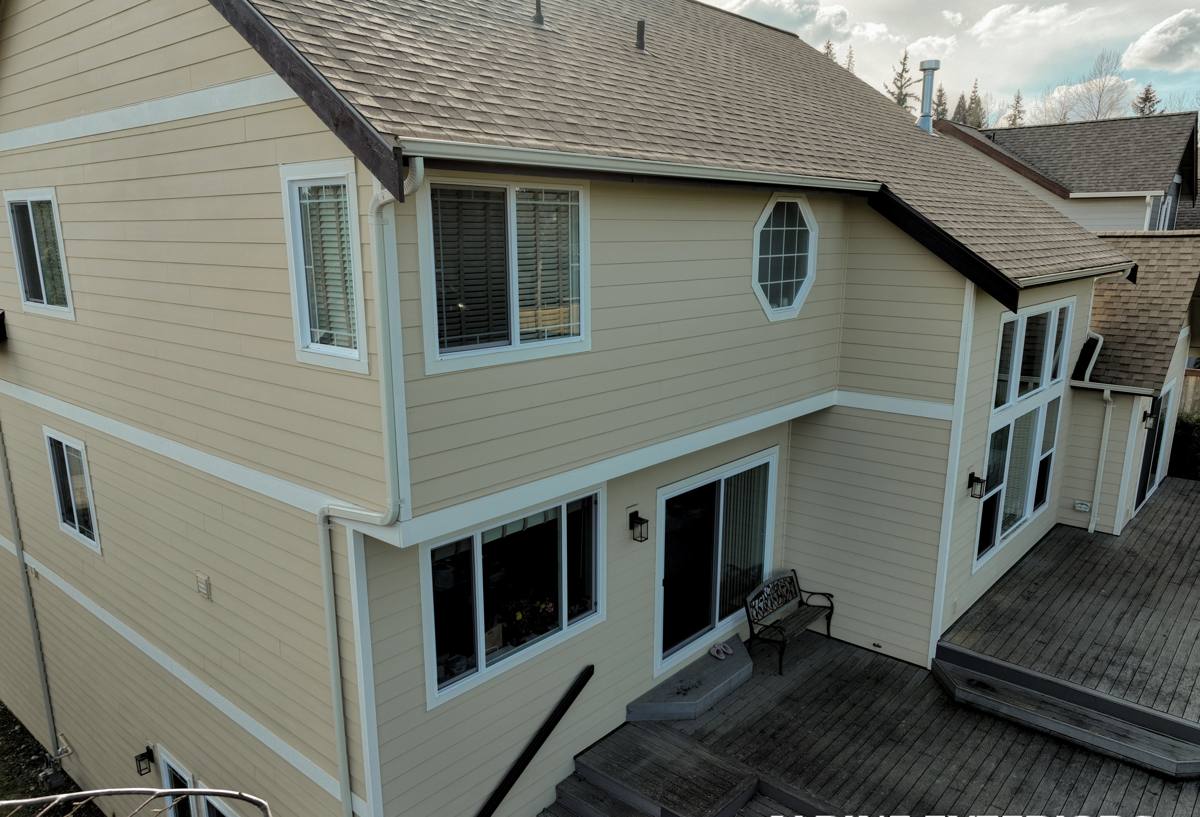
What Bellingham's Climate Actually Demands From Vertical Siding
Board and batten siding has more seams than most people realize — every batten strip creates a joint line, and every joint line is a place water can find its way behind the cladding if the installation isn't done with real attention to detail. In a drier climate, a sloppy joint might go unnoticed for years. In Whatcom County, it won't.
Three climate factors that shape the job
- Driving rain: Wind-driven rain off Bellingham Bay doesn't just fall straight down — it pushes sideways into vertical seams and under poorly lapped battens, so flashing details and batten spacing have to account for lateral water movement, not just gravity.
- Salt air: Proximity to saltwater accelerates corrosion on fasteners and metal flashing. Untreated or undersized fasteners fail faster here than they would inland, and a failed fastener behind a batten is a hidden problem until the board starts to loosen.
- Moss season: Long stretches of damp, shaded conditions — common on north-facing walls and under mature tree cover, both common in York — give moss and algae months to establish themselves on any surface that holds moisture or organic material.
Put together, this means a board and batten system for a York home needs to manage water at the seams, resist fastener corrosion, and shed moisture fast enough that moss and mildew don't get a foothold. That's a materials question as much as a workmanship question.
Why We Only Install James Hardie for Board & Batten
We install James Hardie fiber cement exclusively — we don't do vinyl, LP SmartSide, primed spruce, cedar, or other fiber cement brands like Cemplank or Allura. That's not a marketing line, it's a standard we hold because of what we've seen play out on homes in this exact climate over years of doing this work locally.
What that means in practice
Wood board and batten — cedar or primed spruce — can look beautiful when it's new, but it's an organic material in a climate that stays wet for months at a time. It needs regular repainting, it's vulnerable to swelling and rot at the seams, and it's exactly the kind of surface moss and mildew prefer. Vinyl board and batten sheds water fine but it's a thin plastic product that can warp, fade, and crack in temperature swings, and it doesn't offer the same fire resistance or rigidity. Other fiber cement brands compete on price but don't carry the same factory-applied finish system or the track record we've built our business on.
James Hardie's fiber cement is non-combustible, it's engineered specifically for wet, marine-influenced climates through its HZ10 product line (built for the Pacific Northwest's exposure profile), and it comes with a factory-applied ColorPlus finish that's baked on rather than field-painted — which matters enormously for board and batten, where you have far more cut edges and seams than with standard lap siding. Correctly sealed and caulked, those factory-finished edges resist moisture intrusion far better than a field-primed wood edge ever will. It also carries a strong transferable warranty, which matters if you ever sell the home.
We're not going to tell you every wood or vinyl job in York is destined to fail — plenty of homes get by fine with regular maintenance. But we've made a business decision to only put our name behind the system we believe holds up best in this specific climate, and we'd rather turn down work than install something we don't trust to perform here.
What a Correct Board & Batten Installation Involves
The difference between board and batten that lasts and board and batten that fails early almost always comes down to what's happening behind and between the boards, not the boards themselves.
The details that matter most
- Weather-resistive barrier and rainscreen gap: A drainage plane behind the siding lets any water that gets past the cladding drain and dry out instead of sitting against the wall sheathing.
- Fastener placement and material: Corrosion-resistant fasteners, placed per manufacturer spec, keep boards secure without over-driving or under-driving — both of which create water entry points.
- Batten spacing and flashing: Battens need consistent spacing over properly flashed seams, particularly around windows, doors, and any horizontal trim, where water concentration is highest.
- Caulking and sealant at cut edges: Every field-cut edge on fiber cement needs to be sealed per Hardie's install specs to protect the factory finish's edge protection.
- Ground and roofline clearance: Adequate clearance from grade and roof surfaces prevents splashback and standing moisture at the most vulnerable points of the wall.
Comparing Board & Batten Material Options
| Factor | James Hardie Fiber Cement | Cedar / Primed Spruce | Vinyl |
|---|---|---|---|
| Moisture resistance | Engineered for wet climates (HZ10) | Absorbs moisture; prone to swelling | Sheds water but can trap moisture behind panels |
| Moss/mildew resistance | Factory finish resists organic growth | Organic surface, moss-prone | Resists growth but seams can trap debris |
| Fire resistance | Non-combustible | Combustible | Melts/deforms under heat |
| Finish durability | Factory-baked ColorPlus finish | Field-applied paint, needs recoating | Color molded in but fades/chalks over time |
| Typical repaint cycle | 15+ years (finish-dependent) | 5-7 years | Rarely repainted; replaced when damaged |
| Warranty | Strong transferable manufacturer warranty | Limited to none on material | Varies widely by manufacturer |
Our Process, Start to Finish
For a York home, our process starts with an honest look at the existing wall assembly, not just a measurement of the exterior. We check for hidden moisture damage, assess the current drainage plane (or lack of one), and confirm what's actually behind the current siding before pricing the job. That matters more with board and batten than with lap siding, because the vertical seam pattern means we're often reworking more of the wall's water management system, not just swapping cladding.
What to expect
- On-site assessment of existing siding, trim, flashing, and any moisture or rot issues
- Written estimate detailing materials, HZ10 product selection, and scope — no vague allowances
- Removal of old siding and inspection of sheathing for hidden damage
- Installation of weather-resistive barrier and rainscreen gap where the wall assembly calls for it
- Board and batten installation to Hardie spec, including fastener schedule and flashing details
- Sealing of all cut edges and joints per manufacturer requirements
- Final walkthrough covering warranty registration and basic care
Common Problems We Find on Older York Homes
Board and batten replacements in this neighborhood tend to surface a few recurring issues. Homes with wood board and batten from decades past often show soft or delaminating boards at the base, where splashback and ground moisture have had years to work on untreated wood. We also frequently find missing or failed flashing above windows and doors — a detail that's easy to skip during a fast original install but becomes a chronic leak point over time. On homes with heavy tree cover, which is common in and around York, we regularly see moss buildup concentrated on north- and west-facing walls where sun exposure is limited and moisture lingers longest.
None of these are unusual for the region — they're simply what driving rain, salt air, and a long moss season do to siding that wasn't built or installed to handle them.
Maintenance in This Climate
James Hardie board and batten is low-maintenance compared to wood, but "low-maintenance" doesn't mean "no maintenance" in Whatcom County. A simple annual rinse to knock off pollen, debris, and early moss growth goes a long way, along with a periodic visual check of caulk lines around windows, doors, and butt joints. Caulk is the one component in the system that will need occasional attention over the life of the siding — catching a cracked bead early is a five-minute fix, versus a wet-wall repair if it's ignored for a few seasons.
Simple homeowner checklist
- Rinse siding annually, focusing on shaded or tree-covered walls where moss establishes first
- Inspect caulking at trim, windows, and joints once a year and recaulk as needed
- Keep gutters clear so overflow doesn't run down the wall face
- Trim back vegetation and tree limbs that keep wall sections shaded and damp
- Address any soft spots, discoloration, or gaps between boards promptly rather than waiting
Why Hiring a Crew That Already Works in York Matters
Board and batten installed correctly for a dry inland climate isn't automatically correct for a wall three miles from saltwater. A crew that regularly works in and around Bellingham knows which wall orientations in this neighborhood take the worst of the wind-driven rain, which older homes are more likely to have outdated or missing drainage planes behind the original siding, and where moss problems tend to concentrate based on tree cover and sun exposure. That local pattern recognition shows up in the small decisions — where to add extra flashing, which walls need a rainscreen gap most, how tight to run batten spacing — that don't show up on a spec sheet but show up in how the siding performs ten years down the road.
If you're considering board and batten siding for a home in York, we're glad to come take a look, walk the exterior with you, and give you a straightforward, no-pressure estimate — including an honest read on what your current siding is telling us before we ever talk about replacing it.