 Bellingham
 Decks in Happy Valley Take a Different Kind of Beating
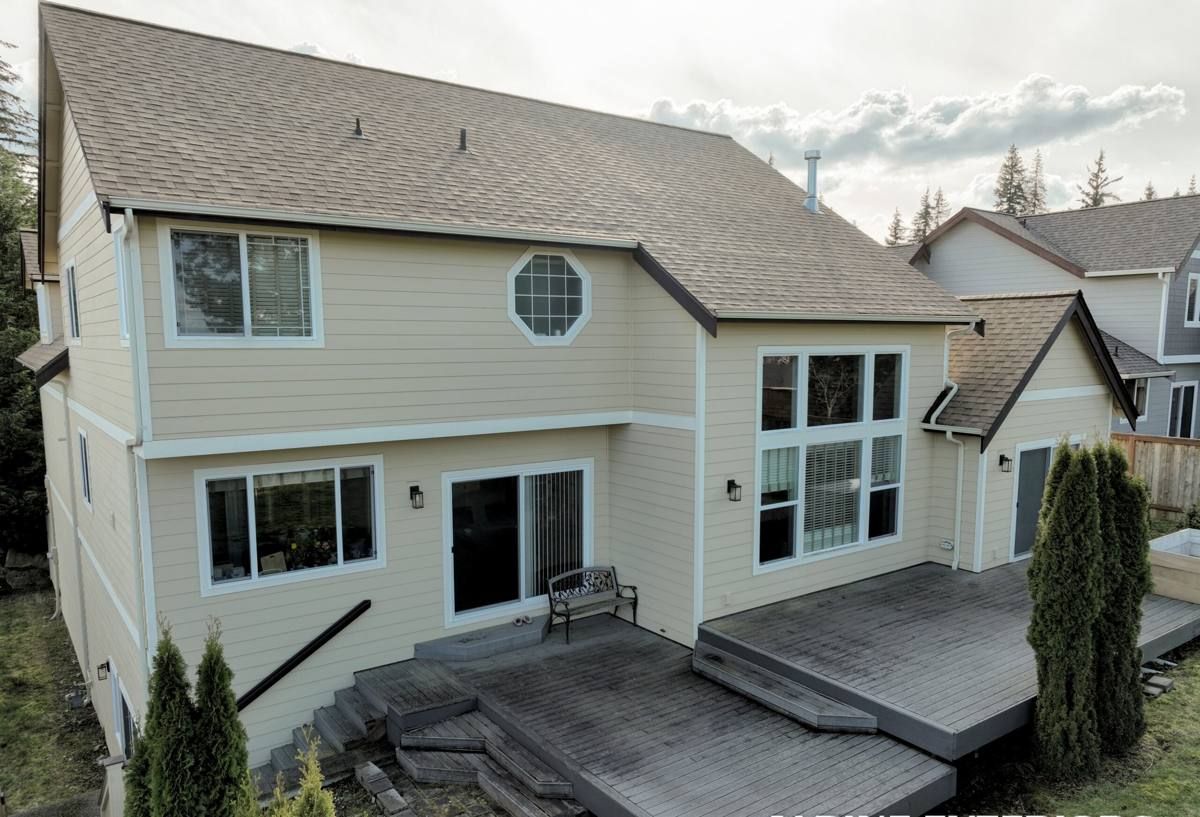
Happy Valley is one of Bellingham's older, tree-covered residential neighborhoods, and that combination of mature tree canopy, hillside lots, and closeness to the water works against wood decks in ways that don't show up the same way in drier parts of the country. Whatcom County sits in a marine climate: salt-laden air off Bellingham Bay, long stretches of driving rain, and a moss season that can run from fall through spring. None of that damage happens overnight. It happens board by board, fastener by fastener, over years, which is exactly why so many decks in this neighborhood look fine from the porch door and turn out to have real problems once someone gets down on their knees and starts probing.
This page is about deck repair specifically — not full replacement, not a general contracting pitch. If your deck is structurally sound but showing its age, or if one section has gone soft while the rest is fine, repair is usually the right call. Knowing what to repair, how to repair it correctly for this climate, and when a "repair" is actually masking a structural problem is where a lot of decks in this area go wrong.
What This Climate Does to a Deck Over Time
Salt Air and Metal Fatigue
Proximity to Bellingham Bay means airborne salt settles on everything, including deck hardware. Standard electro-galvanized nails and screws — the kind still found on a lot of older decks — corrode faster here than they would inland. Once a fastener starts rusting, it loses holding strength long before it looks obviously bad, and rust stains bleeding through decking boards are usually the first visible sign that hardware underneath is failing.
Driving Rain and Trapped Moisture
Wind-driven rain doesn't just fall straight down — it gets pushed sideways into ledger boards, under railings, and into any gap where flashing is missing or has failed. Wood that gets wet and then has a chance to dry out does fine for decades. Wood that gets wet and stays wet, because water is pooling or trapped behind flashing, starts to rot from the inside, often invisibly, well before the surface shows it.
Moss, Algae, and the Long Wet Season
Shaded, tree-covered lots like a lot of what you find in Happy Valley are ideal moss habitat. Moss on a deck isn't just a slip hazard on wet mornings — it holds moisture directly against the wood surface for weeks at a time, which accelerates surface rot and keeps boards from ever fully drying between rains. A deck that gets full sun sheds moss and dries out fast; a deck under a canopy of conifers or big-leaf maples may stay damp most of the winter.
The Repair Issues We See Most Often
| Deck Component | What Goes Wrong Locally | Typical Repair |
|---|---|---|
| Ledger board (where deck meets house) | Trapped moisture behind failed or missing flashing causes hidden rot | Remove decking near the house, inspect and replace rotted framing, install proper flashing and re-fasten with corrosion-resistant lags |
| Joists and beams | Slow rot from splash-back, poor drainage, or ground contact | Sister or replace affected members, correct drainage or ground clearance |
| Fasteners and connectors | Corrosion from salt air weakens holding power over years | Replace with stainless steel or hot-dip galvanized hardware rated for exterior/coastal use |
| Decking boards | Wet-dry cycling causes cupping, checking, and splitting | Spot-replace individual boards; re-fasten loose ones; resurface if damage is widespread |
| Guardrails and posts | Post-to-frame connections rot or loosen, creating a safety issue | Rebuild connection points to current code, replace rotted posts |
| Stairs and stringers | Ground-level moisture and splash rot the base of stringers first | Replace affected stringers, improve footing and drainage at the base |
Cosmetic Damage vs. Structural Damage
Not every gray, weathered, or slightly soft board means trouble. But some warning signs mean the deck needs a real inspection before anyone uses it heavily again. This is the distinction that matters most, because a repair that only addresses what's visible on top — while ignoring what's happening underneath — is not a real repair.
- Boards that flex noticeably underfoot, especially near the house or stairs
- Any soft or spongy spot when you press a screwdriver into the wood — a sign of active rot
- Rust streaks running down from screws, nails, or joist hangers
- Gaps, cracks, or daylight visible where the deck ledger meets the house siding
- A railing or post that wiggles or shifts when you push on it
- Standing water or slow-draining puddles on the deck surface after rain
- Moss or algae buildup that never fully dries out, even during breaks in the weather
- Stair stringers that look fine at the top but are discolored or crumbly near the ground
If any of these show up, especially near the ledger connection or support posts, that's a structural question, not a cosmetic one, and it needs to be resolved before the deck is treated as fully safe.
What a Correct Repair Actually Involves
Inspection Before Estimate
A real deck inspection means getting underneath the structure, probing suspect boards and framing with an awl or screwdriver, and checking the ledger connection and flashing directly rather than guessing from the top side. Surface staining or a fresh coat of paint can hide rot for years — it doesn't fix it.
Fixing the Cause, Not Just the Symptom
Replacing a rotted board without correcting the drainage or flashing problem that caused it just means the new board rots on the same timeline as the old one. Correct repair work addresses water management first — flashing, slope, gaps for airflow — and then replaces damaged material.
Matching Hardware to the Environment
Any fastener or connector used in a repair should be rated for exterior, corrosion-prone use — stainless steel or hot-dip galvanized, not the cheaper coated fasteners that work fine in a dry inland climate but corrode faster here. This is a small cost difference at the time of repair and a meaningful difference in how long the repair lasts.
Code-Compliant Guardrails and Stairs
If a repair touches guardrail posts, baluster spacing, or stair stringers, that work needs to meet current building code, not just match what was there before — especially since older decks in established neighborhoods were often built to standards that have since changed.
Our Deck Repair Process
- On-site inspection — we get underneath the deck, probe questionable boards and framing, and check the ledger and flashing directly rather than assuming from a visual walk-around.
- Honest scope — we tell you plainly what's cosmetic, what's structural, and what can wait, so you're not paying to replace boards that don't need it or ignoring a ledger problem that does.
- Materials sourced for this climate — corrosion-resistant hardware, properly treated lumber, and flashing that actually sheds water instead of trapping it.
- Repair work — framing and ledger repairs first if needed, then decking, then railings and stairs, in that order, because there's no point finishing the surface before the structure underneath is solid.
- Final check — we walk the deck with you, point out what was done and why, and flag anything worth watching going forward.
Materials and labor for isolated board or hardware repairs typically run a few hundred dollars; jobs involving ledger, framing, or guardrail rebuilding run higher, into the low thousands, depending on how much structural work is needed. We won't know which category your deck falls into until we've actually looked underneath it.
Permits and Code in Whatcom County
Structural deck work — anything touching the ledger connection, framing, or guardrails — generally falls under building code requirements set by the City of Bellingham or Whatcom County, depending on where the property sits. Straightforward board replacement usually doesn't trigger a permit, but ledger reattachment, framing repair, or guardrail rebuilding often does. We handle that determination and the paperwork as part of the job rather than leaving it for the homeowner to sort out after the fact.
Timing a Repair Around the Weather
Deck repair can technically happen year-round in Bellingham, but late spring through early fall gives the most consistent dry windows for framing work, sealing, and finish coats to cure properly. Winter repairs are doable for urgent structural issues, but cosmetic and finish work goes better when there's a real stretch of dry weather to work with — which is worth planning around if the repair isn't urgent.
Why Hire a Crew That Already Works This Neighborhood
A contractor who's already worked decks in Happy Valley and the surrounding Bellingham neighborhoods knows what the tree cover, hillside drainage, and marine air actually do to a structure over time — not in the abstract, but on the specific kinds of lots and older housing stock common here. That means knowing which areas of a deck tend to fail first in this climate, which hardware actually holds up, and how local permitting works, instead of applying generic advice that doesn't account for what Whatcom County weather does to a deck year after year.
If you've got a deck in Happy Valley that's showing soft spots, loose railings, or just needs an honest look before another wet season, we're happy to come take a look. The estimate is free, there's no pressure, and you'll get a straight answer about what's cosmetic and what actually needs attention — just fill out the form below.