 Bellingham
 South Hill's Terrain and Tree Cover Change What a Deck Needs to Survive
South Hill sits up above much of Bellingham, and that elevation cuts both ways. Homes here often get wide views toward Bellingham Bay, which also means more direct exposure to wind-driven weather moving in off the water. At the same time, a lot of South Hill's older lots carry mature tree canopy — big conifers and deciduous trees that shade yards and decks for large parts of the day. That combination of open exposure in some spots and heavy shade in others means two decks a few blocks apart can age completely differently. A deck that bakes in afternoon sun dries out and needs different care than one tucked under fir trees that barely sees direct light from October through April.
We don't design or build a South Hill deck the same way we'd build one on a flat, open lot in a different part of Whatcom County. The slope of the lot, the tree cover, and the way salt-laden air moves up from the bay all factor into material choices, framing details, and where we put footings.
What Driving Rain and a Long Moss Season Do to an Unprotected Deck
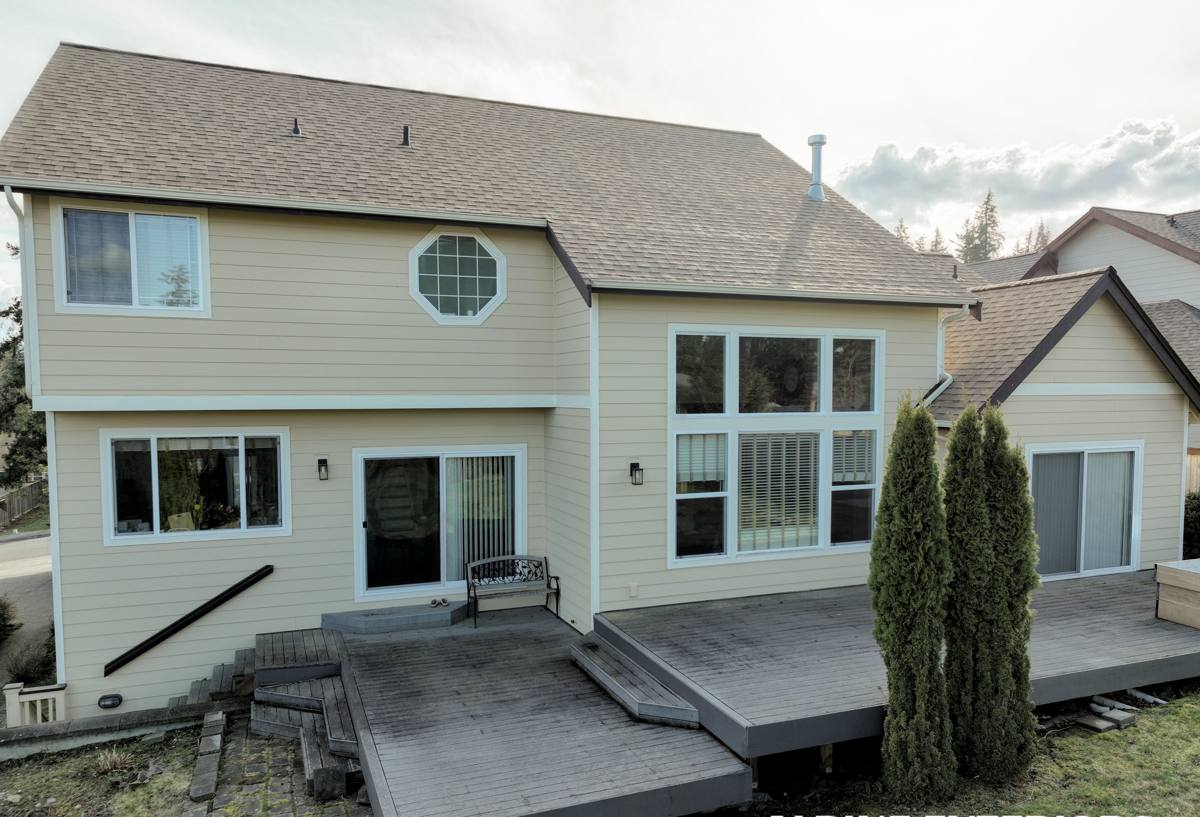
Bellingham's rain rarely falls straight down. Storms coming off the Sound tend to drive rain sideways, which pushes water into places a deck builder might not think to protect if they're used to calmer climates — up under railing caps, behind ledger boards, into the end grain of stair stringers. Add in the fact that many South Hill decks sit partly shaded by trees, and you get surfaces that stay damp far longer after a storm than a deck out in full sun. That's exactly the condition moss and algae need to take hold.
Once moss establishes on decking, it does more than look bad. It holds moisture against the wood or composite surface, it turns steps slick and genuinely dangerous in wet weather, and on wood decking it accelerates rot in the boards and any framing underneath that isn't properly protected. A deck that isn't detailed for this climate can look tired within a few years — cupped boards, staining, soft spots near posts — while a properly built one in the same yard holds up for decades.
Choosing a Decking Material for South Hill Conditions
There's no single "best" decking material — the right choice depends on how much sun and shade your yard gets, how much upkeep you want to do, and your budget. Here's how the common options actually perform in this climate:
| Material | Moisture & Moss Resistance | Maintenance | Typical Lifespan Here |
|---|---|---|---|
| Pressure-treated wood | Fair — moss and algae grow readily in shaded, damp spots | Annual cleaning, periodic sealing | 10-15 years before major repair |
| Cedar | Good natural resistance to rot, still needs upkeep in deep shade | Regular sealing to hold color and resist graying | 15-20 years with upkeep |
| Capped composite | Very good — non-organic surface resists moss staining and moisture absorption | Occasional washing, no sealing | 25+ years |
| PVC decking | Excellent — fully synthetic, doesn't absorb water | Low — periodic washing only | 25+ years |
On heavily shaded South Hill lots, we lean toward recommending capped composite or PVC for the decking surface, simply because they don't give moss and algae organic material to root into the way wood does. That said, plenty of homeowners want the look and feel of real wood, and we'll build that correctly too — it just comes with a more honest conversation about the sealing and cleaning schedule it needs to actually last.
Railings and Fasteners
Material choice isn't just about the decking boards. Because South Hill's elevation puts some homes in more direct path of salt-influenced air off the bay, we pay close attention to hardware — using stainless steel or coated fasteners rated for coastal exposure rather than standard hardware that can streak and corrode over time.
The Framing and Substructure: Where Deck Problems Actually Start
Most deck failures we get called out to inspect don't start with the decking boards — they start underneath, where nobody's looking. On a climate like ours, three details matter more than people expect:
- Ledger flashing: Where the deck attaches to the house needs proper flashing so driving rain can't work its way behind the ledger board and into the wall framing.
- Joist protection: Unprotected cut ends and joist tops trap water and rot from the inside out, often years before it's visible from above.
- Post bases and footings: Posts set directly in or against concrete without a standoff base wick moisture continuously — a slow failure that's easy to prevent at build time and expensive to fix later.
On sloped South Hill lots, footing depth and placement also have to account for grade changes and, in some cases, root systems from nearby mature trees. We check these things during the site visit, not after we've already started digging.
Designing for Sloped, Wooded Lots
A lot of South Hill properties aren't flat, and that shapes the design more than people expect. Multi-level decks, stairs that step down with the grade, and railings sized to code for the drop-off all come into play more often here than on level ground. We also think about how the deck interacts with tree cover — leaving enough clearance from overhanging branches for airflow and sun to reach the surface helps it dry out between storms instead of staying damp and feeding moss growth.
Drainage underneath the deck matters too, especially on a slope. Water that isn't directed away from the house and from the deck's own footings will find the lowest point in the yard — sometimes right back toward the foundation.
Our Process for a South Hill Deck Project
- Site visit: We walk the actual lot — grade, tree cover, sun exposure, existing structure if there's a deck to replace — and talk through what you actually want to use the space for.
- Design and material selection: We put together a layout and material plan based on that site visit, not a generic template, and walk you through the honest trade-offs of each decking option.
- Permitting: Most new decks and significant rebuilds in Bellingham and Whatcom County require a permit. We handle that process so it's not on you to figure out.
- Construction: Framing first, with attention to flashing, fastener choice, and drainage, then decking, railings, and stairs.
- Final walkthrough: We go over the finished deck with you, including what maintenance it actually needs going forward.
Maintenance Checklist to Keep a South Hill Deck Sound Year-Round
Whatever material you choose, a little seasonal attention goes a long way in this climate. A simple routine to follow:
- Sweep leaves and needles off the deck regularly in fall — trapped organic debris holds moisture and speeds moss growth.
- Wash the surface at least once a year, more often in heavily shaded areas, to knock back algae and moss before it establishes.
- Check railing caps and ledger flashing annually for any gaps where driving rain could get behind them.
- Reseal wood decking on the schedule the manufacturer recommends — don't wait until it's visibly gray and dry.
- Keep an eye on stairs and any shaded corners for slickness after wet weather; that's usually the first sign moss is taking hold.
- Trim back tree limbs that overhang the deck to let more light and airflow reach the surface.
Why Local Experience With South Hill Properties Matters
A deck contractor who mostly works flat, open lots elsewhere in Whatcom County isn't necessarily thinking about tree canopy shade patterns, hillside footing placement, or the specific way weather moves up from the bay into a neighborhood like South Hill. We work in these conditions regularly, which means we're not guessing at how a given material or detail will hold up here — we've seen what lasts and what doesn't in yards very much like yours.
That experience also shows up in smaller ways: knowing to check for root systems before digging footings near mature trees, sizing drainage correctly for a sloped yard, and having a realistic conversation with you about how much upkeep a given material actually needs once the shade and moss season set in.
Get a Free, No-Pressure Estimate
If you're thinking about a new deck or need to replace one that's showing its age, we're happy to come take a look, walk the site with you, and put together a straightforward plan and estimate — no pressure, no pushy sales pitch. Use the form below to get started.