 Bellingham
 James Hardie Siding for Columbia Homes
Columbia is one of Bellingham's older, well-established neighborhoods, with a mix of homes ranging from mid-century originals to newer infill construction. What they mostly have in common is exposure to the same weather pattern that defines siding performance across this part of Whatcom County: steady marine humidity, wind-driven rain off the water, and long stretches of shade and dampness that keep walls wet longer than homeowners tend to expect. Siding on a Columbia home isn't decorative trim — it's the single layer standing between that weather and the framing, sheathing, and insulation behind it.
We install James Hardie fiber cement siding exclusively. We don't offer LP SmartSide, vinyl, Cemplank, Allura, primed spruce, or cedar as alternatives, and that's a deliberate professional decision, not a limitation in what we're capable of installing. On a neighborhood-by-neighborhood basis in Bellingham, we've found that standing behind one material system we trust completely — and installing it correctly every time — serves homeowners better than offering a menu of cheaper options that shift maintenance risk onto them five or ten years down the road.
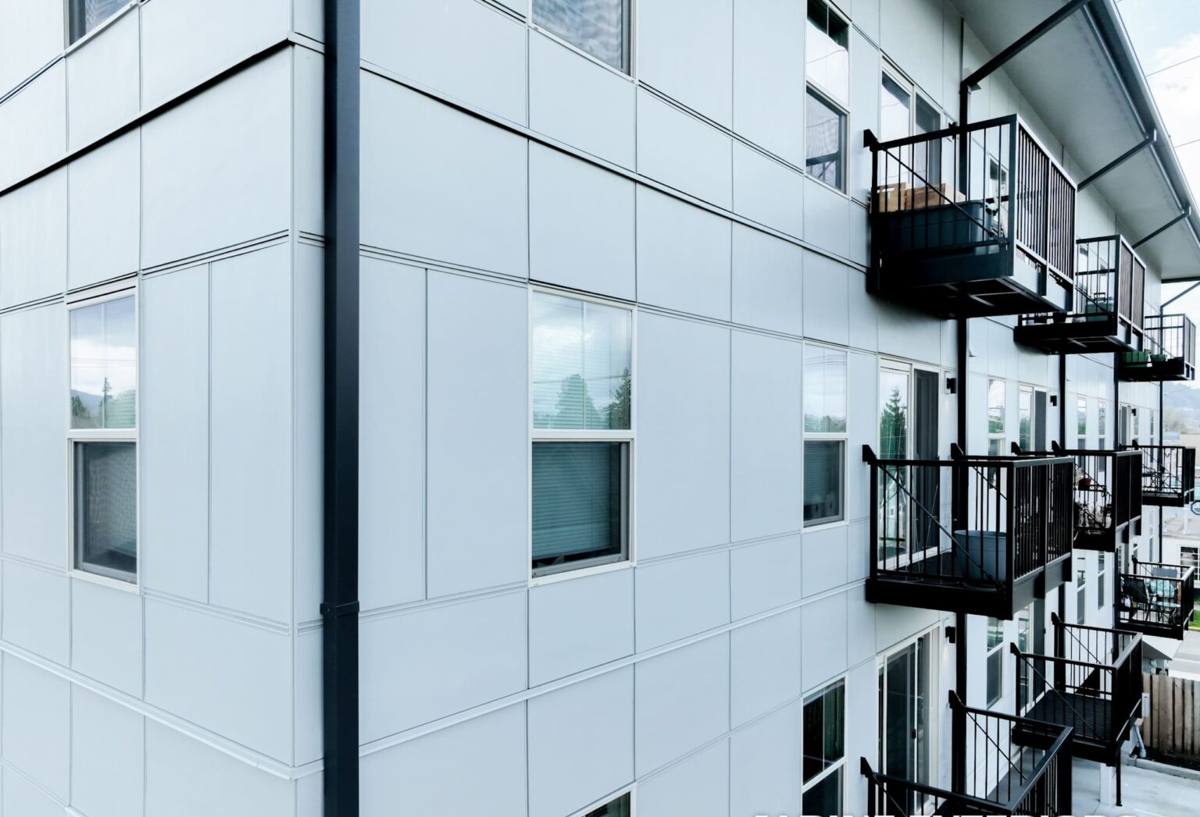
What Columbia's Climate Demands From Siding
Salt Air and Material Wear
Homes in Columbia sit close enough to the bay that salt-tinged air is a constant, low-grade factor in how exterior materials age. Salt exposure doesn't destroy siding overnight, but it accelerates corrosion in exposed fasteners and metal flashing, and it speeds up the breakdown of finishes that aren't built to handle it. Over a decade or two, that steady exposure is often the difference between a wall that still looks like it did on installation day and one that's chalking, fading, or showing rust streaks at every nail head.
Driving Rain and What Happens Behind the Siding
Rain in this part of Washington rarely falls straight down. Wind pushes it sideways against walls, which means siding has to shed water actively at every seam, corner, and penetration rather than just covering the wall. A wall assembly that isn't detailed correctly — missing drainage gap, poorly lapped house wrap, a flashing detail that was skipped to save time — can look fine for a year or two while moisture is already working its way into the sheathing behind it.
A Moss Season That Runs Most of the Year
Shaded walls, tree cover, and consistent dampness make moss and mildew a near-constant presence on north-facing and shaded elevations in Columbia. Some siding materials handle that better than others. A material that holds moisture at the surface or in a porous finish gives moss more to grow on and more time to grow it; a material with a dense, factory-cured finish gives it much less to work with.
Why We Standardized on One Product
Every siding material sold today can be installed competently, and other Bellingham contractors do install LP SmartSide, vinyl, and cedar well. Our reasoning for standardizing on James Hardie fiber cement isn't that those products are bad — it's that in a climate this consistently wet and salt-exposed, the trade-offs of engineered-wood and wood-based products (moisture sensitivity at cut edges, ongoing paint or seal maintenance, variable long-term performance) are trade-offs we no longer want to ask our customers to manage.
| Material | Moisture Behavior | Maintenance in This Climate | Realistic Lifespan |
|---|---|---|---|
| James Hardie fiber cement | Dimensionally stable; resists swelling, cupping, and rot | Low; factory finish resists moss growth and fading | 30+ years with proper installation |
| LP SmartSide (engineered wood) | More sensitive to moisture intrusion at cut edges and fastener holes | Moderate; edge sealing and paint upkeep needed | 15-25 years, climate-dependent |
| Vinyl | Doesn't rot, but can warp, fade, or gap over time | Low visible upkeep, but hides moisture problems behind it | 20-30 years, variable |
| Cedar | Absorbs moisture readily without regular sealing | High; recurring repainting or restaining cycle | 15-25 years with consistent upkeep |
James Hardie's fiber cement composition is non-combustible and doesn't expand and contract with humidity the way wood-based products do, which matters in a climate where the humidity swing between a dry August and a wet November is significant. The factory-applied ColorPlus finish is baked on under controlled conditions, which is a meaningfully different starting point than a finish applied on site and left to cure outdoors.
What a Correct James Hardie Install Actually Involves
Hardie siding's reputation is built on the material itself, but a lot of its real-world performance depends on installation details that aren't visible once the job is finished. A correct install on a Columbia home includes:
- A weather-resistive barrier or house wrap installed and correctly lapped, shingle-style, before any siding goes up
- A drainage gap or rainscreen behind the siding so moisture that does get past the surface can dry out instead of sitting against the sheathing
- Corrosion-resistant fasteners, sized and spaced to Hardie's published installation requirements for this climate zone
- Properly flashed and lapped transitions at every window, door, corner, and roofline intersection
- Correct minimum clearance between the bottom of the siding and grade, decks, patios, or roof lines to keep splash-back and standing water away from the material
- Cut boards primed on any field-cut edge, since the factory ColorPlus finish only covers the original manufactured edges
Skip any one of these and the wall can still look correct at the walkthrough. The problems that show up when they're skipped — moisture staining, soft trim, paint failure at seams — usually take a few wet seasons to surface, which is exactly why a rushed or corner-cutting install is easy to get away with until the homeowner is the one living with the consequences.
Matching the Right Hardie Line to a Columbia Home
James Hardie makes several distinct siding profiles, and the right choice depends on the home's style and what's already on the wall. HardiePlank lap siding is the most common choice for traditional Bellingham homes and comes in several exposure widths and textures. HardieShingle gives a shake-style look without the moisture sensitivity of real cedar shingles, which is a common upgrade for homes trying to keep a Pacific Northwest cottage look without the maintenance that comes with actual wood shakes. HardiePanel works well for modern builds or accent walls where a clean, flat surface is the goal.
Hardie also produces its HZ5 product line specifically engineered for climate zones like ours — colder, wetter, and more humid than the HZ10 line built for hot, dry regions. HZ5 boards are formulated with that moisture exposure in mind, which is one more reason we don't substitute a generic or off-spec product on a Bellingham job. We also strongly recommend factory-applied ColorPlus finishes over primed boards that need field painting; the difference in long-term color retention and moisture resistance is significant enough that we walk every Columbia homeowner through it before a color decision gets made.
Our Process for a Columbia Siding Project
Walkthrough and Assessment
We start by walking the home and looking at each elevation separately — which walls take direct weather, which are shaded and slower to dry, and whether there's any sign the existing wall assembly already has moisture issues that need addressing before new siding goes on. Installing new siding over hidden rot just buries the same problem under a fresh surface.
Planning the Details Before Install Day
Flashing details, corner treatments, and how the siding will meet trim, windows, and rooflines get worked out before crews start cutting material. Working these out on paper first avoids the kind of field improvisation that's usually where corners get cut on a rushed job.
Installation to Manufacturer Spec
Every fastener pattern, gap, and flashing lap follows James Hardie's published installation requirements for our climate zone, not a generic national standard. That's what keeps the manufacturer's warranty valid and what determines whether the wall performs for decades rather than years.
Final Walkthrough
We walk the finished job with you, go over what little maintenance Hardie siding actually needs, and make sure you know what a healthy wall looks like if you ever want to check it yourself down the road.
Why Hire a Crew That Already Works Columbia
A lot of what determines whether Hardie siding performs well here comes down to judgment calls that aren't written into a generic installation manual — how much drainage gap a shaded, moss-prone wall really needs versus a sun-exposed one, which corners of a Columbia lot see enough wind-driven rain to warrant extra flashing attention, how fastener corrosion resistance should be specified given the salt exposure this close to the water. A crew that's installed Hardie siding across Bellingham through multiple wet seasons has already seen which details matter most in this specific climate, rather than working from a national average that doesn't account for the Pacific Northwest.
Cost Factors for James Hardie Siding in This Area
James Hardie siding typically costs more upfront than vinyl and is often in a similar range to or somewhat above engineered wood, but the calculation homeowners actually care about is total cost over the life of the siding, not just the install invoice. A few factors move the price on a specific Columbia home:
| Factor | Why It Matters |
|---|---|
| Wall condition underneath existing siding | Rot or moisture damage found during tear-off needs repair before new siding goes up |
| Home size and wall complexity | More corners, dormers, and roof transitions mean more cuts and flashing details |
| Siding profile chosen | Lap, shingle, and panel profiles use different amounts of material and labor |
| Trim and window count | Each opening needs its own flashing and finish work |
| Site access | Steep lots, tight setbacks, or limited staging area can add labor time |
We'll walk your specific home and give you real numbers based on its actual condition and layout, rather than a rough estimate based on square footage alone. Two homes of the same size in Columbia can land in very different price ranges depending on how many of these factors are in play.
Getting It Right the First Time
Siding is not something you want to redo in five years. A correctly installed Hardie system, detailed for this specific climate, is built to go decades between major work. The cost of planning and installing it correctly the first time is consistently lower than the cost of tearing out and replacing a wall that was rushed or under-detailed.
If you're weighing a siding project for a home in Columbia, we're happy to walk the property, talk through what your specific walls need given their orientation and exposure, and give you a straightforward, no-pressure estimate. There's a form below — reach out and we'll set up a time to take a look.