 Bellingham
 Sudden Valley's Siding Problem Isn't the Same as Downtown Bellingham's
Sudden Valley sits in a different microclimate than a lot in downtown Bellingham or along Bellingham Bay. Homes here are tucked into mature tree canopy around Lake Whatcom, which means more shade, more standing humidity, and slower drying times after every storm that rolls through Whatcom County. Add in the region's driving rain and a moss season that can stretch across most of the year, and you have a set of conditions that punishes the wrong siding material faster than almost anywhere else in the county.
That combination — shade, moisture, and organic growth — is exactly why siding replacement in this neighborhood needs to be approached differently than a generic "re-side the house" job. The material has to shed water and resist rot in conditions that rarely give it a full day of direct sun to dry out. The installation has to account for moisture getting trapped against the wall assembly instead of evaporating off quickly. And the crew doing the work needs to understand how those factors interact before the first piece of siding ever goes up.
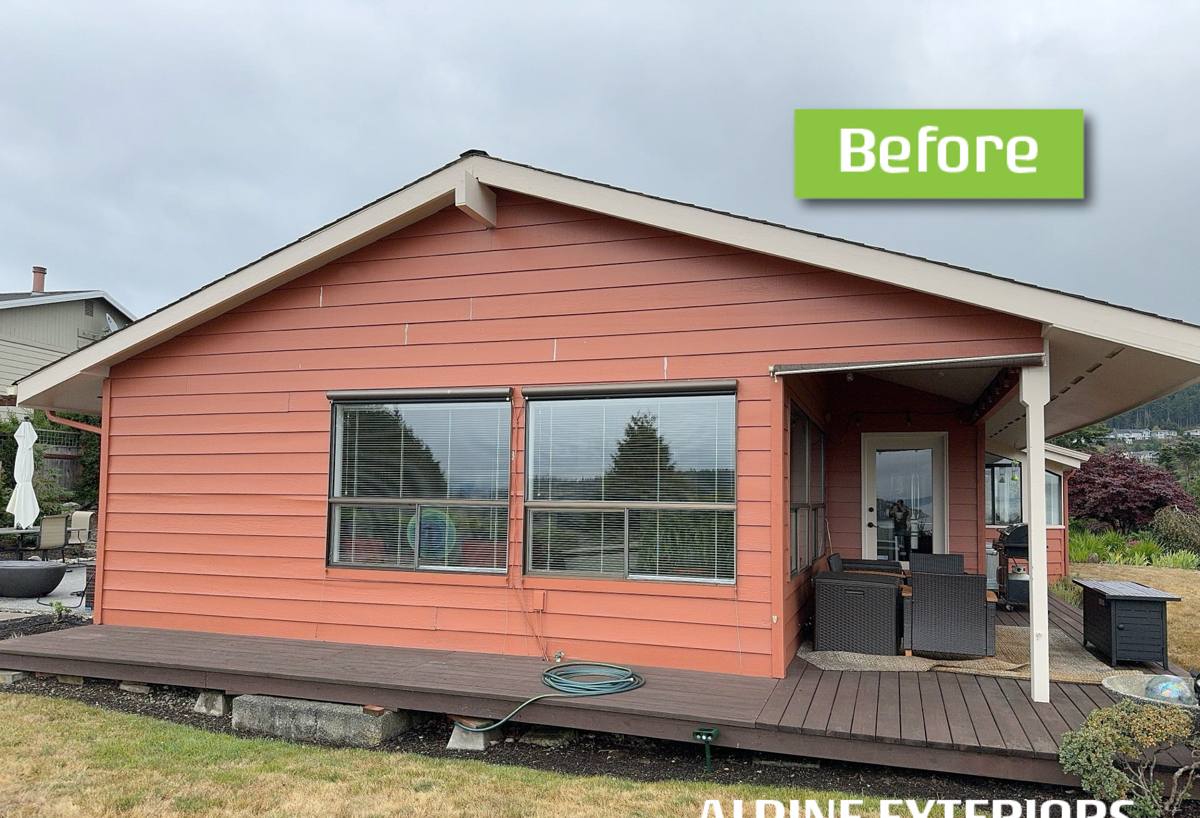
What Shade, Moisture, and Moss Actually Do to Siding
Moisture That Doesn't Leave
On a home with good sun exposure, a rain-soaked wall dries out within a day or two. Under heavy tree cover near the lake, that same wall can stay damp for much longer. Wood-based products — cedar, primed spruce, and engineered wood siding like LP SmartSide — depend on drying cycles to stay ahead of rot and swelling. When those cycles get cut short season after season, the wood fibers absorb more moisture than they release, and that's when problems start at seams, butt joints, and any spot where caulk or paint has started to fail.
Moss and Algae Growth
A long moss season means organic growth doesn't just show up on roofs — it creeps onto siding, especially on north-facing walls and anywhere water sheets down from a roofline or gutter. Moss and algae hold moisture directly against the siding surface, which accelerates whatever damage the material was already prone to. On a painted wood or composite product, that often means more frequent cleaning, more repainting, and a shorter realistic lifespan than the manufacturer's brochure suggests.
Driving Rain and Wind-Driven Water
Whatcom County storms don't always fall straight down. Driving rain pushes water sideways into laps, seams, and fastener penetrations. If the siding material itself is vulnerable to swelling or the installation behind it wasn't flashed and lapped correctly, wind-driven rain finds its way in — and once water gets behind siding in a shaded, slow-drying environment like Sudden Valley, it can sit there for a long time before anyone notices a problem.
Why We Install Only James Hardie Fiber Cement Here
We don't install vinyl, LP SmartSide, Cemplank, Allura, primed spruce, or cedar siding — not because those products don't have their place in the industry, but because we've made a professional decision about what holds up correctly in Whatcom County's climate, and especially in shaded, moisture-heavy settings like Sudden Valley.
James Hardie fiber cement is non-combustible, doesn't swell or rot the way wood-based products can, and holds its factory-applied ColorPlus finish far longer than field-applied paint on wood or composite siding. Hardie also engineers specific product lines (the HZ5 line, for example) for regions that see sustained moisture and temperature swings — which describes this part of Washington well. That engineering matters more in a shaded lake community than it does on a home with full southern exposure, because the margin for error with moisture is smaller here.
We're upfront that this is our standard, not a universal rule for the whole industry. Other products can be installed correctly and maintained diligently. But after years of doing exterior work in this climate, we stopped installing materials that ask homeowners to fight the region's moisture and shade every year with extra maintenance, and standardized on the one that doesn't.
How Fiber Cement Compares in This Climate
| Factor | James Hardie Fiber Cement | Wood-Based / Composite Siding | Vinyl Siding |
|---|---|---|---|
| Moisture & rot resistance | Does not rot; engineered for wet climates | Vulnerable if drying cycles are interrupted by shade | Won't rot, but can trap moisture behind panels |
| Moss/algae staining | Factory finish resists staining better long-term | Paint and coatings degrade faster under organic growth | Surface can stain; harder to fully clean without damage |
| Fire resistance | Non-combustible | Combustible | Can soften, warp, or melt under heat |
| Finish longevity | Factory ColorPlus finish, long warranty | Field-applied paint, shorter repaint cycles | Color molded in, but can fade and become brittle over time |
| Typical maintenance | Occasional wash, minimal upkeep | Regular inspection, caulking, repainting | Low, but prone to cracking in impact or cold |
Signs a Sudden Valley Home Needs Siding Replacement, Not Just a Repair
Because moisture damage in shaded, tree-covered settings often starts from the inside of the wall assembly out, by the time you can see a problem on the surface it's usually further along than it looks. A few signs point toward replacement rather than a patch job:
- Soft or spongy spots when you press on siding, especially near the bottom courses or under windows
- Persistent moss or dark staining that comes back within weeks of cleaning
- Visible warping, buckling, or separation at seams and corners
- Paint that's peeling or bubbling repeatedly in the same spots year after year
- Siding that stays visibly damp long after a storm has passed
- Interior signs like musty smells or damp drywall on exterior-facing walls
- Siding that's original to an older home and has never been fully replaced
If you're seeing more than one or two of these, it's worth having the wall assembly looked at rather than just the surface layer, since shaded lake-adjacent lots tend to hide moisture problems longer than sunnier neighborhoods do.
What a Correct Siding Replacement Job Actually Involves
Replacing siding isn't just stripping off the old material and nailing up new panels. Done right, especially in a moisture-heavy setting, the job includes several steps that don't show up in a quick drive-by estimate:
- Full tear-off and inspection: Removing the existing siding to inspect the sheathing underneath for rot, soft spots, or prior water damage that needs to be addressed before anything new goes up.
- Sheathing repair: Replacing any damaged sheathing or framing found during tear-off rather than covering it over.
- Weather-resistive barrier: Installing a proper moisture barrier that manages water that does get past the siding, which matters more in a shaded environment where drying takes longer.
- Flashing at every penetration: Windows, doors, hose bibs, vents, and any other wall penetration get flashed correctly so wind-driven rain can't work its way behind the new siding.
- Correct fastening and clearances: James Hardie siding has specific fastening patterns and minimum clearances from grade, roofing, and decks that are part of maintaining the manufacturer's warranty — skipping these is one of the most common ways a good product fails early.
- Factory-finished install: Because ColorPlus siding is finished at the factory, installation focuses on protecting that finish and using color-matched materials at cuts and fasteners, rather than painting on site.
- Final detailing and cleanup: Caulking, trim work, and a final check of every seam and joint before the job is considered done.
Cost Factors to Expect
| Factor | Why It Affects Price |
|---|---|
| Extent of sheathing damage found at tear-off | Hidden rot in shaded, damp walls is more common here and adds repair scope |
| Home size and number of stories | More surface area and access complexity increase labor |
| Trim, corner, and detail work | Homes with more architectural detail take more time per square foot |
| Siding profile and Hardie product line chosen | Lap, shingle, and panel styles vary in material and labor cost |
| Access and site conditions | Sloped or tree-covered lots common in Sudden Valley can affect staging and scaffolding |
We give a firm, written estimate after an in-person inspection — not a ballpark over the phone — because the tear-off is where hidden costs usually hide, and we'd rather tell you upfront than surprise you mid-project.
Our Process From Estimate to Finished Job
We keep the process straightforward and communicate at each stage:
- An in-person walkaround to assess current siding condition, sheathing risk areas, and sun/shade exposure on each side of the home
- A written estimate that spells out product line, scope, and any anticipated sheathing repair
- A tear-off schedule that accounts for weather windows, since we don't want open walls exposed during a heavy rain stretch
- Daily site cleanup so the property stays livable throughout the job
- A final walkthrough where we go over the finished work with you before calling it complete
Why Local Experience in Sudden Valley Matters
A crew that mostly works in drier, sunnier parts of Whatcom County can still do competent work, but they may not automatically account for how much longer a shaded, lake-adjacent wall stays wet, or how aggressively moss and algae come back on north-facing elevations here. Having done siding work throughout Bellingham and the surrounding Whatcom County communities, including neighborhoods with the same tree cover and moisture challenges as Sudden Valley, we plan tear-off timing, barrier detailing, and product selection around what actually happens to a wall assembly in this specific setting — not a generic install checklist.
That local familiarity also shapes honest advice. If a home's exposure and tree cover mean certain elevations are going to see more moisture stress than others, we'll tell you that upfront and talk through whether it changes anything about the installation approach, rather than treating every wall on the house the same way.
Ready for a Straight Answer on Your Siding
If your Sudden Valley home is showing signs of wear, or you're simply planning ahead before a small problem becomes a big one, we're glad to come take a look. The estimate is free, there's no pressure, and you'll get a straight assessment of what your siding actually needs — use the form below to get started.