 Bellingham
 Why Window Replacement in Happy Valley Isn't a One-Size-Fits-All Job
Happy Valley sits close enough to the water and to the wooded slopes around it that homes here take on a specific combination of weather stress: salt-laden air drifting in off Bellingham Bay, driving rain that comes in sideways during winter storms, and a moss season that can stretch for months in the shaded, damp corners of a lot. None of that is unique to one street or one style of house, but together it adds up to a climate that is genuinely harder on window systems than what you'd deal with in a drier inland part of Washington.
Windows in this part of Whatcom County don't fail because a homeowner did anything wrong. They fail because moisture finds every weak point over time — a seal that's a few years past its prime, a sill that was never properly flashed, a frame material that wasn't suited to constant damp exposure. When we talk about window replacement for Happy Valley specifically, we're talking about matching materials, glass, and installation detail to that reality, not just swapping in whatever's cheapest or most common.
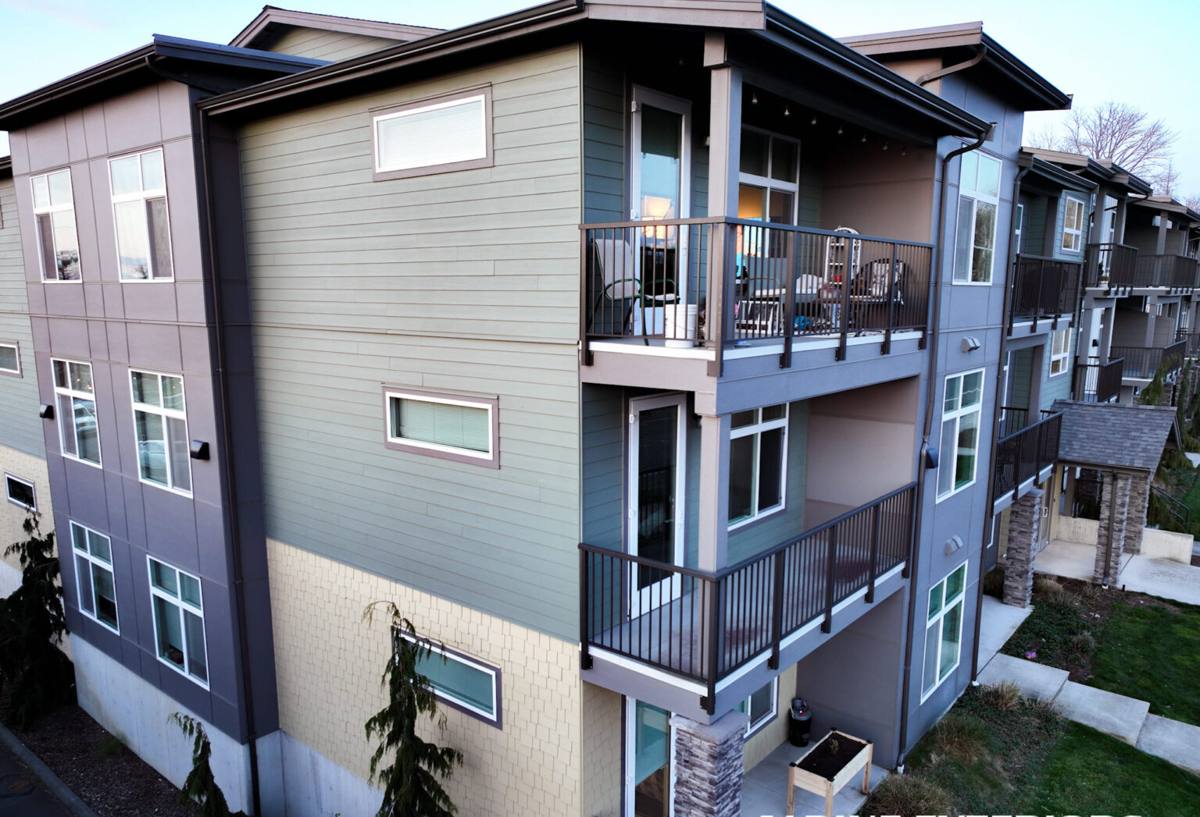
Signs Your Current Windows Are Past Their Service Life
Most homeowners don't wake up one day and decide to replace windows — they notice small problems that get worse. In a marine climate like this one, the warning signs tend to show up earlier and more clearly than they would in a drier region.
- Fogging or a permanent haze between panes of double-pane glass — the seal has failed and moisture is trapped inside
- Soft or discolored wood at the sill or lower frame, especially on walls that face prevailing weather
- Visible moss or green staining building up on frames, tracks, or exterior trim
- Drafts you can feel near the frame even when the window is fully latched
- Windows that stick, won't stay open, or are hard to lock — often a sign the frame has warped slightly
- A noticeable rise in heating costs without any other explanation
- Condensation forming on the inside of the glass regularly, which points to poor seals or single-pane glazing
Any one of these on its own might just need a repair. Several of them together, especially on an older window, usually means the unit has reached the point where replacement is the more honest recommendation than another round of caulk and patch.
What a Correct Window Replacement Job Actually Involves
The window itself is only part of the job. In this climate, the installation detail around the window — the parts you don't see once the trim goes back on — is what determines whether the new unit lasts fifteen years or thirty.
Flashing and Water Management
Every window opening needs a water management path that assumes some moisture will get behind the trim eventually — because in a region with this much driving rain, it will. That means properly lapped flashing tape, a sloped sill pan that directs any intrusion back out rather than into the wall cavity, and careful integration with the existing house wrap or weather-resistive barrier. Skipping or rushing this step is the single most common reason a "new" window ends up with rot problems again within a few years.
Air Sealing and Insulation
Gaps around the rough opening need to be sealed with the right material — typically a low-expansion foam or backer rod and sealant, not just whatever's on hand. Overfilled gaps can bow the frame; underfilled gaps leave drafts and a path for moist air to reach cold surfaces, where it condenses.
Proper Fastening and Leveling
A window that's slightly out of square will bind, won't seal evenly, and puts uneven stress on the frame over time. Shimming and fastening correctly the first time is what keeps the unit operating smoothly for its full lifespan.
Choosing Materials and Glass for Whatcom County Weather
Not every window product sold in the Pacific Northwest is a good fit for a site with heavy salt air and near-constant seasonal dampness. Material choice matters more here than it does in a drier climate, mainly because of how each material handles sustained moisture exposure and how much upkeep it asks of you afterward.
| Material | How It Handles Local Conditions | Maintenance Burden |
|---|---|---|
| Vinyl | Won't rot, resists salt air well, doesn't need repainting | Low — occasional cleaning |
| Fiberglass | Very stable in temperature and moisture swings, strong long-term durability | Low — occasional cleaning |
| Aluminum | Durable but conducts cold and can corrode faster near salt air over time | Moderate — watch for corrosion at coastal-facing exposures |
| Wood (unclad) | Attractive but vulnerable to rot and moss staining without diligent upkeep | High — regular painting/sealing needed |
| Wood-clad (exterior vinyl/aluminum, wood interior) | Good balance — exterior shell resists weather, interior keeps traditional look | Low to moderate |
We're honest with Happy Valley homeowners about this: unclad wood windows can look great, but they demand a maintenance commitment that a lot of busy households underestimate, and in a damp climate that upkeep gap shows up fast as peeling paint, soft spots, and eventually rot. That's a trade-off we'll walk through with you rather than steer you around — it's your home and your call, but we want you making it with the full picture.
On glass, a dual-pane unit with low-E coating and argon gas fill is the practical standard for this area now. It cuts heat loss, reduces condensation risk on the interior pane, and helps with the glare off the water on bright winter days. Triple-pane is worth discussing for north- and west-facing rooms that catch the worst of the wind-driven rain, though it adds cost and weight.
Our Window Replacement Process
- On-site assessment. We look at every window being considered — frame condition, sill condition, sun and weather exposure — and tell you honestly which ones need replacing now versus which can wait.
- Measurement and product selection. We measure precisely for the actual opening (not just the existing window's nominal size) and go over material, glass, and style options suited to that specific wall's exposure.
- Written estimate. You get a clear scope of work and price before anything is scheduled — no surprise add-ons once we've started.
- Removal and opening inspection. Once the old window is out, we check the rough opening and sill for hidden rot or water damage before installing anything new. This is often where problems that caused the original failure get found and fixed.
- Installation with full flashing and sealing detail. Sill pan, flashing tape, shimming, insulation, and sealant — done in the sequence that actually manages water, not just what's fastest.
- Interior and exterior trim finish. Trim is reinstalled or replaced and finished to match the home.
- Final walkthrough. We test operation, check the seal, and walk the job with you before calling it done.
Cost Factors to Understand Before You Get Quotes
Window replacement pricing varies a lot based on specifics, and any contractor who quotes a firm number without seeing your home isn't giving you a real estimate. That said, homeowners should understand what actually drives the price up or down.
| Factor | Why It Affects Cost |
|---|---|
| Frame material | Vinyl is typically the most affordable; fiberglass and wood-clad cost more upfront but often less over the window's lifespan |
| Number and size of openings | Larger and more numerous windows mean more material and labor |
| Existing rot or water damage | Hidden damage found during removal adds repair scope that can't be priced until the opening is exposed |
| Glass package | Low-E coatings, argon fill, and triple-pane glass all add cost but reduce long-term energy loss |
| Full-frame vs. insert replacement | Insert (replacing just the sash within a sound existing frame) is cheaper; full-frame is needed when the frame itself is compromised |
| Access and site conditions | Second-story windows, tight side-yard access, or landscaping obstacles can add labor time |
As a rough guide, a straightforward single window replacement in this region often lands in the low-to-mid thousands per opening depending on size and material, with full-house projects priced accordingly — but the only way to know your actual number is a site visit, because hidden rot and access issues can move that estimate in either direction.
A Homeowner's Checklist Before Hiring
Whether you go with us or anyone else, these are the questions worth asking before you sign a contract for window work in a climate like this one:
- Does the crew explain their flashing and sill pan detail, or do they gloss over it?
- Will they inspect the rough opening for hidden rot before installing, and tell you if they find any?
- Do they offer a written, itemized estimate — not just a lump sum?
- Are they licensed and insured to work in Washington, and can they show proof without hesitation?
- Do they have experience with homes in coastal or high-moisture Whatcom County neighborhoods specifically?
- Is the manufacturer's warranty explained clearly, including what voids it?
- Do they clean up and haul away old windows and debris as part of the job?
Why a Crew That Already Works Happy Valley Matters
A window installer who mostly works drier inland areas can still do a technically fine install on paper and still get it wrong for this specific setting — under-flashing a sill that faces the prevailing wind-driven rain, or recommending a material that looks fine in a showroom but struggles against months of salt air and shade-grown moss. Crews who work Happy Valley and the surrounding Bellingham neighborhoods regularly build habits around this climate: they flash for worse rain than the forecast usually shows, they know which exposures need the tougher material recommendation, and they've seen firsthand what happens to a window that was installed without those details in mind.
That local pattern recognition is hard to get from a one-time out-of-area crew, no matter how skilled they are in general. It's also why we're straightforward about trade-offs rather than upselling the fanciest option every time — a window that's correctly matched to your home's exposure and correctly installed will outperform a premium product that was rushed or mismatched to the site.
Ready to Talk About Your Windows?
If you're noticing drafts, fogged glass, soft spots at the sill, or you're just planning ahead for a home in Happy Valley, we're glad to come take a look. There's no pressure and no obligation — just an honest read on what your windows need and what it would take to fix it right. Use the form below to request a free estimate.