 Bellingham
 Metal Roofing Built for Sudden Valley's Conditions
Sudden Valley sits in one of the shadier, wetter pockets of Whatcom County. Mature tree cover, sloped wooded lots, and proximity to Lake Whatcom mean roofs here rarely get a full day of direct sun, even in summer. That combination of shade and moisture is exactly the environment where lesser roofing materials struggle and where a properly installed metal roof earns its keep. We install metal roofing for homeowners throughout Sudden Valley and the surrounding Bellingham area, and this page covers what that job actually involves, what it should cost to think about, and why local experience on this specific terrain matters as much as the materials themselves.
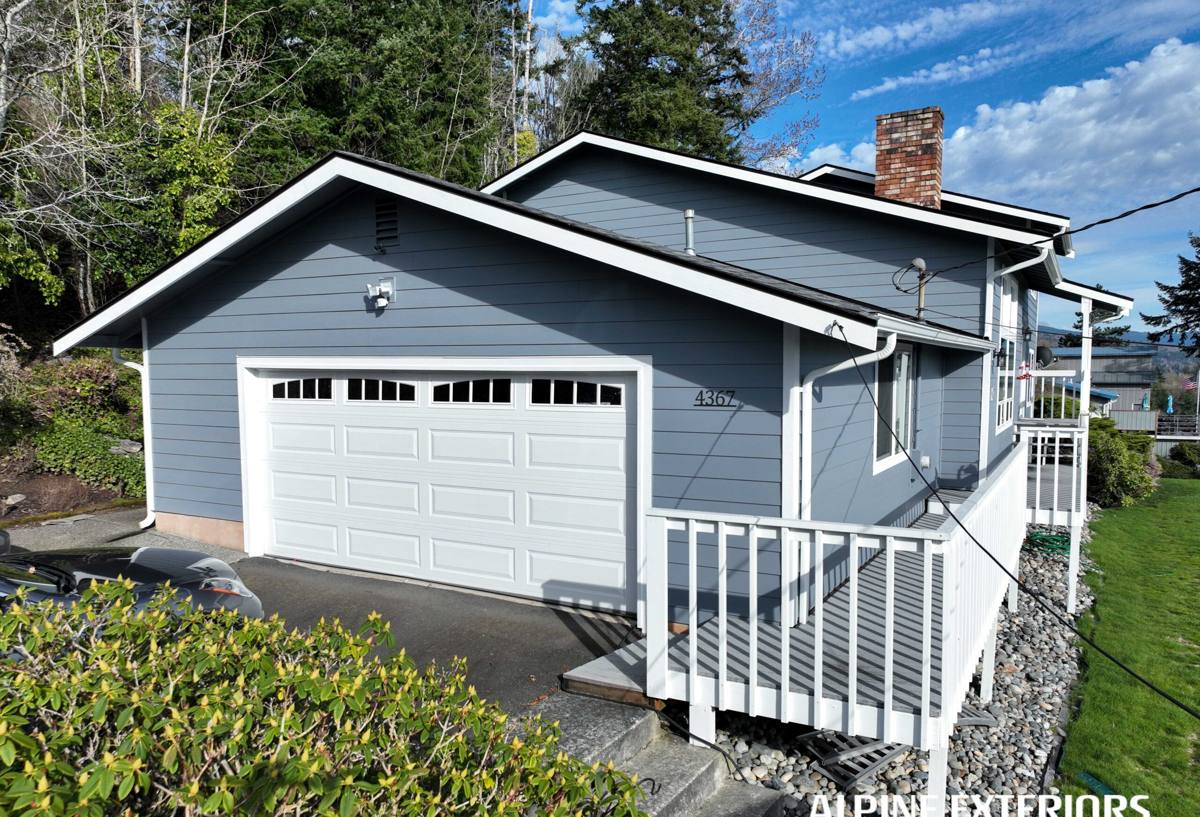
What Sudden Valley's Climate Does to a Roof
Every roofing material has a weak point, and in Sudden Valley the weak points show up fast if a roof isn't matched to the site.
Shade and a Long Moss Season
Dense tree canopy keeps roof surfaces cool and damp for long stretches of the year, which is ideal growing conditions for moss and lichen. On asphalt shingles, moss roots into the granule surface and lifts tabs over time, shortening the roof's life. Metal doesn't give moss the same foothold — there's no granule texture for spores to grab onto, and smooth or ribbed metal panels shed the standing moisture that moss needs to establish itself.
Driving Rain and Wind-Driven Water
Whatcom County storms don't just drop rain straight down — wind pushes it sideways under eaves, into valleys, and against sidewalls. On a wooded, sloped property, that wind can also funnel unpredictably between trees and around rooflines. A metal roof's continuous panel runs and properly lapped seams give wind-driven rain far fewer entry points than a roof built from thousands of individual shingle tabs.
Humidity and Coastal-Influenced Air
Bellingham's proximity to Bellingham Bay and the greater Puget Sound region means the air carries more moisture and salt influence than an inland climate would. Combined with the shade and rain Sudden Valley already sees, that humidity accelerates wear on materials that aren't built for it — including uncoated or poorly finished metal. It's a real factor in which coatings, fasteners, and flashing metals we choose for a job out here.
What a Correct Metal Roof Installation Actually Involves
Metal roofing performs well for decades, but only when the details underneath the panels are done right. A metal roof is only as good as what's beneath it and around its edges.
- Deck inspection and repair: Any soft, rotted, or moisture-damaged sheathing gets replaced before a single panel goes down — covering a bad deck with new metal just hides the problem.
- Underlayment: A high-temperature, self-adhering underlayment (not standard felt) is used, especially at eaves and valleys, to protect against the wind-driven rain common in this area.
- Ice and water barrier at vulnerable points: Valleys, eaves, and any low-slope transitions get extra waterproofing membrane, since these are where standing moisture and shaded, slow-drying areas cause the most long-term damage.
- Correct fastening or seaming: Exposed-fastener panels need the right screw pattern, torque, and washer type; standing seam systems need proper clip spacing and seam engagement so the panels can expand and contract without stressing the roof.
- Flashing at every penetration: Chimneys, vents, skylights, and wall transitions are common leak points on any roof. Metal-to-metal flashing details have to be built for the specific panel profile, not improvised.
- Ventilation: Shaded, tree-covered homes hold moisture in the attic longer. Proper intake and exhaust ventilation keeps condensation from forming on the underside of the deck, which matters as much for a metal roof as any other.
Choosing the Right Metal Roofing System
Not every metal roof is built the same way, and the right choice depends on your roofline, budget, and how long you want to go before any maintenance. We'll walk through the real trade-offs on-site, but here's the general comparison.
| Factor | Standing Seam | Exposed-Fastener (Screw-Down) |
|---|---|---|
| Fasteners | Concealed beneath seams | Visible screws through the panel face |
| Typical lifespan | 40-60+ years with minimal upkeep | 25-40 years, with fastener maintenance |
| Maintenance | Very low — no exposed fasteners to fail | Gaskets and screws should be checked periodically |
| Upfront cost | Higher | More budget-friendly |
| Best fit | Long-term ownership, steep or complex rooflines | Simpler rooflines, outbuildings, tighter budgets |
In a shaded, high-moisture setting like Sudden Valley, standing seam earns its higher upfront cost by removing the one part of a metal roof most likely to need attention over time — exposed fasteners and their gaskets. Screw-down panels are still a solid, honest option, especially on simpler roof shapes, as long as fastener maintenance stays on the homeowner's radar.
Our Process for a Sudden Valley Metal Roof
- On-site inspection: We assess your current roof, deck condition, slope, shading, and any tree-related debris or moss buildup before recommending anything.
- Honest scope and estimate: You get a clear breakdown of what's needed — tear-off, deck repair, panel system, flashing — with no pressure to upsell beyond what your roof actually requires.
- Tear-off and deck prep: Old roofing comes off, the deck is inspected and repaired as needed, and underlayment goes down correctly the first time.
- Panel and flashing installation: Panels are installed to spec for your chosen system, with flashing custom-fit at every penetration and transition.
- Site cleanup: We clear debris and run a magnetic sweep for stray fasteners before we consider the job done.
- Final walkthrough: We go over the finished roof with you, explain any maintenance points specific to your system, and answer questions before we leave.
What Influences the Cost of a Metal Roof
Metal roofing costs more upfront than asphalt shingles, but the gap narrows considerably over the life of the roof given how much longer it lasts and how little maintenance it needs. Exact numbers depend on your roof, but these are the main factors that move the price.
| Cost Factor | Why It Matters |
|---|---|
| Panel system | Standing seam costs more than exposed-fastener panels, both in material and labor |
| Roof complexity | Steep slopes, multiple valleys, and dormers add labor time and flashing work |
| Deck condition | Rot or moisture damage found during tear-off adds repair costs before install can proceed |
| Tree access | Wooded lots common in Sudden Valley can affect staging, material delivery, and cleanup time |
| Existing roof removal | Tearing off old shingles versus roofing over an existing deck affects labor and disposal costs |
We'll break down these factors specifically for your roof during the estimate, so you know exactly what you're paying for and why — not a flat number with no explanation behind it.
Why a Crew That Already Works Sudden Valley Matters
Sudden Valley isn't a typical suburban grid. Many homes sit on sloped, wooded lots with limited staging space, shared or private roads, and tree cover that affects everything from crane and ladder placement to how debris and old roofing material get hauled out. A crew unfamiliar with the area loses time — and sometimes damages landscaping or driveways — figuring out logistics that a local crew already knows going in.
If your property is part of an HOA or has architectural or covenant guidelines around exterior materials and colors, we can work within those requirements rather than treating them as an afterthought. We also know how the local moss and shade patterns affect different roof orientations around the lake, which shapes recommendations on ventilation and panel finish, not just the sales pitch.
Just as important: we're a phone call away after the job is done. If a fastener needs a look after a windstorm or you have a question about moss buildup near a shaded valley years down the road, you're not waiting on a crew that has to drive in from outside the county.
Keeping a Metal Roof Performing in Sudden Valley
Metal roofing is low-maintenance, not no-maintenance. A little attention keeps it performing at its best for decades.
- Clear overhanging branches and needle or leaf buildup, especially in valleys and around chimneys, once or twice a year
- Rinse off accumulated debris and organic matter rather than letting it sit wet against the panels long-term
- Check exposed-fastener systems periodically for loose screws or worn gaskets, particularly after wind events
- Keep gutters clear so water isn't backing up under eave flashing
- Have flashing around chimneys, skylights, and vents inspected every few years, since these are the most common leak points on any roof
- Avoid foot traffic on the roof beyond what's necessary — most metal finishes scratch under improper footwear or dragged equipment
If you're weighing a metal roof for a home in Sudden Valley, we're happy to take a look and walk you through what your specific roof needs — no pressure, no obligation. Fill out the form below for a free estimate.