 Bellingham
 Building Decks for Sudden Valley's Wooded, Waterfront Terrain
Sudden Valley sits in a different microclimate than a lot of the neighborhoods we work in around Bellingham. It's tucked against Lake Whatcom, wrapped in second-growth forest, and built on sloped, often shaded lots. That combination — tree cover, lake humidity, and limited direct sun on many properties — changes how a deck should be designed and built here compared to an open lot closer to the water or downtown. We've built and repaired decks throughout Whatcom County long enough to know that a deck detailed for a sunny cul-de-sac in a newer subdivision won't hold up the same way on a shaded Sudden Valley lot backed by fir and cedar.
This page is about what actually matters when you're building or replacing a deck in this specific community: the moisture and moss pressure from the tree canopy, the slope and access challenges common to Sudden Valley lots, and the material and framing choices that hold up under those conditions year after year.
What Makes Sudden Valley Different for Deck Building
Shade and Moisture Load
Whatcom County gets driving rain and a long moss season generally, but Sudden Valley's tree cover intensifies it. Decks shaded most of the day by mature evergreens dry out slowly after rain. That extended damp period is exactly what moss, algae, and soft rot need to take hold. On these lots, drainage under and around the deck matters as much as the decking material itself — a deck that can't shed water and air out between storms will grow moss and hold moisture against the framing no matter what surface board you choose.
Slope and Site Access
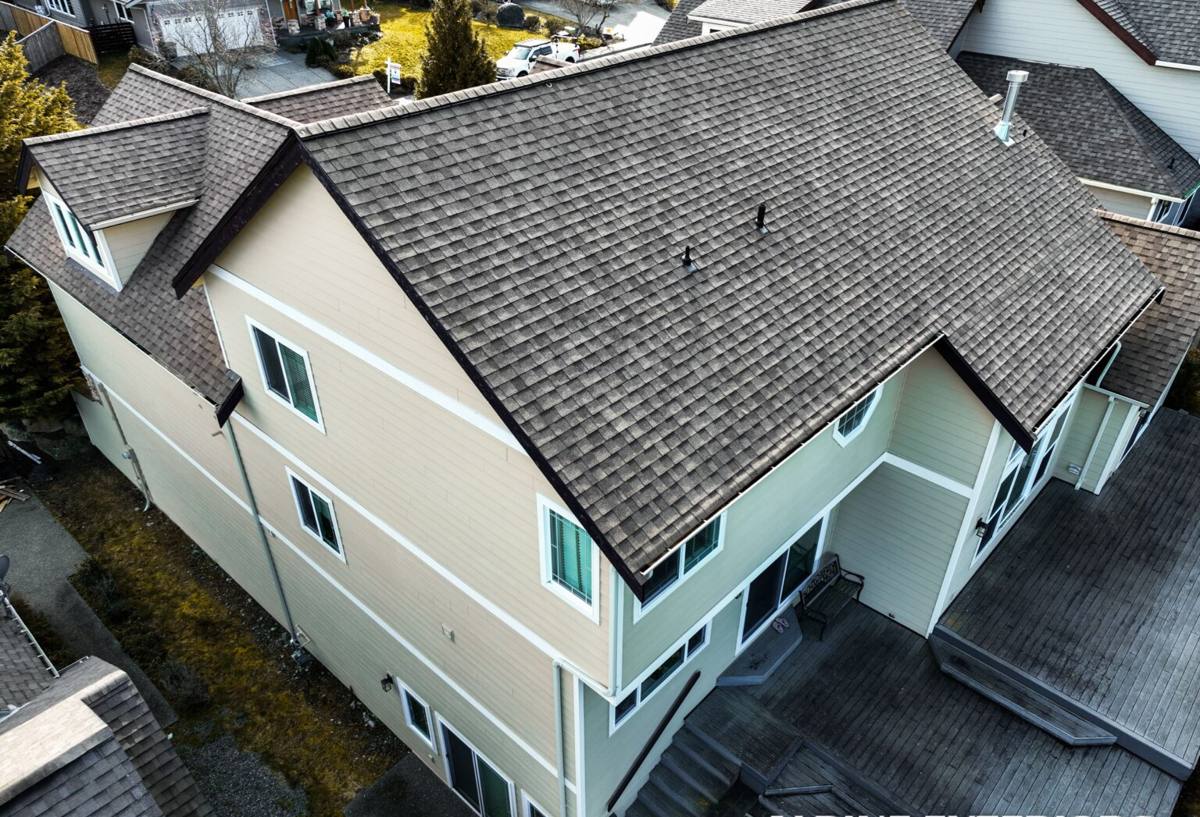
A lot of Sudden Valley homes are built on sloped ground with views toward the lake or surrounding hillside. That means many decks here are elevated, multi-level, or built over a walkout basement rather than sitting low to grade. Elevated decks need more attention to structural bracing, guardrail height and spacing, and stair layout — and they're harder to inspect and maintain once built, so getting the framing and ledger connection right the first time matters more than it would on a simple ground-level patio deck.
Debris and Organic Buildup
Needles, leaves, and cone debris from surrounding trees collect between deck boards and in corners faster here than on an open lot. Left alone, that organic material holds moisture against the wood, feeds moss growth, and clogs the gaps that are supposed to let a deck drain and dry. Board spacing and gap width are small details, but on a heavily treed lot they make a real difference in how much maintenance a deck needs.
What a Correctly Built Deck Needs in This Environment
- Footings sized and set below frost depth, with proper drainage gravel — not just poured against native soil that stays wet under tree cover
- A ledger board attached with proper flashing and structural screws, not nails, with flashing tape that sheds water away from the house rim joist
- Joist tape or a comparable moisture barrier on top of every joist to stop standing water from being trapped under the decking
- Consistent board gaps sized for drainage and airflow, not tight-fit for looks, especially under tree canopy
- Stainless or coated deck screws and hardware rated for ground contact and wet exposure — cheap fasteners rust and stain decking within a couple of seasons here
- Guardrails and stair stringers built to code, especially important on the elevated decks common on sloped Sudden Valley lots
- Under-deck airflow and, where needed, a drainage system if the space below is used as a patio or storage area
Decking Material Choices for a Shaded, Moss-Prone Lot
Every decking material has trade-offs, and the right call depends on your budget, how much maintenance you want to do, and how much direct sun your particular lot actually gets. We'll walk your site with you rather than push one product, but here's the honest comparison we give Sudden Valley homeowners.
| Material | How It Handles Shade & Moss | Maintenance | Typical Lifespan |
|---|---|---|---|
| Pressure-treated wood | Absorbs moisture readily; needs consistent cleaning and sealing to resist moss and rot in shaded spots | Annual cleaning, re-staining every 2-3 years | 15-20 years with upkeep |
| Cedar | Naturally rot-resistant, but still needs regular cleaning under heavy tree cover to stay moss-free | Periodic cleaning and refinishing | 20-25 years with upkeep |
| Composite decking | Resists rot, but can develop surface moss/algae in constant shade if not cleaned periodically | Occasional washing, no staining or sealing | 25-30+ years, manufacturer-warrantied |
| PVC/capped polymer | Fully sealed surface resists moisture absorption best of any option in deep shade | Occasional washing | 25-30+ years, manufacturer-warrantied |
On lots with heavy, near-constant shade, we generally steer clients toward composite or capped polymer decking because the closed-cell surface doesn't absorb water the way wood fiber does, which slows moss growth considerably. That said, plenty of Sudden Valley homeowners want the look and feel of real wood and are happy to keep up with the cleaning schedule — it's a legitimate choice as long as you know the maintenance commitment going in.
Framing and Substructure — Where Deck Failures Actually Start
Most deck problems we get called out for aren't the decking boards — they're the framing underneath that was never protected from moisture in the first place. On a shaded, tree-covered lot, that framing stays damp longer after every rain, so cutting corners here shows up as soft joists, a failing ledger connection, or a wobbly rail post within a handful of years instead of decades. We build every deck's structure to the same standard regardless of what decking surface goes on top, because the frame is what actually holds the deck up and keeps it safe.
Ledger Attachment
The ledger board — where the deck ties into your house — is the single most safety-critical connection on the structure. We flash it properly and fasten it with structural lag screws or through-bolts sized to the load, not construction nails. A poorly flashed ledger is one of the most common causes of hidden rot damage to the house rim joist itself, and it's expensive to fix once it's failed.
Post and Footing Sizing
On sloped or elevated Sudden Valley lots, deck height and post spans need real structural sizing, not a rule of thumb. We size posts, beams, and footings to your actual deck height, span, and load, and we pull the required Whatcom County permit so the work is inspected and documented.
Our Process for a Sudden Valley Deck Project
- On-site walk-through: We look at your slope, sun exposure, tree cover, and how the space connects to your house before we talk material or design.
- Design and material discussion: We lay out size, layout, railing style, and decking material options with honest pros and cons for your specific lot conditions.
- Written estimate: A clear scope and price before any work starts — no surprise change orders for things we should have caught during the walk-through.
- Permitting: We handle the Whatcom County permit and inspection process for any deck that requires one.
- Demolition and site prep: Safe removal of any existing structure, with attention to protecting landscaping and drainage on sloped lots.
- Framing and structural work: Footings, posts, beams, joists, and ledger — built and flashed to hold up under this region's rain and shade.
- Decking, rail, and stairs: Installed with proper spacing and fastening for drainage and long-term stability.
- Final walk-through: We go over the finished deck with you, including a realistic maintenance schedule for your specific site conditions.
Why a Crew That Already Works Sudden Valley Matters
Sudden Valley's private roads, HOA guidelines, and sloped lot access aren't things every contractor is set up to navigate smoothly. A crew that's already worked in the community knows how to plan material delivery and equipment access on tight or steep driveways, what the local permitting and inspection process looks like for Whatcom County, and how tree cover and lake-proximity moisture actually behave on a deck over multiple seasons — not just on paper. That experience shows up in fewer surprises during construction and a deck that's actually built for the site it sits on, rather than a generic design dropped onto a lot it wasn't planned for.
Maintaining Your Sudden Valley Deck After It's Built
- Sweep needles and debris off the deck surface regularly, especially in fall and through the long moss season
- Rinse or wash the surface a couple of times a year to interrupt moss and algae growth before it takes hold
- Check gaps between boards periodically and clear out compacted debris so water keeps draining properly
- Inspect railings, stair connections, and the ledger area yearly for any soft spots or loose fasteners
- Trim back overhanging branches where practical to reduce debris load and let more light and air reach the deck surface
- Re-seal or re-stain wood decking on the schedule appropriate to the product — don't wait until it's visibly failing
Let's Look at Your Lot
Every Sudden Valley property handles shade, slope, and moisture a little differently, and the right deck design follows from what your specific lot is actually doing. If you're planning a new deck or need to replace one that's showing its age, we're glad to come out, walk the site with you, and put together a straightforward, no-pressure estimate. Just fill out the form below to get started.