 Bellingham
 Why Sudden Valley Homes Are Hard on Windows
Sudden Valley sits along Lake Whatcom, tucked into tree cover that keeps the neighborhood shaded, quiet, and noticeably damper than open ground. That's part of the appeal, but it's also why windows here fail differently than windows in a sunny, exposed lot on the other side of Bellingham. Less direct sun means slower drying after every rain. Heavy tree cover means constant organic debris — needles, pollen, leaf litter — collecting in sills and tracks, holding moisture against the frame. And Whatcom County's driving rain, especially in fall and winter storms, tends to come in at an angle that finds any weak seal around a window and pushes water straight at it.
Homes closer to Bellingham Bay deal with salt-laden air that accelerates corrosion on hardware and fasteners; Sudden Valley is far enough inland that this is a smaller factor, but it's still part of the regional air quality your windows sit in day after day. Combine that with our long, low-sun moss season — often running from late fall well into spring — and you get frames, sills, and trim that stay wet or damp far longer than they would in a drier climate. Wood rot, swollen sashes, and green growth on sills aren't cosmetic quirks here; they're the predictable result of the local environment working on ordinary materials year after year.
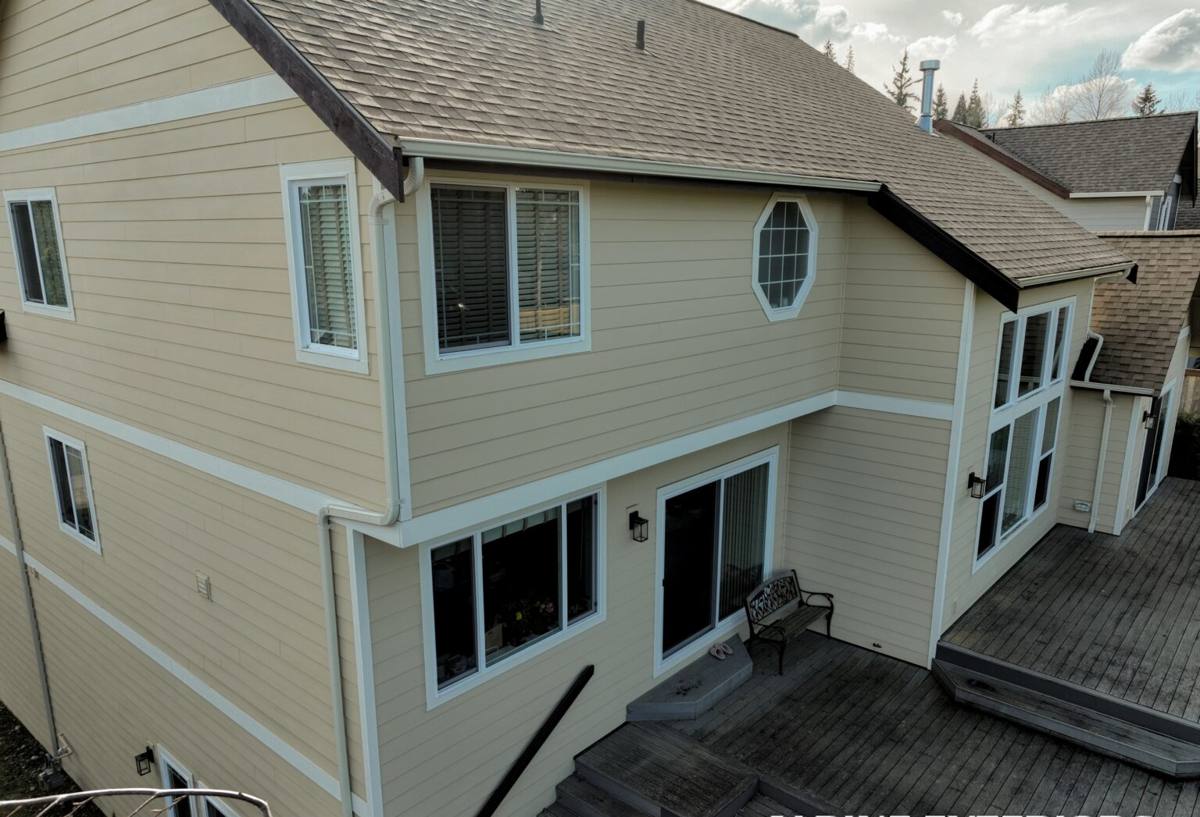
What "Custom" Actually Means for This Job
Custom windows aren't just a bigger price tag — they're windows built to fit an actual opening and an actual home instead of forcing the home to fit a stock size. In Sudden Valley, where many houses were built in stages or renovated over the decades, exact opening dimensions can vary from what a big-box stock window assumes. Custom sizing means:
- Exact width and height measurements for each opening, not "close enough" stock sizing that gets shimmed and caulked to fit
- Frame material and finish matched to the home's exposure — more weather-resistant detailing on north- and west-facing walls that take the brunt of driving rain
- Glazing packages chosen for how much direct sun (or lack of it) a given wall actually gets under the tree canopy
- Trim and flashing details that tie into your existing siding and sill design instead of a generic retrofit flange
This matters more in a shaded, moisture-heavy setting than it does in a dry climate, because a poorly fitted window doesn't just look wrong — it gives water a path in, and that path stays wet longer here than almost anywhere else in the state.
Replacement vs. New Construction Windows
Most of our Sudden Valley work is replacement — pulling an existing window and installing a new one into the same rough opening, keeping your existing trim and siding largely intact. New-construction windows, with a nailing flange, come into play when we're dealing with rot damage that's spread past the frame into the surrounding wall, or when a wall is being opened up anyway for a remodel. We'll tell you honestly which situation you're in before any work starts — it changes both the cost and the timeline.
Choosing the Right Frame Material for This Climate
There's no single "best" window material — there's the right material for your home's exposure, your budget, and how much upkeep you want to take on. Here's how the common options actually perform under Whatcom County's wet, shaded conditions:
| Material | How it handles our moisture | Upkeep | Typical fit |
|---|---|---|---|
| Vinyl | Won't rot; handles standing moisture well; can flex slightly in temperature swings | Low — occasional track cleaning | Most replacement projects, value-focused budgets |
| Fiberglass | Very stable in wet/dry cycling; strong seal retention over time | Low | Homes wanting a longer-term investment, larger openings |
| Wood | Excellent insulator, classic look, but vulnerable if finish isn't maintained in a shaded, damp setting | High — repainting/resealing on a schedule | Character homes where original wood windows are being restored, not replaced |
| Wood-clad (wood interior, aluminum or fiberglass exterior) | Exterior shell resists our rain and moss exposure; interior keeps a natural look | Moderate | Homes wanting the wood look with less exterior maintenance |
Solid vinyl and fiberglass are what we recommend most often for Sudden Valley's shaded, damp lots, simply because they don't give moss and standing moisture the organic material to work on. Where a homeowner wants real wood on the interior for the look and warmth, we frame that as a maintenance commitment up front rather than pretend it's maintenance-free — that's an honest trade-off, not a knock on the product.
How We Approach a Sudden Valley Installation
1. On-Site Assessment
We start by looking at more than the window itself — we check the sill, the surrounding trim, and the wall cavity where accessible for any sign of moisture intrusion that's already begun. In a shaded, high-rainfall setting, catching early rot before it spreads saves real money.
2. Exact Measurement and Ordering
Every opening gets measured individually, even if two windows on the same wall look identical. Older homes especially can have openings that shifted slightly over the years.
3. Removal and Opening Prep
Old windows come out carefully to avoid damaging surrounding siding or trim you're keeping. Any soft or water-damaged framing we find gets flagged and addressed before a new window goes in — installing a good window into a compromised opening just hides the problem.
4. Flashing and Sealing
This is the step that determines whether a window survives our wet season or not. Proper flashing directs water down and out and away from the wall assembly; sealants are applied at the joints that actually take on driving rain, not just around the visible trim. Given how much rain Whatcom County sees, this detail work matters more here than in drier regions.
5. Install, Level, and Test
The new window is set, shimmed level and square, secured, and operated to confirm smooth function before we finish trim work.
6. Finish and Walkthrough
Interior and exterior trim is finished to match your home, the site is cleaned up, and we walk the job with you before calling it done.
Signs Your Current Windows Are Already Failing
Because Sudden Valley's tree cover and moisture hang around longer than in open, sunny lots, window problems here often show up as slow, easy-to-miss symptoms rather than a sudden failure. Worth checking for:
- Sashes that stick, drag, or won't stay open — often swelling from trapped moisture
- Soft or spongy wood at the sill or lower frame corners
- Green or black growth on the sill or frame that returns quickly after cleaning
- Fogging or moisture between panes on double-glazed units (a sign the seal has failed)
- Visible daylight or a draft at the frame edge when the window is closed
- Paint that's bubbling, peeling, or won't hold on the exterior trim
- A noticeably colder feel near the window even with the heat running
Any one of these on its own isn't an emergency. Several together, especially soft wood plus visible moss or growth, usually means water has been getting past the seal for a while and it's worth having someone look before it spreads into the wall framing.
Energy Performance and Condensation Control
Whatcom County's mild but consistently damp climate makes condensation control at least as important as raw insulation value. A window with a good U-factor but poor local air sealing can still fog up or sweat on cold mornings, especially in a shaded Sudden Valley home where indoor humidity has nowhere to escape quickly. We pay attention to:
- U-factor — how well the window resists heat loss; lower is better for our heating-season-dominant climate
- Low-E glazing — helps balance heat retention against the limited direct sun many Sudden Valley walls actually get
- Argon or krypton gas fills — add insulating value between panes without changing appearance
- Weatherstripping quality — the actual seal against driving rain and wind matters as much as the glass package on paper
A window's energy label tells you about the unit in a lab. How it performs on your specific wall, facing your specific exposure to rain and shade, depends on installation quality just as much — which is part of why we treat flashing and sealing as core to the job, not an afterthought.
What Drives the Cost
| Factor | Why it matters here |
|---|---|
| Frame material | Vinyl is typically the most budget-friendly; fiberglass and wood-clad cost more upfront but often less over the window's life given our climate |
| Number and size of openings | Larger or multiple openings on one project reduce per-window setup cost |
| Replacement vs. new construction | New-construction installs (needed after rot damage) involve more carpentry and trim work |
| Existing damage found during removal | Rot repair to sills or framing, common in long-shaded walls, adds labor beyond the window itself |
| Glazing package | Higher-performance Low-E and gas-fill options cost more but pay back in comfort and lower heating bills |
| Trim and finish complexity | Matching custom trim profiles or historic detailing takes more time than a standard finish |
We give straight, itemized estimates before any work begins so you know what's driving the number — no surprise add-ons once the wall is opened up, unless we find something during removal that genuinely needs to be addressed, and we'll always show you that before proceeding.
Why It Matters to Hire a Crew That Already Works This Neighborhood
Sudden Valley's mix of shaded lots, lake-adjacent humidity, and homes of varying ages and construction styles isn't the same as a standard Bellingham city lot. A crew that's already worked this specific area knows to expect softer sill wood on north-facing walls, knows how long moss season really runs here, and knows which flashing details actually hold up under this level of sustained dampness rather than just meeting a minimum code spec. That familiarity shows up in fewer surprises during the job and windows that are detailed correctly for where they're actually going, not a generic install.
If you're noticing sticking sashes, soft sills, or drafts around your windows, or you're just planning ahead for a home that's due for an upgrade, we're happy to take a look and give you a straightforward, no-pressure estimate — use the form below to get started.