 Bellingham
 Storm Damage Looks Different on a Lynden Roof
Lynden sits out on the open farmland of the Nooksack Valley, and that setting shapes how storms treat a roof here. Homes in town don't have the wind protection that a denser, more wooded neighborhood might offer closer to Bellingham. When a front moves through Whatcom County, the wind has a long, flat run at Lynden roofs before it hits, and it often arrives sideways, driving rain up under shingle edges instead of just down on top of them.
That's on top of the everyday climate load every roof here carries: near-constant winter dampness, marine air that drifts in off Bellingham Bay and the Salish Sea, and a moss season that can run most of the year in shaded or north-facing sections. None of that shows up as one dramatic failure. It shows up as a slow buildup of small weaknesses that a storm then finds and exploits. Repairing storm damage correctly means understanding both halves of that equation — the sudden event and the conditions that set the roof up for it.
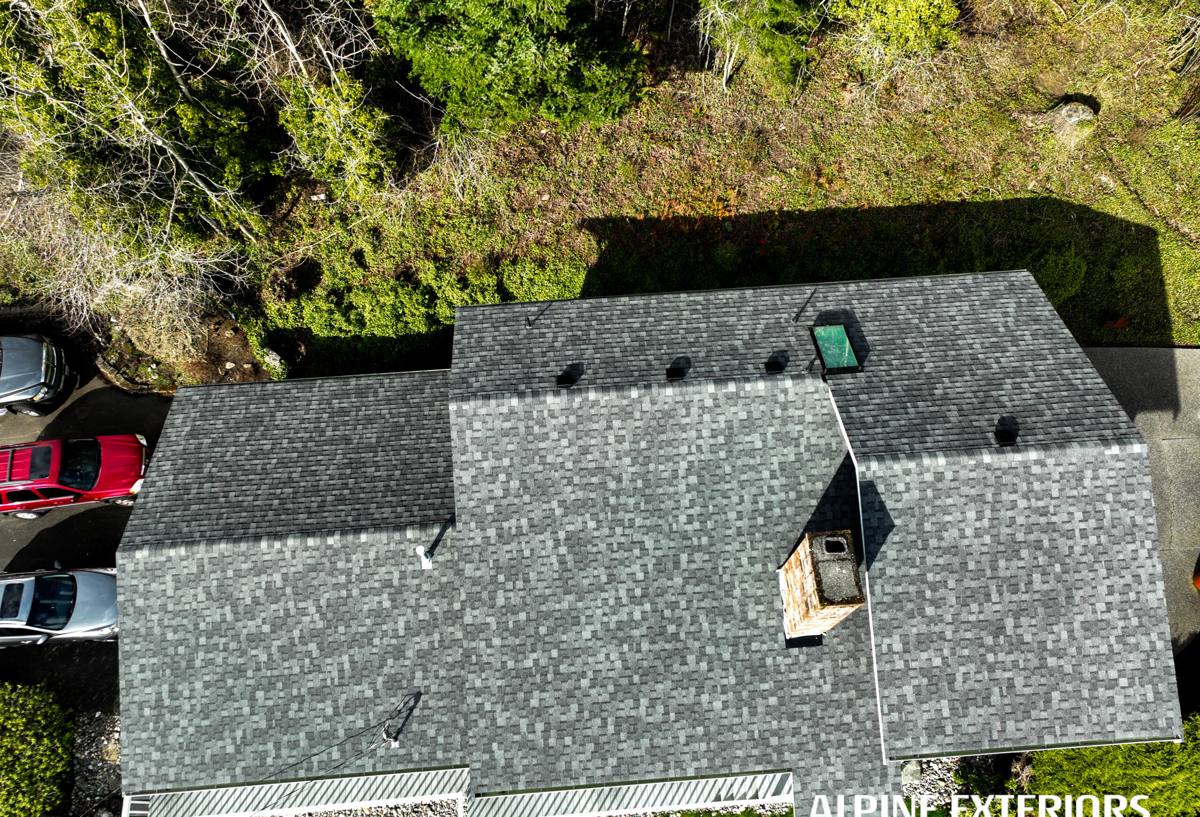
What Wind and Wind-Driven Rain Actually Do
Most storm damage isn't a roof "blowing off." It's smaller and easier to miss.
Lifted and Creased Shingles
Sustained gusts get under a shingle's tab, break the seal strip, and either crease the shingle or lift it enough that it doesn't lie flat again on its own. A shingle that's been lifted and dropped back down often looks fine from the ground but no longer sheds water the way it should.
Flashing Movement
Flashing around chimneys, skylights, dormers, and roof-to-wall transitions is mechanically fastened, not glued down like shingle tabs. Wind can work fasteners loose over a season or two, and a hard storm can finish the job, opening a gap that lets wind-driven rain track sideways into the wall or attic rather than dripping straight down where it would be easy to spot.
Debris Impact
Branches and tree debris are a real factor around Lynden's more wooded lots and windbreaks. Impact damage tends to crack or puncture shingles in a very localized spot, which is easy for an untrained eye to miss during a quick look from the driveway.
Water Intrusion Through Existing Weak Points
A lot of "storm damage" is really a pre-existing weak point — aging flashing, a worn boot around a vent pipe, moss-lifted shingles — that finally gave way once wind-driven rain hit it hard enough. The storm is the trigger, but the vulnerability was already there.
Signs Your Lynden Home May Have Storm Damage
After any significant wind or rain event, it's worth doing a quick check. You don't need to get on the roof to do this safely.
- Shingle pieces, granules, or small debris in the gutters or on the ground after a storm
- Shingles that look lifted, curled, or out of alignment with the surrounding field
- Water stains on interior ceilings or upper walls, even faint ones
- A musty smell in an upstairs room or closet that wasn't there before
- Visible daylight or gaps around chimney or vent flashing from the attic
- Gutters pulling away from the fascia or sagging after heavy wind
- Moss or debris mats that shifted position, exposing bare shingle underneath
None of these guarantee damage on their own, but any of them is a reason to get a proper inspection rather than wait and see.
What a Correct Storm Damage Repair Actually Involves
A Full Inspection, Not Just the Obvious Spot
If a homeowner points out one damaged area, it's tempting to patch that one spot and call it done. We don't work that way. Wind damage rarely stays confined to a single shingle — if one section failed, the surrounding field took the same load and may be one storm away from failing too. A correct repair starts with checking the whole slope the damage occurred on, plus the flashing details nearby.
Matching Materials Honestly
Shingles fade with UV exposure over time, so a brand-new shingle dropped into an older roof will stand out. We'll tell you upfront what kind of match to expect, whether that means sourcing the closest current match, pulling shingles from a less visible slope to patch a visible one, or being honest that a small color difference is unavoidable on an older roof.
Flashing and Underlayment, Not Just Shingles
If wind lifted flashing or opened a seam, replacing the shingle without addressing the flashing underneath just sets up the same failure again next storm. We check step flashing, counter-flashing, and pipe boots as part of any storm repair, not as an upsell afterward.
Checking the Decking
Where water has been getting in for a while, the plywood or OSB decking underneath can be soft or delaminated. This only shows up once the damaged shingles are pulled back, which is one reason a phone estimate or a photo sent by a neighbor down the street is never a substitute for someone actually opening up the area.
Repair or Replace? How We Make That Call
Not every storm-damaged roof needs to come off. But sometimes a repair is a short-term patch on a roof that's already near the end of its service life, and it's fairer to say so than to keep billing small repairs against a roof that needs replacing.
| Factor | Points Toward Repair | Points Toward Replacement |
|---|---|---|
| Age of roof | Under 12-15 years, mid-life shingles | Approaching or past expected shingle lifespan |
| Extent of damage | Isolated to one slope or section | Damage scattered across multiple slopes |
| Decking condition | Solid, dry decking under damaged area | Soft, stained, or delaminated decking found |
| Granule loss | Localized to the storm-damaged area | Widespread granule loss across the field |
| Prior repair history | First repair needed in several years | Repeated patches in the same areas over time |
| Moss/moisture history | Minor, manageable moss growth | Long-term moss damage already degrading shingles |
We'll walk you through where your roof falls on these factors and give you a straight answer, not the option that happens to be more profitable for us.
Our Process, From Call to Finished Repair
- Initial call or estimate request — tell us what you noticed and when the storm hit; we'll ask a few questions to prioritize urgent leaks
- On-site inspection — we check the damaged area, the surrounding field, flashing details, and the attic side where accessible
- Written findings and options — you get a clear explanation of what we found, what caused it, and what repair (or replacement, if warranted) makes sense
- Temporary protection if needed — if there's an active leak, we can address immediate water intrusion before scheduling the full repair
- Repair work — shingles, flashing, underlayment, or decking addressed as needed, matched as closely as the existing roof allows
- Final walk-through — we show you the completed work and explain anything you should keep an eye on going forward
Documenting Damage for Insurance
Many storm repairs go through homeowners insurance. We're not an insurance company and we don't handle your claim for you, but we can provide clear photos, a written description of the damage, and our professional assessment of likely cause, which your adjuster or agent can use as supporting documentation. Getting an independent roofing inspection soon after a storm — rather than relying only on the adjuster's initial look — helps make sure nothing gets missed, especially damage in less visible areas like flashing or the attic side of the decking.
Why It Matters That We Already Work in Lynden
A crew that's already doing roofing work around Lynden and the rest of Whatcom County isn't guessing at how local weather behaves — they've seen how wind moves across open farmland here, how moss builds up in the shaded, damp stretches of the year, and how marine air off Bellingham Bay keeps everything slower to dry out than it would be further inland. That matters for storm repair specifically: the fix needs to hold up against the same conditions that caused the damage in the first place, not just look right on the day it's finished.
It also matters for response time. Storm damage that lets water in doesn't wait for a convenient scheduling slot, and a crew that's regularly in the area can get eyes on a leaking roof faster than one dispatching from well outside the county.
After the Repair: Reducing the Impact of the Next Storm
A repair is a good moment to address the conditions that make storm damage worse in the first place.
Moss Management
Moss holds moisture against shingles and lifts their edges over time, which makes them easier for wind to catch. Keeping moss knocked back on north-facing and shaded slopes reduces one of the quieter contributors to wind and water damage.
Gutter and Drainage Checks
Clogged or sagging gutters back water up under the roof edge during heavy rain, which compounds any wind-driven rain intrusion happening higher up the slope. Clear gutters and properly pitched downspouts are cheap insurance against that.
Flashing Checkups
Since flashing failure is one of the more common quiet causes of storm-related leaks, a periodic check — especially after any significant wind event — catches loosening fasteners before they turn into an active leak.
If a recent storm has you wondering about the condition of your roof, we're happy to take a look. The estimate is free, there's no pressure to move forward with anything, and you'll get a straight answer about what's actually going on up there. Use the form below to get in touch.