 Bellingham
 Metal Roofing Built for South Hill's Conditions
South Hill sits up above downtown Bellingham with views out toward the bay, which is part of what makes it a great place to live — and part of what makes it a tougher place to keep a roof healthy. Elevation and proximity to Bellingham Bay mean homes here take on salt-laden air, wind-driven rain off the water, and a long wet season that keeps roofs damp for months at a stretch. Add in the mature tree canopy that covers a lot of South Hill's older streets, and you get a climate that is hard on asphalt shingles and unusually well suited to a properly installed metal roof.
We're not talking about generic "metal roofs are durable" marketing here. We're talking about what this specific neighborhood, in Whatcom County, actually does to a roof over ten or twenty years, and what a metal system needs to look like to hold up against it.
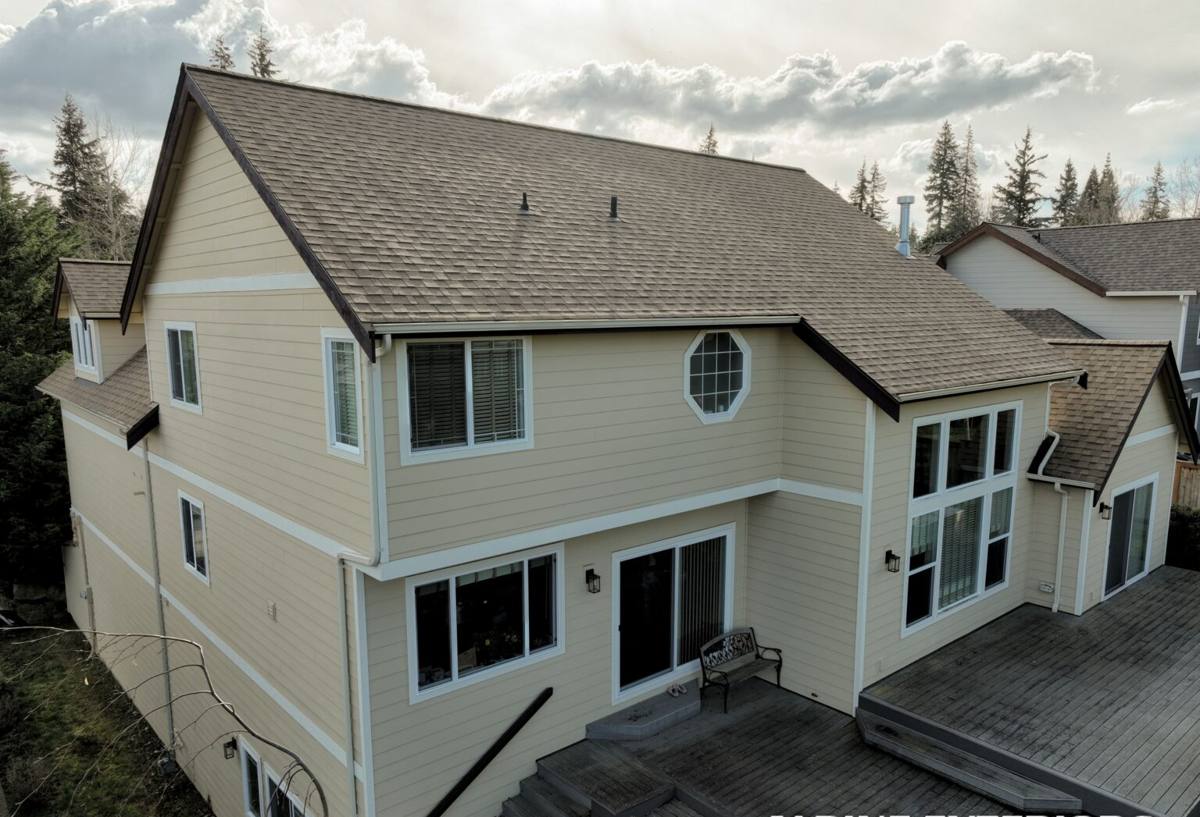
Why South Hill's Terrain and Tree Cover Change the Roofing Equation
Two things set South Hill apart from a flat subdivision roof job: elevation exposure and shade cover, and they pull in opposite directions.
Wind and Salt Exposure
Homes higher on the hill or with a clearer line toward the water catch more wind-driven rain and more airborne salt than homes tucked into the trees below. Salt air accelerates corrosion on unprotected or poorly finished metal, and it's especially hard on fasteners, flashing, and any exposed cut edges that weren't treated correctly during installation.
Shade, Moisture, and Moss
South Hill's older tree-lined streets keep a lot of roofs shaded and damp well after a storm has passed. That's exactly the environment moss and algae need to take hold. Moss holds moisture against the roof surface, works into seams, and on a shingle roof it lifts tabs and shortens lifespan. On a correctly installed metal roof, moss has almost nothing to grip — but the roof still needs to be detailed right at valleys, eaves, and any low-slope sections where debris and needles can collect and hold water.
A roof designed for a dry, sunny climate elsewhere in the country isn't automatically right for a shaded, salt-exposed hillside in Whatcom County. The panel type, coating, fastening system, and underlayment all need to account for what this specific micro-climate does over time.
Choosing a Metal Roofing System for a Coastal, Moss-Prone Climate
Not all metal roofing is built the same, and the right choice for South Hill depends on exposure, roof pitch, and how much shade the property gets.
Panel Profile
Standing seam panels — with concealed fasteners and raised interlocking seams — are the strongest choice for wind-driven rain and long-term weathertightness, because there are no exposed screw heads for water to work into over time. Exposed-fastener panel systems cost less up front but rely on the fasteners and their washers staying sealed for decades, which is a harder ask in a wet, salt-influenced climate.
Metal Type and Coating
Galvalume steel with a quality baked-on finish is the standard workhorse and performs well here when installed correctly. Aluminum is worth considering on homes with heavier salt exposure, since it doesn't rust the way steel can if a coating is ever compromised. Whatever the substrate, the coating system matters as much as the metal underneath it — a thin or inconsistent finish will chalk, fade, and become more vulnerable to corrosion years before it should.
Underlayment and Ice/Water Protection
Given how much rain this area sees, we don't treat underlayment as an afterthought. A synthetic underlayment plus self-adhered ice-and-water membrane at eaves, valleys, and penetrations gives the roof a real second line of defense if wind ever drives water up under a seam.
What a Correct Metal Roof Installation Actually Involves
A metal roof is only as good as its details. Most of the failures we get called out to inspect on older metal roofs in this area trace back to a handful of installation shortcuts, not the metal itself.
- Solid, properly prepared decking — soft or rotted sheathing gets replaced, not roofed over
- Correct panel and fastener spacing for the specific wind exposure of the site
- Butyl or approved sealant at every seam, penetration, and end lap — not just at the visible surface
- Properly formed flashing at valleys, chimneys, skylights, and wall transitions, custom-bent for the job rather than a generic stock piece
- Ventilation that lets the attic breathe, so trapped moisture doesn't condense against the underside of the metal
- Fasteners and trim rated for the coastal environment, not a generic hardware-store substitute
Skip any one of these and the roof can still look fine from the ground for a few years while a slow leak or corrosion problem develops underneath.
Comparing Metal Roofing Options for a South Hill Home
| Option | Best For | Trade-Offs to Know |
|---|---|---|
| Standing seam steel | Full-exposure homes, higher wind/rain areas of the hill | Higher upfront cost; needs a skilled installer to detail seams correctly |
| Standing seam aluminum | Homes closer to the water with heavier salt exposure | Costs more than steel; softer metal needs careful handling during install |
| Exposed-fastener steel panel | Outbuildings, budget-conscious projects, lower-exposure roofs | Long-term performance depends on fastener seals staying intact — needs periodic inspection |
| Stone-coated steel | Homes wanting a shingle or shake look with metal's durability | More surface texture can hold debris under heavy tree cover; regular clearing helps |
Our Process for South Hill Metal Roofing Projects
1. On-Site Assessment
We walk the roof and the attic, not just the ground-level view. On a hillside property that means checking exposure on all sides — a roof plane facing the water needs different detailing than one shaded by trees on the uphill side.
2. Straightforward Proposal
We lay out the panel and coating options that make sense for that specific roof, with honest pricing and no pressure to upsell into something the house doesn't need.
3. Prep and Protection
Landscaping, siding, and gutters get protected before tear-off starts. We check decking condition as we go and address any soft spots before a single panel goes on.
4. Installation to Spec
Panels, flashing, and fasteners go in to the manufacturer's specifications and to the standard this climate actually requires — not the minimum that passes inspection.
5. Final Walkthrough
We walk the finished roof with the homeowner, cover what regular maintenance should look like, and make sure everything is cleaned up before we leave.
Maintenance: What South Hill Homeowners Should Expect
One of the real advantages of metal roofing in this climate is how little routine maintenance it needs compared to shingles — moss and algae have very little to hold onto. That said, "low maintenance" isn't "no maintenance," especially under tree cover.
- Clear debris — needles, leaves, small branches — from valleys and gutters at least once or twice a year
- Have gutters and downspouts checked for clogs before the heavy fall rains arrive
- Watch for any granule buildup or organic debris packed against low-slope sections, which can trap moisture even on metal
- Get an occasional walk-through inspection of flashing and sealant at penetrations, since these are the components most likely to need attention over time
Why Hiring a Crew That Already Works South Hill Matters
South Hill isn't a flat, uniform tract of houses — it's a mix of older character homes and newer construction, varied rooflines, steep driveways, and lots that back up to trees or open toward the bay. A crew that regularly works this neighborhood already knows how exposure changes house to house on the same street, what the tree cover does to a roof over a season, and how to stage a job safely on hillside lots with limited access. That local familiarity shows up in fewer surprises mid-project and a roof detailed for the conditions it will actually face, not a generic install.
It also means someone local is available if a question comes up after the job is done — not a crew that installed the roof and then moved on to the next county.
Signs Your South Hill Roof May Need Attention
- Moss or algae buildup that keeps coming back within a season of cleaning
- Rust streaking or discoloration around fasteners or flashing on an existing metal roof
- Granule loss or bald patches on an aging asphalt shingle roof
- Water stains on interior ceilings, especially near valleys or chimneys
- Gutters that consistently overflow or clog with needles and debris
- A roof over 15–20 years old that hasn't had a professional inspection recently
If any of that sounds familiar, it's worth having someone look before it turns into a bigger repair.
Get a Free Estimate for Your South Hill Roof
If you're weighing a metal roof for your South Hill home, we're glad to come take a look, walk you through what your specific roof and exposure call for, and give you a straightforward, no-pressure estimate. Use the form below to get started.