 Bellingham
 Silver Beach Sits Right Where Weather Meets Wood
Homes along Silver Beach get a version of Bellingham's marine climate that's a step more aggressive than what you'll find a few miles inland. Being close to the water means more airborne moisture, more wind-driven rain hitting walls at an angle instead of falling straight down, and a longer stretch of the year where north-facing and shaded siding just doesn't get a chance to fully dry out. Add in the salt-tinged air that comes off the water and the moss that colonizes anything damp for more than a few weeks, and you've got a set of conditions that will find every weakness in a siding system faster than it would on a house in a drier part of Whatcom County.
That's not a reason to panic about your siding. It's a reason to be deliberate about what goes on the wall and how it's installed. This page is about one thing specifically: installing siding correctly on Silver Beach homes, with the product and the methods that actually hold up here.
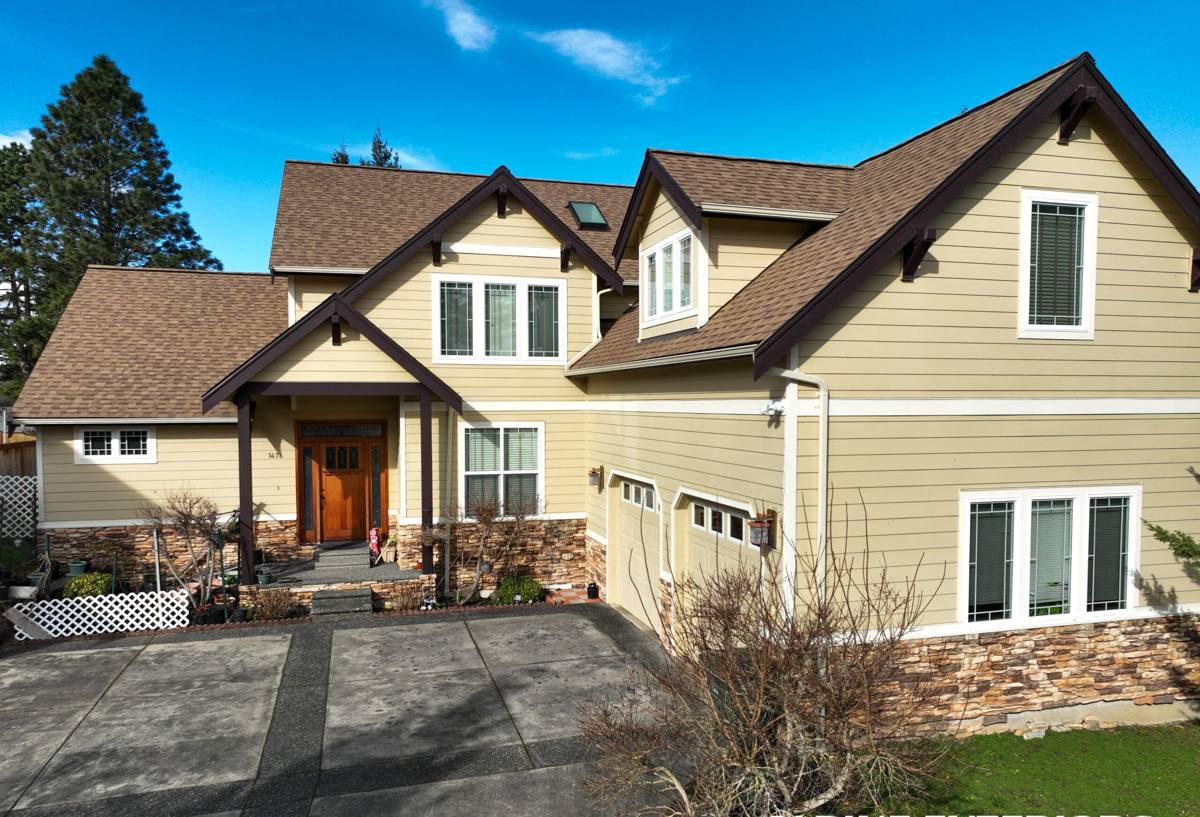
What Driving Rain and Moss Season Do to the Wrong Siding
Every siding material fails in its own way when it's asked to do more than it's built for. Understanding the failure pattern helps explain why the product choice matters as much as the installation.
Wood and Wood-Based Products
Cedar and primed spruce siding look great on day one, but they're organic materials in a climate that rarely lets them dry completely. Once moisture gets behind the paint film or into end grain at butt joints, rot sets in from the inside — often invisible until a board is soft to the touch or paint is bubbling. Moss and algae staining is a constant maintenance item on shaded or water-facing walls.
Vinyl
Vinyl doesn't rot, which is its main selling point, but it moves. Temperature swings make it expand and contract, and over time that stresses the fastening system and the seams. In driving rain and wind off the water, poorly lapped or loosely fastened vinyl panels are also more prone to water intrusion behind the panel — where you can't see it happening.
Engineered Wood (LP SmartSide and Similar)
These products are wood strand composites with a resin binder and a treated surface. They perform reasonably well when the treated face and edges stay intact, but any cut, gouge, or field trim that isn't properly sealed becomes a moisture entry point. In a climate with this much sustained dampness, that's a maintenance commitment most homeowners underestimate when they buy the product.
We install James Hardie fiber cement siding exclusively, and it's not a marketing preference — it's because fiber cement is the one common siding category that doesn't have an organic core to rot, doesn't expand and contract the way vinyl does, and is factory-engineered specifically for climates like ours.
Why James Hardie Is What We Put on Silver Beach Homes
James Hardie fiber cement siding is made from cement, sand, and cellulose fiber — there's no wood core to absorb water and break down, and it's non-combustible, which matters more every fire season in the Pacific Northwest. Hardie also makes a product line, HZ5, specifically engineered for climate zones with sustained moisture exposure like ours, with a formulation tuned for freeze-thaw and wet-weather performance rather than a one-size-fits-all national product.
The factory-applied ColorPlus finish is also a real advantage on a site like Silver Beach. It's baked on under controlled conditions rather than field-painted, which means better adhesion and more consistent coverage than a job-site paint job — and Hardie backs it with a real, transferable finish warranty. On a house exposed to salt air and driving rain, a finish that's engineered to resist fade and moisture intrusion at the coating level, not just the substrate level, is doing real work every day it's on the wall.
None of that replaces good installation. Fiber cement is a durable, climate-appropriate material, but it still depends on correct flashing, correct clearances, and correct fastening to perform the way it's designed to. That's the part we control.
What a Correct Installation Actually Involves
A siding job that looks fine from the curb can still be set up to fail behind the surface. On a water-adjacent property like Silver Beach, we treat the details below as non-negotiable, not optional upgrades.
Water-Resistive Barrier and Flashing First
Before a single piece of siding goes up, the wall needs a continuous water-resistive barrier, properly lapped, with flashing integrated at every window, door, and penetration so water is directed out and down — never trapped behind the cladding. This is the layer that actually keeps a house dry; the siding is the second line of defense, not the first.
A Rainscreen Gap
We install with a drainage gap between the back of the siding and the water-resistive barrier. That gap lets any moisture that does get past the siding drain and evaporate instead of sitting against the wall assembly — which matters enormously in a climate where walls rarely get a long dry stretch.
Manufacturer-Spec Fastening and Clearances
James Hardie publishes specific fastening patterns, minimum clearances from grade, decks, and roof lines, and gapping requirements at butt joints and trim. These specs exist because Hardie has engineered the product's expansion behavior and water-shedding around them. Deviating from them — fastening too tight, closing up expansion gaps, setting siding too close to grade — is how even a good product ends up with problems.
Caulking and Sealant Discipline
Correct sealant use at trim, joints, and penetrations, with the right product for the substrate, closes off the small gaps that would otherwise let wind-driven rain work its way in over time.
Our Installation Process
- Assessment and moisture check. We look at the existing siding, sheathing condition, and any signs of past moisture intrusion before we ever quote a job — problems found now are far cheaper to fix than problems found after new siding is up.
- Tear-off and sheathing evaluation. Removing old siding lets us inspect the sheathing underneath and repair or replace anything compromised before it gets covered up again.
- Water-resistive barrier and flashing installation. Continuous barrier, integrated flashing at every opening, done before cladding starts.
- Rainscreen and furring. The drainage gap goes in per spec, giving the wall assembly a way to dry.
- Hardie siding installation. Installed to manufacturer fastening, gapping, and clearance specifications — not shortcuts that save an afternoon but cost you later.
- Trim, caulking, and final detailing. Every joint and penetration sealed correctly, with attention paid to the areas most exposed to wind-driven rain.
- Walkthrough. We go over the finished work with you before calling the job done.
Siding Materials Compared for This Climate
| Material | How It Handles Sustained Moisture | Maintenance Burden | Typical Lifespan Here |
|---|---|---|---|
| James Hardie fiber cement | No organic core; engineered HZ5 formulation for wet climates | Low — factory finish, no repainting cycle in the near term | Long-term, backed by transferable warranty |
| Cedar / primed spruce | Organic material; prone to rot if moisture gets behind finish | High — regular repainting, moss and stain treatment | Shorter, highly dependent on upkeep |
| Vinyl | Doesn't rot, but seams and fasteners are vulnerable to wind-driven rain | Low, but limited repair options once damaged | Moderate; can degrade with UV and temperature cycling |
| Engineered wood (LP SmartSide, etc.) | Treated surface performs until cut edges or damage expose the core | Moderate — field cuts and damage need immediate sealing | Moderate, dependent on installation care |
Signs Your Current Siding Is Losing the Battle
- Soft or spongy spots when you press on the siding, especially near the bottom courses or window sills
- Persistent moss or dark streaking that comes back within weeks of cleaning
- Paint that's bubbling, peeling, or chalking heavily on water-facing walls
- Visible gaps, warping, or separation at butt joints and corners
- Musty smell or moisture staining on interior walls that back up to exterior siding
- Siding that was installed tight to grade, a deck, or a roofline with no visible clearance
If more than one of these applies to your home, it's worth having someone look at what's happening behind the siding, not just at the surface.
What Drives the Cost of a Siding Job
| Factor | Why It Matters |
|---|---|
| Home size and wall complexity | More corners, dormers, and trim detail mean more labor and material cuts |
| Sheathing condition | Rot or damage found during tear-off adds repair scope before new siding can go on |
| Siding profile and accessories | Lap width, trim style, and color selection affect material cost |
| Access and site conditions | Sloped lots, limited staging area, and proximity to the water can affect setup and scaffolding needs |
| Existing siding removal | Full tear-off versus install over existing material changes labor scope |
We don't quote from a distance — an accurate number requires actually looking at the house.
Why a Crew That Already Works Silver Beach Matters
Water-adjacent Whatcom County properties come with their own quirks: older homes with sheathing that's seen decades of moisture cycling, lots where wind direction concentrates rain on one or two walls, and a moss and algae load that's heavier and more persistent than it is a few miles inland. A crew that regularly works this specific area has already seen how these houses behave — where moisture tends to collect, which details get skipped on older installs, and what actually holds up over a full Whatcom County winter versus what just looks good the first year. That local pattern recognition shows up in the quality of the flashing details and the fastening decisions, not just in friendly conversation on the job site.
If your Silver Beach home needs new siding — or you're just not sure whether your current siding is doing its job — we're happy to take a look and give you a straight answer. The estimate is free, there's no pressure, and you'll get a clear explanation of what we see and what we'd recommend.