 Bellingham
 New-Construction Windows for Silver Beach Builds
If you're framing a new home or an addition in Silver Beach, the windows are one of the few components that have to be right the first time. Once siding closes in around them, any mistake in the flashing or the rough opening prep is buried — and it stays buried until it shows up as a stain on drywall or soft trim a few years down the road. New-construction window installation is a different job than replacing an old window in an existing wall, and it deserves a crew that treats it that way from the start.
We install new-construction windows on builds throughout Bellingham and Whatcom County, including in Silver Beach, where salt air, driving rain, and a long moss season put real demands on how a window gets integrated into the wall assembly. This page walks through what that means in practice — not sales language, just what a correct install involves and why it matters here specifically.
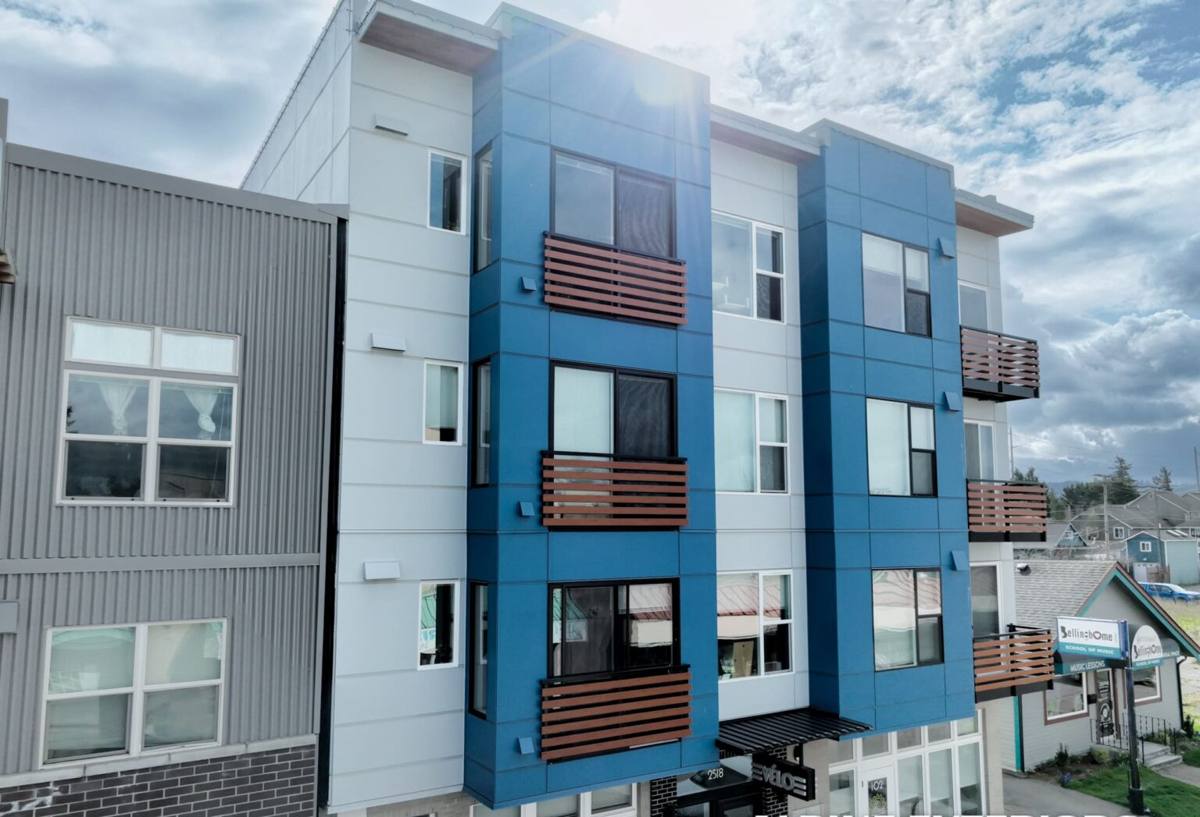
New-Construction Windows Are Not the Same Job as Replacements
New-construction (or "nail-fin") windows are designed to be installed during framing, before siding and often before the weather-resistive barrier (WRB) is fully lapped. The window's nailing flange gets integrated directly into the wall's drainage plane — the layered system of house wrap, flashing tape, and sill pans that manages any water that gets past the siding. This is different from a replacement or "insert" window, which is installed into an existing, already-finished opening and doesn't touch the framing or the WRB at all.
That distinction matters because a new-construction install gives you one real opportunity to build the water management right into the wall. There's no siding to work around, no old flashing to inspect and second-guess — just a clean opening and a chance to do the sequencing correctly. Get it wrong here, and you've built a leak path into the house that won't show itself until the finishes are already covering it.
Why This Matters More on New Builds
- The rough opening, flashing, and siding all have to line up in the right order — there's no "fixing it later" without tearing into finished walls.
- Inspectors are checking this stage of the build, so the flashing detail has to be code-correct, not just visually tidy.
- Whatever gets buried behind the siding now is what the house lives with for decades.
What Bellingham's Climate Actually Does to a Window Opening
Whatcom County doesn't get the heaviest rain totals in the state, but it gets a lot of wind-driven rain — the kind that pushes water sideways into a wall rather than just running down the glass. Add in salt air off the water and a long stretch of damp, low-sun months that keep moss and algae established on north- and shade-facing surfaces for much of the year, and you've got three separate stresses acting on the same few inches of wall around every window.
Driving Rain
Wind-driven rain finds gaps that vertical rain never would. A flashing detail that would be fine in a drier climate — say, a house wrap that's simply taped over the nailing fin without a proper sill pan — can still let water track sideways and pool at the sill during a real storm. Correct flashing has to assume water will reach the opening and be built to shed it back out, not just to keep it from getting in.
Salt Air
Homes with any exposure to salt-laden air see accelerated corrosion on unprotected metal — fasteners, hinges, cranks, and screen hardware age faster than they would further inland. This isn't a reason to avoid any particular window brand; it's a reason to be deliberate about fastener material and hardware finish at the install stage, since that's the one point where it's easy to specify stainless or coated components instead of whatever came standard.
Moss and Prolonged Dampness
Moss doesn't damage a window directly, but it's a symptom of the same conditions that do: surfaces that stay damp for extended periods. Trim details and sealant joints around a window that don't allow water to drain and dry out will hold moisture longer, and that's exactly where moss, mildew, and eventually wood or trim decay take hold. Good window installation includes thinking about how water leaves the area, not just how it's kept out.
The Flashing and Water Management Sequence We Follow
The actual glass-and-frame unit is rarely where a window installation fails. Almost every window leak we've diagnosed over the years traces back to the flashing sequence around the opening, not the window itself. For a new-construction install, the order of operations matters as much as the materials:
- Sill pan first. A sloped, self-adhered or pan-flashed sill gives any water that reaches the opening a clear path back outside instead of a place to sit against the framing.
- Jamb flashing next, lapped over the sill pan legs so water draining down the sides can't get behind it.
- Window set into the opening, checked for level, plumb, and square before a single fastener goes in — an out-of-square unit stresses the frame and can cause operating hardware to bind for the life of the window.
- Head flashing last, always lapped over the top of the WRB above the window so water shed down the wall runs over the flashing, never behind it — shingle-style, top layer over the one below, every time.
- WRB integration tied back into the full house wrap so the window becomes part of one continuous drainage plane, not an isolated patch.
None of this is visible once siding goes on. It's also the part of the job that determines whether the window performs for thirty years or starts showing problems in five.
Choosing a Window Product for a Silver Beach Build
We work with what a builder or homeowner specs, and we're happy to talk through trade-offs for a specific project. In general, for homes with meaningful exposure to salt air and wind-driven rain, the frame material decision comes down to maintenance tolerance versus upfront cost more than any single product being "better."
| Frame Material | Corrosion / Weather Resistance | Maintenance | Typical Use Case |
|---|---|---|---|
| Vinyl | Good — won't corrode, but hardware and reinforcement still matter | Low | Cost-conscious builds, good all-around performer |
| Fiberglass | Very good — stable in temperature swings, resists moisture-driven warping | Low | Higher-exposure walls, longer ownership horizon |
| Aluminum-clad wood | Good exterior protection, but reveals and joints need attention | Moderate | Architectural detail, interior wood finish desired |
| Bare wood | Requires diligent, ongoing maintenance in this climate | High | Historic or period-specific projects only |
Whatever material is specified, we pay close attention to hardware — screws, cranks, and locking hardware in stainless or coated finishes hold up noticeably better under salt air exposure than standard-grade fasteners, and it costs very little to specify correctly at install time.
Energy Performance
Washington's energy code sets minimum performance requirements for new construction, and Whatcom County's mild-but-overcast climate means solar heat gain is rarely the concern that it is elsewhere — the priority here is a low U-factor for heat retention through the long wet season, more than aggressive solar control. We'll help confirm the specified units meet code for your project rather than just assuming the numbers on the label are suf1ficient.
Our New-Construction Window Installation Process
Every build has its own schedule, but the core sequence stays consistent:
- Plan review and rough opening verification — confirming opening sizes match the window schedule before units arrive, so there are no surprises on install day.
- Sill pan and flashing installation — done to manufacturer instructions and best-practice water management, not just the minimum code detail.
- Window setting — leveled, plumbed, squared, and fastened per the manufacturer's schedule so warranty coverage stays intact.
- Head flashing and WRB tie-in — integrated into the surrounding house wrap as one continuous drainage plane.
- Operation check — every sash, crank, and lock cycled before we consider the unit done.
- Photo documentation of the flashing — for our own records and for the builder, since this is the part of the job that gets covered up.
- Confirming rough openings against the window order before units are on site, not after.
- Scheduling around weather — setting windows in a driving rain event is avoidable and worth waiting a day for.
- Clear handoff notes to the siding crew on how our flashing laps so they continue the drainage plane correctly rather than working around it.
- Being available for a walk-through with the builder or inspector if questions come up about the flashing detail.
We coordinate directly with the general contractor or framer on timing, since window installation has to land at the right moment — after the WRB is up on the relevant wall sections, before siding closes them in.
Coordinating With Builders and Other Trades
New-construction window work rarely happens in isolation. We're usually one piece of a schedule that includes the framer, the siding crew, and sometimes a separate WRB installer. A few things make that coordination go smoothly on a Silver Beach job site:
What New-Construction Window Installation Runs
Costs vary by window count, size, product line, and site access, but these are the main factors that move the number on a Silver Beach build:
| Factor | Why It Affects Cost |
|---|---|
| Frame material | Vinyl is typically the lowest entry point; fiberglass and clad-wood units cost more per opening |
| Window size and count | Larger openings and higher window counts increase both material and labor |
| Wall height / site access | Second-story or scaffold-dependent openings take longer to set safely |
| Flashing complexity | Corner windows, bays, and openings near rooflines need extra flashing detail |
| Hardware specification | Stainless or coated hardware for salt-air exposure adds modest cost with real longevity payoff |
We'll walk your plan set and give you real numbers rather than a rough guess — every build is different enough that a generic price range isn't much use to you.
Why a Crew That Already Works Silver Beach Matters
Window flashing details that work fine in a drier inland climate aren't always the right call this close to the water. A crew that installs windows regularly in Silver Beach and the surrounding Bellingham area has already seen how wind-driven rain behaves against these walls, which fastener finishes actually hold up under salt exposure, and where moss and prolonged dampness tend to concentrate on a home's shaded elevations. That's not something you get from a manufacturer's install manual alone — it comes from doing the work here, on this coastline, in this weather, repeatedly.
It also matters for the long run. If a flashing detail ever needs a look years down the line, or a warranty question comes up with the window manufacturer, you want a contractor who's still local, still reachable, and still standing behind the work — not a crew that was only ever passing through on one job.
If you're framing a new home or addition in Silver Beach, we're glad to walk your plans, talk through window options for your specific site exposure, and give you a straightforward, no-pressure estimate. Use the form below to get started.