 Bellingham
 What Cordata's Climate Does to Siding Over Time
Cordata sits in north Bellingham, and like the rest of Whatcom County it deals with a version of Pacific Northwest weather that's harder on exterior siding than most homeowners realize until something starts to fail. The salt-tinged marine air common to this part of the county works on fasteners and exposed edges year-round. Wind-driven rain doesn't just fall straight down — it gets pushed sideways into seams, corners, and trim joints that were never designed to take water head-on. And the long moss season that settles into shaded and north-facing walls here keeps surfaces damp for months at a stretch, which is exactly the environment moss, mildew, and slow rot need to take hold.
None of this means siding is doomed in Cordata. It means small problems don't stay small. A hairline crack, a gapped joint, or a soft spot at the base of a wall that might be cosmetic in a drier climate becomes a moisture entry point here, and once water gets behind siding in a marine climate, it often does more damage before anyone notices than the original defect ever would have on its own.
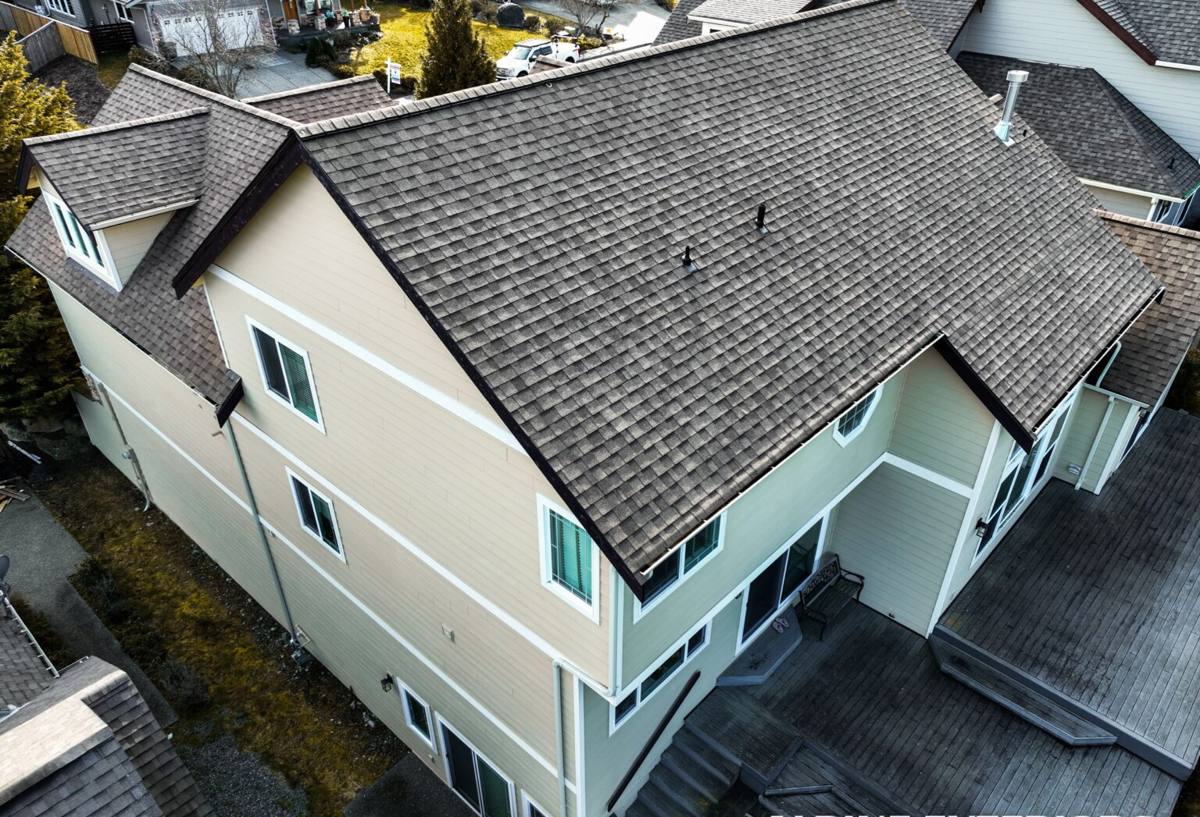
Signs a Cordata Home Actually Needs Siding Repair
Most siding repair calls we get start with something a homeowner noticed while doing yard work or washing windows, not a dramatic failure. Here's what's worth a closer look:
- Cracked, chipped, or split siding panels, especially near corners or at the bottom courses closest to grade
- Soft or spongy spots when you press on the siding, which usually points to trapped moisture and possible substrate damage underneath
- Persistent staining or dark streaking in the same spot every wet season, even after cleaning
- Bubbling, peeling, or flaking paint concentrated at seams, joints, or fastener heads rather than spread evenly across a wall
- Gaps that have opened up at caulked joints around windows, doors, or trim
- Visible rust streaking from fastener heads, which usually means the original fasteners weren't corrosion-rated for this climate
- Moss or mildew that keeps returning to the same section of wall no matter how often it's cleaned off
Any one of these on its own might be a minor fix. Two or three showing up in the same area of a wall is usually a sign there's a moisture problem underneath that a caulk gun alone won't solve.
Repair or Replace? Making the Right Call
Not every damaged section calls for a full re-side, and we're not in the business of upselling a repair into a replacement job it doesn't need. Isolated damage — a cracked panel from a fallen branch, a corner that took an impact, a section with failed caulking but sound material underneath — is usually a straightforward, contained repair. The calculus changes when damage shows up in multiple unrelated spots across the same elevation, when we find rot in the sheathing or framing behind the siding, or when the existing material is old enough that matching it exactly is no longer realistic. In those cases we'll tell you honestly that a wider repair or a full replacement is the better long-term move, rather than patching something that's going to keep giving you the same problem every year.
What a Correct Siding Repair Actually Involves
Diagnosing the Root Cause First
Replacing a cracked board without figuring out why it cracked, or caulking a gap without checking what's happening behind it, just resets the clock on the same failure. Before any material comes off the wall, we look at what's underneath: is the house wrap intact, is there evidence of past water intrusion, is the framing behind the damage still sound? A repair that skips this step might look fine on the day it's finished and still fail again within a season or two.
Matching Material and Finish
James Hardie's factory-applied ColorPlus finish is baked on and UV-cured, which makes it far more durable and consistent than a field-applied paint job — but it also means an exact color match on a repair depends on getting the right product line, profile, and color match, since older ColorPlus runs can weather slightly differently than a brand-new board over many years of sun and salt air. We account for this up front rather than letting a homeowner discover a visible patch after the fact.
Flashing and Water Management at the Repair Point
Every seam we open up during a repair is a chance to either restore the wall's original drainage path or quietly make it worse. That means correct flashing and lapping at any disturbed joint, a maintained drainage gap behind the new material, and fasteners driven at the spacing and depth Hardie's install specs actually call for — not just enough to hold the board in place until the next inspection.
Why We Repair Only With James Hardie Fiber Cement
We install and repair exclusively with James Hardie fiber cement. That's a deliberate standard, not a limitation we apologize for. Fiber cement doesn't swell, cup, or absorb water at a cut edge the way wood-based products can, which matters enormously when you're doing repair work — cutting into an existing wall creates fresh exposed edges, and how a material handles that exposure over the following wet seasons determines whether a repair holds or becomes a callback.
| Material | Behavior When Repaired/Patched | Long-Term Risk in This Climate |
|---|---|---|
| James Hardie fiber cement | Stable at cut edges once primed; doesn't swell or distort | Low, when installed and repaired to spec |
| LP SmartSide (engineered wood) | Cut edges and exposed fastener holes are moisture-sensitive | Moderate; edge sealing needs ongoing attention |
| Vinyl | Can be brittle to patch cleanly; color-matching aged panels is difficult | Low material risk, but hidden moisture damage is easy to miss |
| Cedar | Absorbs moisture readily at any new cut or joint | High without a consistent resealing schedule |
We don't install LP SmartSide, vinyl, Cemplank, Allura, primed spruce, or cedar siding, and we won't repair a wall with a mismatched material just to save a homeowner a phone call to a different contractor. If a home in Cordata has one of those products and needs work outside what we do, we'll say so plainly rather than force a fix that doesn't hold up.
Our Process for a Cordata Siding Repair
The Inspection Call
We start by looking at the damage in person, not off a photo. That includes checking the area immediately around the visible problem, since siding damage in this climate rarely stays contained to exactly where it's visible from the ground.
The Repair Itself
Once we know what we're dealing with, we remove only what needs to come off, check the wall assembly underneath, correct anything compromised, and rebuild the section to the same drainage and fastening standards as a new installation — because a repair that isn't built to that standard just becomes next year's repair.
What Happens After
We walk the finished repair with the homeowner, point out what we found and what we did about it, and give straightforward guidance on anything else on the property worth keeping an eye on.
What Affects the Cost of a Siding Repair
| Factor | Why It Matters |
|---|---|
| How much hidden damage is found | Rot or moisture damage behind the visible problem adds scope once the wall is opened up |
| Color and profile matching | Matching an older ColorPlus finish or discontinued profile can take more sourcing effort |
| Access and wall height | Second-story or hard-to-reach sections take more time and equipment |
| Number of separate repair areas | Several small repairs across a home cost differently than one contained section |
| Underlying cause | A repair tied to a flashing or drainage problem may need more than a cosmetic fix |
We'll give you real numbers after seeing the damage in person — repair costs vary too much house to house for a rough estimate to mean much.
Why a Crew That Already Works in Cordata Matters
Siding repair is diagnostic work as much as it's install work, and a crew that's worked on homes throughout this part of Bellingham has already seen how the local mix of salt air, driving rain, and a long moss season plays out on real walls over real years. That's useful when we're standing in front of a cracked panel or a soft spot trying to figure out whether it's an isolated issue or a sign of something bigger happening behind the siding. It also means a faster response — repair work is often more time-sensitive than a planned replacement, especially if there's an active moisture path into the wall, and a local crew can typically get out to look at the problem sooner than one dispatching from farther away.
If you've noticed a cracked panel, a soft spot, or a section of wall that just doesn't look right anymore, we're glad to come take a look. There's a free, no-pressure estimate request form below — reach out and we'll set up a time to walk the property with you.