 Bellingham
 Why Birch Bay Siding Wears Differently Than Inland Bellingham Homes
Birch Bay sits right against the water, and that changes how siding fails. Homes a few miles inland in Bellingham deal mostly with rain volume and shade-driven moss. Birch Bay homes deal with all of that plus a steady drift of salt-laden air coming off the bay, near-constant exposure to wind-driven rain with no windbreak, and long stretches of damp, low-sun weather that keeps exterior walls wet longer than they should be. None of this is dramatic on its own, but it adds up year after year, and it shows up first in the siding — not the roof, not the windows.
When we get called out to a Birch Bay property, the damage pattern is usually different from what we see on a typical Bellingham repair call: more corrosion on fasteners and trim hardware, more staining and soft spots on the walls facing the water, and more cases where a homeowner assumed a small cosmetic issue was cosmetic when it was actually a sign of moisture already inside the wall assembly.
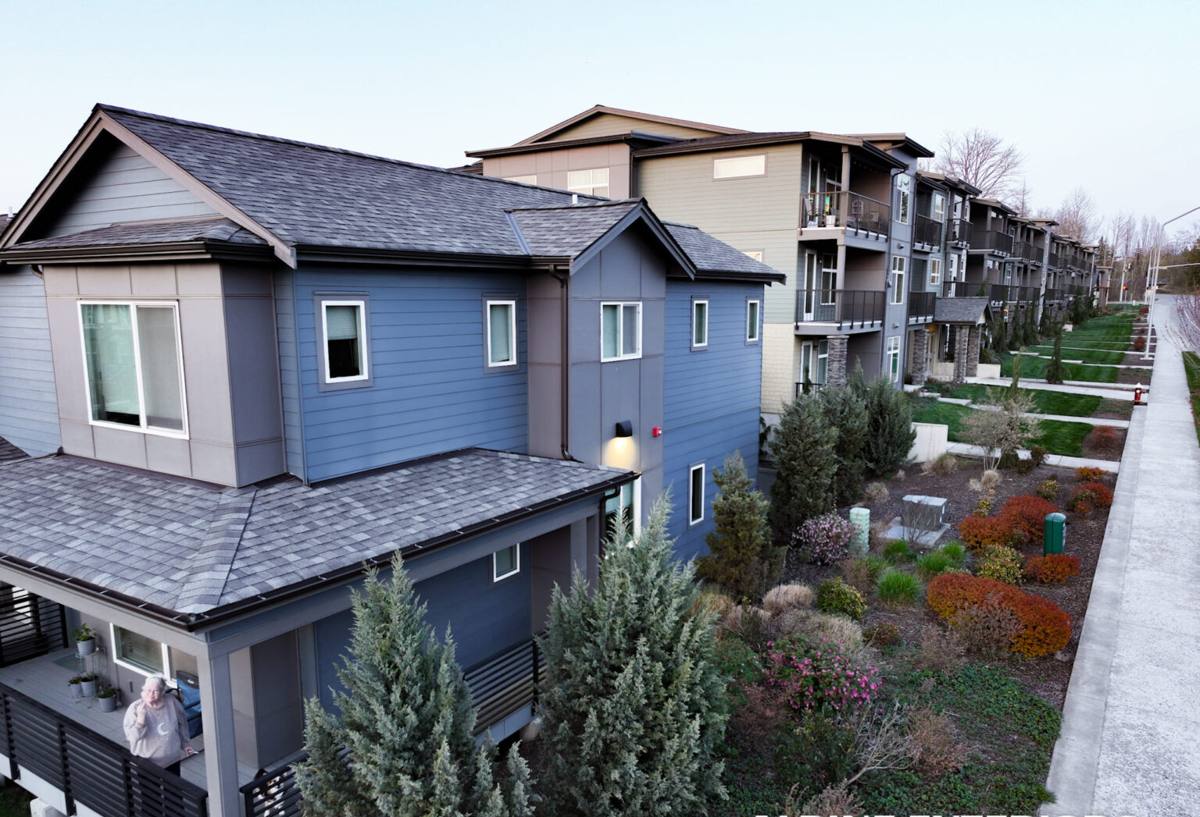
The Three Things Doing the Damage
Salt Air Corrosion
Airborne salt accelerates corrosion of exposed metal fasteners, flashing, and trim hardware. On siding systems that rely on face-nailing or exposed metal joints, this shows up as rust streaking, loosening panels, and fastener heads that eventually pop or fail. It's slow, and it's easy to miss until a section of siding starts to move in the wind.
Driving Rain
Wind off the water doesn't just wet the siding surface — it drives rain sideways into laps, seams, and butt joints that were designed for vertical rain, not horizontal pressure. Over time this pushes water past caulk joints and into seams that were never sealed with that kind of exposure in mind, especially on older installations.
Extended Moss and Algae Season
Shaded walls, north-facing elevations, and anywhere airflow is blocked by landscaping or a neighboring structure stay damp for extended stretches. That moisture supports moss and algae growth on siding surfaces for a longer season here than in drier parts of the county, and sustained organic growth traps moisture against the material underneath it — which is the actual problem, not just the appearance.
Signs a Repair Is Actually Needed
- Soft or spongy spots when you press on a wall, especially near the bottom courses or below windows
- Visible rust streaking below fastener heads or trim joints
- Peeling, bubbling, or persistent staining on interior walls that back up to an exterior wall facing the water
- Siding panels that have started to bow, warp, or pull away from the wall
- Cracked or missing caulk at seams, corners, and around penetrations (hose bibs, vents, light fixtures)
- A musty smell in a room with no obvious source
- Moss or algae that keeps returning to the same section within a season or two of cleaning
Any one of these on its own might be minor. Two or more in the same area, especially on a wall exposed to prevailing weather off the bay, usually means water has already gotten past the surface.
What a Correct Siding Repair Actually Involves
A lot of "siding repair" in this region amounts to caulking a gap and calling it done. That's not a repair — it's a temporary cover-up that often traps moisture in rather than letting the wall dry. A repair done right has a specific sequence:
- Remove the damaged material — enough to see the full extent of the problem, not just the visible edge of it.
- Check the wall behind it — sheathing, house wrap, and framing get inspected for rot, softness, or existing mold before anything new goes back on.
- Address the water source — a repair that doesn't fix why water got in will fail again, often faster the second time.
- Replace with matching, correctly rated material — patched-in siding needs to match profile, reveal, and finish, and needs to be a product suited to the exposure it's going back into.
- Reseal and flash properly — seams, joints, and penetrations get treated for wind-driven rain, not just standard vertical exposure.
Skipping step 2 is the most common shortcut we see from repairs done elsewhere, and it's the reason the same spot often needs fixing again within a year or two.
Repair or Full Replacement? How We Make That Call
Not every damaged section needs full replacement, and not every "quick patch" candidate should stay a patch. The honest answer depends on how far the moisture has traveled and how old the existing siding is.
| Factor | Favors Repair | Favors Replacement |
|---|---|---|
| Extent of damage | Isolated to one or two sections | Recurring across multiple walls or elevations |
| Sheathing condition | Solid, dry behind removed material | Soft, stained, or rotted sheathing found |
| Age of existing siding | Under 10-15 years, good overall condition | Near or past expected service life |
| Material match available | Yes, close visual and profile match | Discontinued or mismatched product |
| Exposure | Protected elevation, minimal direct wind-driven rain | Direct water-facing wall, full salt air exposure |
We'll tell you plainly which side of that table your home falls on. If a repair is genuinely the right call, that's what we'll recommend — a full tear-off isn't always necessary, and we're not going to push one just because it's a bigger job.
Our Process for Birch Bay Repair Calls
Because Birch Bay's exposure is more aggressive than most of the areas we work, we treat the inspection differently than a standard Bellingham repair estimate:
- Full-elevation walkthrough, not just the section you called about — water tends to show up somewhere before it shows up where you noticed it
- Moisture reading at suspect areas to confirm whether a wall assembly is actually wet, not just stained
- Fastener and flashing check for corrosion, given the salt air factor
- Written scope that separates "repair this now" from "watch this, it's not urgent yet" — so you're not paying to fix things that don't need it
- Cleanup and disposal included, with the work area left the way we found it
Why We Repair With James Hardie Fiber Cement
We install and repair with James Hardie fiber cement exclusively — we don't install vinyl, LP SmartSide, cedar, or primed spruce, and we won't patch a repair with a mismatched product just because it's convenient. For a location like Birch Bay, that standard matters more than usual. Fiber cement doesn't corrode, it doesn't feed the moss and algae the way some organic-based products can, and it's engineered to hold up under sustained moisture exposure rather than just tolerate occasional rain. James Hardie's HZ5 product line in particular is built for exactly this kind of climate — cold, wet, and coastal.
When we're patching an existing Hardie installation, matching is straightforward because the product line and ColorPlus finish system are consistent and available. When we're repairing a home currently sided in something else, we'll be honest with you about whether a true match is realistic or whether the better long-term move is transitioning that wall — or eventually the whole house — to fiber cement. We won't tell you that a mismatched patch will look or perform the same as the original when it won't.
Why Local Experience in Birch Bay Specifically Matters
A contractor who mostly works drier, more sheltered neighborhoods will size up a Birch Bay repair the same way they'd size up any other job — and that's how you end up with a fix that fails again in a season or two. Crews who've actually worked this stretch of coastline know to check fastener corrosion even when the siding face looks fine, know which elevations take the worst of the wind-driven rain, and know that a repair here needs a longer-exposure standard than the same repair three miles inland. That's not a sales pitch — it's the difference between a repair that lasts and one you'll be calling about again next winter.
Simple Maintenance That Extends a Repair's Life
Once a repair is done right, a little upkeep keeps it that way:
- Rinse siding annually, especially water-facing walls, to reduce salt buildup
- Trim back landscaping that's blocking airflow and keeping a wall shaded and damp
- Re-check and refresh caulk at seams and penetrations every few years, sooner on exposed elevations
- Have moss or algae treated promptly rather than letting it establish — the longer it sits, the more moisture it traps
- Walk the exterior after major windstorms and check for loosened panels or fasteners
If you're seeing any of the warning signs above on a Birch Bay home, or you just want an honest read on whether it's a repair or something bigger, we're happy to take a look. The estimate is free, there's no pressure, and you'll get a straight answer about what your siding actually needs — use the form below to get started.