 Bellingham
 Siding Built for South Hill's Particular Climate
South Hill sits up on the bluff above downtown Bellingham, with open exposure to Bellingham Bay on one side and mature tree canopy on the other. That combination is harder on exterior siding than either factor alone. Homes with a bay-facing exposure take on salt-laden air and wind-driven rain, while homes tucked under the tree cover deal with shade, moisture retention, and moss that never fully dries out between storms. A lot of South Hill properties get some version of both, depending on the lot and which direction the house faces.
Whatcom County's wet season runs long — realistically eight or nine months of the year with regular rain, overcast skies, and high humidity. Siding here isn't just a cosmetic surface; it's the thing standing between that weather and your sheathing, framing, and insulation for the next several decades. Material choice and installation quality both matter more here than they would in a drier climate.
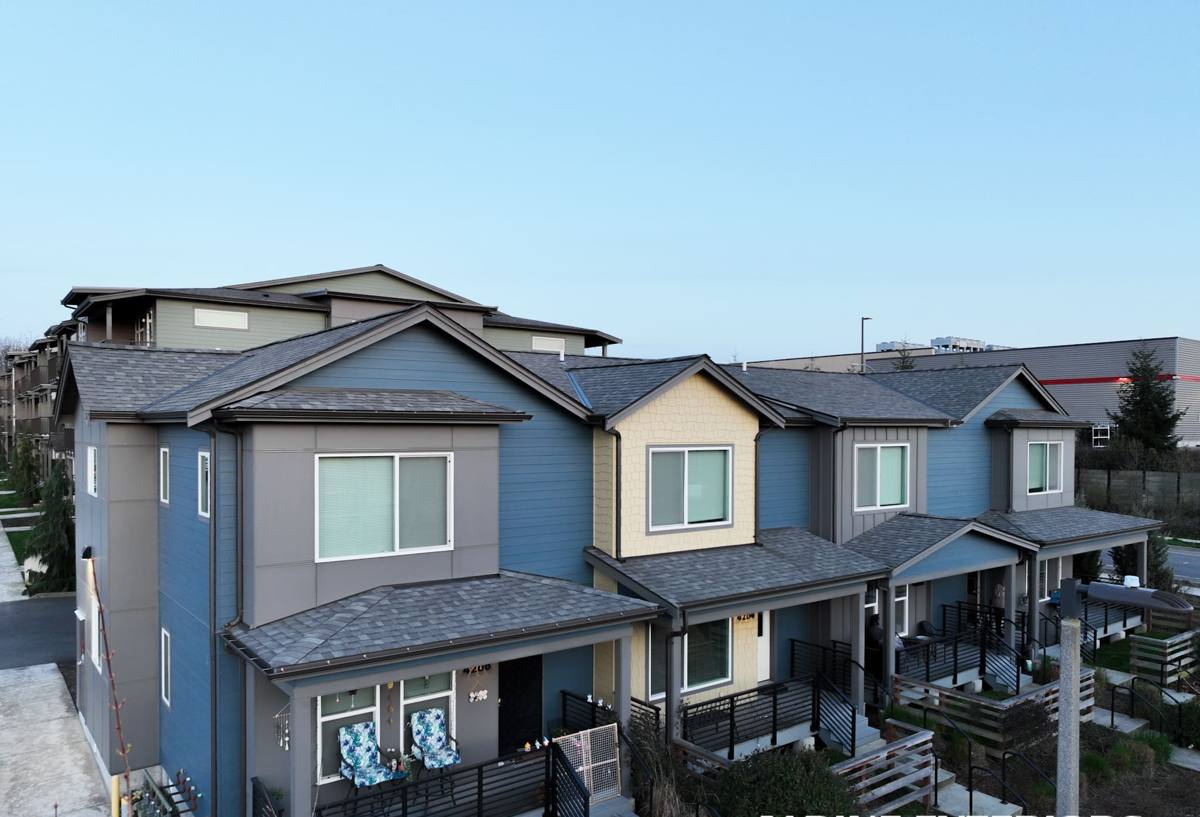
What Salt Air, Driving Rain, and Moss Actually Do to Siding
Salt Air
Airborne salt from Bellingham Bay accelerates corrosion on fasteners, flashing, and any exposed metal trim. It also degrades some paint and coating systems faster than inland exposure would, leading to earlier fading, chalking, or peeling on materials not engineered for coastal-adjacent conditions.
Driving Rain
Storms off the Sound don't just fall straight down — wind pushes rain sideways into wall assemblies, seams, and laps. Siding that isn't installed with correct overlaps, flashing, and drainage behind it will eventually let water track into the wall cavity, even if the surface material itself is sound.
Long Moss Season
Shaded lots and persistent moisture create ideal conditions for moss, algae, and mildew to colonize siding surfaces. Some materials resist this better than others; some require regular washing or treatment to keep growth from taking hold and holding moisture against the wall.
Why We Install Only James Hardie Fiber Cement
We standardized on James Hardie fiber cement siding and don't install vinyl, LP SmartSide, or other engineered wood products. That's a deliberate call based on how those materials perform over time in exposures like South Hill's — not a claim that they're unusable everywhere, just that we've seen what holds up here and what doesn't.
Fiber cement is non-combustible, dimensionally stable in wet-dry cycling, and doesn't feed moss and algae growth the way wood-based products can. James Hardie's HZ5 product line is engineered specifically for climates like ours — freeze-thaw cycling, prolonged moisture exposure, and coastal air. The factory-applied ColorPlus finish is baked on under controlled conditions, which gives it better long-term color retention and adhesion than field-applied paint, and it carries a stronger, transferable finish warranty than most site-painted alternatives.
None of that replaces correct installation. Fiber cement performs the way it's rated to only when it's installed to manufacturer spec — that's true of any siding product, and it's where most premature siding failures actually originate.
What a Correct Siding Installation Actually Involves
The siding you see is the last layer of a system. Getting South Hill homes weathertight means getting every layer underneath right, not just hanging boards straight and level.
- A drainage plane or rainscreen gap so any water that gets behind the siding can drain and the wall can dry out, rather than staying trapped against the sheathing
- Correct flashing at every window, door, and roofline intersection — the single most common failure point on older siding jobs
- Proper fastener type, spacing, and depth per James Hardie's installation specifications, which affects both wind performance and warranty coverage
- Minimum clearances from grade, decks, and roof lines so the siding isn't sitting in standing water or splash-back
- Correctly lapped and sealed joints, with factory-matched caulking at the panel seams that actually need it — and no caulking where a proper lap should be doing the work instead
- Starter strips and trim details installed so the bottom course sheds water the way the rest of the wall does
Skip any one of these and the siding can look fine for a few years while moisture works its way in behind it — which is exactly the kind of failure that's expensive to diagnose and repair once it shows up as rot or interior damage.
Our Process for South Hill Siding Installation Projects
- Walk-through and assessment. We look at your home's specific exposure — bay-facing wind and salt load, shaded moss-prone walls, existing moisture damage — and check the condition of the sheathing and trim underneath the current siding where accessible.
- Scope and product selection. We recommend the James Hardie plank, panel, or shingle profile and color that fits the home and the exposure, and walk through what full removal versus repair-and-patch would each involve.
- Written estimate. Clear scope, materials, and timeline before any work starts — no surprise add-ons once the old siding comes off.
- Tear-off and inspection. Once old siding is removed, we inspect the sheathing and framing for hidden moisture damage before anything new goes up. This is often the point where a home's real condition becomes visible.
- Weather barrier and drainage plane installation. This layer does the real work of keeping South Hill's driving rain out of the wall assembly, and it's not visible once the job is done — which is exactly why it has to be right.
- Flashing, then siding installation to spec. Windows, doors, and rooflines get flashed first; siding goes up to James Hardie's fastening and clearance requirements.
- Final walk-through. We review the finished job with you, including care and maintenance specific to your home's exposure.
Siding Material Comparison for South Hill's Exposure
| Factor | James Hardie Fiber Cement | Vinyl | Engineered Wood (e.g. LP SmartSide) |
|---|---|---|---|
| Salt air / coastal exposure | Engineered HZ5 line rated for coastal and freeze-thaw climates | Can warp or fade faster under UV and temperature swings | Wood-based core is more sensitive to prolonged moisture exposure |
| Moss / algae resistance | Non-organic material doesn't feed growth; surface can still be washed as needed | Doesn't feed growth, but seams can trap moisture | Wood-based composition is more vulnerable if moisture gets past the coating |
| Fire resistance | Non-combustible | Combustible, can melt or deform near heat sources | Combustible |
| Finish longevity | Factory-baked ColorPlus finish, strong transferable warranty | Color is part of the material; can fade over time | Relies on factory or field-applied coating maintenance |
| Maintenance | Periodic washing; no repainting needed for the life of the ColorPlus warranty | Low maintenance but limited repair options if damaged | Coating requires more active upkeep, especially at cut edges and seams |
This is a general comparison of how these material categories tend to behave, not a claim about any specific product's failure rate. We install James Hardie because, weighed against South Hill's specific exposure, it's the option we're comfortable standing behind long-term.
Signs Your South Hill Home May Need New Siding
Some warning signs are visible from the ground; others take a closer inspection to catch, especially on shaded or bay-facing walls where damage can progress before it's obvious.
- Soft or spongy spots when you press on the siding, especially near the bottom courses or under windows
- Persistent moss or algae staining that keeps returning shortly after cleaning
- Visible warping, buckling, or gaps opening up between boards or panels
- Peeling, bubbling, or chalking paint on painted wood or composite siding
- Rising energy bills that don't line up with any change in usage — sometimes a sign of a compromised wall assembly
- Visible rust streaking from fasteners or trim, more common on bay-facing walls
Any one of these on its own isn't necessarily urgent. Several together, or anything paired with visible interior staining, is worth having looked at before the next wet season.
Why a Crew That Already Works South Hill Matters
South Hill's mix of hillside lots, mature trees, and bay exposure means every job has its own combination of wind load, shade, and drainage considerations. A crew that's worked the neighborhood before isn't guessing at how a given wall will behave — they've seen how bay-facing exposures differ from tree-shaded ones a few blocks over, and they plan flashing, drainage, and fastening accordingly.
Local familiarity also means fewer surprises with permitting and inspection timelines specific to the City of Bellingham and Whatcom County, and a crew that's set up to work around this area's wet-season scheduling realities rather than being caught off guard by them.
Before You Hire: What to Ask a Siding Contractor
- Are you licensed and insured to work in Washington State, and can you provide proof?
- Will you inspect the sheathing and framing before installing new siding, not just after removal is complete?
- What weather barrier and drainage plane system do you install behind the siding?
- Do you follow the manufacturer's written fastening and clearance specifications, and will you show me the spec sheet?
- What does the material warranty cover, and is it transferable if I sell the home?
- Can you walk me through how you'd handle a bay-facing wall versus a shaded, tree-covered wall on the same house?
A contractor who answers these clearly and specifically — rather than in generalities — is usually the one who's actually done the work before, not just sold it.
Get an Estimate for Your South Hill Home
If your siding is showing wear, or you're planning ahead of the next wet season, we're happy to take a look and give you a straight assessment — no pressure, no obligation. Use the form below to request a free estimate for siding installation on your South Hill home.