 Bellingham
 Sehome's Siding Problem Isn't Cosmetic — It's Moisture Management
Sehome sits close enough to Bellingham Bay to catch salt-laden air off the water, tucked against tree-covered slopes near Sehome Hill that keep the neighborhood shaded and damp for long stretches of the year. That combination — salt air, driving rain off the Sound, and a moss season that can run from October through May — is hard on any exterior wall covering. Siding damage here rarely stays put. A small crack that would sit quietly on a drier, sunnier property becomes an entry point for water within a season, and once water gets behind siding in a climate this wet, it doesn't dry out between storms the way it might elsewhere.
That's the piece homeowners often miss: siding repair in Sehome isn't really about patching an eyesore. It's about stopping a moisture problem before it reaches the sheathing, framing, or insulation behind the wall. Whatcom County's wet-season stretch means any gap in your siding's defense has months to do damage, not days.
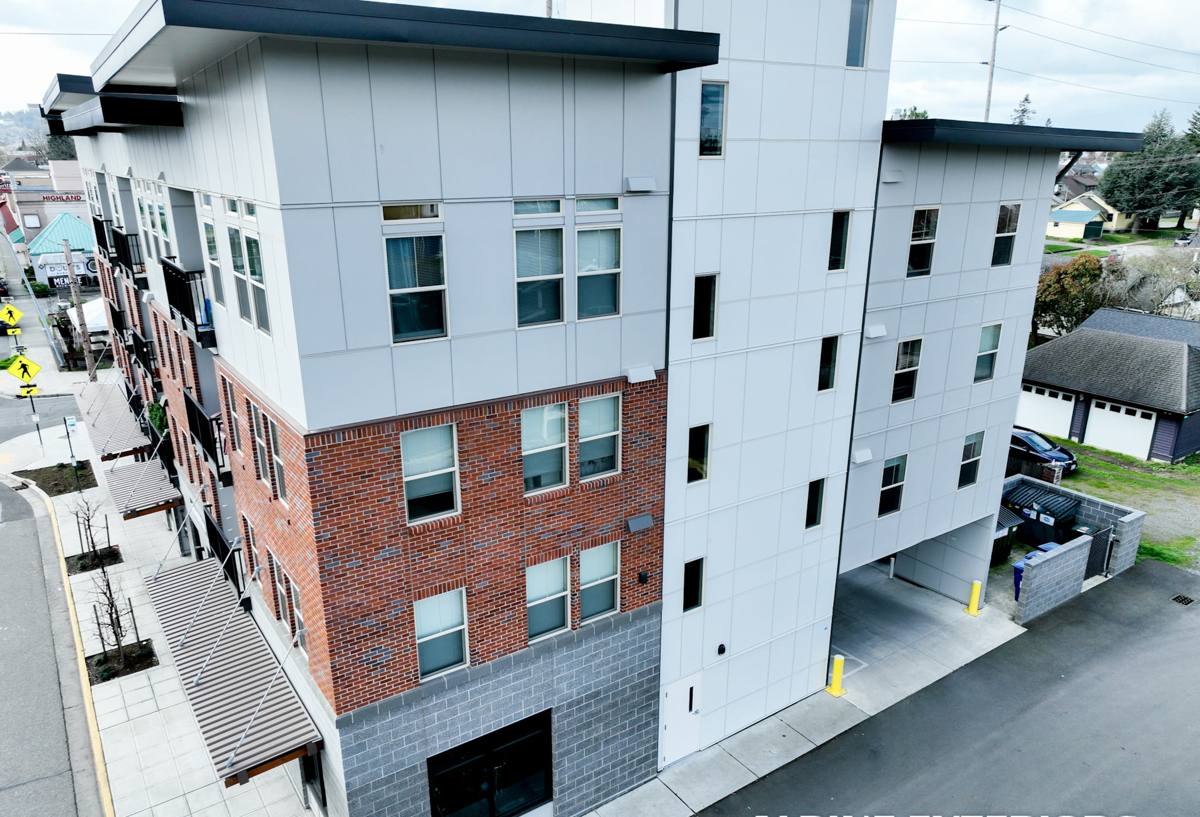
What Driving Rain, Salt Air, and Moss Actually Do to Siding
Driving Rain
Wind-driven rain off the bay doesn't just fall on siding — it gets pushed sideways into seams, laps, and fastener holes. Siding that's slightly out of alignment, under-lapped, or missing a bead of sealant where it should have one will take on water during a hard blow that it would shed fine in calm rain.
Salt Air
Airborne salt accelerates corrosion on fasteners, flashing, and any exposed metal trim. Rusted nail heads and streaking stains are often the first visible sign that salt exposure has been working on a wall longer than the paint film suggests.
Moss and Sustained Dampness
Shade from mature trees and a long wet season give moss and algae the damp, low-sun conditions they need to take hold. Beyond the green staining, moss holds moisture directly against the siding surface for weeks at a time, which is exactly the condition that causes swelling, delamination, or rot in moisture-sensitive materials.
Signs a Sehome Home Needs Siding Repair Now
Most siding failures give warning signs well before there's visible rot or a water stain inside. Homeowners who catch these early save significant money over waiting for a full wall section to fail:
- Cracked, bubbled, or peeling paint concentrated on one wall (usually the side facing prevailing wind and rain)
- Soft or spongy spots when you press on the siding near the bottom courses or around windows
- Visible gaps, warping, or boards that have pulled away from the wall at the seams
- Persistent moss or dark streaking that keeps returning within weeks of cleaning
- Rust trails below nail heads or metal trim
- Musty smell or a slightly damp feel to interior walls on the exterior-facing side
- Visible daylight or drafts around siding penetrations (vents, hose bibs, light fixtures)
What a Correct Siding Repair Actually Involves
A proper repair is more than swapping a damaged board for a new one. Done right, it addresses why the damage happened in the first place, not just what it looks like now.
Diagnosing the Real Cause
Before any board comes off, we look at flashing above and below the damaged area, check for gaps in the water-resistive barrier, and confirm whether the fastening pattern or board spacing contributed to the failure. Replacing a board without fixing a flashing gap just guarantees the same repair again in a year or two.
Matching Existing Siding
Repairs should blend with the surrounding wall in profile, exposure, and finish. Mismatched replacement boards are one of the most common signs of a rushed repair, and they're avoidable with the right material on hand before the crew starts.
Rebuilding the Moisture Barrier
Any opening in the wall assembly is a chance to inspect and, if needed, repair the underlying house wrap or building paper. Sealing the visible siding without addressing a torn barrier underneath leaves the real problem in place.
Fastening and Flashing to Spec
Correct nail placement, spacing, and flashing integration matter more in a climate like this one than in drier regions, because there's less margin for error before wind-driven rain finds a way in.
Repair or Replace? How We Help You Decide
Not every damaged area needs a full re-side, and not every repair is worth doing on siding that's already near the end of its service life. We walk homeowners through the real trade-offs rather than defaulting to the most expensive option.
| Factor | Favors Repair | Favors Replacement |
|---|---|---|
| Extent of damage | Isolated to one wall or a few boards | Recurring failures across multiple walls |
| Underlying material condition | Sound material elsewhere on the home | Widespread swelling, rot, or delamination |
| Age of existing siding | Relatively young, still under warranty | Near or past expected service life |
| Moisture barrier condition | Intact behind the damaged section | Compromised or missing in multiple areas |
| Material match availability | Discontinued but repairable in kind | No longer matches, or product is obsolete |
Why We Repair — and Replace — Only With James Hardie Fiber Cement
We install and repair with James Hardie fiber cement exclusively. We don't work in vinyl, LP SmartSide, Cemplank, Allura, primed spruce, or cedar, and that's a deliberate standard, not a limitation of convenience.
Vinyl expands and contracts with temperature swings and can crack or warp under impact, which matters in a climate with real seasonal shifts and storm activity. Wood-based products like primed spruce, cedar, and OSB-core products such as LP SmartSide can perform well when maintained closely, but they depend on an intact factory or field-applied coating to keep moisture out — and Sehome's moss season and salt air are exactly the conditions that stress that coating hardest. Once moisture gets past that layer on a wood-based substrate, swelling and rot can progress quickly in a climate this wet.
James Hardie fiber cement is non-combustible, dimensionally stable across our seasonal swings, and comes with a factory-applied ColorPlus finish engineered to resist the fading and cracking that field-applied paint struggles with. Hardie's HZ5 product line is specifically engineered for wetter, colder climates like ours. It also carries a strong transferable warranty when installed to Hardie's specifications — which is a meaningful backstop for a homeowner in a region where siding gets tested hard, year after year.
When a repair calls for new material, or when the damage tells us the smarter long-term move is replacing a section (or a full elevation), Hardie fiber cement is what goes back on the wall.
Our Process for Sehome Siding Repair Calls
- On-site inspection: we assess the damaged area and check flashing, fastening, and the moisture barrier, not just the visible boards
- Honest repair-vs-replace recommendation: based on what we actually find, not a default upsell
- Material match or Hardie replacement plan: sourcing matching product where a true repair makes sense, or scoping a Hardie replacement where it doesn't
- Correct-to-spec repair: proper flashing integration, fastening, and barrier repair before new siding goes on
- Cleanup and a clear explanation: what we found, what we fixed, and what to watch for going forward
Living With a Long Wet Season: Maintenance Between Repairs
Good siding, properly repaired, still needs some seasonal attention in this climate. A yearly rinse to knock back moss and algae before it takes hold, keeping gutters clear so runoff doesn't sheet down the siding face, and trimming back vegetation that keeps a wall shaded and damp all go a long way toward stretching the time between repairs. None of this replaces a correct repair when damage shows up — but it does reduce how often you need one.
Why a Crew That Already Works in Sehome Makes a Difference
Siding repair done by a contractor who understands Whatcom County's rain patterns, moss cycles, and salt exposure tends to hold up better than a generic patch job. It shows in small decisions — how much lap to leave at a seam, where extra flashing attention pays off, which walls on a Sehome property typically take the worst of the weather. That local pattern recognition is part of why an experienced local crew, not just a licensed one, is worth seeking out for repair work in this specific pocket of Bellingham.
If you're seeing early warning signs on your siding, or you already know there's a section that needs attention, we're happy to take a look and give you a straight answer on repair versus replacement. Reach out for a free, no-pressure estimate using the form below.