 Bellingham
 Deck Replacement in Sehome: What a Central Bellingham Lot Puts a Deck Through
Sehome is one of Bellingham's established central neighborhoods, and a lot of its housing stock, older homes, mid-century construction, and newer infill sitting near the rise of Sehome Hill, has decks that are original to the house or were built decades ago under very different framing and fastener standards than we'd use today. A deck is different from siding or roofing in one important way: it's a horizontal surface. Instead of shedding rain the way a wall or roof plane does, a deck holds water, moss, and debris directly on top of its structure, and that structure is often sitting a few feet off the ground where airflow and drying are limited to begin with.
Add in Whatcom County's marine climate, salt-tinged air moving in off the Salish Sea, rain that arrives on a wind rather than straight down, and a moss season that can run most of the year on shaded ground, and a Sehome deck takes a specific, cumulative kind of punishment. Framing lumber, ledger connections, and fasteners underneath a deck can be failing quietly for years before the surface boards show anything obvious. We replace decks throughout Bellingham, and in Sehome specifically we see that gap between what a deck looks like from the yard and what's actually happening underneath it more often than homeowners expect.
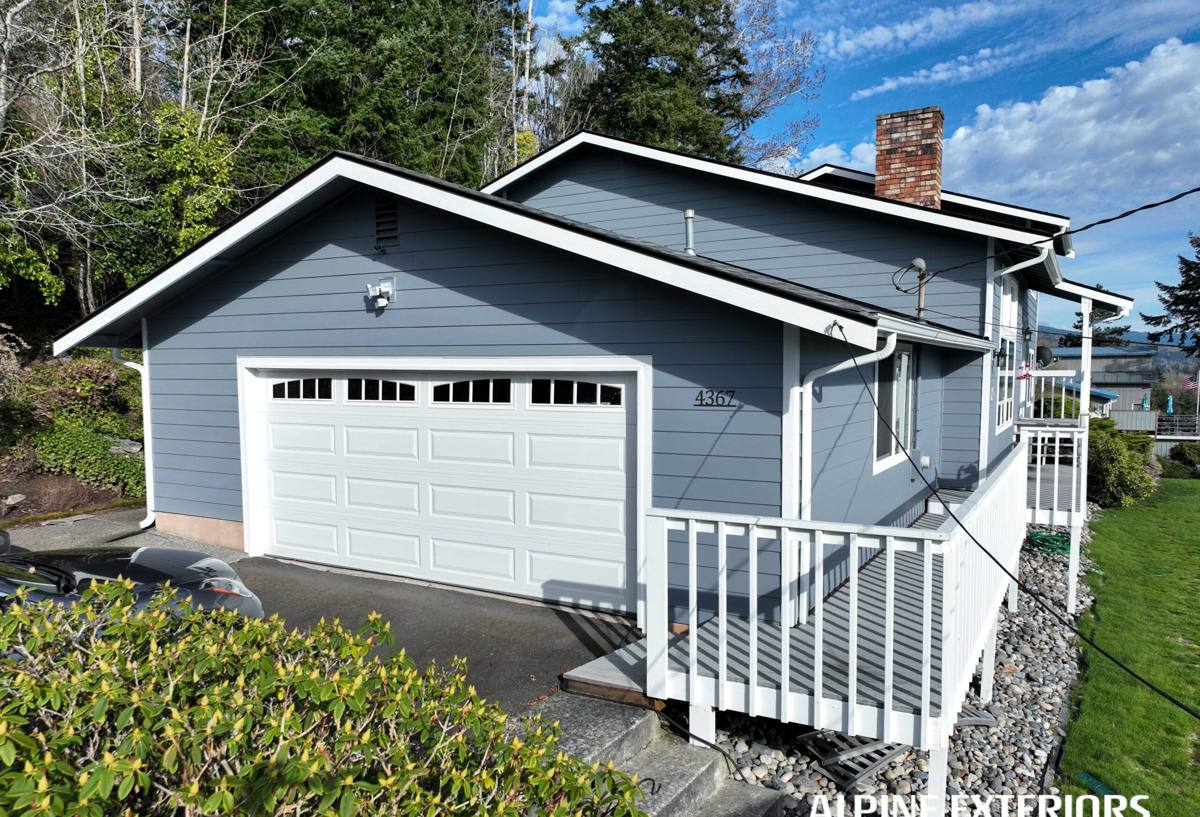
What Bellingham's Climate Does to a Deck
Salt Air and Fastener Corrosion
Sehome sits back from the immediate waterfront, but it's still well within the reach of the salt-laden air that moves through Bellingham off the bay. Salt accelerates corrosion on nails, screws, joist hangers, and other structural hardware faster than it would in a drier inland climate. A deck's strength depends entirely on hardware you can't see once the boards are down, so corrosion-resistant fasteners and connectors aren't a nice-to-have here, they're the difference between a deck that holds up for decades and one that develops hidden structural problems well before the surface boards look worn.
Wind-Driven Rain and Water That Doesn't Just Run Off
Rain in this part of Whatcom County usually comes in sideways on a wind rather than falling straight down, which matters more for a deck than people assume. Water gets pushed under railings, into board gaps, and against the house at the ledger connection instead of simply running off the far edge the way it might in a calmer climate. On sloped Sehome lots, that water also has somewhere to go, and if grading and drainage under the deck weren't planned for, it tends to collect right where the posts and footings sit.
A Long Moss Season on a Horizontal Surface
Mature tree cover and mild, damp temperatures give Bellingham a moss and algae season that can stretch across most of the year on shaded ground, and a deck is exactly the kind of horizontal, often shaded surface that grows it fastest. Moss doesn't just look bad; it holds moisture against the decking material underneath it and turns the walking surface slick, which is a real fall hazard on stairs and landings, not just a maintenance annoyance.
Repair or Full Replacement? Signs to Look For
Not every deck problem in Sehome means starting over. A handful of damaged boards, a railing that's come loose, or isolated fastener corrosion can often be repaired without touching the framing underneath. The distinction that actually matters is whether the problem is in the surface boards or in the structure holding them up. Surface-level issues are usually repairable. Anything involving the ledger board, the posts, or the footings is a structural question, and once framing has been compromised by rot or corrosion, patching around it is a short-term fix at best.
- Boards that feel soft, spongy, or spring underfoot, especially near the house or at stair landings
- Moss or dark staining that returns quickly after cleaning, particularly on shaded sections
- Visible gaps, separation, or staining where the deck meets the house at the ledger board
- Rust streaking around fasteners or joist hangers, or visibly corroded hardware
- Railings or stair stringers that feel loose, wobbly, or flex under normal weight
- Posts or footings that have shifted, settled unevenly, or show signs of standing water pooling nearby
- A deck original to an older Sehome home that's never had its framing inspected
What a Correct Deck Replacement Involves
Footings and Framing Built for Wet, Sometimes Sloped Ground
Footings need to be sized and set to local frost and load requirements, not just poured to whatever depth is convenient, and on Sehome's sloped lots that often means more careful grading and drainage planning around the footings than a flat, open site would need. Framing lumber should be rated for ground contact or exterior exposure as appropriate to its location under the deck, and joist spacing needs to match the decking material going on top of it, composite boards and wood boards don't always share the same span ratings.
The Ledger Board: Where Most Deck Failures Actually Start
The ledger board, the piece that bolts the deck to the house, is the single most common point of failure we find on older decks in this climate. If it isn't flashed correctly, wind-driven rain works its way behind it and into the house's rim joist and wall framing, which means a bad ledger connection can turn into a house moisture problem, not just a deck problem. Correct flashing, proper structural bolts rather than nails, and a small gap between the ledger and any siding above it so water can drain instead of pooling are basic requirements we don't treat as optional.
Fasteners and Hardware Rated for This Climate
Given the salt exposure across Bellingham, we use corrosion-resistant structural screws and connectors rather than standard-grade hardware, and we match fastener type to whatever decking material is going down, composite boards often call for hidden fastening systems that behave differently than a standard deck screw in wood.
Decking Material Choices: Composite vs. Wood in a Marine Climate
The framing underneath a deck matters most for how long it lasts structurally, but the decking material on top is what homeowners live with day to day, and it's what takes the direct hit from moss, standing water, and UV exposure. In Bellingham's climate, that choice carries more weight than it would somewhere dry.
| Factor | Pressure-Treated or Cedar Wood | Capped Composite Decking |
|---|---|---|
| Moisture behavior | Absorbs water; prone to cupping, splitting, and checking over repeated wet seasons | Capped composite sheds water and doesn't absorb moisture into the board core |
| Moss and algae resistance | Porous surface holds moisture and grows moss faster on shaded sections | Denser, capped surface is more resistant to moss taking hold, though not immune |
| Maintenance | Needs regular sealing or staining to keep moisture out | Occasional washing; no sealing or staining required |
| Upfront cost | Lower material cost | Higher material cost |
| Long-term cost | Recurring maintenance and earlier board replacement | Lower ongoing maintenance, longer expected service life |
| Appearance over time | Natural look, but grays and weathers unevenly without upkeep | Consistent color and texture held over many years |
Our default recommendation for Sehome and the rest of Bellingham is capped composite decking, framed on properly treated structural lumber, because the maintenance schedule that wood decking actually needs in this climate tends to slip in real life, and a missed sealing cycle is exactly how moisture gets in and moss gets a foothold. That said, wood decking installed correctly and maintained on schedule is a legitimate choice, and we'll build it that way if that's what a homeowner wants. What we won't do is install either material without proper flashing and framing underneath it, because no decking surface, wood or composite, holds up long if what's underneath it is failing.
Permits, Railings, and Building on a Sloped Sehome Lot
Most deck replacements in Bellingham require a building permit, particularly when the deck is attached to the house or elevated enough to need guardrails, and skipping that step can create real problems later when a home is sold or insured. Guardrails are generally required once a deck surface sits above a certain height off grade, and railing and baluster spacing has to meet code, not just look right. On a sloped lot like many in Sehome, post height, footing depth, and grading underneath the deck all need individual attention rather than a standard plan copied from a flat site. We handle the permit process as part of the job rather than leaving it to the homeowner to sort out.
Our Deck Replacement Process
- Site visit and assessment: We inspect the existing deck's framing, ledger connection, footings, and drainage, not just the surface boards, before we quote anything.
- Permitting: We pull the required permit and design the footing and framing layout to meet code for the specific site, including any slope or drainage considerations.
- Demolition and disposal: The old deck comes out, including any framing or ledger material that's compromised, and we haul away the debris.
- Footings and framing: New footings, posts, and joists go in sized to the deck's actual load and span requirements, with the ledger board flashed and bolted correctly to the house.
- Decking and railing installation: Boards, stairs, and railings go in to the material and layout the homeowner chose, with fasteners and hardware matched to this climate.
- Final walkthrough: We go over the finished deck with the homeowner, including how to care for the decking material chosen, before calling the job done.
Cost Factors for Deck Replacement in Sehome
| Factor | What It Affects | Why It Matters in Sehome |
|---|---|---|
| Deck size and footprint | Total material and labor | Larger decks common on older, established lots take more framing and footings |
| Decking material choice | Material cost and long-term maintenance | Composite carries a higher upfront cost but less maintenance in a wet, mossy climate |
| Framing and footing work | Structural labor and materials | Sloped sections of Sehome lots can require deeper or additional footings and more grading |
| Railing style and code requirements | Material and labor for guardrails and stairs | Elevation and layout on a sloped lot can change how much railing and stair work is needed |
| Demolition and disposal | Labor and haul-away cost | Older decks with deteriorated framing take longer to remove safely |
| Site access | Labor time and equipment needs | Tree cover and sloped terrain common in Sehome can limit equipment access and add setup time |
Real numbers depend on the specific deck, lot, and material choice, which is why we walk the property and look at the existing structure before giving an actual estimate rather than pricing off square footage alone.
Why a Local Sehome Crew Matters
A crew that builds and replaces decks across Bellingham on a regular basis sees how salt air, wind-driven rain, and a long moss season actually affect framing, fasteners, and decking material over real years, not just how a product performs on a spec sheet. That shows up in practical decisions on a Sehome job: how much attention the ledger flashing needs given the neighborhood's older housing stock, how a sloped or shaded lot changes footing and drainage planning, and which hardware is worth the extra cost so a homeowner isn't dealing with soft framing or a wobbly railing a few winters later. A contractor who only occasionally works this specific climate is more likely to build to a generic standard that doesn't quite hold up against what this part of Bellingham throws at a deck year-round.
If your Sehome deck is showing soft spots, loose railings, or moss that keeps coming back, or if it's simply old enough that you're not sure what's happening underneath it, we're glad to take a look and give you a straightforward, honest assessment. Reach out using the form below to schedule a free, no-pressure estimate.