 Bellingham
 Roof Replacement Built for Sudden Valley, Not a Generic Bellingham Job
Sudden Valley sits in a different microclimate than a lot of the properties we work on around Bellingham proper. Tucked along Lake Whatcom and wrapped in second-growth forest, homes here deal with heavy shade, constant tree drop, and moisture that lingers on the roof deck long after the rest of Whatcom County has dried out. A roof replacement here has to account for all of that, not just match whatever spec sheet a manufacturer hands out.
We're not talking about a different roof system entirely — most Sudden Valley homes still do well with quality asphalt composition shingles or metal, the same as anywhere in the region. The difference is in the details: how the roof is ventilated, how edges and valleys are flashed, how much moss-resistance actually matters versus marketing, and how the crew handles access on wooded, sometimes steep lots. Get those details right and a roof out here will perform the way it's supposed to. Get them wrong and you'll be dealing with moss, soft decking, or ice-dam-style backups well before the shingles are actually worn out.
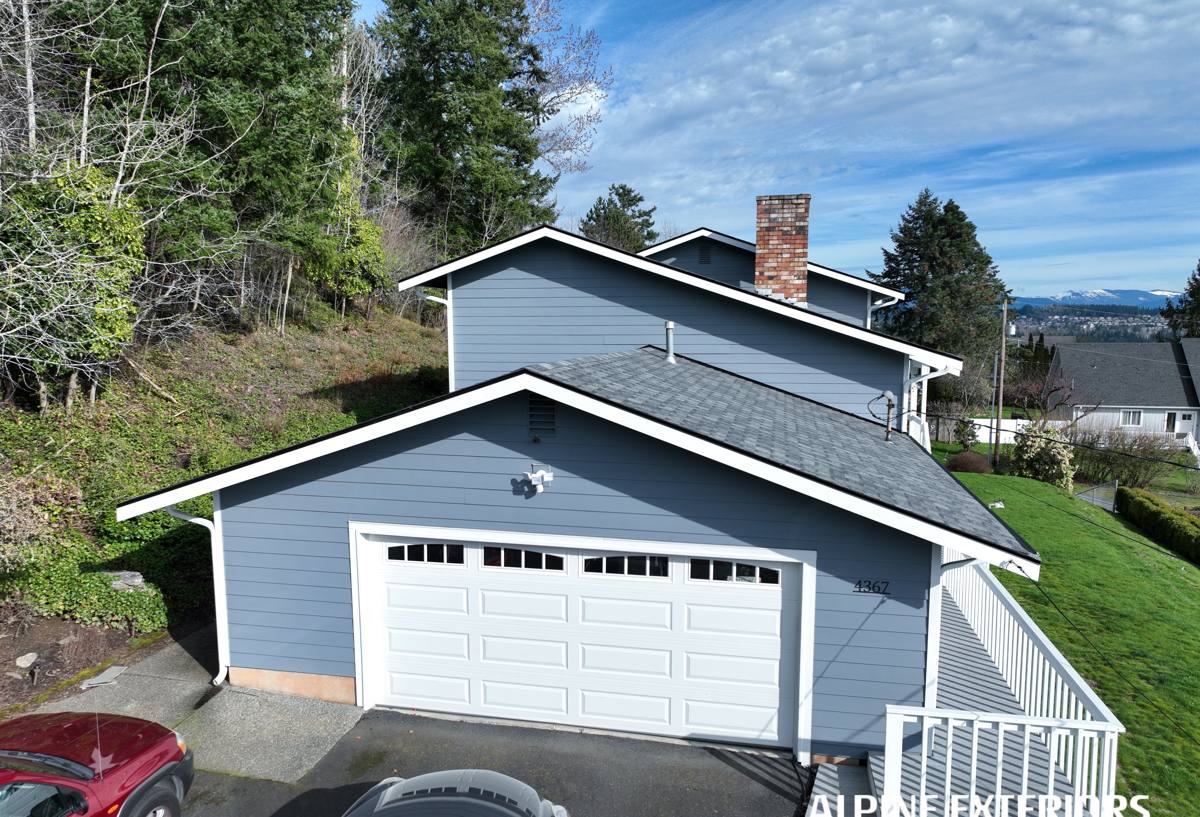
What Sudden Valley's Climate Actually Does to a Roof
Shade and moisture that never fully clears
The tree canopy that makes Sudden Valley a nice place to live is hard on a roof. Shaded slopes stay damp for days after a storm, and that constant moisture is exactly what moss, lichen, and algae need to take hold. Once moss establishes itself on a shingle roof, it lifts the shingle edges, holds water against the granule surface, and accelerates wear in a way that's very different from a roof baking in full sun.
Driving rain and wind off the lake
Storms moving through Whatcom County often bring rain sideways rather than straight down, and Sudden Valley's exposure to wind funneling across Lake Whatcom can push water up under shingle edges and into vents, ridge caps, and anywhere flashing is even slightly undersized. A roof that's fine in a light, vertical rain can still leak in a wind-driven event if the underlayment and flashing details weren't built for it.
Salt air and a long wet season
Bellingham's broader marine climate — salt air off the bay combined with a long damp season that stretches from fall through spring — adds slow corrosion to any exposed metal on a roof: nails, flashing, vents, and fasteners. Combined with the tree debris common in Sudden Valley, gutters and valleys clog faster here, which backs up water onto the roof surface instead of letting it drain.
Needle and leaf debris
Conifers shed constantly, and that debris collects in valleys, behind chimneys, and around skylights. Left alone, it holds moisture against the roofing material year-round, which is one of the most common reasons we see premature wear on roofs in this specific area compared to more open, sun-exposed parts of Bellingham.
Signs a Sudden Valley Roof Needs Replacement, Not Another Repair
- Moss covering more than isolated patches, especially on north-facing or heavily shaded slopes
- Granules collecting in gutters or at downspout outlets in noticeable amounts
- Soft or spongy spots when walked, which usually means the decking underneath has taken on moisture
- Daylight visible through the roof deck from the attic, or damp insulation near the eaves
- Shingles that are curling, cupping, or missing tabs, particularly along wind-exposed edges
- Repeated leaks around the same valley, chimney, or skylight despite prior patch repairs
- A roof that's past 20-25 years old for asphalt shingle, regardless of how it looks from the ground
Moss on its own doesn't always mean replacement — sometimes it's a cleaning and treatment issue. But moss combined with granule loss, soft decking, or a roof already near the end of its expected life is usually the point where patching stops making financial sense.
Choosing a Roofing System for This Environment
There's no single "best" material for every Sudden Valley home — it depends on the roof's pitch, how much shade it gets, and what the homeowner wants to maintain long-term. Here's how the common options actually compare under these specific conditions.
| Material | Moss/moisture behavior | Maintenance in shaded areas | Typical lifespan here |
|---|---|---|---|
| Standard 3-tab asphalt shingle | Prone to moss and granule loss in constant shade | Regular cleaning needed on shaded slopes | 15-20 years |
| Architectural (laminate) asphalt shingle | More resistant due to thicker profile, still needs upkeep in heavy shade | Moderate | 20-30 years |
| Algae/moss-resistant shingle (copper or zinc granules) | Best asphalt option for tree-covered lots | Lower, but not maintenance-free | 25-30 years |
| Standing seam metal | Sheds moisture fast, very little surface for moss to grip | Low | 40-50+ years |
For heavily shaded lots that ring much of Lake Whatcom, we lean toward algae-resistant shingles or metal when the budget allows, simply because the maintenance burden drops significantly. That's a professional recommendation based on how these materials shed water and resist growth — not a claim that standard shingles are unsuitable everywhere, just that they demand more upkeep under this much tree cover.
Ventilation matters as much as the shingle
A roof deck under constant shade needs good airflow to dry out between storms. Poor attic ventilation traps moisture against the underside of the deck, which can rot plywood or OSB from below even while the shingles above look fine. Any replacement here should include a real look at intake and exhaust venting, not just a swap of old material for new.
What a Correct Tear-Off and Replacement Involves
- Full tear-off to the deck — no roofing over existing layers, which traps moisture and hides deck damage
- Deck inspection and replacement of any soft, delaminated, or water-damaged sheathing
- Ice-and-water shield at eaves, valleys, and around every penetration — the areas most exposed to driving rain and debris buildup
- Synthetic underlayment across the full deck for a secondary moisture barrier
- New flashing at all valleys, chimneys, skylights, and sidewalls — reused old flashing is one of the most common causes of early leaks
- Balanced intake and exhaust ventilation sized to the attic space
- Shingle or metal installation per manufacturer spec, including proper nailing pattern and exposure
- Ridge cap, drip edge, and gutter apron installed to shed water cleanly at every edge
- Full site cleanup, including magnetic sweep for nails and debris hauled off site
Site Access and Debris in a Forested Community
A number of Sudden Valley properties sit on steep or wooded lots with limited driveway access, which changes how a crew stages material and equipment compared to a flat, open lot elsewhere in Bellingham. We plan delivery, dumpster placement, and safety setup around the actual site — not a generic assumption about access — before the crew shows up. Overhanging branches and tight sightlines also mean more care is taken protecting landscaping, gutters, and siding during tear-off, since falling debris has fewer places to land safely.
Our Process From Estimate to Cleanup
We start with an on-site inspection, not a drive-by estimate — on a shaded, tree-covered lot, what the roof looks like from the ground rarely tells the full story. That inspection covers the shingle condition, decking, flashing, ventilation, and any moss or moisture issues specific to that roof's exposure.
From there we walk through material options and give a clear, written scope: what's being torn off, what's being replaced, and what the warranty covers on both labor and materials. Once scheduled, we work around Whatcom County's weather windows rather than rushing a tear-off ahead of an incoming system, since an open deck in driving rain is exactly the situation a good schedule avoids. After installation, cleanup includes a full nail sweep and debris haul-off before we walk the finished roof with the homeowner.
What Drives the Cost of a Sudden Valley Roof Replacement
| Factor | Why it matters here |
|---|---|
| Roof pitch and complexity | Steeper, multi-plane roofs common on lake-view lots take longer and need more safety setup |
| Decking condition | Moisture-related rot under moss-covered areas often means more sheathing replacement than expected |
| Material choice | Standard shingle, algae-resistant shingle, and metal carry different upfront and lifetime costs |
| Site access | Wooded or steep driveways can affect staging, disposal, and crew time |
| Ventilation upgrades | Adding proper intake/exhaust venting on an older home adds labor but pays off in deck longevity |
| Flashing and valley work | Homes with multiple valleys or chimneys need more custom flashing than a simple gable roof |
We give firm, written numbers after the inspection — not a phone estimate — because on shaded, wooded lots the deck condition genuinely varies more than it would on a straightforward open roof.
Questions worth asking any contractor before you sign
- Will the deck be inspected and repaired, not just covered, if it's soft or damaged?
- What underlayment and ice-and-water shield brands and coverage are included, specifically at valleys and eaves?
- Is ventilation being assessed, or just the shingle layer replaced?
- What's the workmanship warranty, separate from the manufacturer's material warranty?
- How will they protect landscaping and manage debris on a wooded or sloped lot?
- Do they carry current liability insurance and workers' comp, and can they show proof?
Why Hiring a Crew That Already Works Sudden Valley Matters
A roofing crew that regularly works this specific area already knows how shade and moisture behave on these lots, how to stage a job on a steep or forested driveway, and which flashing and ventilation details actually hold up against driving rain off the lake. That familiarity shows up in fewer surprises mid-job and a roof that's built for the conditions it actually faces, rather than a one-size-fits-all install. It also means a crew that isn't guessing at permitting or access logistics for the neighborhood — they've done it before.
If your roof in Sudden Valley is showing moss, granule loss, or is simply getting old, we're happy to take a look and give you a straightforward, no-pressure estimate — just fill out the form below to get started.