 Bellingham
 Windows Built for the Puget Area's Weather, Not Just the Opening
Homes in the Puget area near Bellingham sit close enough to the water and the weather patterns off the Salish Sea that window decisions can't be made the same way they'd be made further inland. Salt-laden air, wind-driven rain that hits window walls at an angle instead of straight down, and a moss and mildew season that can stretch for the better part of the year all put steady stress on window frames, seals, and the wall assembly around them. A window that's a fine product on paper can still fail early here if it isn't specified and installed with those conditions in mind.
This page is specifically about custom window work for Puget-area homes — not a general window replacement page. The construction styles, sun exposure, wind orientation, and moisture load in this pocket of Whatcom County shape real decisions: which frame materials hold up, how flashing needs to be detailed, and where extra attention has to go so the window still performs correctly ten and twenty years out.
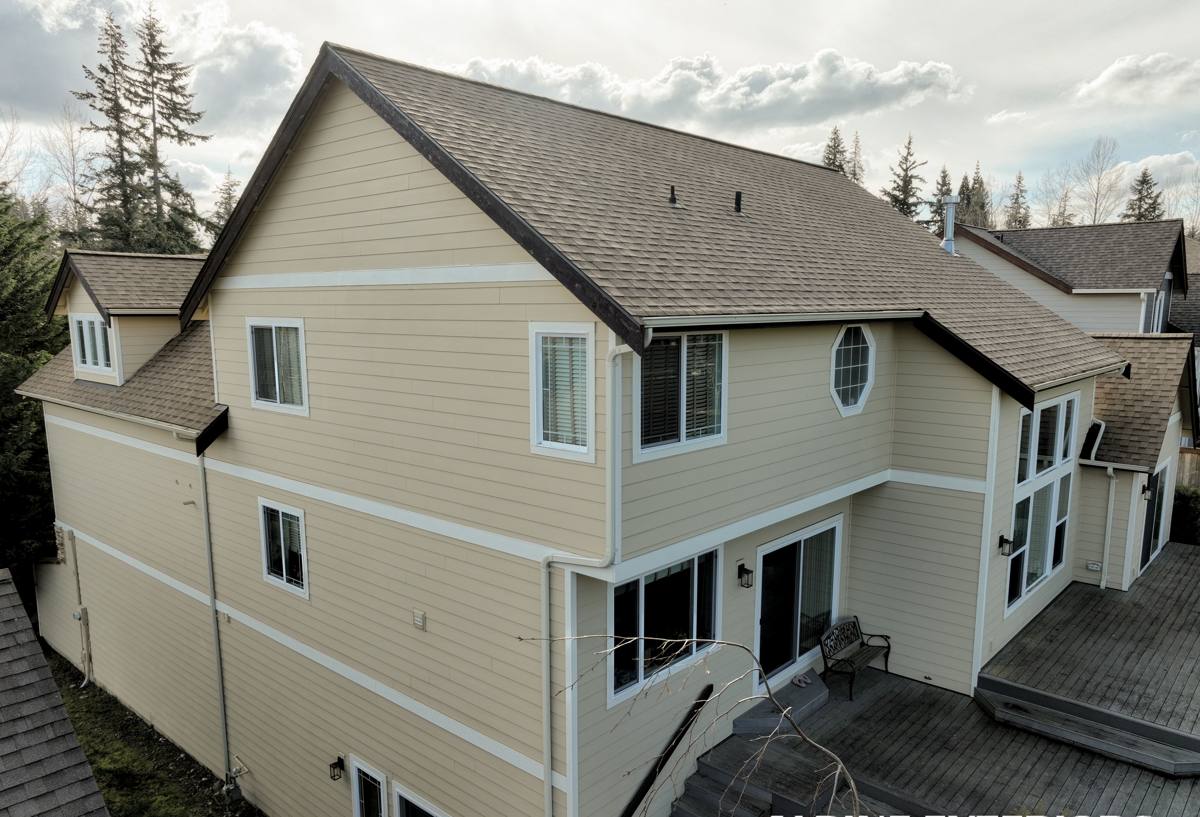
What "Salt Air, Driving Rain, and Moss Season" Actually Do to a Window
Salt Air
Airborne salt from the Sound doesn't just sit on glass — it settles into hardware, weep holes, and any exposed metal fasteners or tracks. Over time it accelerates corrosion on lower-grade hardware and can etch certain finishes if they're not rated for a marine-influenced environment. This matters most on the weather side of a home and on windows with metal cranks, locks, or aluminum-clad components.
Driving Rain
Wind off the water frequently pushes rain sideways rather than letting it fall straight down. That means water is testing the seal around a window far more often than the manufacturer's lab rating alone might suggest, and it's testing the flashing and sill pan just as hard as it's testing the window unit itself. A window with a great glass package but a mediocre installation will still leak in these conditions — and a mediocre window installed perfectly will still underperform. Both halves have to be right.
Moss and Sustained Moisture
Whatcom County's long damp stretch keeps humidity elevated around window openings for extended periods, especially on north- and west-facing walls that don't get much drying sun. Moss and mildew growth on sills, trim, and cladding near a window isn't just cosmetic — it holds moisture against wood trim and can mask early rot if nobody's looking closely. Custom window work in this area should account for that from the start, not treat it as a maintenance afterthought.
What "Correct" Custom Window Work Looks Like Here
A correct custom window job in the Puget area isn't just about picking a nice-looking window. It's a sequence of decisions and installation steps that, done right, keep water out and keep the window performing for decades. Here's what we actually look at and do:
Sizing and Fit
Custom means the window is built to the actual rough opening, not the other way around. On older Bellingham-area homes, openings are rarely perfectly square, and forcing a stock size into a slightly out-of-square opening is one of the most common causes of early air and water infiltration. We measure the real opening, account for any settling or shim gaps, and order or build to that.
Frame Material Selection
Frame material choice matters more here than in a dry inland climate. We walk homeowners through the real trade-offs — maintenance burden, moisture behavior, appearance, and cost — rather than pushing one product as universally best. What's right for a sun-exposed south wall may not be right for a rain-battered west wall on the same house.
Flashing and Weatherproofing Detail
This is the step that determines whether driving rain stays outside the wall. A proper install includes a sloped sill pan, correctly lapped flashing tape integrated with the house wrap, and a drainage path so any water that does get past the exterior seal has somewhere to go besides your wall cavity. Skipping or rushing this step is the single biggest reason "good" windows leak.
Sealing and Insulation at the Rough Opening
Gaps around the window frame get filled with a low-expansion foam or backer rod and sealant system rated for exterior use — never just caulk smeared over a gap. This controls both air infiltration and condensation risk at the frame edge, which matters when interior humidity meets a cold, damp exterior wall through much of the year.
Hardware and Finish Rated for Marine-Influenced Air
On or near the water, we favor hardware and cladding finishes with better corrosion resistance, and we're upfront when a particular finish or hardware option isn't a good fit for a salt-exposed elevation.
Comparing Frame Material Trade-Offs for This Climate
| Frame Material | Moisture Behavior | Maintenance | Notes for Puget-Area Homes |
|---|---|---|---|
| Vinyl | Won't rot; unaffected by salt corrosion | Low — occasional cleaning | Reliable value option for most walls; verify UV and impact rating for the specific exposure |
| Fiberglass | Very stable in wet/dry cycling; low expansion | Low | Strong fit for driving-rain elevations due to dimensional stability around seals |
| Wood (clad exterior) | Interior wood warmth, exterior clad protection | Moderate — clad side low, check seams | Works well when clad-side detailing is done correctly; bare wood exteriors are a poor match for this moisture load |
| Aluminum | Durable but conducts cold and can be prone to corrosion if hardware/finish isn't marine-rated | Moderate | Best reserved for specific architectural needs, with corrosion-resistant hardware specified |
How Our Process Works
1. On-Site Assessment
We look at each opening individually — orientation, current condition of the trim and sill, signs of past moisture intrusion, and how exposed that particular wall is to wind-driven rain. Puget-area homes often have different exposure conditions from one elevation to the next, and the plan should reflect that instead of treating every window the same.
2. Honest Product Recommendations
We walk through frame material, glass package, and hardware options with real trade-offs explained — not a single "best" answer pushed regardless of fit. If a product isn't a good match for a given wall's exposure, we'll say so and explain why.
3. Precise Measurement and Ordering
Custom units are ordered to the actual opening dimensions after final measurement, accounting for any out-of-square conditions found during assessment.
4. Removal and Opening Prep
Old windows come out carefully, and we inspect the sill and framing underneath before anything new goes in. This is often the only point where hidden moisture damage from years of exposure gets caught early — while it's still a small repair instead of a large one.
5. Flashing, Sill Pan, and Weatherproofing Install
This is done to a consistent sequence every time: sill pan first, window set and shimmed level and plumb, then flashing integrated with the existing weather-resistive barrier in the correct shingle-lap order so water always sheds outward and downward.
6. Interior and Exterior Finish
Interior sealing for air and condensation control, exterior trim and caulking sized for the material and expected movement, and a final check of operation and seal.
7. Walkthrough
We go over what was done, what maintenance (if any) the homeowner should expect, and answer questions before considering the job finished.
Pre-Project Checklist for Puget-Area Homeowners
- Note which walls of the house take the most direct wind and rain — this affects material and flashing decisions more than most homeowners expect
- Check current windows for moss, black staining, or soft spots on the sill and surrounding trim before deciding it's "just cosmetic"
- Ask any contractor specifically how they handle sill pan flashing — a vague answer is a red flag in this climate
- Decide upfront whether frame color/finish needs to match existing trim or siding, since custom orders take lead time
- Budget for potential hidden sill or framing repair if old windows have leaked for years — this isn't unusual on older Whatcom County homes
- Confirm whether permits are needed for the scope of work planned, especially on structural or historic-adjacent properties
Why a Crew That Already Works in the Puget Area Matters
Window installation isn't uniform across regions, and it isn't uniform across Bellingham either. A crew that regularly works in the Puget area already has a working sense of which elevations on local homes tend to take the worst weather, what kind of moisture damage shows up first, and how local building conditions — older housing stock, established trim details, established siding types — tend to interact with a new window install. That local pattern recognition shows up as fewer surprises during removal, tighter flashing work the first time, and material recommendations grounded in what actually holds up nearby rather than what performs well in a different climate's marketing material.
It also means faster turnaround for warranty follow-up or minor adjustment visits, since the crew isn't traveling in from outside the area for a callback.
Maintenance That Actually Matters Here
Even a correctly installed window needs some upkeep in this climate, though it's less than most homeowners assume:
- Rinse salt residue off exterior glass and frames periodically if the home is closer to the water
- Keep weep holes clear of debris and moss so water has somewhere to drain
- Check exterior caulking annually for cracking or separation, particularly on south- and west-facing units that see the most temperature swing
- Clear moss or organic buildup from sills and surrounding trim before it holds moisture against the surface long-term
- Operate hardware a few times a season on windows that don't get regular use, so seals and cranks don't seize
Getting Started
If you're considering custom windows for a home in the Puget area, we're happy to walk the property, look at how each elevation is currently holding up, and give you a straightforward assessment — no pressure, no inflated urgency. Use the form below to request a free estimate and we'll get back to you to schedule a time that works.