 Bellingham
 Decking in the Puget Area Has to Work Harder
If you live in the Puget area near Bellingham, you already know your deck doesn't get an easy life. Salt-laden air off the water, long stretches of driving rain, and a moss season that seems to start earlier every year all put steady pressure on outdoor structures. A deck that would hold up fine in a drier inland climate can start showing problems here within a few seasons — soft spots, discoloration, slick surfaces, fasteners that bleed rust through the boards. Composite decking, installed correctly for this specific environment, is one of the most reliable ways to get ahead of that wear instead of fighting it every spring.
This page is about one thing: composite decking for homes in and around the Puget area, and what it actually takes to get it right in a Whatcom County climate. Not a generic decking overview — the specifics that matter when your deck sits within reach of salt air and sits wet more months than it sits dry.
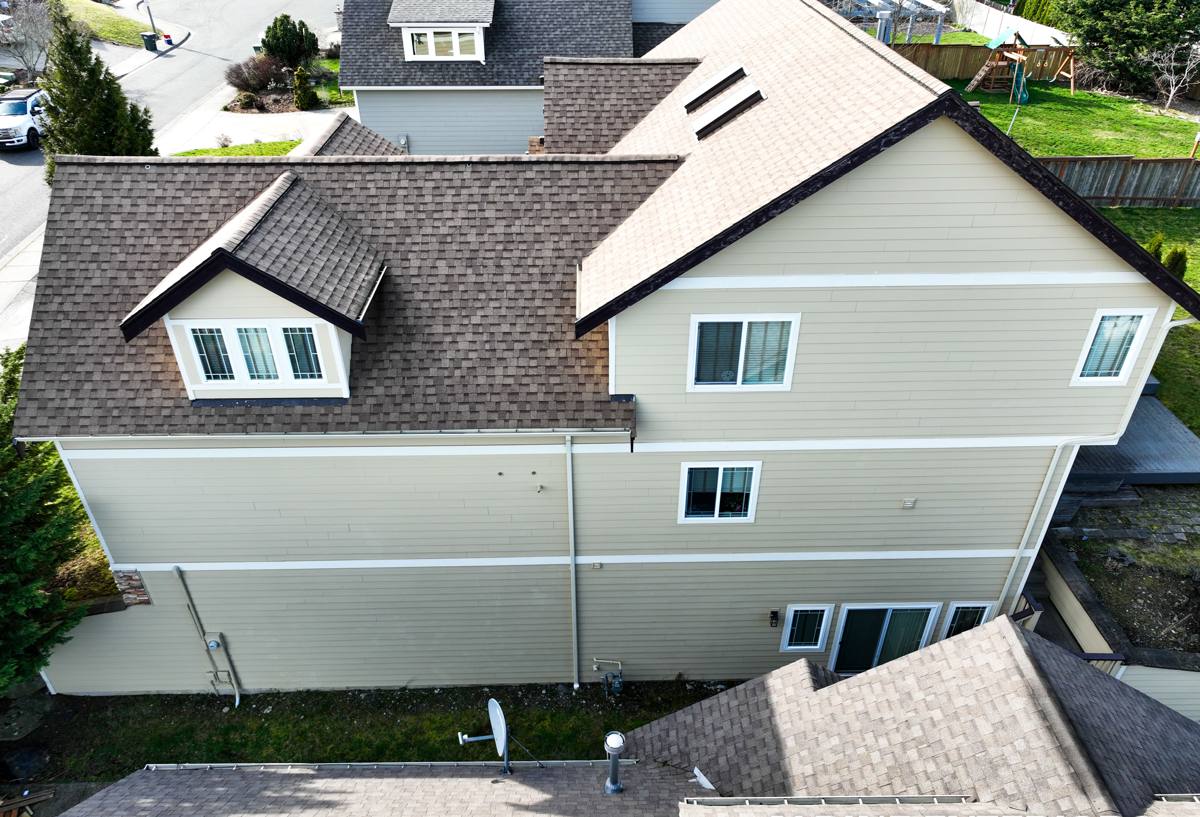
What Salt Air, Rain, and Moss Actually Do to a Deck
It helps to understand the failure points before talking about the fix.
Salt Air
Airborne salt accelerates corrosion on anything metal — screws, joist hangers, railing brackets, post bases. Even coated fasteners can start to weep rust stains onto deck boards over time if they weren't rated for the exposure. Salt also settles into porous surfaces and can leave a dull, gritty film that ordinary rinsing doesn't fully remove.
Driving Rain
It's not just how much rain falls here — it's how often the wood or decking surface stays saturated. Wood decking that can't dry out between storms is where rot gets a foothold, especially at fastener holes, board ends, and anywhere two pieces of material meet without a drainage gap. Standing water on a deck surface also means more freeze-thaw stress during cold snaps.
Moss and Algae
Shaded decks, north-facing decks, and anything under tree cover develop moss and algae growth over a long, damp season. Beyond looking bad, a mossy deck surface is genuinely slippery and a real fall hazard, and moss holds moisture against the board surface longer than an open, dry deck would.
None of these are exotic problems — they're just the normal cost of building outdoors this close to the water. The question is whether the material and the installation account for them.
Why Composite Decking Fits This Climate
Composite decking — boards made from a blend of wood fiber and recycled plastic, most of it now with a protective cap layer — was built to resist exactly the conditions Puget homes deal with. It doesn't absorb water the way solid wood does, so it isn't prone to rot, splintering, or cupping from repeated wet-dry cycles. It doesn't need annual staining or sealing to keep performing. And a capped board resists moss and algae staining far better than bare wood, which makes cleaning it a rinse-and-brush job instead of a scrub-and-reseal job.
We'll be straightforward about the trade-offs, because an honest answer serves you better than a sales pitch:
- Upfront cost — composite typically costs more per square foot than pressure-treated wood, though it closes the gap over time by skipping annual refinishing.
- Heat underfoot — darker composite colors can get warmer in direct sun than wood; lighter colors and covered decks minimize this, which is worth discussing for south-facing spaces.
- Installation sensitivity — composite expands and contracts with temperature more than wood, and needs correct gapping and fastening or you get buckling, squeaking, or fastener pull-through. This is where a lot of DIY and inexperienced installs go wrong.
- Not all composite is equal — cheaper, uncapped boards absorb moisture at the edges and are more prone to staining and mold in a climate like ours. We install capped composite for that reason.
For a deck that sits in salt air and gets rained on eight or nine months a year, composite's resistance to moisture damage and reduced maintenance load is usually the deciding factor for Puget-area homeowners — but it only pays off if the installation underneath it is done right.
What a Correct Composite Deck Build Actually Involves
The boards get the attention, but the structure underneath and the details around it are what determine whether the deck holds up in this climate for the long haul.
The Substructure
Joists, beams, and posts should be either naturally decay-resistant or properly rated pressure-treated lumber, and every cut end needs to be sealed — an untreated cut end is where rot starts on an otherwise sound frame. Joist tape over the top of each joist keeps standing water off the wood and off the fastener heads, which matters more here than in a drier climate.
Fasteners and Hardware
Given the salt exposure, hardware needs to be rated for coastal or salt-air use — not just standard exterior-grade. That includes joist hangers, structural screws, post anchors, and railing brackets. Mismatched or under-rated hardware is one of the most common shortcuts that shows up as rust stains and weakened connections a few years down the road.
Drainage and Airflow
Composite boards need proper spacing for water to shed and air to circulate underneath — this is what keeps moss and mildew from building up on the underside and around fastener points. Ledger boards attached to the house need correct flashing so water is directed away from the wall, not channeled into it.
Board Layout and Fastening
Correct gapping accounts for composite's expansion and contraction through temperature swings, which in this region can be significant between a cold, wet January and a dry August. Hidden fastener systems, installed to the manufacturer's spacing, keep the surface secure without surface screws that create water entry points.
Railings and Stairs
Railing posts need solid blocking and correctly rated connectors — this is a code and safety issue, not just an appearance one. Stair stringers see the most direct rain exposure on most decks and deserve the same attention to hardware and sealing as the deck frame itself.
Our Process, Start to Finish
- On-site assessment. We look at sun and shade exposure, drainage, existing structure (if replacing an old deck), and any moss or moisture patterns specific to your lot.
- Honest scope and estimate. You'll get a clear breakdown of material options, structural needs, and cost — no vague allowances that turn into surprises later.
- Permitting. We handle the permit process required for deck work in Whatcom County so you don't have to chase paperwork.
- Demolition and disposal (if replacing an old deck), done cleanly with minimal disruption to your yard.
- Framing and structural work, built to the standards above — coastal-rated hardware, sealed cuts, proper drainage.
- Composite installation, with correct spacing, fastening, and finish detailing at railings, stairs, and the house connection.
- Final walkthrough, where we go over care and answer questions before we consider the job done.
Composite Options and What Drives Cost
Composite decking comes in a range of tiers, and the right one depends on your budget, sun exposure, and how the deck will be used. Here's a general comparison to help frame the conversation before an estimate:
| Factor | Entry-Level Composite | Premium Capped Composite |
|---|---|---|
| Moisture resistance | Good, capped surface only | Excellent, fully capped on all sides |
| Fade/stain resistance | Moderate over time | Strong, better long-term color hold |
| Warranty structure | Shorter, more limited | Longer, broader coverage |
| Best fit for Puget exposure | Covered or low-exposure decks | Open, rain- and salt-exposed decks |
| Relative upfront cost | Lower | Higher |
Beyond the boards themselves, cost is also driven by deck size and height, substructure condition (new build vs. tear-off), railing style, stair count, and site access. We walk through all of this during the estimate so there are no guessing games.
Keeping a Composite Deck at Its Best in This Climate
Composite cuts the maintenance burden dramatically compared to wood, but "low-maintenance" isn't "no-maintenance," especially with the moss and algae pressure common here. A little seasonal attention goes a long way:
- Sweep off leaves and debris regularly, especially in fall — trapped organic matter holds moisture and feeds moss growth.
- Rinse with a garden hose periodically to clear salt residue and surface grime before it builds up.
- Use a soft-bristle brush and a mild soap-and-water solution on any moss or algae spots as soon as you notice them, rather than letting them establish.
- Avoid pressure washing at close range or high PSI directly on composite boards — it can damage the cap layer over time.
- Check railing connections and stair hardware once a year for any early signs of rust bleed or looseness.
- Keep gutters and downspouts near the deck clear so runoff isn't pouring directly onto or under the deck surface.
Why a Crew That Already Works This Area Matters
Decking crews who mostly work drier, inland climates sometimes treat coastal Whatcom County jobs the same way they'd build anywhere else — standard hardware, standard spacing, standard drainage details. In an environment with this much salt air and sustained moisture, those shortcuts show up early, usually as rust staining, loose railings, or moss creeping in around fastener points within the first couple of years.
Working regularly on Puget-area and Bellingham homes means we're used to building for this exposure by default — coastal-rated hardware, proper drainage detailing, and layout that accounts for how much this region's boards actually get rained on. It's not a different product; it's the same composite decking installed with the specific climate in mind from the first cut.
Get a Straightforward Estimate
If you're weighing composite decking for a home in the Puget area, we're glad to come take a look, walk the site with you, and give you a clear, honest estimate — no pressure, no upsell. Use the form below to get started.