 Bellingham
 New Roof Installation Built for Blaine's Conditions
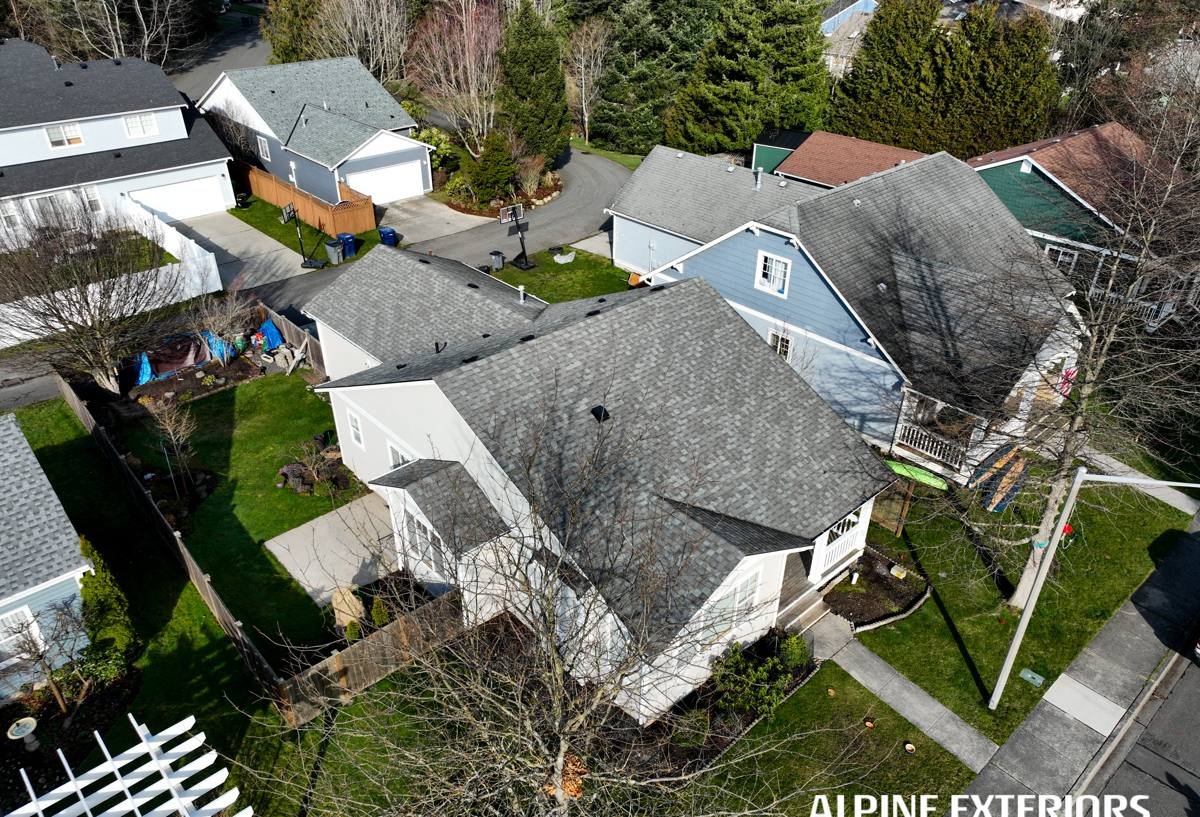
Blaine sits at the northern tip of Whatcom County, close enough to Semiahmoo Bay and Drayton Harbor that salt-laden air reaches most homes in town, not just the ones facing the water. Add in storm systems coming ashore off the Pacific with real wind behind them, and a moss season that barely lets up most of the year, and you've got a set of conditions that ask more of a roof than a typical inland install. A new roof going on a Blaine home needs to be planned for that specific combination from the start, not treated as a standard install that happens to be in a different zip code.
We're a Bellingham-based crew, and Blaine is regular territory for us — close enough that we're out there often, and familiar enough with how houses age in that specific stretch of the county that it shapes decisions we make on every job. This page covers what a correct new roof installation looks like for a Blaine home: the material and installation choices that matter here, how our process runs from first look to final walkthrough, and why it's worth hiring a crew that already knows this coastline.
What Blaine's Climate Does to a Roof
Salt Air Off the Water
Homes anywhere near the bay or harbor in Blaine take a steady dose of salt-laden air, and that salt works on exposed metal continuously — fasteners, flashing, vent stacks, drip edge. Lower-grade metal corrodes faster here than it would twenty miles inland, and once corrosion starts at a fastener or flashing seam, it's usually a slow leak building for years before it shows up as a stain on a ceiling. New roof installation is the one point in a roof's life where you can specify corrosion-resistant materials throughout instead of patching around whatever's already failing.
Wind-Driven Rain
Storms coming off the water near the border don't drop rain straight down. Wind pushes it sideways and up under shingle edges, into valleys, and around flashing details in a way that a calm, dry-climate rain never tests. A roof that would perform fine in a sheltered inland town can leak within a few seasons in Blaine if the underlayment and flashing weren't specified for that sideways load in the first place.
A Long Moss Season
Mild temperatures and near-constant dampness keep moss and algae active on shaded and north-facing roof planes for most of the year in Blaine, not just the wettest months. Moss doesn't just look bad — it holds moisture against the roofing material and works its way under shingle tabs and around fasteners, shortening the life of even a well-installed roof if the material and ventilation weren't chosen with that in mind.
What a Correct New Roof Installation Involves
A new roof is a full system, not a single product laid over the old one. Every layer matters, and skipping or shortcutting one usually doesn't show up as a problem until years later, when it's a much bigger repair than it would have been to do right the first time.
Tear-Off to the Deck
New roof installation starts with a complete tear-off, not a layover. That's the only way to actually see the decking underneath and catch soft spots, hidden rot, or moisture damage before new material goes down on top of it. In a moisture-heavy town like Blaine, decking problems are common enough on older roofs that skipping this step means burying a problem instead of fixing it.
Deck Repair Before Anything New Goes On
Any damaged or rotted decking found during tear-off gets replaced before underlayment goes down. Installing a new roof over compromised decking undermines the whole job regardless of how good the shingles or metal above it are.
Underlayment Specified for Wind-Driven Rain
Standard felt underlayment isn't enough for what Blaine's storms push at a roof. Synthetic or self-adhered underlayment, with ice-and-water shield at eaves, valleys, and other vulnerable transitions, gives the roof a real water barrier under the primary roofing material — the layer that actually stops a leak when wind forces rain somewhere it normally wouldn't go.
Flashing at Every Transition
Valleys, chimneys, skylights, and wall-to-roof intersections are where most roof leaks start, not in the open field of the roof. Correct flashing work means properly lapped and integrated metal at every one of those points, not caulk covering a gap that shouldn't be there.
Ventilation Sized for the Roof
Balanced intake and exhaust ventilation keeps the underside of the roof deck dry, which slows moss growth from underneath and extends the life of whatever material is on top. A new roof installed without adequate ventilation is working against itself from day one, even if it looks correct from the street.
Corrosion-Resistant Fasteners and Metal
Given Blaine's proximity to the water, every fastener, flashing piece, and vent component on a new roof should be specified to resist salt corrosion, not just meet a minimum code requirement. It's a small cost difference at install time and a real difference in how long those components last.
Choosing a Roofing Material for a Blaine Home
The right material depends on the home's roof pitch, budget, and how much shade and moss exposure it deals with — there isn't one universal right answer, but there are real trade-offs worth understanding.
| Material | Typical Lifespan | Fit for Blaine Conditions |
|---|---|---|
| Architectural Asphalt Shingles | 25-30 years | Strong wind rating and good value; algae-resistant granules are worth the small upcharge given the local moss season |
| Standing Seam Metal | 40-50+ years | Excellent wind and moisture performance, sheds moss better than most materials, higher upfront cost |
| Premium/Designer Shingles | 30+ years | Heavier construction and enhanced algae resistance, a good fit for shaded or north-facing roof planes |
For most Blaine homes, architectural shingles with algae-resistant granules remain the practical middle ground between upfront cost and long-term performance. Metal roofing is worth a serious look on homes with heavy tree cover or a long-term ownership horizon, since its moss resistance and lifespan can offset the higher install cost over time.
Cost Factors Worth Understanding
Two bids for the same roof can land thousands of dollars apart, and the gap is almost always a difference in actual scope, not one contractor padding a number.
| Factor | What It Affects |
|---|---|
| Tear-off vs. layover | Whether hidden deck damage gets found and repaired before new roofing goes on |
| Underlayment grade | How well the roof resists wind-driven rain intrusion at seams and edges |
| Material grade and wind rating | Expected lifespan and resistance to lifting in exposed, near-water conditions |
| Flashing scope | How thoroughly valleys, chimneys, and wall transitions are addressed |
| Ventilation work | Long-term moisture control and material longevity |
| Roof pitch and access | Labor time, staging, and safety equipment required |
Ask for a written estimate that breaks out each of these items individually. A single lump-sum number makes it impossible to tell whether you're comparing two similar jobs or two very different ones.
How Our Process Works
- In-person inspection: We walk the roof and attic ourselves and document the actual condition, not a guess from a drive-by or a photo.
- Written estimate: A clear, itemized bid covering tear-off, deck repair allowance, underlayment, flashing, ventilation, material, and cleanup.
- Scheduling around weather: We build reasonable flexibility into the timeline, since wet-season delays are a normal part of working this coastline rather than a surprise.
- Tear-off and deck repair: Old roofing comes off completely and any deck damage found gets fixed before anything new goes down.
- Underlayment, flashing, and roofing installation: Each layer goes on to manufacturer specification, with extra attention at every valley, penetration, and wall transition.
- Final walkthrough and cleanup: We review the finished roof with you and do a full site and magnetic nail sweep before we call the job done.
Why Hiring a Crew That Already Works in Blaine Matters
A crew that works Blaine regularly has already seen how salt air corrodes underspecified fasteners on this specific stretch of coastline, how wind-driven rain finds gaps in underlayment that wasn't chosen for it, and which roof orientations hold moss longest through the wet months. That's not abstract knowledge — it's the kind of thing that shows up in dozens of small decisions on a job, decisions a crew unfamiliar with Blaine's particular conditions might not think to make at all.
It also matters after the job is finished. A workmanship warranty only means something if the company behind it is still reachable in a few years, and a Bellingham-based crew with an ongoing presence in Blaine is one you can actually call if a question comes up down the road.
A Practical Checklist Before You Choose a Roofer
- Do they perform a full tear-off with deck inspection, not a layover?
- Does the estimate specify underlayment type and roofing product by name, not just "new roof"?
- Is flashing work at every valley, chimney, and wall transition explicitly included?
- Are fasteners and flashing metal specified as corrosion-resistant, given the coastal location?
- Do they carry current WA contractor licensing, liability insurance, and workers' compensation?
- Can they point to recent, real work in or near Blaine, not just the broader region?
- Does the bid separate the manufacturer's material warranty from their own workmanship warranty?
Signs a Blaine Roof May Need Replacing Rather Than Repairing
Roofs rarely fail all at once — they show warning signs first, and knowing when a repair stops making sense is what keeps a homeowner from paying for patch after patch on a roof that's already past its useful life.
- Granules collecting heavily in gutters, signaling shingles worn thin
- Widespread curling, cracking, or lifted edges rather than a single damaged area
- Persistent moss or algae coverage that returns quickly after cleaning
- Multiple past repairs in different areas of the same roof
- Visible sagging along the roofline, which points to deck-level moisture damage
- A roof approaching or past its material's expected lifespan, especially in this climate
If several of these apply, a full replacement is usually the more cost-effective choice over time than continuing to fund repairs on a roof that's already breaking down in more than one place.
If you'd like an honest, no-pressure look at your Blaine home's roof and a written estimate to compare against anything else you've received, we're glad to come take a look. Use the form below to request a free estimate.