 Bellingham
 Metal Roofing Built for Lynden's Weather, Not Just Its Look
Lynden sits inland from Bellingham Bay but still gets the full weather package that defines this corner of Whatcom County: long stretches of driving rain off the Pacific, salt-tinged air that travels farther inland than most homeowners expect, and a moss season that can run nine or ten months out of the year under the right shade and moisture conditions. A metal roof handles that combination better than almost any other material available to homeowners here, but only when it's specified and installed correctly for this specific climate. A metal roof installed the way it would be in a dry inland state is not the same product as one installed for a farm town fifteen minutes from the Nooksack River floodplain and under an hour from saltwater.
This page covers what metal roofing actually needs to hold up in Lynden, what a correct installation involves, and how our process works when we come out to a property in this area. We're not going to give you generic "metal roofs last 50 years" marketing copy — we're going to tell you what matters for a roof in this specific climate zone.
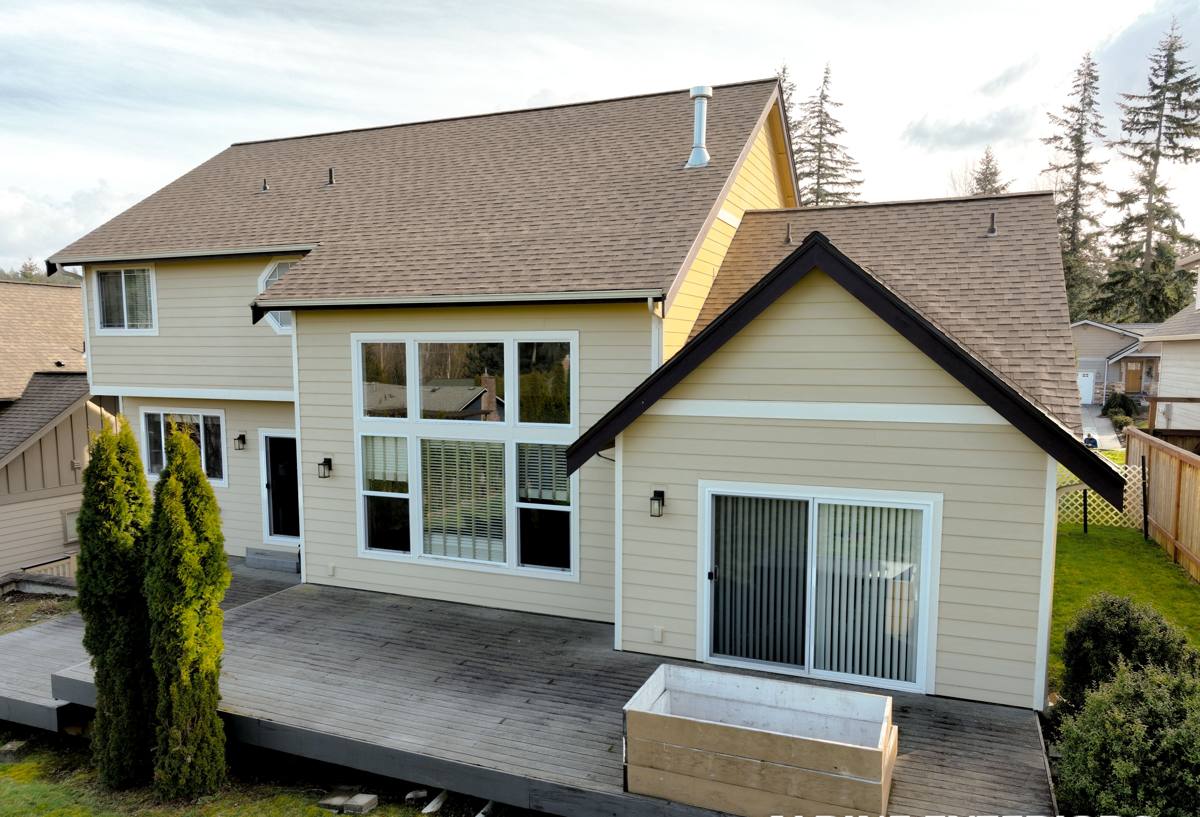
What Lynden's Climate Actually Does to a Roof
Driving Rain
Whatcom County rain rarely falls straight down. Wind-driven rain finds its way under poorly lapped flashing, undersized drip edges, and fastener penetrations that weren't sealed with the right gasket. On a metal roof, water management at the seams, valleys, and penetrations matters more than the panel material itself — a premium panel with sloppy flashing work will leak faster than a basic panel installed correctly.
Moss and Organic Growth
Lynden's tree cover, agricultural surroundings, and consistent moisture give moss and algae plenty of time to establish themselves on any roof surface that holds shade or debris. Metal sheds moss far better than shingles because there's no granulated texture for spores to grip, but valleys, low-slope sections, and areas near overhanging trees still need attention. A smooth, properly sloped metal roof with clean water flow is one of the best long-term defenses against moss homeowners in this region can invest in.
Salt Air and Corrosion
Properties closer to Bellingham Bay and the Puget Sound corridor see accelerated corrosion on unprotected or improperly coated metal. Even in Lynden, further from the water, salt-laden air moves inland on weather systems and settles on exterior surfaces over years, not days. This is why fastener quality, panel coating, and metal gauge selection matter — cutting corners on any of those shows up as rust streaking and fastener failure well before the panel itself would ever wear out.
Panel Types We Install and Why We Choose Them
Not every metal roofing product is a good fit for this climate. We steer homeowners toward systems that perform well under sustained wet conditions and repeated freeze-thaw cycling, and we're upfront about the trade-offs of each option rather than pushing whichever product has the best margin.
| Panel Type | Best For | Trade-Offs |
|---|---|---|
| Standing Seam (concealed fastener) | Most Lynden homes, especially low-slope sections and anywhere water pooling is a concern | Higher upfront cost; requires experienced installers for clean seams |
| Exposed Fastener Panel | Outbuildings, shops, barns, and budget-conscious main roofs on steeper pitches | Fasteners need periodic inspection and eventual re-torquing or replacement as gaskets age |
| Stone-Coated Steel | Homeowners wanting a shake or tile appearance with metal's durability | More installation steps, higher material cost, heavier than standard panel |
For most primary residences in and around Lynden, we recommend standing seam because the concealed fastener design removes the most common failure point on an exposed-fastener roof: gasket degradation at thousands of screw penetrations exposed to years of driving rain and UV cycling. Exposed fastener panels aren't wrong for every application — they're a legitimate, more affordable choice for outbuildings and steeper simple roofs — but we tell homeowners honestly which category their project falls into before they commit to either one.
What a Correct Metal Roof Installation Actually Involves
The panels get the attention in most sales conversations, but the layers underneath and the details at every transition are what determine whether the roof performs for decades or develops problems within a few wet seasons.
- Deck inspection and repair — any soft, delaminated, or water-damaged decking gets replaced before anything goes down, not covered up
- Ice and water shield at vulnerable zones — eaves, valleys, and penetrations get self-adhering membrane, not just felt, given how much sustained moisture this region sees
- Synthetic underlayment across the field — a breathable, high-tear-strength layer under the panels as a secondary water barrier
- Proper panel layout and seaming — starting points, overlap direction, and seam engagement matched to prevailing wind and water flow on that specific roof
- Flashing custom-formed to the roof, not generic stock pieces, at every chimney, wall transition, skylight, and valley
- Fastener spec matched to panel type — correct gauge, coating, and gasket for concealed or exposed systems
- Ventilation review — intake and exhaust balanced so moisture doesn't get trapped under the deck, which causes rot regardless of how good the metal on top is
Skipping any one of these doesn't cause an immediate problem — it causes a problem in year three or year eight, which is exactly why cutting corners on installation is so common among crews chasing the lowest bid. The panel warranty means very little if the underlayment, flashing, or ventilation underneath it was done wrong.
Our Process for a Lynden Metal Roof Project
1. On-Site Assessment
We walk the roof and attic, check current ventilation, evaluate the deck, and look at how water currently moves off the structure — including where it's clearly not moving well, which shows up as staining, moss buildup, or granule wash patterns on the existing roof.
2. Honest Scope and Panel Recommendation
We explain which panel system fits the roof's pitch, exposure, and your budget, and why — including where a cheaper option is genuinely reasonable and where it isn't.
3. Written Estimate
Clear line items covering tear-off (if applicable), decking repair allowance, underlayment, flashing, panels, and fasteners — no vague lump-sum pricing that hides what you're actually paying for.
4. Installation
Deck repair first, then underlayment and ice/water shield, then panels and custom flashing, with attention to the seams, valleys, and penetrations that determine long-term performance in this climate.
5. Final Walkthrough and Cleanup
We check flashing, fastener torque, and ventilation with you before we consider the job finished, and we clear the property of debris and old material.
Maintenance in a Wet, Mossy Climate
Metal roofing is low-maintenance compared to shingles, but "low" doesn't mean "none" in a climate like this one. A short annual check catches small issues before they become expensive ones.
- Clear debris from valleys and around any roof penetrations before fall rains set in
- Check gutters and downspouts for moss and needle buildup that can back water up under the eave edge
- Look for early moss or algae staining in shaded, low-slope areas and address it before it spreads
- Inspect exposed fasteners (if applicable) every couple of years for gasket wear or backing out
- Watch for scuffed or scratched coating near tree contact points, which can be touched up before bare metal is exposed
- After any major windstorm, do a visual check for lifted panel edges or damaged flashing
What Metal Roofing Costs and What Drives the Price
We won't quote a number without seeing the roof, but the factors below are what actually move the price up or down on a Lynden metal roof project.
| Factor | Effect on Cost |
|---|---|
| Panel system (exposed fastener vs. standing seam) | Standing seam typically runs higher due to material and labor complexity |
| Roof pitch and complexity (valleys, dormers, penetrations) | More cuts, flashing, and labor hours on complex rooflines |
| Tear-off vs. install over existing roof | Tear-off adds cost but is often the right call when decking needs inspection |
| Decking condition | Rot or delamination found during tear-off adds repair cost, usually itemized separately |
| Metal gauge and coating quality | Heavier gauge and better corrosion coatings cost more upfront, less over the roof's life |
| Access and site conditions | Steep pitches, tall structures, or tight lot access affect equipment and labor needs |
Broadly, homeowners should expect metal roofing to cost more upfront than asphalt shingles, with the trade-off being a much longer service life and less frequent full replacement. We'll walk you through where your specific roof falls in that range during the estimate, with the reasoning behind each line item.
Why Hiring a Crew That Already Works Lynden Matters
Metal roofing installation isn't forgiving of guesswork. A crew that's used to installing in a drier or milder climate can do technically competent work that still underperforms here, because the margin for error on flashing details and water management is smaller in a place that gets this much sustained rain and this long a moss season. Local experience means knowing which valley details actually shed water under Whatcom County's wind and rain patterns, which fastener coatings hold up under salt-influenced air even this far from the water, and which roof sections in this area are most prone to moss buildup based on tree cover and orientation, not a manufacturer's generic install guide written for a national audience.
It also means a crew that's on hand afterward — not a company that did one job in the area and moved on. Roofing is a long-term relationship with the building, not a one-time transaction, and that matters more with a 40-to-60-year roofing system than it does with a shorter-lived one.
Is Metal Roofing the Right Call for Your Lynden Home?
Metal roofing isn't automatically the right choice for every home or every budget, and we'll tell you honestly if a well-installed asphalt or composite roof makes more sense for your situation, your timeline for staying in the home, or your budget. What we won't do is install a metal roof without the underlayment, flashing, and ventilation details this climate actually requires just to hit a lower price point — that approach costs homeowners more in the long run than it saves them upfront.
If you're weighing metal roofing for a home in Lynden or elsewhere in Whatcom County, we're happy to walk the roof with you, explain what we're seeing, and put together a straightforward estimate — no pressure, no obligation. Use the form below to get started.