 Bellingham
 Asphalt Shingle Roofing Built for Lynden's Weather, Not Just Any Roof
Lynden sits in Whatcom County, close enough to Bellingham that homes here deal with the same weather patterns that wear down roofs all over the region: long stretches of driving rain, salt-laden air moving inland off the Sound on windy days, and a moss season that can run most of the year in shaded yards. An asphalt shingle roof that's installed correctly for this climate will handle all of that without complaint for decades. One that's installed with shortcuts — thin underlayment, skipped flashing details, poor ventilation — will show problems in the first few wet seasons, not the tenth.
This page is specifically about asphalt shingle roofing for Lynden properties: what the local climate actually demands, what a correct installation includes, and how our crew handles the job from estimate to final cleanup.
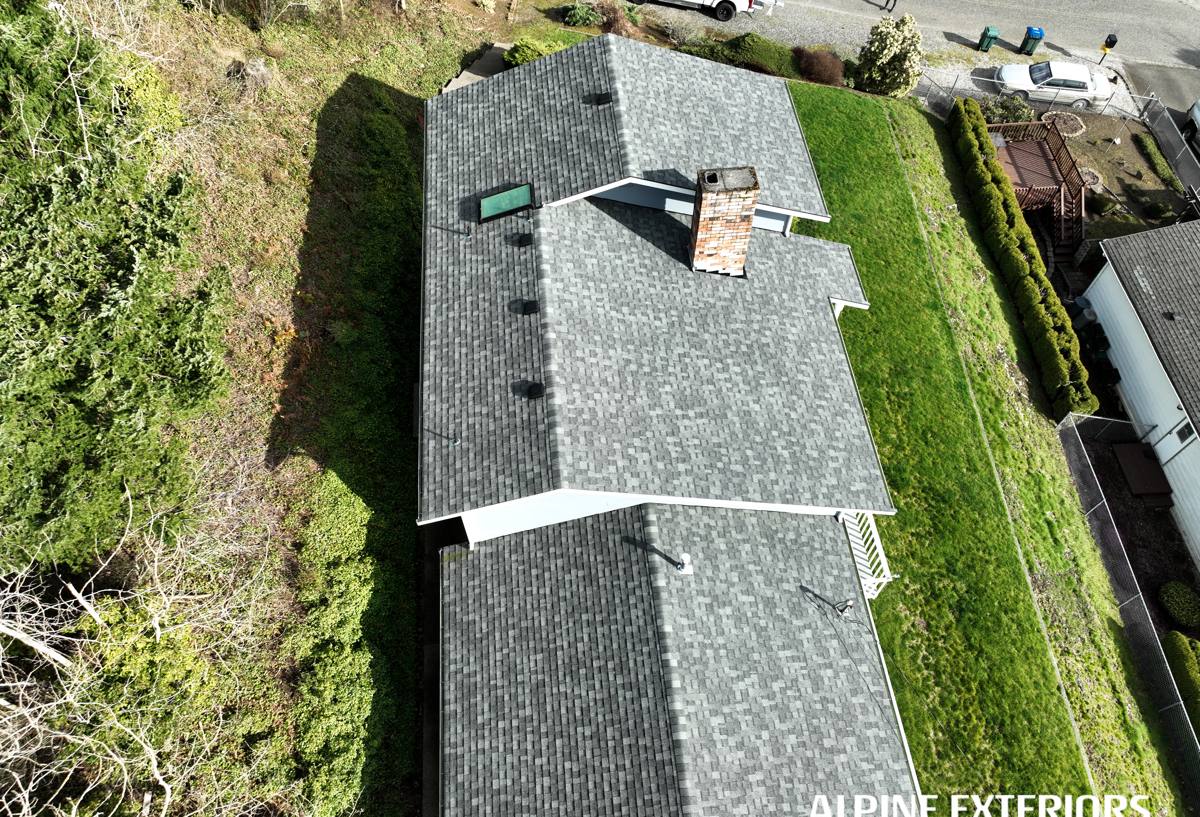
What Whatcom County Weather Does to a Shingle Roof
Asphalt shingles are a proven, affordable roofing material almost anywhere in the country, but the Pacific Northwest asks more of them than drier climates do. A few things we watch for on every Lynden roof:
- Sustained rain, not just occasional storms. Water sits on a roof here for hours or days at a time during the wet months, which means every seam, nail line, and valley has to shed water perfectly the first time — there's no quick drying period to forgive a weak spot.
- Wind-driven rain. Storms moving through Whatcom County often push rain sideways, which can force water up under shingle tabs if the sealant strips or fastening pattern weren't done right.
- Salt air influence. Air moving inland off the Sound carries salt that accelerates corrosion on exposed metal — nails, flashing, and vent components — faster than it would inland in a drier state.
- A long moss and algae season. Cool, damp, shaded conditions for much of the year are exactly what moss and algae need to establish themselves on a roof.
None of this means asphalt shingles are the wrong choice for Lynden — they're one of the most common and cost-effective roofing systems in this region for good reason. It means the installation details matter more here than they do in a milder climate.
What a Correct Installation Actually Includes
Underlayment and Water Barrier
Given how much rain Whatcom County sees, we don't treat underlayment as an afterthought. A synthetic underlayment across the full roof deck, combined with self-adhered ice-and-water membrane at the eaves, valleys, and any roof penetration, gives the roof a real second line of defense if wind ever drives water past the shingles themselves. Valleys in particular take a beating here — they concentrate runoff from two roof planes into one channel, and a weak valley is one of the most common sources of leaks we find on older Lynden roofs.
Flashing Details
Chimneys, skylights, sidewalls, and roof-to-wall transitions are where most leaks actually start, not the open field of shingles. Correct step flashing, counter-flashing, and properly sealed penetrations matter more in a region that gets this much sustained moisture than almost anywhere else in the country.
Fastening and Sealant
Shingles are rated for wind resistance based on correct nailing — the right number of nails, in the right location on each shingle, driven flush rather than over- or under-driven. In a region with regular wind-driven rain, a poorly nailed shingle field is what leads to lifted tabs and water intrusion during the next storm, not years down the road.
Attic Ventilation
A shingle roof doesn't fail in isolation — what's happening in the attic underneath it matters just as much. Balanced intake and exhaust ventilation keeps moisture from condensing on the underside of the roof deck during our cool, damp winters, which protects both the shingles and the wood structure below them.
Choosing a Shingle for This Climate
Not every asphalt shingle product is built the same way, and the right choice depends on how much upfront investment a homeowner wants to make versus how long they want the roof to last with minimal attention. Here's how the common tiers compare for a Lynden home:
| Shingle Type | Typical Lifespan | Wind Rating | Best For |
|---|---|---|---|
| 3-Tab (Standard) | Shorter end of the range | Lower | Budget-focused projects, rentals, secondary structures |
| Architectural / Dimensional | Mid-to-long range | Higher, better wind performance | Most primary homes — the standard choice we recommend |
| Algae-Resistant (with copper or zinc granules) | Mid-to-long range | Higher | Shaded lots or homes with a history of moss/algae staining |
| Impact-Resistant (Class 4) | Long range | Highest | Homeowners prioritizing durability and potential insurance savings |
For most Lynden homes, we recommend architectural shingles with algae-resistant granules as the practical baseline — the upfront cost difference over standard 3-tab shingles is modest, and the payoff in reduced moss/algae staining and better wind performance is significant given how long our wet season runs.
Moss and Algae: Managing the Long Wet Season
Moss doesn't just look bad — it holds moisture against the shingle surface and can work its way under tabs over time, which shortens the life of the roof. A few things reduce the problem without requiring constant attention:
- Zinc or copper strips installed near the ridge, which release trace metals with rain runoff that inhibit moss and algae growth over the whole roof plane.
- Keeping overhanging branches trimmed back so shaded, damp sections of roof get more light and airflow.
- Gentle, low-pressure cleaning rather than pressure washing, which can strip granules and shorten shingle life faster than the moss itself would.
- Clear gutters and downspouts, since standing water backing up under the eaves is one of the most common ways moss gets a foothold in the first place.
We build moss prevention into the installation itself rather than treating it as a separate maintenance product to sell later.
Our Process, Start to Finish
- On-site inspection and estimate. We walk the roof (or use a drone where access is limited), check the deck condition, flashing, ventilation, and existing damage, and give a written estimate — no pressure, no surprise add-ons discovered after the contract is signed.
- Material selection. We go over shingle options and colors based on the home's exposure, shade, and the homeowner's budget.
- Tear-off and deck inspection. Old roofing comes off down to the deck so we can actually see the wood underneath — soft or rotted decking gets replaced before anything new goes down, not covered over.
- Underlayment, flashing, and shingle installation. Done in the sequence and to the fastening spec that keeps the manufacturer's warranty intact.
- Cleanup and magnetic nail sweep. We clear debris and run a magnetic sweep of the property so stray roofing nails don't end up in a driveway or lawn.
- Final walkthrough. We review the finished roof with the homeowner before calling the job complete.
Repair or Replace? Signs Worth Checking
Not every roofing issue in Lynden means a full replacement. Some signs point to a targeted repair; others tell you the whole system is past the point of patching. A quick self-check:
- Granules collecting in gutters — normal in small amounts, a concern in large amounts
- Shingles that are cupping, curling, or missing tabs after a windstorm
- Visible daylight through the attic roof deck, or damp insulation after rain
- Thick moss mats rather than light surface growth
- A roof nearing or past the upper end of its expected lifespan with multiple issues at once, rather than one isolated spot
If it's one or two of these in isolation, a repair is often the right call. If several show up together, that's usually a sign the roof as a whole is reaching the end of its service life.
Why a Crew That Already Works in Lynden Matters
Roofing crews that mainly work outside Whatcom County don't always build in the details this climate requires by default — because in a drier region, they don't have to. A crew that regularly works Lynden and the surrounding Bellingham area already knows to spec ice-and-water membrane at valleys as standard practice, plans installations around realistic weather windows instead of guessing, and understands how local permitting and inspection work. That local familiarity shows up in fewer surprises during the job and a roof that's actually built for what it has to handle here.
After Installation: Warranty and Simple Maintenance
A correctly installed asphalt shingle roof comes with both a manufacturer's material warranty and a workmanship warranty covering the installation itself — the two are separate, and it's worth knowing which one covers what before a claim ever comes up. Beyond the warranty, upkeep is minimal: keep gutters clear, trim back overhanging branches, and have the roof looked at after any major windstorm. A roof built correctly for this climate shouldn't need much more than that.
If you're weighing a repair or a full shingle roof replacement on a Lynden property, we're happy to take a look and give you a straight answer — no pressure, no obligation. Fill out the form below for a free estimate.